
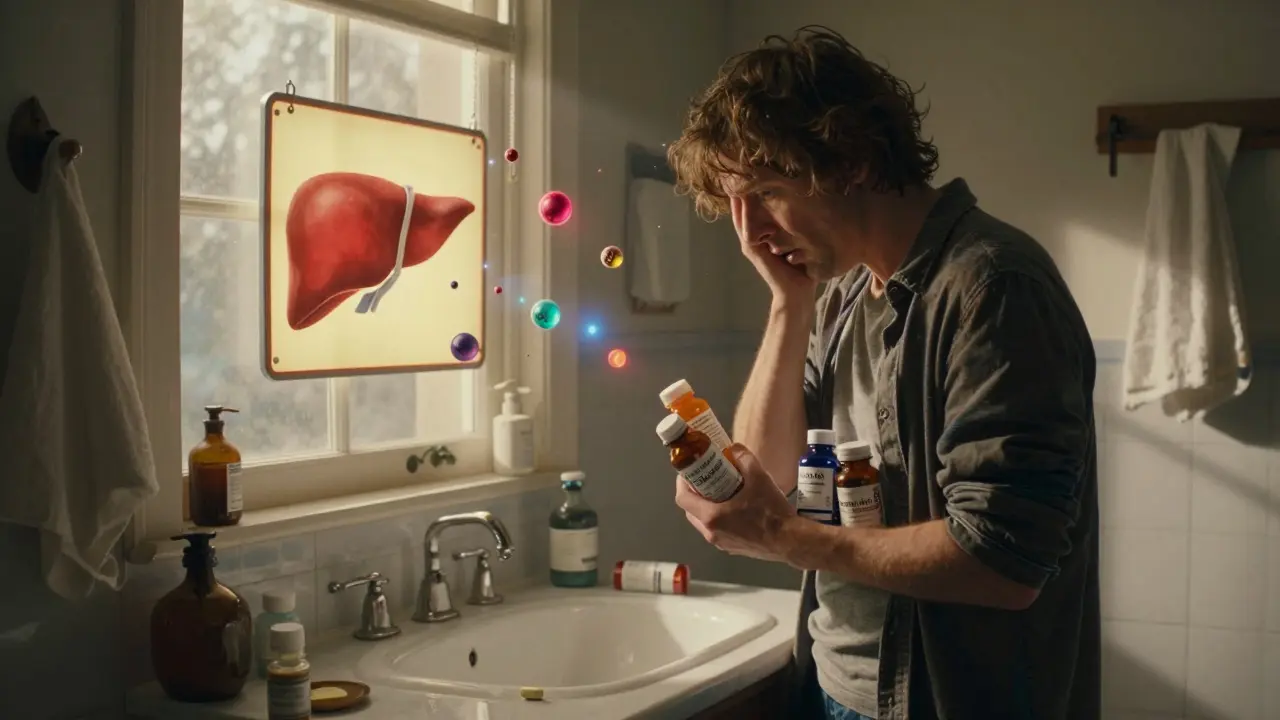
Every year, thousands of people end up in emergency rooms because they took too much acetaminophen-and most of them didn’t mean to. It’s in your cold medicine, your headache pills, your sleep aid, even your prescription painkillers. You think you’re being careful, taking just one extra tablet when the pain won’t go away. But that one extra tablet? It could be the difference between feeling better and needing a liver transplant.
Acetaminophen, known by the brand name Tylenol, is one of the most common pain relievers in the world. It’s sold over the counter, it’s cheap, and it’s generally safe-when used exactly as directed. But the line between safe and dangerous is razor-thin. For adults, the maximum daily dose is 4,000 milligrams. That’s eight 500 mg tablets. Sounds simple? Here’s the catch: many people take more than that without realizing it.
Why Acetaminophen Is More Dangerous Than You Think
Unlike ibuprofen or aspirin, acetaminophen doesn’t irritate your stomach or affect your kidneys much. That’s why doctors recommend it for people with ulcers, high blood pressure, or kidney issues. But your liver? It’s the only organ that can break down acetaminophen. And it has a hard limit.
When you take too much, your liver runs out of the natural antioxidant called glutathione. Without it, a toxic byproduct called NAPQI builds up and starts killing liver cells. This isn’t slow damage-it happens fast. Within hours, your liver enzymes spike. Within days, your liver can fail. In the U.S., acetaminophen is responsible for over half of all cases of acute liver failure. It’s the #1 cause of liver transplants from drug overdose.
And here’s what makes it worse: you won’t feel sick right away. In the first 24 hours, you might just feel a little nauseous or tired. No jaundice. No pain. No warning. By the time your skin turns yellow or your abdomen swells, it’s often too late for prevention.
How Accidental Overdoses Happen
The biggest risk isn’t intentional overdose. It’s confusion. People don’t realize how many products contain acetaminophen.
- One cold medicine? Contains 325 mg.
- One pain reliever? Another 500 mg.
- One sleep aid? Another 500 mg.
Add them up, and you’ve hit 1,325 mg before breakfast. Take two more Tylenol at night? You’re over 2,300 mg-already past the 3,000 mg safety threshold many experts now recommend.
Studies show that 25% of accidental overdoses happen when people take two or more products with acetaminophen at the same time. And 41% of parents make dosing errors with children because they use kitchen spoons instead of measuring cups. A tablespoon isn’t a teaspoon. One wrong spoonful can land a child in the hospital.
Even alcohol makes it worse. Just three drinks a day can lower your liver’s ability to handle acetaminophen. You don’t need to be drunk. Just regular drinking-like a glass of wine with dinner-can push you over the edge.
The Signs You’re in Trouble
Acetaminophen toxicity happens in stages. Stage one: 0-24 hours. You might feel nauseous, sweaty, or just off. Lab tests? Normal. Stage two: 24-72 hours. Pain in your upper right abdomen. Your liver enzymes start climbing. Stage three: 72-96 hours. Jaundice. Confusion. Bleeding. Kidney failure. Stage four: after five days. Recovery… or death.
Most people don’t recognize the early signs. They think, “I’ll wait and see.” But waiting is the mistake. By the time symptoms are obvious, the damage is already done.
How to Prevent an Overdose
Here’s what actually works:
- Know your limit. For adults, don’t exceed 3,000 mg per day unless your doctor says otherwise. That’s six 500 mg tablets. Less if you drink alcohol or have liver disease.
- Read every label. Look for “acetaminophen” or “APAP.” If you see it on two products, don’t take both. That includes cough syrups, flu tablets, and prescription painkillers like Vicodin or Percocet.
- Never mix with alcohol. Even one drink a day increases risk. If you drink regularly, talk to your doctor before using acetaminophen.
- Use the right tool. For liquids, always use the measuring cup that comes with the bottle. Never guess with a kitchen spoon.
- Keep a log. Write down what you take and when. If you’re taking multiple meds, track your total acetaminophen intake.
For children, the rules are stricter. Dose by weight, not age. Use pediatric formulas only. Never give adult pills to a kid. The American Academy of Pediatrics says 10-15 mg per kilogram of body weight per dose, no more than five doses in 24 hours.
What to Do If You Think You’ve Taken Too Much
If you suspect an overdose-no matter how small it seems-call Poison Control immediately. In the U.S., dial 1-800-222-1222. In Australia, call 13 11 26. Don’t wait for symptoms. Don’t hope it’ll pass.
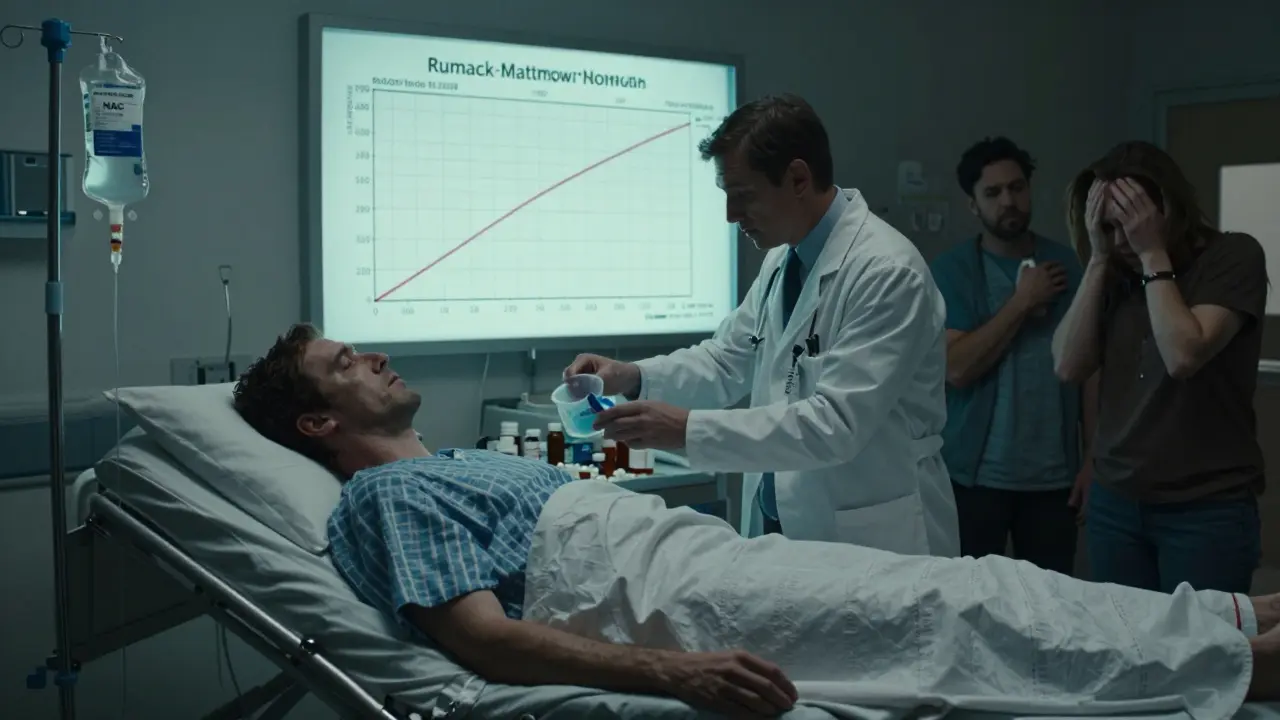
The antidote, N-acetylcysteine (NAC), works best if given within 8 hours. After 16 hours, its effectiveness drops by half. If you get treated early, you’ll likely recover with no lasting damage. If you wait? You could need a transplant.
One man in Melbourne, 42, took three extra-strength Tylenol after a night out with wine. He felt fine the next day. By day three, he was vomiting blood. He was hospitalized with liver enzymes 12 times higher than normal. He survived because he called for help. He didn’t wait.

What’s Being Done to Fix This
Regulators are trying. The FDA now requires a black box warning on all acetaminophen labels. Prescription combo drugs can’t have more than 325 mg per pill. But labels are still too small. Studies show only 38% of people notice the liver warning.
Next steps? Larger, bolder text on packaging. Apps that scan barcodes to warn you about cumulative doses. Better training for pharmacists. A new 2023 guideline from America’s Poison Centers now standardizes how emergency teams respond-so you get the right treatment no matter where you are.
But the real fix? You. Knowing what’s in your medicine. Reading labels. Asking questions. Not assuming it’s safe because it’s OTC.
Acetaminophen Isn’t the Enemy
It’s still the best choice for many people. For pregnant women. For those with stomach ulcers. For older adults who can’t take NSAIDs. It’s effective. It’s affordable. And when used correctly, it’s very safe.
The danger isn’t the drug. It’s the misunderstanding. The assumption that because it’s sold on shelves, it’s harmless. That’s not true. It’s a powerful medicine with a narrow safety zone.
So next time you reach for a pill, pause. Ask: What’s in this? How much have I taken today? Do I really need this?
One extra tablet won’t kill you. But 10 extra tablets over a week? That’s how liver failure starts.
Can I take acetaminophen if I drink alcohol?
It’s risky. Even moderate drinking-like one or two drinks a day-can make your liver more vulnerable to acetaminophen damage. If you drink regularly, limit acetaminophen to no more than 2,000 mg per day. Better yet, talk to your doctor. If you’re a heavy drinker, avoid acetaminophen altogether.
Is Tylenol safer than ibuprofen?
It depends. Tylenol (acetaminophen) is safer for your stomach and kidneys, but much riskier for your liver. Ibuprofen can cause ulcers or kidney stress, but it doesn’t cause liver failure at normal doses. If you have liver disease, avoid acetaminophen. If you have stomach issues, avoid ibuprofen. Talk to your doctor about which is better for you.
What’s the difference between regular and extra-strength Tylenol?
Regular strength has 325 mg per tablet. Extra-strength has 500 mg. That means you can take fewer pills with extra-strength-but you’re still limited to 4,000 mg total per day. Taking six extra-strength tablets gives you 3,000 mg. Taking eight gives you 4,000 mg. Going beyond that puts you in danger.
Can children take adult acetaminophen?
Never. Adult tablets contain too much for a child’s weight. A single 500 mg tablet can overdose a young child. Always use pediatric formulations and dose by weight, not age. Use the measuring device provided. Never guess with spoons.
What if I took too much but feel fine?
That doesn’t mean you’re safe. Acetaminophen damage can take 12-24 hours to show symptoms. If you took more than 4,000 mg in 24 hours, or more than 7.5 grams in one dose, call poison control immediately. Waiting for symptoms to appear could cost you your liver.
Is there a blood test to check for acetaminophen overdose?
Yes. Hospitals test blood for acetaminophen levels and liver enzymes (AST and ALT). A nomogram called the Rumack-Matthew scale helps doctors decide if you need treatment. If your level is above the line on the chart, you’ll get NAC. Don’t wait to get tested-call for help right away.
Roland Silber
March 7, 2026 AT 05:24I've been a pharmacist for 18 years, and I can't tell you how many times I've had someone come in asking why their liver enzymes are through the roof after taking 'just a couple extra Tylenol' for a headache. The problem isn't the drug-it's the myth that OTC means harmless. People don't realize that acetaminophen is in over 600 products. One cold medicine. One sleep aid. One back pain pill. Add 'em up. Boom. You're at 3,500 mg before lunch. I always tell folks: if you're taking more than one OTC med, read every single label. Write it down. Track it. Your liver doesn't care how good your intentions were.
And if you drink? Even one glass of wine a night? Cut your max dose in half. Seriously. It's not worth the gamble.
Patrick Jackson
March 8, 2026 AT 04:27bro this is wild 😭 i took 3 extra strength tylenol last week after a long day and i felt fine the next day… then i read this and nearly threw up. i thought i was being careful. turns out i was just lucky. i’m never doing that again. i keep a little notebook now. ‘acetaminophen log’ - sounds dumb but it’s saved my liver. 🫡
Adebayo Muhammad
March 9, 2026 AT 15:00Vikas Verma
March 10, 2026 AT 10:44From a clinical perspective, the 3,000 mg/day threshold is not arbitrary-it's evidence-based. Multiple peer-reviewed studies, including those from the Journal of Hepatology (2021), show a clear dose-response curve beyond this threshold, even in healthy adults. The risk of hepatotoxicity increases exponentially at 4,000 mg. Moreover, alcohol co-ingestion reduces glutathione synthesis by up to 40%. The data is unambiguous. Adherence to label instructions is not optional-it’s a biological imperative.
Sean Callahan
March 11, 2026 AT 00:54Ferdinand Aton
March 11, 2026 AT 06:51Actually, you're all overreacting. I've been taking 6 extra-strength Tylenol a day for 5 years. I'm 43, no liver issues, no drinking. My doctor says I'm fine. You're scaring people with cherry-picked stats. The real danger is fearmongering. Not the pill.
William Minks
March 11, 2026 AT 14:41Love this post. 🙌 I’m from Nigeria and we don’t have the same access to clear labeling here. People just grab whatever’s cheapest. I started a small campaign in my community-printed simple infographics in pidgin and hung them in pharmacies. ‘One pill? Check the box. Two pills? Stop. Read.’ It’s tiny, but it’s something. If you’re reading this-share it with someone who needs to hear it. ❤️
Jeff Mirisola
March 13, 2026 AT 05:22My mom had liver failure from this. She didn’t even know she was taking two things with acetaminophen. She was on a sleep aid and a cold med. Thought she was being smart. She woke up in ICU. She’s fine now, but it changed her. Now she carries a little card in her wallet: ‘I do NOT take acetaminophen.’ I made it for her. If you take anything, even once, ask yourself: what am I really fixing? Is it worth the risk? I’m not judging. I’m just saying… pause. Breathe. Read the label.
Susan Purney Mark
March 15, 2026 AT 02:45I’m a nurse, and I’ve seen this too many times. One time, a 16-year-old girl came in after taking 10 tablets because she thought ‘more = faster relief.’ She didn’t even know what she was taking. She just saw ‘Tylenol’ on the bottle. We saved her because her mom called Poison Control right away. But she’s lucky. So many aren’t. Please, if you’re a parent-keep meds locked up. Use the cup. No spoons. And if you’re unsure? Call. It’s free. It’s anonymous. And it might save a life.
Ian Kiplagat
March 15, 2026 AT 18:05