

Why Antivirals Stop Working: The Real Story Behind Resistance
Antivirals don’t fail because the drug is bad. They fail because the virus changes. Every time a virus replicates, it makes copies of itself - and sometimes, it gets it wrong. These mistakes, called mutations, can accidentally make the virus invisible to the drug. That’s resistance. It’s not magic. It’s biology.
Take HIV. In the 1990s, people took just one drug - zidovudine (AZT). Within years, the virus adapted. It mutated. The drug stopped working. Today, we know better. We use combinations - three or four drugs at once. That’s called combination antiretroviral therapy (cART). Why? Because for the virus to resist all of them at once, it needs multiple mutations to happen at the same time. That’s rare. The chance of that? Less than 1 in 10 billion.
But not all antivirals are built the same. For hepatitis B, lamivudine used to be common. It’s cheap. It’s easy. But it has a low genetic barrier. After five years, up to 70% of people developed resistance. Adefovir? Higher barrier. Only 29% developed resistance over the same period. That’s why doctors now avoid single-drug treatments for chronic viruses. The risk isn’t worth it.
Herpesviruses like HSV-1 and HSV-2 are different. Over 90% of acyclovir resistance comes from mutations in the thymidine kinase gene - not the polymerase. That means the virus can’t even activate the drug. Foscarnet and cidofovir can still work, but if the virus mutates its DNA polymerase, those fail too. And once resistance shows up, options shrink fast.
For hepatitis C, the game changed in 2014. New direct-acting antivirals (DAAs) turned a 50% failure rate with interferon into a 95% cure rate. Resistance? Now below 5% in most cases. Why? Because they hit the virus in multiple places at once. One mutation won’t save it.
What You Might Feel: Common Side Effects of Antivirals
Antivirals aren’t sugar pills. You might feel something. But it’s not always the drug - sometimes it’s your body reacting to the virus leaving.
With HIV meds, the first few weeks are the toughest. Nausea, headaches, fatigue. Some people get trouble sleeping. A few report vivid dreams. These usually fade after 2-4 weeks. But for about 1 in 4, side effects stick around. That’s why doctors now use single-tablet regimens. One pill, once a day. Less to remember. Less to react to.
Hepatitis C treatments? Most people tolerate them well. But 23% report fatigue. 18% get headaches. These aren’t dangerous. They’re just annoying. And they’re short-lived - 8 to 12 weeks max.
For herpes, daily valacyclovir (one pill a day) is easier than old acyclovir (three pills a day). Fewer side effects. Better sleep. Less nausea. That’s why adherence jumped from 42% to 68% when people switched.
CMV, a virus that hits transplant patients hard, can cause kidney damage with ganciclovir or cidofovir. That’s why doctors monitor blood work closely. No one wants to cure one problem and break another organ.
And yes - some antivirals cause rashes. Some cause liver enzymes to rise. Some make you dizzy. But here’s the key: if you’re on a modern regimen, serious side effects are rare. Most people feel better once the virus is under control. The side effects are the price of progress - and they’re getting cheaper every year.
Adherence Isn’t Optional: Why Missing a Dose Can Change Your Life
You missed one pill. So what?
That’s what most people think. But here’s the truth: missing doses gives the virus a fighting chance. Every time you skip, the drug level in your blood drops. The virus wakes up. It starts copying. And while it’s copying, it makes mistakes. Some of those mistakes become resistance.
One study found that people who missed even 5% of their HIV doses were 3 times more likely to develop resistance. That’s not a small risk. That’s life-changing.
Why do people miss doses? Three reasons: complex schedules, side effects, and travel. A 2022 survey showed 47% of people struggled because their meds required multiple pills at different times. 31% skipped because they felt sick. 19% forgot during trips.
Modern treatments fix this. Single-tablet regimens like Dolutegravir + Lamivudine + Tenofovir? One pill. Once a day. No food restrictions. No timing hassles. It takes just two weeks for people to get used to it - compared to eight weeks with old multi-pill regimens.
Tools help. Pill organizers? Used by 63% of people who stay on track. Phone reminders? Used by 57%. Pharmacist check-ins? Cut resistance rates by 28%. You don’t need to be perfect. You just need to be consistent.
And here’s the kicker: resistance isn’t just your problem. It’s everyone’s. Resistant viruses can spread. If you develop resistance and pass the virus to someone else, they start with a drug-resistant strain. That limits their treatment options from day one.
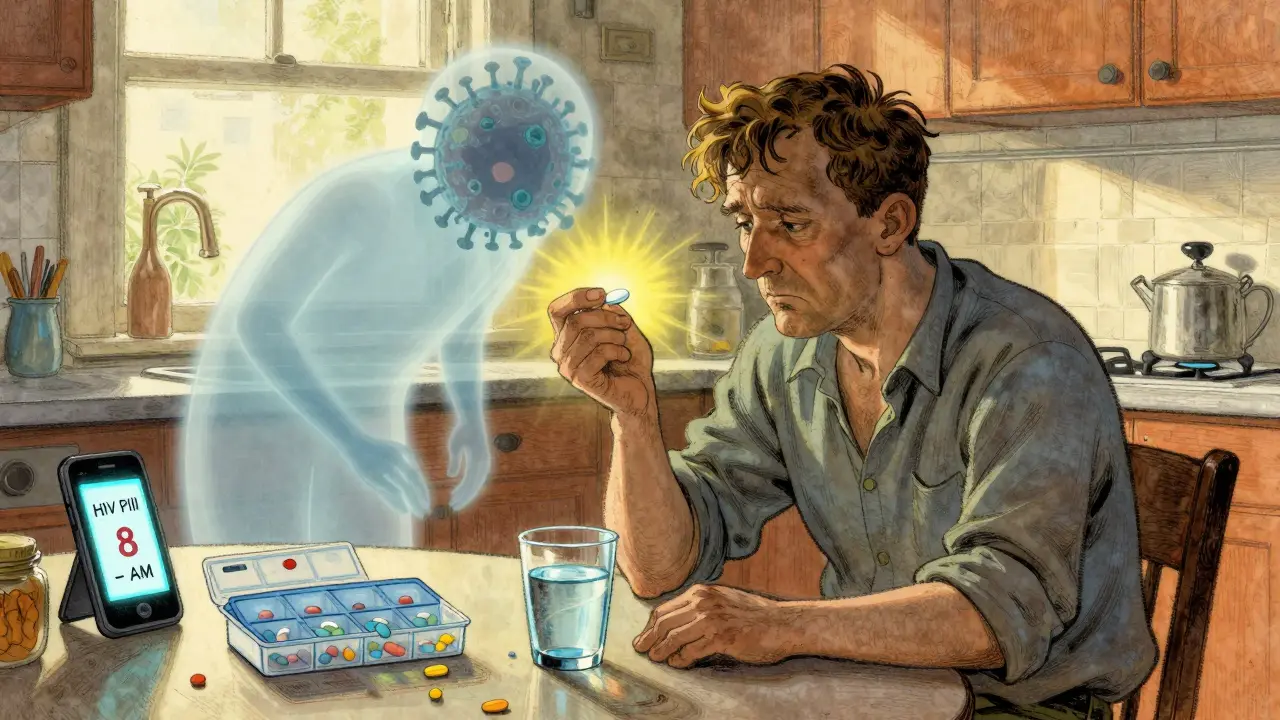
What Works: Proven Strategies to Stay on Track
Staying on antivirals isn’t about willpower. It’s about systems.
- Use a pillbox. Buy one with compartments for morning, afternoon, evening, and night. Fill it every Sunday. You’ll know right away if you missed a dose.
- Set phone alarms. Label them: "HIV pill - 8 AM" or "Hep C - 7 PM." Don’t just say "meds." Be specific.
- Link it to a habit. Take your pill right after brushing your teeth. Or right before you eat dinner. Anchor it to something you already do.
- Keep extra pills. If you travel, pack a week’s extra. Put them in your carry-on. Never check them.
- Talk to your pharmacist. They’re not just the person who hands you the bottle. They’re trained to help you stick with your meds. Ask for a 15-minute consultation. Most pharmacies offer it free.
For herpes, daily suppressive therapy is easy. One pill. One time. For HIV, single-tablet regimens make it simpler than ever. For hepatitis C? Eight to twelve weeks. Then you’re done.
And if you do miss a dose? Don’t panic. Don’t double up. Just take the next one as scheduled. But tell your doctor. They’ll know if it’s a pattern - and they can help adjust your plan before resistance starts.
The Future: New Drugs, Better Tools
Things are getting better - fast.
In 2023, the FDA approved lenacapavir, a new HIV drug with a genetic barrier so high, it stopped resistance in 96% of patients over 72 weeks. That’s unheard of. It’s injected twice a year. No daily pills. Just two shots.
Gene editing? CRISPR trials are now testing whether we can cut HIV out of human DNA. Early results show a 60% drop in viral reservoirs - without resistance. It’s early, but it’s real.
And guidelines changed in 2024. Now, resistance testing is recommended before starting any antiviral for chronic infections - not just after treatment fails. That means doctors catch problems before they start.
For hepatitis B, tenofovir and entecavir are now first-line. Both have low resistance rates. For herpes, valacyclovir is the gold standard. For CMV, letermovir is replacing older drugs with fewer side effects.
The goal isn’t just to survive. It’s to live well. And with today’s tools, that’s possible - if you stick with it.

When to Call Your Doctor
You don’t need to wait for a crisis. Call if:
- You’ve missed more than two doses in a row.
- You’re having side effects that don’t go away after two weeks.
- You’re traveling and worried about keeping your meds safe.
- You’re thinking about stopping because you feel fine.
Feeling better doesn’t mean the virus is gone. It means the drugs are working. Stop them, and the virus comes back - stronger.
Can antiviral resistance be reversed?
No, once a virus develops resistance, that mutation stays. But you can switch to a different drug that still works. For example, if HIV develops resistance to lamivudine (M184V mutation), switching to dolutegravir usually brings the virus back under control. The resistant strain doesn’t disappear - but it stops being the main problem.
Do all antivirals cause side effects?
No. Modern antivirals are much better than older ones. Many people on today’s HIV or hepatitis C regimens report no side effects at all. When side effects happen, they’re usually mild and short-term. Fatigue, headache, and nausea are the most common - and they often fade within weeks.
Is it safe to take antivirals with other medications?
Sometimes. Many antivirals interact with other drugs - especially statins, blood thinners, and some antidepressants. Always tell your doctor and pharmacist about every medication you take, including supplements and over-the-counter pills. They’ll check for dangerous interactions before you start.
How often should I get resistance testing?
Guidelines now recommend testing before you start treatment for chronic infections like HIV or hepatitis B. After that, test if your viral load rises unexpectedly, or if you’ve missed doses regularly. Routine testing every year isn’t needed if you’re doing well - but your doctor will tell you if it’s time.
Can I stop antivirals if I feel fine?
No. For chronic infections like HIV or hepatitis B, stopping means the virus comes back. And when it returns, it’s more likely to be resistant. Even if you feel great, the virus is still there - hidden. Stopping is like turning off the alarm in a house with a burglar still inside.
Are there natural ways to prevent antiviral resistance?
No. Supplements, herbs, or diets don’t stop viral mutations. The only proven way to prevent resistance is taking antivirals exactly as prescribed. Staying on schedule, avoiding missed doses, and using combination therapy are the only tools that work. Don’t rely on unproven methods - they put you at risk.
What to Do Next
If you’re on antivirals, check your routine today. Do you use a pillbox? Set reminders? Talk to your pharmacist? If not, start now. One small change - like setting a daily alarm - can keep you on track for years.
If you’re not on antivirals but have a chronic viral infection - talk to your doctor about resistance testing before starting treatment. Ask about single-tablet regimens. Ask about side effects. Ask how to avoid missing doses.
Antivirals save lives. But only if you take them. The science is powerful. The tools are simple. Your job? Stay consistent. That’s the real breakthrough.
Maggie Noe
January 8, 2026 AT 21:27Catherine Scutt
January 10, 2026 AT 20:35Meghan Hammack
January 11, 2026 AT 05:42Lindsey Wellmann
January 12, 2026 AT 13:30Aron Veldhuizen
January 14, 2026 AT 07:54Drew Pearlman
January 14, 2026 AT 07:58Gregory Clayton
January 14, 2026 AT 18:56Ashley Kronenwetter
January 15, 2026 AT 05:20