
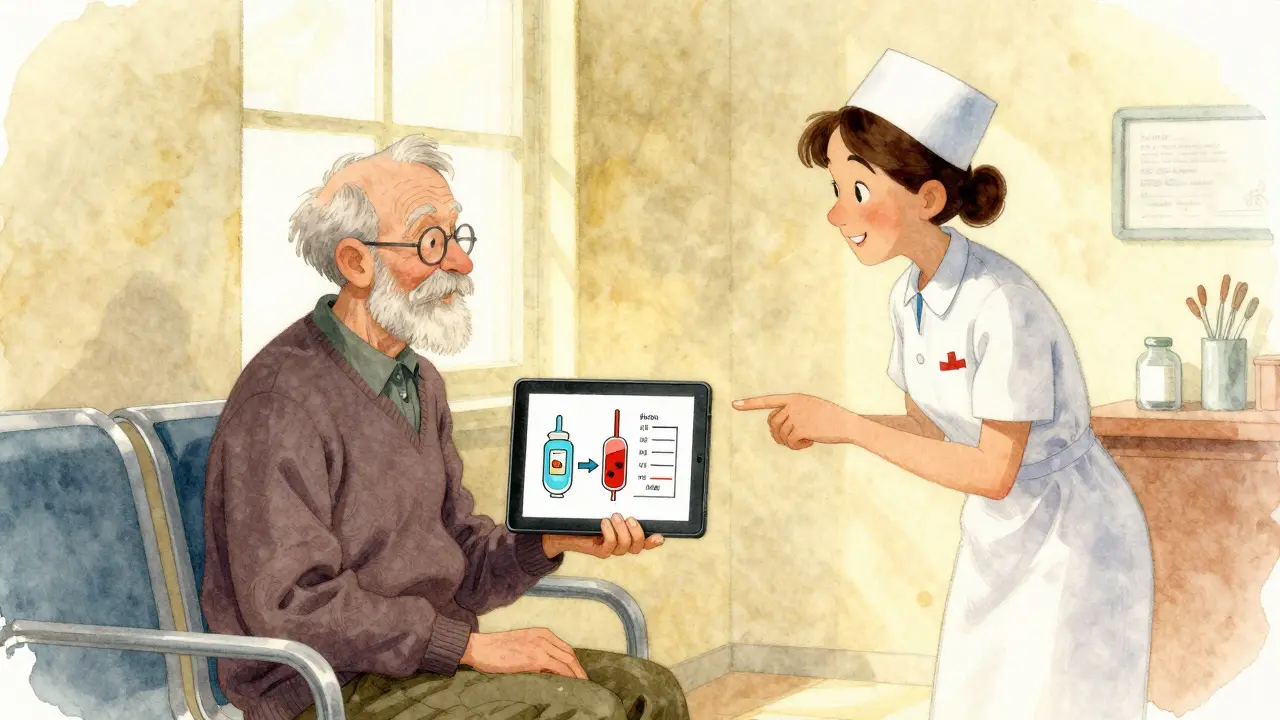
Why digital tools are changing how patients learn about their health
Most people don’t learn how to manage diabetes, high blood pressure, or asthma from a single doctor’s visit. They need ongoing support, clear explanations, and ways to track progress. That’s where digital tools come in. In 2026, patients aren’t just reading pamphlets or watching videos on YouTube-they’re using apps that adapt to their needs, get feedback from AI, and even talk back when they’re confused.
According to a 2025 study by the American Medical Association, patients who used digital education tools were 52% more likely to stick to their treatment plans than those who didn’t. The reason? These tools make complex medical info feel personal, not overwhelming.
Top apps for patient education in 2026
Not all health apps are created equal. Some are flashy but useless. Others quietly change lives. Here are the ones that actually work.
- Khan Academy Kids isn’t just for children. Many clinics use its simple, visual lessons to explain chronic conditions like asthma or epilepsy to older adults with low health literacy. It’s free, works offline, and uses animations instead of text-heavy instructions.
- Epocrates is used by over 1.2 million healthcare providers, but patients can access its simplified drug guides. It answers questions like “What does metformin do?” or “Can I drink alcohol with this pill?” in plain language, with side effect alerts built in.
- MyTherapy helps patients track meds, symptoms, and appointments. It sends reminders and generates weekly reports patients can share with their doctors. One user in a 2025 Cleveland Clinic study cut her hospital visits by 40% after using it for six months.
- Ada Health uses AI to ask questions about symptoms and then explains possible causes in simple terms. It doesn’t diagnose, but it helps patients understand what to ask their doctor next. Over 15 million people use it globally.
- Healthline has a patient-focused version of its site that strips away jargon. Articles are rated by readability score, and videos feature real patients explaining how they manage conditions like COPD or rheumatoid arthritis.
How e-learning platforms help patients learn at their own pace
Unlike apps that focus on daily tracking, e-learning platforms give patients structured lessons. Think of them like online courses-but for your health.
- PatientsLikeMe lets people with rare diseases join group courses taught by doctors and peers. A user with ALS can take a 10-module course on breathing techniques, then watch videos from others who’ve done the same. The platform tracks progress and connects users to support groups.
- MedBridge is used by hospitals to train patients before and after surgery. It offers video modules on wound care, mobility exercises, and pain management. One hospital in Minnesota saw a 33% drop in readmissions after rolling out MedBridge for joint replacement patients.
- Coursera’s Health and Wellness courses are free for patients with a referral from their provider. Courses like “Understanding Your Blood Pressure” or “Managing Diabetes Through Nutrition” are taught by university professors and include quizzes with instant feedback.
- WebMD’s Patient Education Hub organizes content by condition. Click on “Heart Failure,” and you get a step-by-step learning path: what it is, how meds work, warning signs, diet tips, and printable checklists.
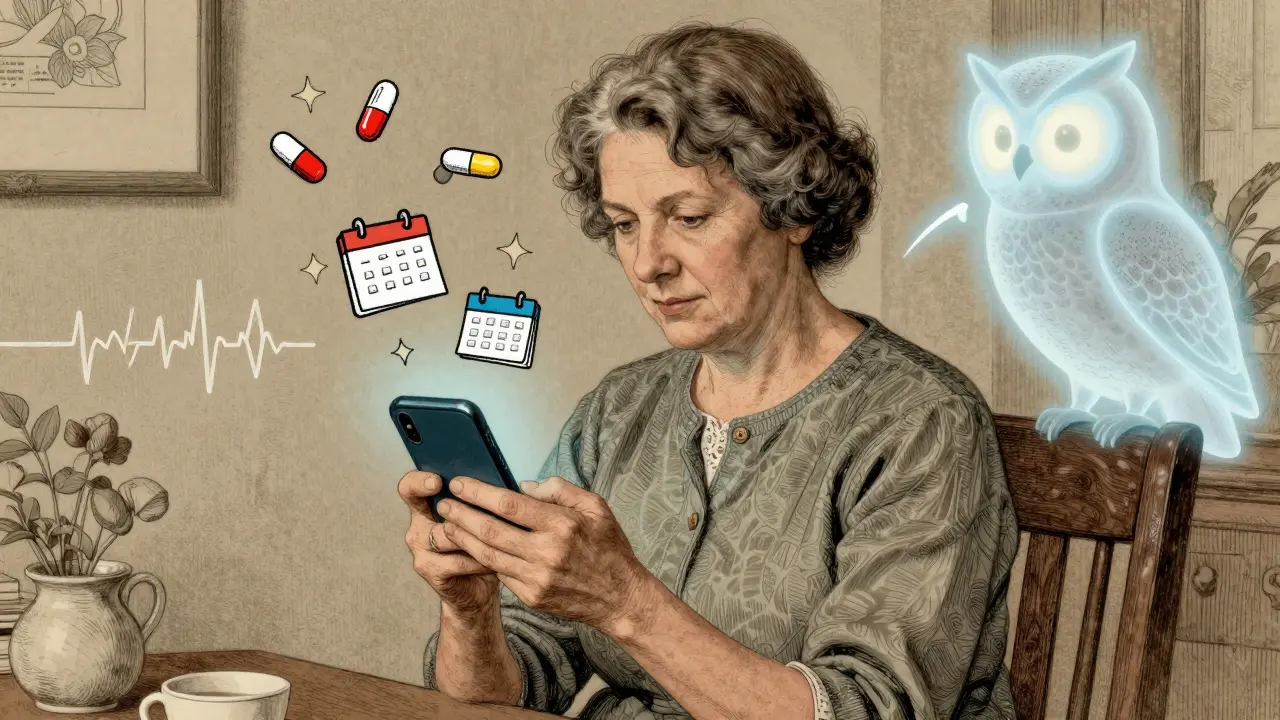
AI tools that listen, explain, and respond
AI isn’t just for chatbots anymore. New tools are being built to understand how patients think, not just what they say.
Snorkl, originally designed for classrooms, is now being used in clinics. Patients record themselves answering questions like, “What happens if you miss your insulin?” The AI listens to their words, watches their facial expressions, and gives feedback: “You mentioned feeling scared-that’s common. Let me explain how to handle that.” A pilot program at Johns Hopkins found patients using Snorkl understood their treatment 61% better than those who just read brochures.
But there’s a catch. A 2025 study in the Journal of Medical Internet Research found AI tools misinterpreted non-native English speakers 18% of the time. That’s why the best programs pair AI with human review-especially for high-risk patients.
What works better: apps or e-learning platforms?
It’s not an either/or question. The most successful patients use both.
Apps are for daily life: reminders, tracking, quick answers. E-learning platforms are for deeper understanding: building knowledge over weeks, not minutes.
For example, someone with type 2 diabetes might:
- Use MyTherapy to log meals and insulin doses daily.
- Take a MedBridge course on carb counting after their doctor’s visit.
- Watch a Healthline video on foot care before their next appointment.
- Ask Ada Health about a strange symptom they noticed.
This layered approach builds confidence. Patients stop feeling like passive recipients of care and start feeling like active managers of their health.
The hidden challenges: privacy, access, and tech fatigue
Not every patient can use these tools-and that’s a problem.
One in four older adults doesn’t own a smartphone. Rural patients often lack reliable internet. And many patients are overwhelmed by tech. A 2025 survey by the National Association of Community Health Centers found that 63% of patients spent over two hours a week just trying to get apps to work.
Here’s what helps:
- Choose tools that work on basic phones (no app download needed).
- Use platforms with voice navigation (like Healthline’s audio summaries).
- Ask your clinic if they offer tech support. Many now have “digital health navigators” who help patients set up accounts.
Privacy is another concern. In 2025, over 240 health apps were found to share user data with advertisers. Stick to tools from trusted sources: hospitals, universities, or nonprofits. Avoid apps that ask for unnecessary permissions like your contacts or location.
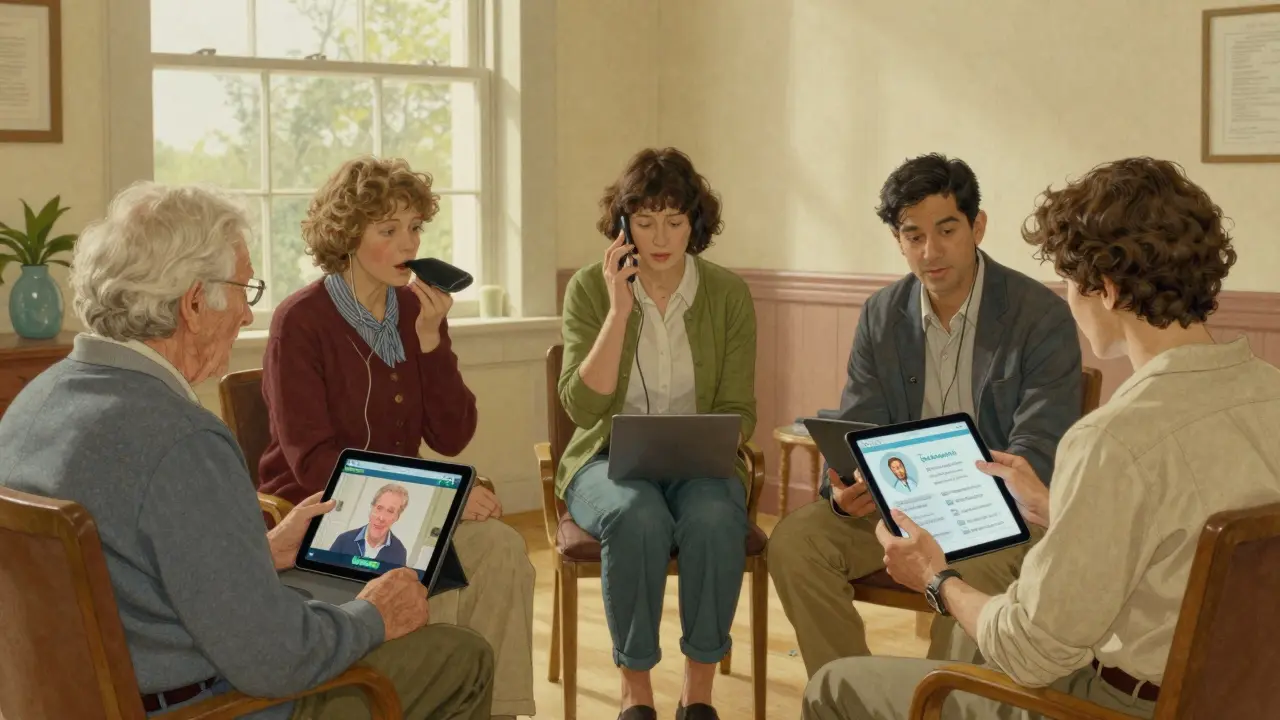
How to pick the right tool for you
Don’t download ten apps and hope one sticks. Start small.
Ask yourself:
- What’s my biggest challenge? (Remembering meds? Understanding test results? Knowing when to call the doctor?)
- Do I prefer videos, text, or talking to someone?
- Do I have a stable internet connection?
Then try one tool for two weeks. If it doesn’t fit, switch. There’s no shame in that. The goal isn’t to use every app-it’s to feel more in control.
Many clinics now offer free trials of platforms like MedBridge or PatientsLikeMe. Ask your provider. They might already have a license you can use.
The future of patient education: smarter, simpler, and more human
By 2027, AI tutors will help explain complex treatments before you even meet your doctor. AR glasses might show you how a pill works inside your body. Blockchain could let you own and share your health records securely.
But the real win won’t be in the tech-it’ll be in the outcome. When patients understand their condition, they make better choices. When they feel heard, they trust their care team. And when they don’t have to guess what their doctor meant, they live longer, healthier lives.
The tools are here. The question isn’t whether to use them-it’s which one will help you the most.
Are free patient education apps safe to use?
Some are, some aren’t. Free apps from trusted organizations like the American Heart Association, Mayo Clinic, or Khan Academy are generally safe. Avoid apps that ask for your Social Security number, insurance details, or access to your contacts. Always check the privacy policy-look for mentions of HIPAA compliance or data encryption.
Can digital tools replace doctor visits?
No. Digital tools help you prepare for visits, understand your condition, and track progress-but they can’t replace physical exams, lab tests, or professional judgment. Think of them as your personal health assistant, not your doctor.
What if I’m not good with technology?
You don’t need to be tech-savvy. Start with voice-based tools like Healthline’s audio summaries or ask your clinic if they offer in-person tech help. Many hospitals now have staff trained to walk patients through apps on a tablet during visits. Take your time-learning to use one tool well is better than struggling with five.
Do these tools work for older adults?
Yes, especially if they’re designed for them. Apps like Khan Academy Kids use large buttons and simple animations-perfect for seniors. MyTherapy lets you set reminders with voice alerts. Healthline offers text-to-speech for articles. The key is choosing tools built with older users in mind, not just repurposed apps for young adults.
How do I know if a tool is actually helping me?
Look for changes in your daily life. Are you remembering your meds better? Do you understand your test results? Are you asking better questions at appointments? If you feel more confident and less anxious about your health, the tool is working. Track it for 30 days and talk to your provider about what you’ve noticed.
Next steps: Start with one tool
Don’t try to use everything at once. Pick one area where you need help-maybe remembering pills, understanding your diagnosis, or knowing when to call your doctor. Then find one app or platform that focuses on that. Try it for two weeks. If it doesn’t fit, try another. The right tool will make you feel more in control-not more stressed.
Your health is too important to leave to guesswork. Digital tools are here to help you take charge. You just need to pick the right one.
Lisa Rodriguez
January 31, 2026 AT 07:49My grandma started using MyTherapy last year after her hip surgery. She didn’t know how to use a smartphone, but the voice reminders and big buttons made all the difference. Now she checks in every morning like clockwork. No more missed meds. No more panic calls to the clinic. Just calm, steady progress.
It’s not about tech-it’s about design. If it doesn’t feel human, it won’t stick.
Naresh L
January 31, 2026 AT 09:52I’ve been using Ada Health for my father’s hypertension. He’s 72, speaks Hindi mostly, and hates reading. The app translates the explanations into simple English with voice playback. He doesn’t say much, but I’ve noticed he’s asking better questions at appointments now.
It’s not perfect. The AI still trips on accents. But when paired with a nurse who checks in weekly? It’s magic.
Sami Sahil
January 31, 2026 AT 10:07bro i tried 5 of these apps and all of them kept crashing on my old samsung j7. i just use google translate to read my doctor’s notes now. at least it dont ask for my contacts or track my location. why do these apps think i want to be monitored 24/7?
also why is every health app named something like ‘MyTherapy’ or ‘HealthMate’? it’s like they all stole the same naming handbook.
franklin hillary
February 1, 2026 AT 17:12Let’s be real-the real win here isn’t the apps. It’s the shift in power. For decades, patients were told what to do and given a pamphlet. Now? We’re being given tools to ask better questions, track our own data, and push back when something doesn’t feel right.
That’s not just education. That’s empowerment.
And yeah, some tools suck. But the ones that work? They turn patients into partners. And that changes everything.
Rachel Liew
February 3, 2026 AT 03:21i just started using healthline’s audio summaries and i cried the first time. my mom had alzheimers and she used to get so scared when the doctor said ‘hypertensive crisis’ or ‘renal insufficiency.’ now i can play her the audio version and she actually understands. she says ‘ohhh that’s what that means.’
thank you for making this easy. no jargon. no pressure. just clear, kind words.
Nicki Aries
February 4, 2026 AT 23:56I’ve been a nurse for 22 years. I’ve seen patients drown in brochures. I’ve seen them Google symptoms and panic for three days. I’ve seen them skip doses because they didn’t understand why they were taking them.
These tools? They’re not ‘nice to have.’ They’re essential. And the fact that they’re finally being designed with empathy-instead of just features-is the most hopeful thing I’ve seen in healthcare in a decade.
Don’t just download an app. Ask your clinic if they offer digital health coaching. Many do. And if they don’t? Push them. This isn’t optional anymore.
Patients deserve to understand. Not just be told.
Ed Di Cristofaro
February 5, 2026 AT 13:27Of course it works. You’re telling people to use apps instead of listening to their doctors. That’s how you get people self-diagnosing cancer from a chatbot.
My cousin used Ada Health and thought she had a brain tumor because it said ‘possible neurological involvement.’ She showed up at the ER in tears. Turned out it was a sinus infection.
AI doesn’t care if you’re scared. It just gives you options. That’s not healthcare. That’s gambling with your life.
Bryan Coleman
February 7, 2026 AT 00:55My brother works at a rural clinic in Nebraska. They hand out tablets with preloaded MedBridge modules to every post-op patient. No internet needed. No login. Just tap and watch.
Readmissions dropped 40%. Staff say patients come in saying ‘I watched the video on wound care’ instead of ‘I didn’t know what to do.’
It’s not fancy. It’s not AI. It’s just clear video + simple access. Sometimes the best tech is the one you don’t have to think about.
Lilliana Lowe
February 8, 2026 AT 20:27Let’s not romanticize this. Most of these apps are either grossly oversimplified or dangerously reductive. Khan Academy Kids? For older adults? That’s condescending, not helpful. And Healthline’s readability scores? They’re based on Flesch-Kincaid, which ignores cognitive load, cultural context, and literacy barriers beyond vocabulary.
And don’t get me started on Ada Health’s ‘AI feedback’-it’s trained on data from 20-year-old college students. It doesn’t know what ‘chest tightness’ means to a 70-year-old with COPD.
These aren’t tools. They’re marketing gimmicks dressed up as innovation.
vivian papadatu
February 9, 2026 AT 19:31Just tried Snorkl with my mom after her stroke. She’s nonverbal most days. The AI picked up her sighs, her hesitation, her hand gestures-and said, ‘You’re scared you won’t get better. That’s normal. Let me show you how others got stronger.’
She cried. I cried.
It didn’t diagnose. It didn’t fix. It just… saw her.
That’s what we’ve been missing.
❤️
Melissa Melville
February 10, 2026 AT 09:06So let me get this straight. We’re supposed to trust AI to explain insulin to my 80-year-old aunt, but we’re not allowed to use her phone’s autocorrect? 🤡
Also, why does every health app look like it was designed by a 14-year-old who just discovered Material Design?
Can we please have one that doesn’t look like a TikTok filter?
Deep Rank
February 10, 2026 AT 20:10Okay but have you considered that these tools are just another way for corporations to collect your health data and sell it to pharma? Every single app asks for permissions they don’t need. Your location? Your contacts? Your calendar? Why? Because they want to know when you’re sick, when you’re lonely, when you’re vulnerable. And then they target you with ads for drugs you don’t need.
And don’t even get me started on how these platforms ignore socioeconomic reality. You think my cousin in rural Mississippi has Wi-Fi strong enough for MedBridge? Or that her phone can handle video playback? No. She’s still getting paper instructions from a nurse who’s overworked and underpaid.
These aren’t solutions. They’re distractions. They make the system feel like it’s doing something while the real problems-underfunded clinics, lack of training, poverty-are ignored.
It’s digital washing. And it’s dangerous.
Jamie Allan Brown
February 12, 2026 AT 11:17I’m from the UK. We’ve had NHS Digital Health Hubs for years. They’re not flashy. No AI. No gamification. Just a quiet room, a tablet, and a trained volunteer who sits with you and walks through one app at a time.
It’s slow. It’s human. It’s not sexy.
But it works.
Maybe the real innovation isn’t the tech-it’s the patience to help someone use it.
franklin hillary
February 13, 2026 AT 13:15Just read the comment about Snorkl. That’s the future right there. Not the AI diagnosing. Not the app tracking. But the AI noticing silence. The AI recognizing fear in a sigh.
That’s not machine learning. That’s machine empathy.
And if we can scale that? We won’t just improve outcomes-we’ll restore dignity.
That’s worth every line of code.