
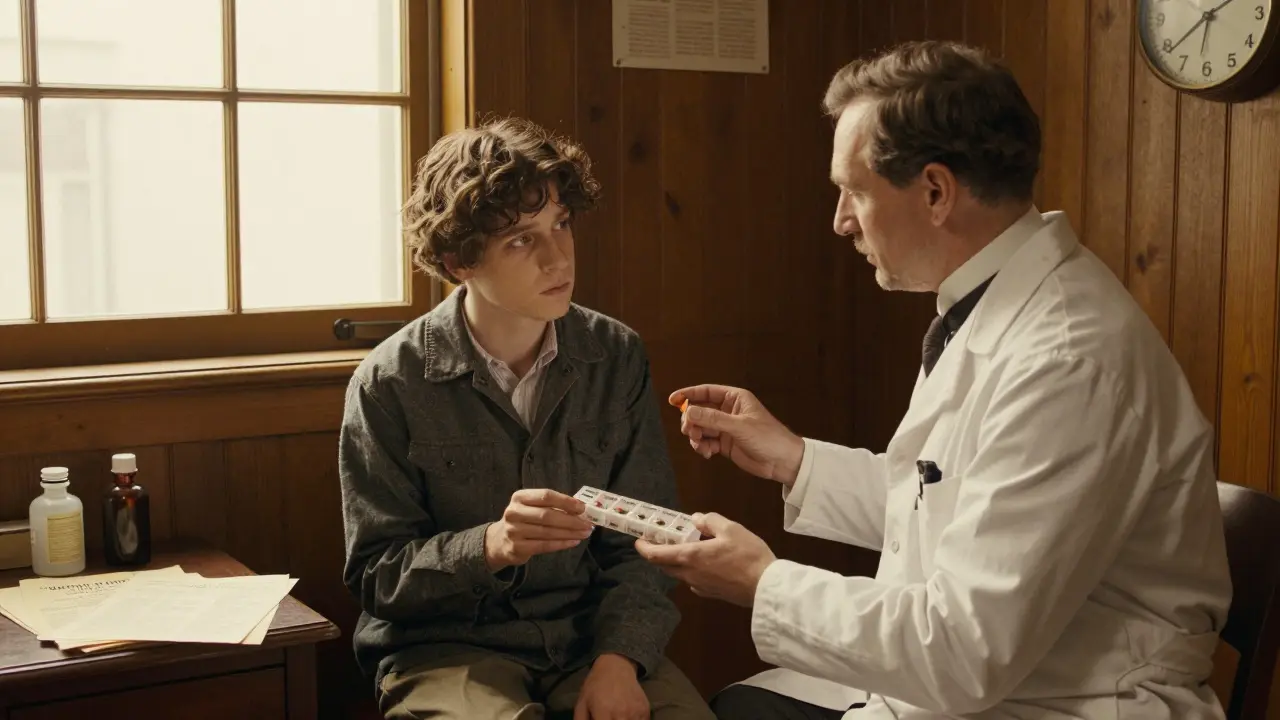
What You Need to Know About Contrast Dye Reactions
When you get a CT scan or other imaging test that uses contrast dye, most people have no issues. But for some, that dye can trigger a reaction-ranging from a mild rash to a life-threatening emergency. The good news? If you’ve had a reaction before, or you’re at higher risk, there’s a clear, proven way to reduce that risk: pre-medication. It’s not a guarantee, but it cuts your chance of another reaction by over 90% in most cases.
Who Needs Pre-Medication?
Not everyone needs it. If you’ve never had a reaction to contrast dye, you likely don’t need any special steps. But if you’ve had a prior allergic-type reaction-like hives, swelling, trouble breathing, or vomiting-your risk of another one jumps to about 35%. That’s why doctors recommend pre-medication for anyone with a history of moderate to severe reactions.
Here’s the catch: not all reactions count. If you got a little nausea or a warm flush during a scan, that’s usually not an allergic reaction. Mild symptoms like that don’t automatically mean you need steroids and antihistamines. Studies show those patients have almost the same risk as someone with no history at all.
And no, being allergic to shellfish or iodine doesn’t make you more likely to react to contrast dye. That’s a myth that’s been around for decades. The iodine in seafood is totally different from the iodine in contrast agents. Same goes for Betadine. If you’ve had a reaction to any of those, you’re not automatically at higher risk. Only prior reactions to contrast dye itself matter.
The Two Main Premedication Protocols
There are two standard ways to pre-medicate, and which one you get depends on whether you’re having the scan scheduled in advance or in an emergency.
Oral Protocol (For Elective Scans)
If your CT scan is planned-say, for a tumor check or a kidney evaluation-you’ll usually get an oral regimen that starts a full day before. This is the classic 13-hour protocol:
- Prednisone 50 mg by mouth at 13 hours before the scan
- Prednisone 50 mg again at 7 hours before
- Prednisone 50 mg one more time at 1 hour before
- Diphenhydramine (Benadryl) 50 mg by mouth at 1 hour before
This works well, but Benadryl makes you sleepy. So you need someone to drive you to and from the appointment. No exceptions. If you don’t have a ride, they’ll reschedule.
IV Protocol (For Emergencies or Hospitalized Patients)
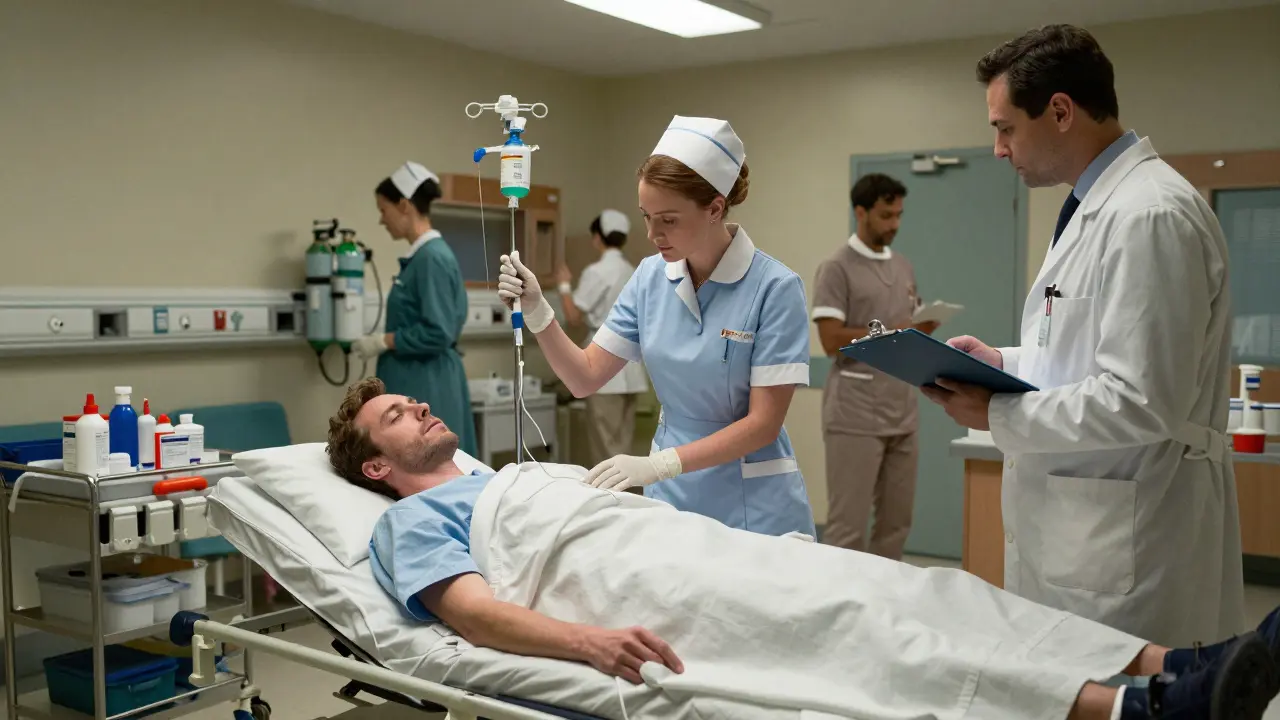
If you’re in the ER or already in the hospital and need a scan right away, you can’t wait 13 hours. That’s where IV premedication comes in. Two options are commonly used:
- Methylprednisolone 40 mg IV, then again every 4 hours until the scan, plus diphenhydramine 50 mg IV one hour before
- Hydrocortisone 200 mg IV, then every 4 hours until the scan, plus diphenhydramine 50 mg IV one hour before
Both are fast-acting and effective. The IV route bypasses the gut, so it works even if you’re nauseous or can’t swallow.
What If You Don’t Have 13 Hours?
Life doesn’t always wait. Sometimes you need a scan urgently-maybe you’re having internal bleeding or a possible stroke. That’s where newer protocols come in. A 2017 study published in Radiology showed that a 5-hour oral regimen works just as well:
- Methylprednisolone 32 mg by mouth at 5 hours before
- Methylprednisolone 32 mg again at 1 hour before
- Diphenhydramine 50 mg by mouth at 1 hour before
This is now widely used in trauma centers and busy hospitals. It’s not perfect-most data still comes from the 13-hour version-but it’s the best option when time is tight. And yes, you still need a driver if you take Benadryl.
What About Kids?
Children react less often than adults, but they’re not immune. For kids 6 and older who need pre-medication, doctors usually skip the steroids and go straight to an antihistamine:
- Cetirizine (Zyrtec) 10 mg by mouth one hour before the scan
It’s safer, easier to swallow, and doesn’t cause drowsiness like Benadryl. For younger kids, the dose is adjusted by weight, and the decision is made case by case with the radiologist and pediatrician.
Switching Contrast Agents: A Simpler Alternative?
Here’s something many people don’t know: if you had a reaction to one type of contrast dye, switching to a different brand or formulation within the same class can be just as effective as pre-medication. A 2021 study showed that for some patients, changing the agent reduced recurrence rates to the same low level as pre-medication.
That’s why top hospitals now recommend this as a first step: if you had a reaction to Iohexol, try Ioversol next time. It’s not a magic fix-some people react to everything-but for others, it’s a way to avoid steroids and antihistamines entirely.
Safety Planning: It’s Not Just About the Pills
Premedication is only half the story. The real safety plan includes:
- Only having the scan at a facility with trained staff and emergency equipment nearby
- Ensuring a crash cart and defibrillator are immediately available
- Having a radiologist consulted before scheduling if you have a prior reaction history
- Documenting the reaction type and timing in your medical record
At places like UCLA and UCSF, patients with severe past reactions are only scanned at major hospitals-not outpatient centers. Why? Because if you go into cardiac arrest, you need a full code team in under 60 seconds. Outpatient clinics don’t always have that.
And yes, you’ll be asked if you have someone to drive you home. No ride? No scan. It’s not bureaucracy-it’s survival.

What Happens If You Still React?
Even with all the right steps, about 2% of pre-medicated patients still have a reaction. That’s why you’re monitored during and after the scan. Most reactions happen within 5 to 20 minutes after the dye is injected. If you feel flushing, itching, or tightness in your chest, tell the tech right away. They’re trained to stop the injection and treat you on the spot.
Severe reactions-like low blood pressure, swelling of the throat, or trouble breathing-are rare but real. That’s why every imaging department must have emergency meds ready: epinephrine, oxygen, IV fluids, and airway tools. The Joint Commission requires this. It’s not optional.
The Bottom Line
Contrast dye reactions are scary, but they’re manageable. If you’ve had one before, you’re not stuck avoiding scans forever. With the right pre-medication, proper planning, and a smart choice of contrast agent, you can get the imaging you need safely.
Don’t let myths hold you back. Shellfish allergies? Doesn’t matter. Mild reaction last time? Might not need anything. But if you’ve had trouble breathing or swelling before-don’t skip the prep. It’s the difference between a minor inconvenience and a trip to the ICU.
And if your doctor says you need pre-medication, ask: Which protocol? Why this one? Can we switch the dye instead? Being informed gives you control. And control means safety.
Frequently Asked Questions
Do I need pre-medication if I had a mild reaction to contrast dye before?
Not usually. Mild reactions-like a brief rash, warm feeling, or nausea-are common and rarely repeat. Studies show the chance of another mild reaction is only about 2-3%, similar to someone with no history. Most guidelines don’t recommend pre-medication unless you had hives, swelling, breathing trouble, or low blood pressure.
Can I take Benadryl the night before instead of the morning of?
No. Benadryl only works if it’s in your system right before the dye is given. Taking it the night before means it’s mostly cleared from your body by the time of the scan. The timing matters: it needs to be given 1 hour before contrast to reach peak levels in your blood. If you take it too early, it won’t help.
Is it safe to get contrast dye if I’m pregnant?
Iodinated contrast dye can cross the placenta, but there’s no strong evidence it harms the fetus. The bigger concern is whether the scan is truly necessary. If your doctor says you need it-for example, to check for a blood clot or internal injury-the benefits usually outweigh the risks. Premedication isn’t typically used in pregnancy unless you have a prior severe reaction. Always talk to your OB and the radiologist together.
Can I use an over-the-counter antihistamine instead of Benadryl?
Not reliably. Benadryl (diphenhydramine) is the only antihistamine with enough evidence to support its use in contrast premedication. Other OTC options like cetirizine or loratadine haven’t been studied enough for this purpose. In children, cetirizine is used, but in adults, Benadryl is the standard. Don’t substitute without checking with your doctor.
Why do I need a driver if I take Benadryl?
Benadryl causes drowsiness, dizziness, and slowed reaction time. You could fall, pass out, or have trouble driving safely-even if you feel fine. Studies show these effects last 4 to 6 hours. For your safety and others’, you must have someone drive you. If you don’t, the appointment will be canceled. It’s not about inconvenience-it’s about preventing accidents.
Does premedication work with modern contrast dyes?
It’s less clear than it used to be. Modern low-osmolar contrast dyes are much safer than the old ones. Reaction rates are now 10 times lower. Some experts argue premedication may not be as necessary today, especially for mild reactions. But for people with a history of severe reactions, the data still supports it. The ACR still recommends it in those cases, even if the evidence isn’t as strong as it was 20 years ago.