

If you're taking warfarin, even a daily glass of cranberry juice could be more dangerous than you think. It’s not just a healthy drink-it’s a potential trigger for serious bleeding. This isn’t speculation. It’s documented in hospitals, flagged by the FDA, and confirmed by doctors who see patients end up in the ER because their blood got too thin. And it’s happening to people who thought they were doing the right thing-trying to prevent urinary tract infections or just enjoying a tart, refreshing drink.
Why Warfarin Needs Stable Dosing
Warfarin is a blood thinner. It doesn’t dissolve clots. It stops new ones from forming. That’s why it’s prescribed for people with atrial fibrillation, deep vein thrombosis, or mechanical heart valves. But here’s the catch: the difference between a safe dose and a dangerous one is tiny. Doctors measure how well it’s working with a test called INR. A normal range is 2.0 to 3.0. Go above 4.0? You’re at risk of bleeding. Go above 6.0? You could bleed internally without warning.That’s why consistency matters. Take the same dose. Eat the same foods. Avoid sudden changes. Because even small shifts in how your body processes warfarin can send your INR soaring.
The Cranberry Connection
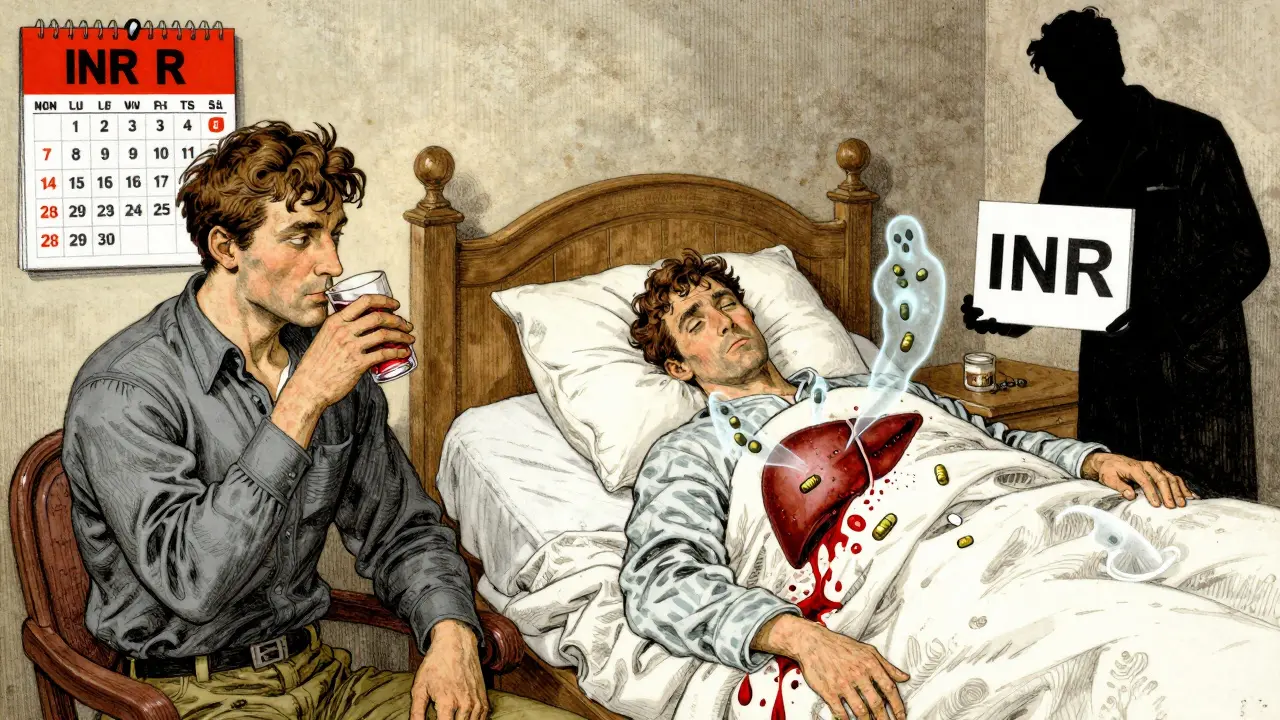
Cranberry products-juice, capsules, extracts, even flavored sodas-have been linked to dangerous spikes in INR since the early 2000s. The first major case report came out in 2003. Since then, dozens more have followed. One 78-year-old man in Los Angeles was stable on 45 mg of warfarin per week. Then he started drinking half a gallon of cranberry-apple juice every week. His INR jumped to 6.45. He almost bled out.It’s not just juice. One woman took cranberry capsules for UTI prevention. Within 10 days, her INR climbed from 2.5 to 8.3. She ended up with gastrointestinal bleeding. Another patient’s INR went from 2.4 to 4.1 in just one week after starting daily cranberry juice. Her hematologist told her to stop immediately.
The problem isn’t the sugar or the acidity. It’s the chemicals inside cranberries-flavonoids like quercetin. These compounds block an enzyme in your liver called CYP2C9. That enzyme is responsible for breaking down the active part of warfarin. When it’s blocked, warfarin builds up in your blood. More warfarin = thinner blood = higher bleeding risk.
What Does the Science Say?
You might hear conflicting advice. Some studies say cranberry doesn’t affect warfarin. Others say it’s a major risk. Why the confusion?Because not all cranberry products are the same. A 100% pure cranberry extract has way more of the active compounds than a sweetened juice cocktail. Some people metabolize warfarin faster due to genetics. Others are slow metabolizers-and for them, even a small amount of cranberry can be dangerous.
The FDA added a warning to warfarin labels in 2005. Health Canada did the same in 2008. The European Medicines Agency listed cranberry as a substance to avoid with anticoagulants in 2015. New Zealand’s Medsafe updated its warning in December 2022, citing 33 reports of food and supplement interactions with warfarin in just one year.
And here’s the kicker: the Merck Manual, a trusted clinical reference used by doctors worldwide, now says bluntly: “People taking warfarin should avoid cranberry products.”

How Much Is Too Much?
There’s no safe amount. Some patients report problems after drinking just 150 mL (about half a cup) of cranberry juice daily. Others only see spikes after consuming 500 mL or more. But even if you’ve had cranberry juice for years without issues, that doesn’t mean it’s safe. Your body changes. Your liver function changes. Your other medications change. A once-harmless habit can suddenly become dangerous.And it’s not just juice. Cranberry capsules, gummies, extracts, and even cranberry-flavored teas or sports drinks can contain enough active compounds to interfere with warfarin. Sweetened juice cocktails? They’re often more concentrated than you think-manufacturers add cranberry extract to make them tart, not just sugar.
What Should You Do?
If you’re on warfarin, the safest choice is simple: avoid all cranberry products. Full stop.That includes:
- Cranberry juice (even 100% pure)
- Cranberry capsules or tablets
- Cranberry extract supplements
- Cranberry-flavored sodas, teas, or snacks
- Cranberry sauce or dried cranberries in large amounts
If you’ve been using cranberry products to prevent UTIs, talk to your doctor about alternatives. Methenamine hippurate, low-dose antibiotics, or simply drinking more water are proven options with no interaction risk.
If you’ve already started cranberry products and are on warfarin, stop immediately and get your INR checked within 3-5 days. Don’t wait for symptoms. Bleeding doesn’t always come with warning signs.
What If You Can’t Quit?
Some patients insist they’ve been drinking cranberry juice for years with no problems. That’s possible-but risky. If you absolutely refuse to give it up, here’s what your doctor will expect:- Stop all other cranberry products. Only one consistent form-say, 250 mL of juice daily.
- Never change the amount or type. No switching from juice to pills.
- Get INR tested weekly, not every four weeks.
- Report any bruising, nosebleeds, dark stools, or unusual headaches right away.
Even then, this is not recommended. The American Heart Association and the American College of Chest Physicians both say complete avoidance is the only reliable approach.
What About New Blood Thinners?
Good news: newer anticoagulants like apixaban (Eliquis), rivaroxaban (Xarelto), and dabigatran (Pradaxa) don’t interact with cranberry. They work differently. No CYP2C9 involvement. No need to avoid cranberry.But here’s the catch: not everyone can switch. Warfarin is still used for mechanical heart valves, severe kidney disease, or when cost is a barrier. About 2.5 million Americans still take it. And in places like Australia, Canada, and the UK, it’s still widely prescribed.
If you’re on a newer drug, you’re probably fine. But if you’re on warfarin, don’t assume you’re safe just because you’ve heard “it’s outdated.” Your doctor chose it for a reason. And cranberry still poses a real threat.
Final Reality Check
This isn’t about fear. It’s about control. Warfarin works best when your life is predictable. A glass of cranberry juice might seem harmless. But for someone on warfarin, it’s like adding a hidden variable to a precise equation. You can’t predict the outcome.Doctors see the results. A man with a brain bleed after months of daily cranberry juice. A woman with a gastrointestinal hemorrhage who didn’t realize cranberry was the cause. A patient whose INR spiked after switching from one brand of juice to another-because the new one had more extract.
It’s not rare. It’s not theoretical. It’s happening right now.
Don’t gamble with your blood. If you’re on warfarin, skip the cranberry. Your body will thank you.
Mohammed Rizvi
January 25, 2026 AT 11:09Cranberry juice and warfarin? That’s like putting a match to a fireworks factory and calling it a healthy habit. I’ve seen patients come in with INRs over 8, all because they thought ‘natural’ meant ‘safe.’ It’s not. It’s pharmacology, not a yoga retreat.
Karen Droege
January 27, 2026 AT 09:11As a nurse in Ottawa, I’ve had three patients in the last year with GI bleeds tied directly to cranberry supplements they bought online ‘for UTIs.’ One was 82, lived alone, and didn’t even know cranberry could interact with meds. We had to educate the whole family. This isn’t just a warning-it’s a public health blind spot. If you’re on warfarin, treat cranberry like radioactive material. Avoid it. Period.
Neil Thorogood
January 27, 2026 AT 12:13So let me get this straight… I can drink 10 energy drinks, smoke a pack, and down whiskey like water… but one glass of cranberry juice and I’m one sneeze away from a brain bleed? 🤦♂️
TONY ADAMS
January 27, 2026 AT 15:25Man I used to drink cranberry juice every day. I’m on warfarin too. Never had a problem. You people are just scared of everything now. Maybe your liver’s weak, not the juice.
George Rahn
January 28, 2026 AT 22:26It is not merely a pharmacological interaction-it is a metaphysical betrayal of the body’s natural equilibrium. The cranberry, a fruit of the New World, has been weaponized by modern pharmacology to undermine the ancient covenant between man and his blood. The FDA, in its bureaucratic wisdom, has merely codified the inevitable collapse of intuitive health into algorithmic fear. We are not patients. We are data points in a pharmaceutical dystopia.
Ashley Porter
January 30, 2026 AT 09:14Interesting. The CYP2C9 inhibition mechanism is well-documented, but the clinical significance is heterogenous across genotypes. Some studies show negligible INR changes with low-dose cranberry, especially in rapid metabolizers. The real issue is inconsistent product formulation-commercial juices vary wildly in proanthocyanidin content. Standardization is the missing piece.
Peter Sharplin
January 31, 2026 AT 07:56I’ve been on warfarin for 12 years after a pulmonary embolism. I stopped cranberry juice cold turkey after my doc showed me a chart of my INR spiking every time I drank it. It’s not about fear-it’s about predictability. My INR stays stable because my life is simple: same dose, same meals, no surprises. Cranberry juice? It’s a surprise. And surprises kill people on warfarin. Don’t risk it.
Shweta Deshpande
February 1, 2026 AT 02:31I’m from India and we don’t even drink cranberry juice here-it’s expensive and weirdly sour! But my cousin in Toronto told me her mom had a bleed after starting cranberry pills. I showed her this post and she cried because she didn’t know. We need to spread this info more, especially in immigrant communities where ‘natural remedies’ are trusted more than doctors. Please share this with your elders.
Simran Kaur
February 2, 2026 AT 02:40My aunt in Punjab used to drink cranberry juice for ‘cleaning her blood’-she had a mechanical valve and was on warfarin. She didn’t understand English, and the pharmacist didn’t warn her. When she had a nosebleed that wouldn’t stop, we rushed her. INR was 9.2. She’s fine now, but I’ll never let my family touch cranberry again. This isn’t a ‘maybe’-it’s a ‘don’t even think about it.’
Jessica Knuteson
February 2, 2026 AT 13:18Robin Van Emous
February 3, 2026 AT 21:15I respect that everyone has their own experience. My uncle took cranberry for years and never had an issue. But I also know someone who almost died from it. So I don’t judge. I just say: if you’re on warfarin, talk to your pharmacist. Ask them to check for interactions. It’s free. It’s easy. And it might save your life. No shame in asking.
Curtis Younker
February 4, 2026 AT 21:53Let me tell you something real-this isn’t about cranberries. This is about taking control of your health. You think it’s just a juice? Nah. It’s a test. Are you going to be the person who says ‘I’m fine’ and ignores the warning signs? Or are you going to be the person who says ‘I’m worth more than a habit’? I’ve seen people come back from the edge. I’ve seen them lose their independence because they thought ‘it’s just one glass.’ Don’t be that person. Your future self is begging you: stop. Just stop. Your body didn’t ask for this chaos. Give it peace.
Kipper Pickens
February 5, 2026 AT 18:28For those on DOACs like apixaban, cranberry is fine-no CYP2C9 interaction. But for warfarin patients, the risk is real and well-documented in multiple international guidelines. The inconsistency in product formulation (juice vs. capsules vs. extracts) makes it impossible to establish a ‘safe threshold.’ Therefore, avoidance remains the only evidence-based recommendation. This isn’t opinion-it’s clinical consensus.