
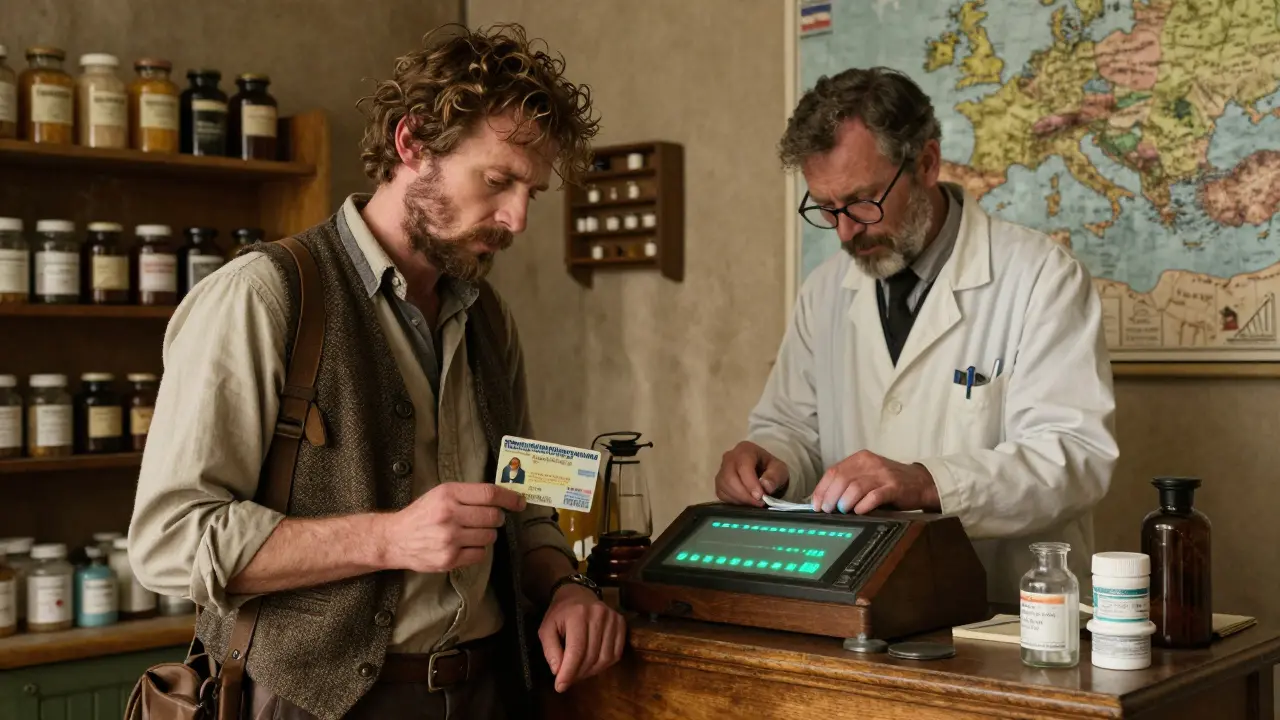
Imagine you’re on vacation in southern France and your asthma inhaler runs out. Back home, you have a valid prescription, but you’re not sure if you can fill it abroad. In 2026, this isn’t a hypothetical anymore - it’s a routine option for millions of EU citizens thanks to the EU cross-border pharmacy system. The reality, though, is messier than the official brochures suggest. While the framework exists, getting your medicine across borders still depends on where you are, who prescribed it, and whether the local pharmacist knows how to handle it.
How the EU cross-border pharmacy system actually works
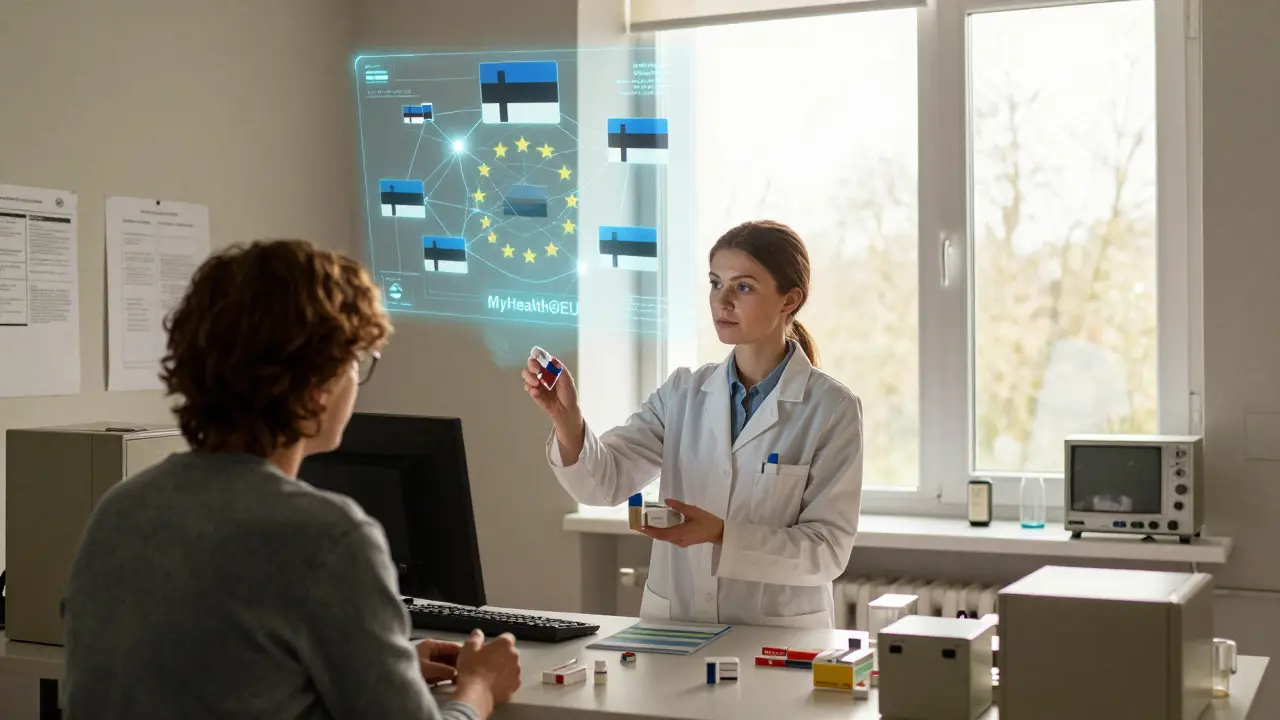
The backbone of this system is the ePrescription and electronic transfer of prescriptions between EU/EEA countries through the eHealth Digital Service Infrastructure (eHDSI). Since 2011, EU law has guaranteed patients the right to get their medications in any member state. But it wasn’t until 2025 that the infrastructure became truly operational across most of Europe. Today, 27 countries - including Germany, France, Austria, and Italy - allow pharmacists to access your prescription digitally, as long as your home country has enabled the service.The process is simple in theory: you log into your national health portal (like Germany’s eGK or France’s Ameli), authorize your prescription to be sent abroad, and then walk into a pharmacy in another EU country with your ID. The pharmacist pulls up your ePrescription through the MyHealth@EU secure cross-border health data exchange platform, checks your details, and dispenses the medication - same as if you were home.
But here’s where it gets tricky. Not every country uses the same system. Italy replaced paper prescription stickers with GS1 DataMatrix codes in February 2025. Germany uses a different digital signature standard. France’s portal requires two-factor authentication. If the pharmacy in Spain doesn’t recognize the format, they can’t process it. And if your home country hasn’t fully connected to the eHDSI network? Forget about it. Iceland is the last to join, with full integration set for August 2025.
What you can and can’t get across borders
The system works best for generic drugs - the same active ingredients, cheaper versions of brand-name meds. Common ones like metformin, lisinopril, or sertraline are widely available. But if you need a specialized biologic, a rare cancer drug, or a medication not approved in the country you’re in? You’re out of luck. The system doesn’t force countries to stock every drug - only to accept valid prescriptions for drugs they already have on their list.Even worse, some countries still block prescriptions from outside the EU. Ireland, for example, refuses all prescriptions from the UK, even if they’re issued by a licensed UK doctor. A patient in Dublin recently tried to refill their insulin after a trip to Manchester - the pharmacist rejected it outright. The reason? UK telehealth prescriptions don’t meet Ireland’s legal standards for prescriber verification. That’s not a glitch - it’s policy. And it’s not just Ireland. Austria and the Netherlands also have strict rules about prescriber registration and consultation method.
Then there’s the issue of dosage. A pill labeled 10mg in Germany might be 12.5mg in Poland. The active ingredient is the same, but the formulation differs. Pharmacists are supposed to check this, but many don’t have the training. A 2025 EAEP study found that 63% of pharmacists in non-border regions had never received formal training on cross-border prescription differences. That’s a recipe for errors - especially for elderly patients on multiple medications.
Why awareness is still shockingly low
You’d think everyone knows about this. You’d be wrong. According to the September 2025 Eurobarometer survey, only 38% of EU citizens even know they have the right to fill prescriptions abroad. That number jumps to 72% in places like the Dutch-German border, where cross-border pharmacies have been common for decades. But in rural Romania, Portugal, or Bulgaria? Most people assume they need to fly home or pay out of pocket.The disconnect isn’t just ignorance - it’s design. The system is built for health professionals, not patients. The EU provides technical manuals for pharmacists, but there’s no public-facing guide. No easy-to-read brochure. No YouTube video in 20 languages. The Patient Summaries feature - which translates your medical history into the local language - is available, but rarely used because patients don’t know to ask for it.
Even patients who know about it face friction. One Reddit user from Lithuania described spending 45 minutes in a Polish pharmacy while the pharmacist called three different authorities to verify her prescription. Another from Sweden said her ePrescription was rejected because the system flagged her as a "tourist" - even though she was on a six-month work assignment.
The hidden players: e-pharmacies and regulatory chaos
Behind the scenes, a new breed of e-pharmacies is pushing for expansion. The European Association of E-Pharmacies (EAEP) represents 120 digital pharmacies across 15 countries. They want to deliver generic drugs directly to your door, regardless of borders. Their 2025 Action Plan calls for pan-European prescription delivery, fair reimbursement, and telepharmacy access in rural zones.But national regulators aren’t on board. The UK’s General Pharmaceutical Council (GPhC) explicitly warns its members: "Distance services must comply with local rules first." That means a French e-pharmacy can’t legally ship to a German patient unless it’s registered in Germany. This creates a patchwork of rules. One pharmacy might accept your ePrescription. The next one down the street won’t. And there’s no central database to tell you which is which.
Meanwhile, the Critical Medicines Act of 2025 is forcing manufacturers to report supply shortages in real time. It’s meant to prevent drug shortages, but it’s also making pharmacists more cautious. If a medication is flagged as low-stock, they may refuse to dispense it - even if you have a valid prescription - because they don’t want to risk running out for local patients.
What you need to do to make it work
If you’re planning to use cross-border pharmacy services in 2026, here’s what actually helps:- Before you travel, check if your home country’s ePrescription system is active. Visit your national health portal - if it has a "cross-border" tab, you’re good.
- Bring your European Health Insurance Card (EHIC) and a physical copy of your prescription - just in case.
- Call the pharmacy ahead of time. Ask: "Do you accept ePrescriptions from [your country]?" Don’t assume.
- If you’re on a chronic medication, ask your doctor to issue a 3-month supply before you leave. Many countries limit foreign prescriptions to 30 days.
- For non-generic drugs, always confirm availability in the destination country. Use the European Medicines Agency’s public database to check if your drug is authorized there.
And if you’re a pharmacist? You need 40 hours of training. If you’re a policymaker? You need to stop treating this like a technical problem and start treating it like a patient service.
What’s next? The road to 2030
By 2030, the EU aims to cut medication access disparities by 35%. That means full integration of lab results, medical images, and hospital discharge summaries into the MyHealth@EU system. But that won’t happen without political will. Right now, countries like Hungary and Poland are dragging their feet on compliance. Others, like Estonia and Denmark, are leading the way with seamless digital health integration.The real test? When a diabetic in rural Slovakia needs insulin and the nearest pharmacy is 120 kilometers away - across the border in Austria. If the system works, she gets her medicine in 20 minutes. If it doesn’t? She waits. And that’s the difference between a policy that looks good on paper and one that actually saves lives.
Can I use my EU prescription in a non-EU country like the UK or Switzerland?
No. The EU cross-border system only works between EU and EEA countries (Iceland, Liechtenstein, Norway). The UK is no longer part of the system, and Switzerland has its own separate agreements. Even if you’re a UK citizen living in France, your UK prescription won’t be accepted in a French pharmacy unless it’s been reissued through the EU ePrescription network.
Do I need to pay extra for cross-border prescriptions?
You pay the same price as local patients - no extra fees. But reimbursement rules vary. If you’re from France and fill a prescription in Spain, you’ll pay the Spanish price upfront, then apply for reimbursement back in France. Some countries, like Germany, have direct billing agreements, so you pay nothing at the pharmacy. Always check your home country’s policy before you travel.
What if the pharmacy refuses my ePrescription?
Ask them to contact their national contact point for digital health. Every EU country has one. They can verify your prescription through the eHDSI portal. If they still refuse, ask for a written explanation - you have the right to appeal under Directive 2011/24/EU. File a complaint with your national health authority.
Can I get my prescription filled at a pharmacy I’ve never been to before?
Yes - as long as it’s a licensed pharmacy in an EU/EEA country and connected to the eHDSI network. You don’t need to be a regular customer. The system is designed so any pharmacy can access your record, provided you’ve authorized the transfer.
Are generic drugs the same across EU countries?
The active ingredient must be identical, but inactive ingredients (fillers, coatings, dyes) can differ. This rarely affects effectiveness, but can cause issues for people with allergies or sensitivities. Always check the pill’s appearance and ingredients list if you’ve had reactions before. Pharmacists are required to inform you if the formulation differs.