
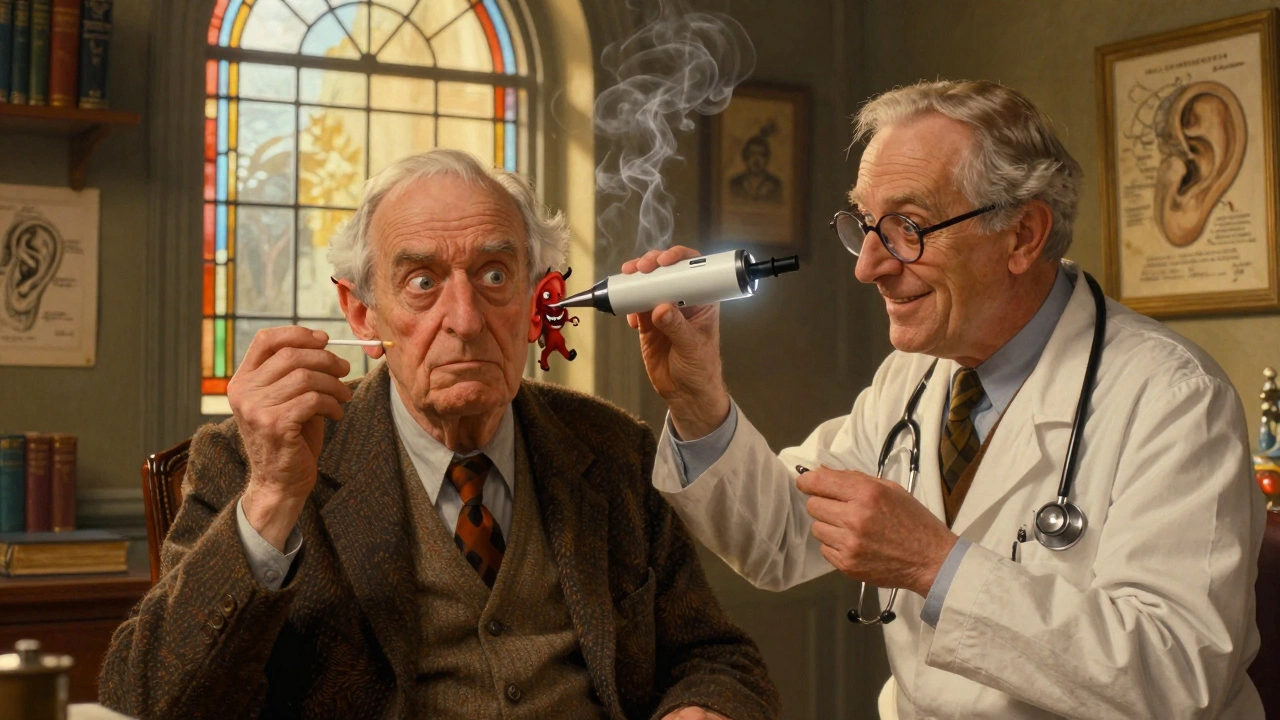
Most people think earwax is something to clean out - like dirt. But your ears aren’t dirty. They’re self-cleaning. The real problem isn’t too much wax. It’s earwax impaction - when that wax gets pushed deep, hardens, and blocks your ear canal. And it’s more common than you think. About 6% of adults deal with it every year. For people over 65, that number jumps to 14%. If you’ve felt like your ear is plugged, heard ringing, or noticed your hearing isn’t what it used to be, you might not have an infection. You might just have impacted cerumen.
What Does Earwax Impaction Actually Feel Like?
It doesn’t always start with pain. Often, it creeps up slowly. You might notice your TV volume creeping higher. Or you feel like your ear is full - like you’re underwater. That’s the most common sign: a sense of pressure or blockage. About 65% of people with impacted earwax report some degree of hearing loss. That’s not temporary muffled hearing. It’s real, measurable reduction in sound clarity. Other symptoms show up, too. Around 42% feel earache. Nearly 30% hear ringing (tinnitus). Dizziness hits 18% of cases. Even a persistent cough can be linked - the nerve that runs through your ear can trigger throat reflexes when blocked. Drainage or a strange smell? That’s a red flag. It could mean infection has set in because the wax trapped moisture and bacteria. The key thing to remember: not all earwax is bad. If you have wax in your ear but no symptoms, you don’t need to do anything. The ear naturally pushes wax out. You only need to act when it starts causing problems.Why Do People Keep Making It Worse?
Here’s the cruel irony: the thing most people do to fix it makes it worse. Cotton swabs. Q-tips. Bobby pins. Fingers. They don’t clean the ear. They push wax deeper. NHS England data shows 60-70% of impactions are caused by self-cleaning attempts. You think you’re removing wax. You’re just compacting it against your eardrum. Hearing aid users are especially at risk. The devices sit right in the ear canal and block the natural exit path for wax. About 35-40% of hearing aid wearers develop impaction over time. Older adults with more ear hair or narrower ear canals are also more likely to get stuck with it. And age plays a big role - wax gets drier and stickier as you get older. Then there’s the internet. TikTok is full of videos showing people using ear scoops, vacuum devices, or even candles to pull wax out. These aren’t just ineffective. They’re dangerous. The FDA reports over 12,500 ear injuries from home removal tools between 2018 and 2022. That includes 3,000 perforated eardrums. One wrong move with a cotton swab can rupture your eardrum. And once that’s done, it doesn’t always heal on its own.How Do Doctors Know It’s Impaction?
You can’t tell by looking. Even if you can see wax near the opening, that doesn’t mean it’s blocking your hearing. That’s why doctors use an otoscope - a small lighted tool that lets them see deep into the canal. A trained clinician can spot impaction with 98.7% accuracy. But they don’t just look. They check for symptoms too. The American Academy of Family Physicians says: no symptoms, no treatment needed. That’s important. Many people have wax buildup without any issues. That’s normal. They also rule out other causes. About 22% of people who think they have earwax impaction actually have something else - like swimmer’s ear, a cholesteatoma, or even jaw joint problems. Those need different treatments. That’s why self-diagnosis is risky. If you’re unsure, see a professional.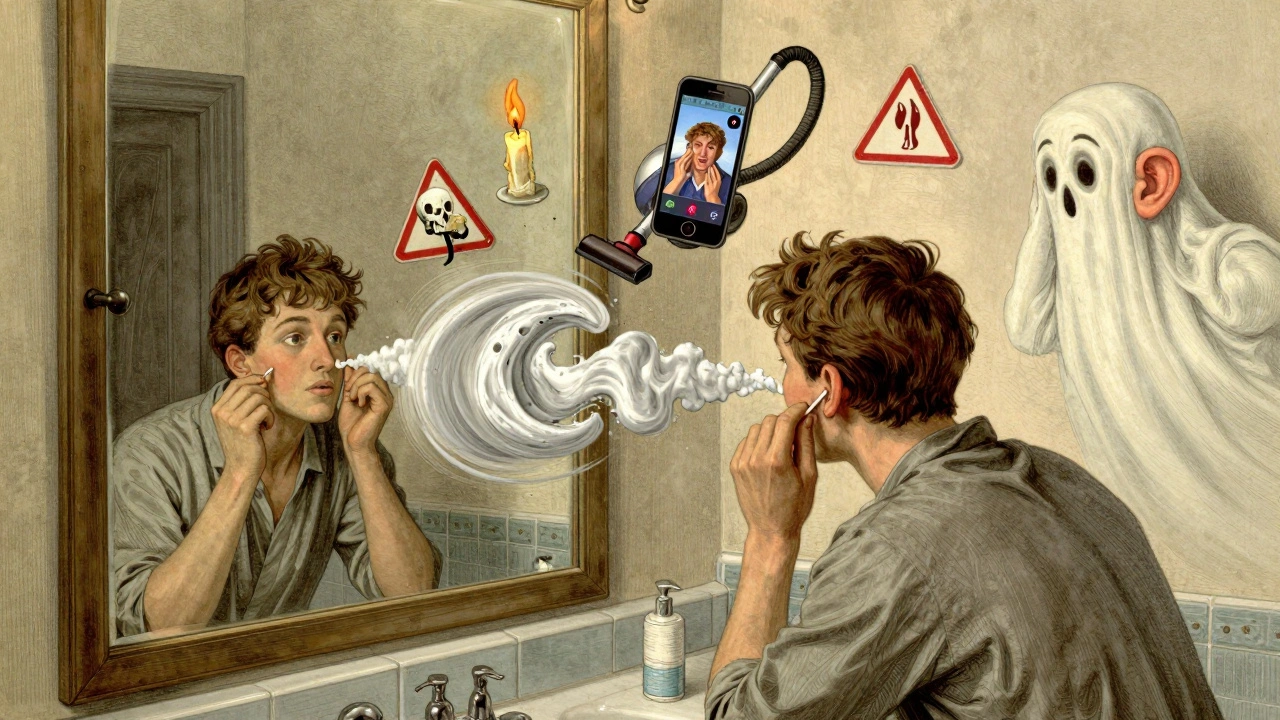
What Are the Safe Ways to Remove It?
There are three proven methods - and they’re all done by professionals or with doctor-approved steps. 1. Softening Drops (First Step)If the wax is hard and stuck, the first move is to soften it. Use olive oil, almond oil (if you’re not allergic), or glycerin. Put 2-3 drops in the ear, lie on your side for 5-10 minutes, then sit up. Do this 3-4 times a day for 3-5 days. This doesn’t remove the wax. It just makes it easier to clear later. Studies show this works about 58% of the time. Over-the-counter drops like Debrox (carbamide peroxide) work a bit better - around 65% success - but they can sting. Hydrogen peroxide? It’s less effective and irritates the skin inside the ear more often. 2. Professional Removal
If drops don’t work, or if symptoms are severe, you need a clinician. Here’s what they do:
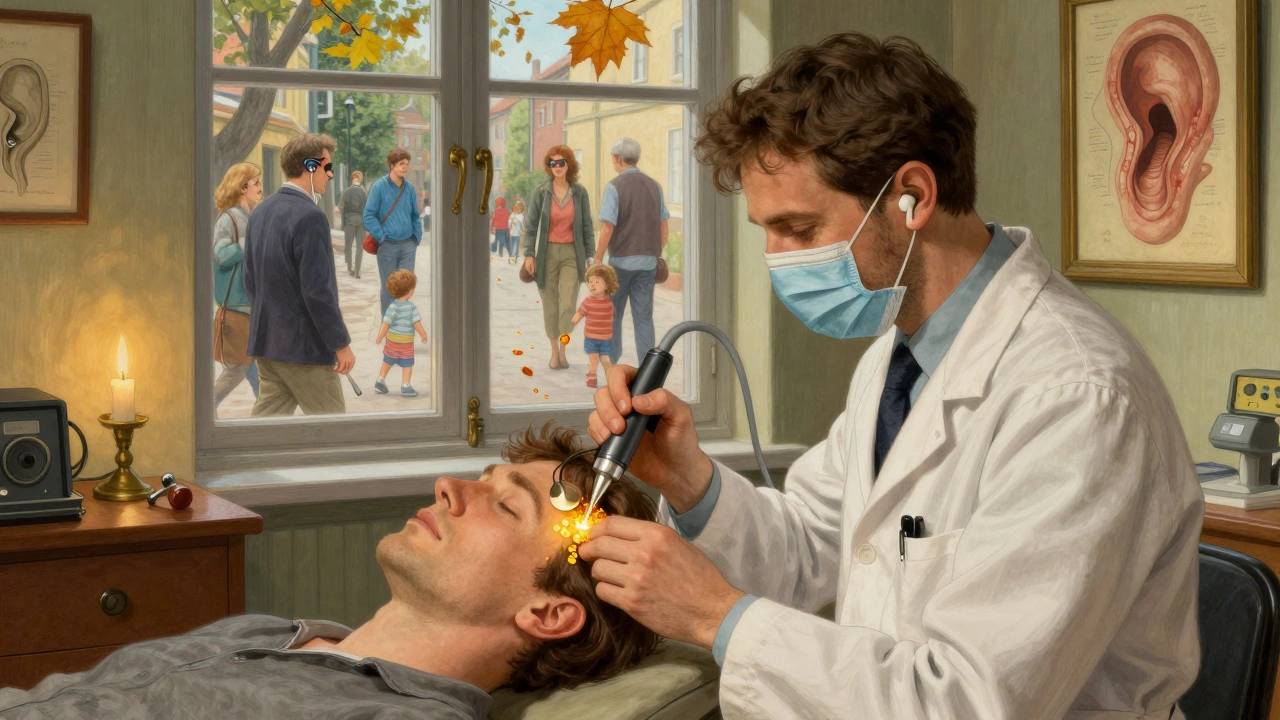
- Microsuction: This is the gold standard. A small vacuum gently pulls out the wax under direct view. It’s quick, dry, and safe. Success rate? 96%. Most patients feel immediate relief. Satisfaction rates on Trustpilot hit 92%.
- Manual removal: Using tiny tools called curettes or forceps, the doctor carefully scrapes or picks out the wax. Works in 92% of cases. Requires skill - but if done right, it’s very safe.
- Ear irrigation: Warm water or saline is gently flushed into the ear. Effective in 85% of cases. But it’s not for everyone. If you’ve ever had a perforated eardrum, ear surgery, or an active infection, skip this. It can push infection deeper or cause dizziness.
What Should You Never Do?
Forget the candles. Forget the ear vacuums. Forget the ear scoops you saw on Instagram. These aren’t just useless - they’re illegal in many places. The FDA has banned ear candles as misbranded medical devices since 2010. Why? Because they don’t work. And they cause burns, wax blockages, and eardrum tears. Also avoid these:- Inserting anything into your ear canal - even a finger.
- Using ear drops if you have a perforated eardrum or tubes.
- Trying to flush your ear with a syringe at home - too much pressure can rupture your eardrum.
When Should You See a Doctor?
Don’t wait until you’re in pain. See a professional if:- Your hearing has dropped suddenly or gotten worse over a few days.
- You have ear pain, dizziness, or ringing that won’t go away.
- You notice fluid, pus, or a bad smell coming from your ear.
- You wear hearing aids and notice feedback or muffled sound.
- You’ve tried oil drops for 5 days and nothing changed.
What’s Changing in Earwax Care?
New tools are coming. In 2023, the FDA cleared the Eareto OtoSonic - a prescription-only device that uses gentle ultrasound to soften wax at home. Early trials showed 78% effectiveness. It’s not a cure-all, but it’s a step toward safer at-home management. Doctors are also testing telehealth for earwax triage. A 2023 study showed that with a video call and a phone camera, clinicians could accurately spot impaction 89% of the time. That means you might not need to go in person for a simple check. But the biggest threat? Social media. Over 1.2 billion views on TikTok show people scraping, poking, and suctioning their ears. These videos aren’t educational. They’re dangerous. And they’re spreading fast.Final Thought: Your Ears Don’t Need Cleaning
You don’t need to clean your ears. Not daily. Not weekly. Not ever - unless you have symptoms. The ear is designed to push wax out on its own. Jaw movement, chewing, showering - all of it helps. Wax isn’t dirt. It’s a protective barrier. It traps dust, fights bacteria, and keeps your ear canal moist. The real issue isn’t wax. It’s interference. Trying to clean your ears is like trying to clean your lungs by poking a stick down your throat. You’re not helping. You’re hurting. If you’re having trouble hearing or feeling blocked, don’t guess. Don’t YouTube it. Don’t reach for a cotton swab. See a professional. It’s quick. It’s safe. And you’ll hear better the moment it’s done.Can earwax impaction cause permanent hearing loss?
No, earwax impaction doesn’t cause permanent hearing loss. The hearing loss it causes is temporary and fully reversible once the blockage is removed. However, if left untreated for a long time, it can lead to infections or damage to the eardrum - which, in rare cases, may result in lasting hearing issues. That’s why it’s important to get it checked if symptoms last more than a few days.
Is it safe to use hydrogen peroxide for earwax removal at home?
Hydrogen peroxide can help soften earwax, but it’s not the safest option. About 15% of users report irritation, burning, or itching inside the ear. It can also dry out the skin and make the ear more prone to infection. If you use it, stick to a 3% solution and only for a few days. Better alternatives are olive oil, mineral oil, or glycerin - gentler and just as effective for softening.
How often should I get my ears checked for wax buildup?
You don’t need routine checks unless you’re at higher risk. If you wear hearing aids, have narrow ear canals, are over 65, or have had impaction before, get checked once a year. Otherwise, only see a doctor if you have symptoms - like muffled hearing, ear fullness, or ringing. Most people never need professional cleaning.
Can children get earwax impaction too?
Yes, children can get impacted earwax - especially if they use cotton swabs or have developmental delays. Kids’ ear canals are smaller, so wax builds up faster. If your child is pulling at their ears, not responding to sounds, or seems to have hearing trouble, see a pediatrician. Never try to remove wax from a child’s ear at home. Professional removal is always safer.
What’s the difference between microsuction and ear irrigation?
Microsuction uses a gentle vacuum to remove wax without water. It’s dry, quick, and safe even if you’ve had ear surgery. Irrigation uses water or saline to flush out wax. It’s effective but risky if you have a history of eardrum perforation, ear infections, or tubes. Microsuction has a higher success rate (96%) and fewer complications than irrigation (85%).
Are over-the-counter earwax removal kits worth it?
They can help if used correctly - but only as a first step. Kits with carbamide peroxide (like Debrox) soften wax and work about 65% of the time. But they don’t remove the wax. You still need to get it cleared out by a professional if symptoms persist. Don’t rely on them as a full solution. And never use them if you have ear pain, drainage, or a history of eardrum problems.
Can earwax impaction cause vertigo or dizziness?
Yes. When wax presses against the eardrum, it can affect the balance nerves connected to the inner ear. About 18% of people with impaction report dizziness or vertigo. This usually goes away within hours after the wax is removed. If dizziness lasts longer, it could signal another issue - like an inner ear infection - and needs further evaluation.
Why do some people keep getting earwax impaction?
Some people naturally produce more wax, or their wax is drier and stickier. Others have narrow ear canals, excessive ear hair, or use hearing aids - all of which block wax from exiting naturally. Frequent use of earbuds or headphones can also trap wax. If you’re prone to it, see your doctor every 6-12 months for a check-up. They can clean your ears before problems start.
Stacy Foster
December 13, 2025 AT 03:09So let me get this straight - the government and Big Pharma are letting people believe ears are self-cleaning so they can sell you $80 microsuction procedures? 😏 I’ve seen videos of people using suction devices that work better than any doctor. They’re banned? Sure. Because they don’t want you to know you can fix this yourself. The FDA is just protecting profits. I used a cheap ear vacuum from Alibaba and heard like I was 18 again. No doctor needed. 🤫
Reshma Sinha
December 14, 2025 AT 13:04From a clinical audiology standpoint, this is a textbook case of preventive otolaryngological hygiene. The physiological mechanisms of cerumen transport via mucociliary clearance and mandibular kinematics are underappreciated in lay populations. Self-intervention via rigid instruments disrupts the epithelial migration cascade - leading to impaction, biofilm formation, and secondary otitis externa. Prophylactic use of emollients like almond oil in high-risk cohorts (hearing aid users, geriatric populations) reduces incidence by up to 40%. Evidence-based practice > TikTok myths. 🧬
Lawrence Armstrong
December 16, 2025 AT 09:03Just had my ears done last week - microsuction. Best 15 minutes ever. 🎧💥 Instant clarity. Like someone turned up the world. I used to think my headphones were broken. Nope. Just wax. Don’t stick anything in there. Seriously. I used Q-tips for 20 years. Learned the hard way. Doctor said I had a brick in there. 😅
Rob Purvis
December 17, 2025 AT 00:25It’s fascinating how cultural norms around hygiene are so deeply misguided - we clean our ears like we clean our teeth, but the ear canal isn’t a surface that needs scrubbing; it’s a dynamic, self-regulating system. The fact that 70% of impactions are iatrogenic - caused by our own attempts to fix it - speaks volumes about how little we understand our own biology. We’re taught to ‘clean’ everything, but some systems are designed to be left alone. The ear is one of them. Let it do its job. And if it stops? Then, and only then, consult a professional. No drama. No tools. Just patience and observation.
Laura Weemering
December 18, 2025 AT 17:13So… you’re saying I’ve been traumatizing my body for 30 years because I thought earwax was ‘dirty’? And now I’m supposed to just… let it sit there? Like a toxic secret? I feel violated. Like my body was lying to me. And now I’m scared to even look in the mirror. What else am I doing wrong? Am I breathing wrong too? 😭
Audrey Crothers
December 20, 2025 AT 01:45OMG YES. I thought I was going deaf. My husband had to yell. I was crying. Then I went to the clinic - they used the vacuum thingy. Felt like a tiny tornado in my ear. And then… silence. Then… birds. Then… my own breathing. I heard my cat purr for the first time in years. 🐱❤️ Don’t be scared. Go get it done. It’s quick. It’s painless. You’ll thank yourself.
Donna Anderson
December 21, 2025 AT 18:44i had no idea earwax was a thing. i thought it was just dirt. i used q-tips every day. like, daily. my mom said it was good. now my ears feel weird. like theyre empty. but also full? idk. should i be worried? 😅
Levi Cooper
December 22, 2025 AT 00:05Of course the medical establishment wants you to pay for this. In my day, we used warm olive oil and a turkey baster. No fancy machines. No $200 bills. Now you need a degree just to clean your ears? This is why America is falling apart. We’ve turned natural processes into profit centers. You don’t need a doctor. You need common sense. And maybe a little patriotism.
sandeep sanigarapu
December 23, 2025 AT 10:34Earwax is natural. It protects. It is not dirt. If no symptoms, do nothing. If symptoms, visit clinic. Simple. No need for drama. No need for tools. Just science. Respect your body. It knows better than you.
Ashley Skipp
December 23, 2025 AT 23:49So you’re telling me I’ve been doing this wrong my whole life and now I’m supposed to just stop? What if I like the feeling of cleaning them? What if it’s my ritual? You can’t take that away from me
Nathan Fatal
December 25, 2025 AT 07:02The deeper issue here isn’t earwax - it’s our relationship with our own bodies. We’ve been conditioned to fear natural processes, to see them as flaws to be fixed. Wax isn’t a problem - it’s a sign that your body is working. The real tragedy isn’t impaction. It’s the loss of trust in our own physiology. We’ve outsourced our biology to experts, to devices, to videos. And in doing so, we’ve forgotten how to listen - not just with our ears, but with our intuition. Let your body breathe. Let it clean itself. Only intervene when it screams. Not when it whispers.
Robert Webb
December 26, 2025 AT 21:09I really appreciate how this post emphasizes the difference between normal wax production and true impaction - so many people conflate the two. I’ve worked as a nurse in an ENT clinic for over a decade, and I’ve seen countless patients who came in convinced they needed cleaning because they saw a little yellow in the outer canal. But the real blockage? Deep inside. And they’d been poking at it with bobby pins for months. I always tell them: if you can see it, it’s probably not the problem. If you can’t hear well, or feel pressure, or get ringing - then it’s time to get it checked. And please, for the love of all that is holy, stop using cotton swabs. They’re not brushes. They’re wedges. And your eardrum is not a target. It’s a delicate membrane. Treat it like glass. Because in many ways, it is.