

Why Eating Out Feels So Hard With Diabetes
You want to enjoy dinner with friends. Maybe it’s your birthday, or just a night off from cooking. But then you look at the menu and panic. That pasta dish? It’s probably 80 grams of carbs. The grilled chicken? Covered in a sweet glaze. The salad? Drenched in dressing that adds another 15 grams of sugar. You’re not alone. Over 70% of people with diabetes say dining out is their biggest challenge - not because they lack willpower, but because restaurants are designed to serve big portions with hidden carbs.
The Plate Method: Your Simple Restaurant Hack
You don’t need to count every gram of carbs to eat out safely. The Diabetes Plate Method works every time. Grab a normal dinner plate - the kind you use at home. Divide it like this: half filled with non-starchy veggies, one-quarter with lean protein, and one-quarter with carbs. That’s it.
Non-starchy veggies? Think broccoli, spinach, zucchini, peppers, mushrooms. These barely move your blood sugar. Lean protein? Grilled chicken, fish, tofu, lean beef. Skip fried, breaded, or creamy versions. Carbs? Stick to 15-30 grams per meal. That’s half a cup of rice, one small potato, or one slice of whole-grain bread. Most restaurants serve way more than that. Ask for half a portion. Or share your main with someone.
This method works whether you’re at an Italian restaurant, a Thai place, or a steakhouse. Even if the menu doesn’t list carbs, you can still use the plate. It doesn’t require a calculator. No app needed. Just your eyes and a little courage to ask for changes.
Hidden Carbs Are the Real Trap
It’s not the obvious stuff that gets you. It’s the sauces, dressings, and sides you don’t think about.
That “grilled salmon” might come with a honey glaze - that’s 15 grams of carbs in two tablespoons. The “caesar salad”? Croutons and creamy dressing add 20+ grams. The “baked potato” with sour cream and cheese? That’s 50 grams right there. And don’t forget the bread basket. One roll can be 30 grams of carbs - before you even order your meal.
Learn to spot the red flags: “crispy,” “breaded,” “creamed,” “au gratin,” “sweet and sour,” “teriyaki,” “glazed,” “battered.” These words mean extra carbs. Ask for sauces on the side. Use only one or two tablespoons. Skip the bread. Order steamed veggies instead of fries. Most places will do it - they’re used to requests by now.
Restaurant Types Ranked by Difficulty
Some places are easier than others. Here’s the real breakdown:
- Fast food: Hardest. A Big Mac has 46 grams of carbs. A chicken sandwich? 42 grams. Even the “salad” can have 25+ grams if it’s loaded with croutons and dressing. Stick to grilled chicken wraps (without tortilla), or side salads with oil and vinegar.
- Italian: High risk. Pasta portions are huge - often 2-3 cups. One serving can be 60-80 grams of carbs. Choose tomato-based sauces (no cream or sugar). Ask for half portions. Skip the bread. Order grilled fish or chicken with veggies.
- Asian: Tricky. Soy sauce, hoisin, teriyaki - all loaded with sugar. A chicken and broccoli dish might look healthy, but the sauce adds 20-30 grams of carbs. Ask for sauce on the side. Choose steamed rice instead of fried. Skip the sweet and sour anything.
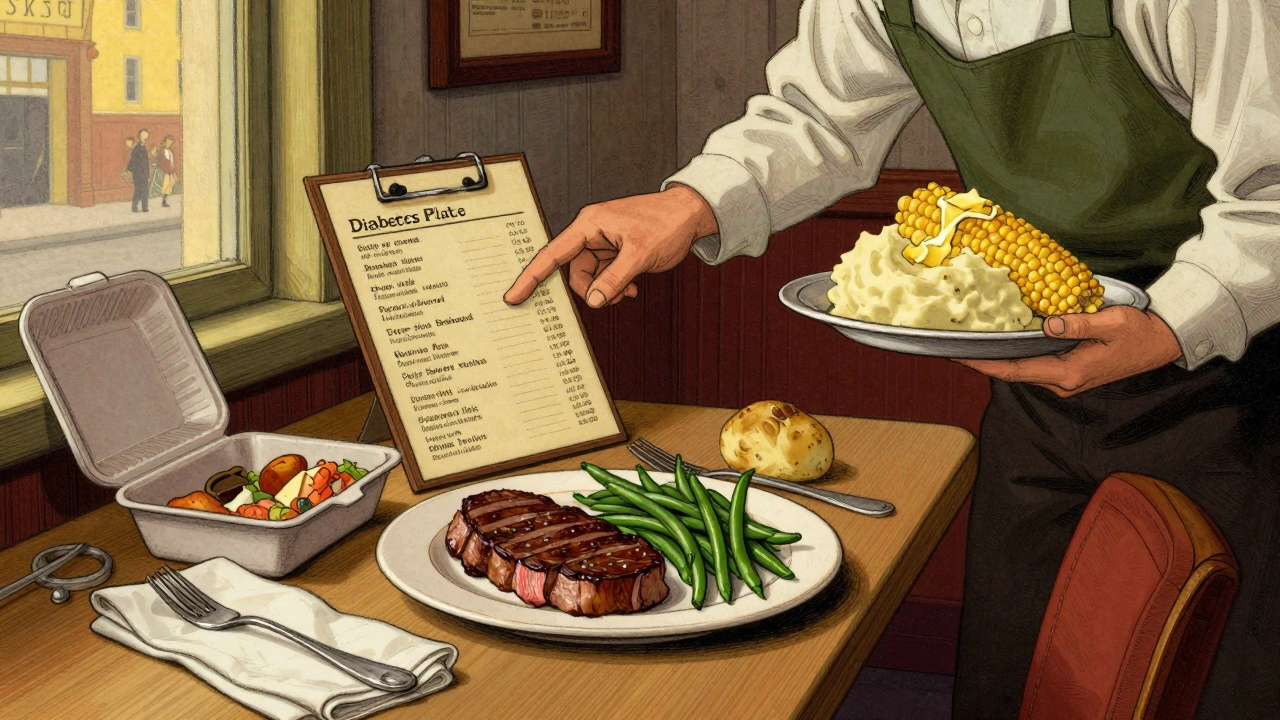
- Steakhouses: Easier for protein, harder for veggies. Most cuts are fine. But the sides? Mashed potatoes, loaded baked potatoes, creamed spinach. Ask for double steamed broccoli or a side salad. Skip the butter on your steak.
- Buffets: Avoid if you can. Unlimited access means overeating. Even if you start with salad, you’ll likely end up with dessert and pasta. If you must go, fill your plate once. Walk away. Don’t go back.
Plan Ahead - It’s Not Optional
Don’t wing it. Look at the menu online before you leave the house. Most chains list nutrition info now. Even if they don’t, you can guess based on what’s in the dish. For example:
- A grilled chicken salad with no croutons or dressing: ~15g carbs
- A turkey burger on a whole-wheat bun: ~40g carbs
- A shrimp stir-fry with brown rice: ~50g carbs
Check the restaurant’s website or use the ADA’s “Restaurant Ready” app. It’s free, works offline, and has verified carb counts for over 15,000 menu items. If you know what you’re ordering before you get there, you’re 60% more likely to stick to your plan.
Also, eat a small snack before you go - like a handful of nuts or a hard-boiled egg. Going in starving makes you grab the first thing that looks good. You’ll be less likely to overdo carbs if you’re not ravenous.
Portion Control: How to Eat Less Without Feeling Rude
Restaurant portions are huge. They’re not meant for one person. They’re meant to make you feel like you got your money’s worth. You don’t have to eat it all.
Here’s how to handle it:
- Ask for a to-go box when your food arrives. Put half of it in the box right away. Then eat the rest like a normal meal.
- Share your entree. Split it with a friend. Most people don’t mind - they’re just as overwhelmed by the size.
- Order an appetizer as your main. A grilled shrimp skewer or chicken satay is often 3-4 ounces of protein with minimal carbs.
- Order a side of veggies and make that your carb source. Skip the rice, pasta, or potatoes.
You’re not being difficult. You’re being smart. Most servers have heard it before. And if someone says, “But you’re not hungry?” just say, “I’m watching my carbs - I’ll be fine.”
What to Bring With You
Always carry two things when you eat out:
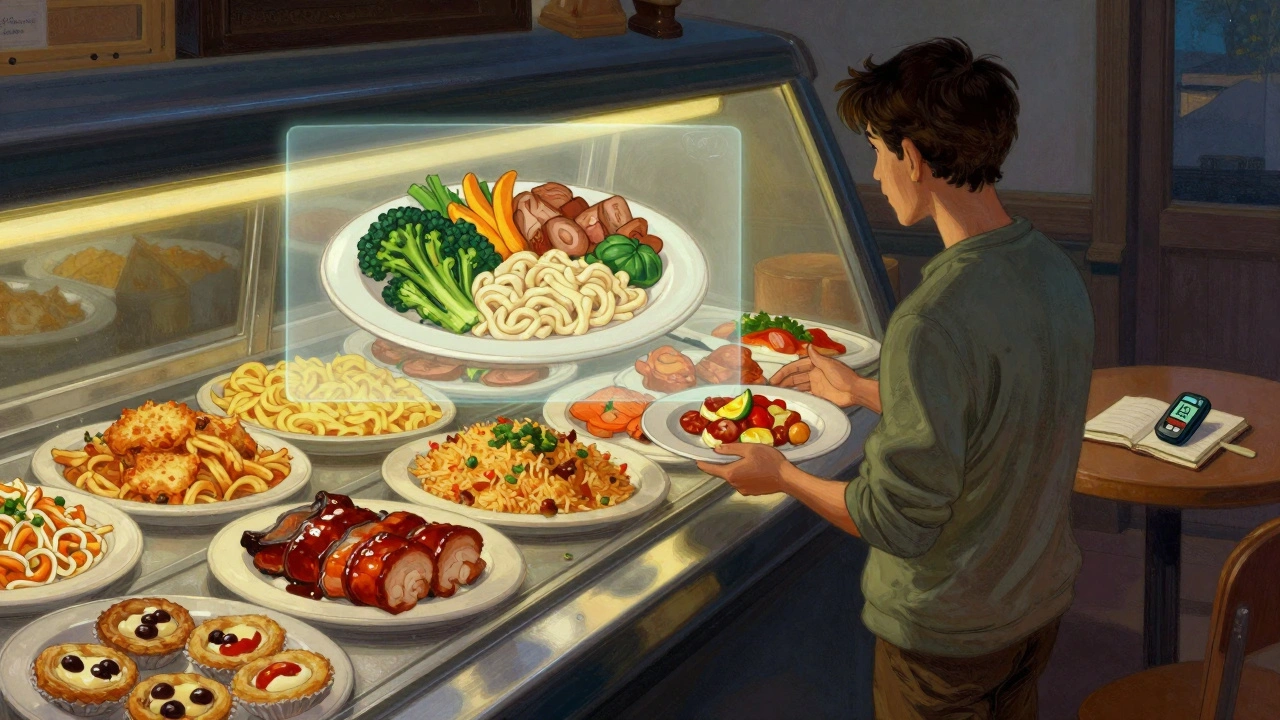
- A portable glucose meter
- Fast-acting glucose tablets (15g carbs each)
Why? Restaurant service can be slow. You might wait 45 minutes for your food. If you take insulin, your blood sugar could drop. Having glucose tablets on hand prevents a low. It’s not embarrassing - it’s necessary.
Also, keep a small notebook or phone note with your carb goals for the day. It helps you make quick decisions when you’re unsure.
Real Talk: It’s Not Perfect - And That’s Okay
Some days, you’ll eat more carbs than planned. Maybe you didn’t know the sauce had sugar. Maybe you ate the bread because you were too tired to say no. That’s life. One meal won’t ruin your HbA1c. What matters is what you do next.
Studies show people who consistently use portion control and carb awareness lower their HbA1c by 0.8-1.2% in six months. That’s a big deal. It means fewer complications, more energy, less medication.
Don’t aim for perfection. Aim for progress. One smart choice at a time.
What’s Changing for Better
Things are improving. More restaurants now label carb counts. The CDC’s “Dine Smart” program is working with 20 major chains to add symbols on menus for meals under 45g carbs. Apps are getting smarter. Some hospitals are testing systems that link your glucose monitor to restaurant menus - giving you real-time carb estimates as you scroll.
But technology won’t fix everything. You still have to make the choice. You still have to ask for sauce on the side. You still have to leave half your food in the box.
That’s the real skill. Not counting carbs. Knowing how to take care of yourself - even when the world is serving you more than you need.
Can I still eat pasta if I have diabetes?
Yes, but in small amounts. Stick to half a cup of whole-grain pasta, paired with lots of veggies and lean protein. Avoid creamy sauces. Tomato-based sauces are better. Always check the carb count - some pasta dishes can have 70+ grams. Ask for a half portion or share it.
Do I need to count carbs every time I eat out?
Not if you use the Plate Method. It’s a visual tool that helps you balance meals without numbers. But if you use insulin, knowing exact carb amounts helps you dose correctly. For most people, estimating is enough - especially if you’re consistent. Use apps like ADA’s Restaurant Ready when you’re unsure.
Is it okay to have dessert?
Yes - but make it count. Skip the cake if you already had carbs in your meal. If you really want dessert, choose something small: a single scoop of sorbet, a few dark chocolate squares, or fresh berries with whipped cream. Share it. Eat slowly. And check your blood sugar afterward to see how it affects you.
What if my friends don’t understand my choices?
Most people just need a simple explanation. Say, “I’m managing my blood sugar, so I need to watch carbs and portions.” You don’t owe anyone a full medical lecture. If they tease you, remind them it’s not about being “on a diet” - it’s about staying healthy. You’re not being difficult; you’re taking care of yourself.
Can I drink alcohol at restaurants?
Yes, but be careful. Alcohol can cause low blood sugar, especially if you’re on insulin or certain pills. Stick to dry wine, light beer, or spirits with soda water and lime. Avoid sugary cocktails, sweet wines, and mixed drinks with juice. Always eat food when you drink. And check your blood sugar before bed - alcohol can cause lows hours later.
Joanne Rencher
December 3, 2025 AT 05:50Adrianna Alfano
December 3, 2025 AT 18:55Casey Lyn Keller
December 4, 2025 AT 18:46Jessica Ainscough
December 6, 2025 AT 00:34Josh Bilskemper
December 7, 2025 AT 00:02Storz Vonderheide
December 7, 2025 AT 20:13dan koz
December 9, 2025 AT 11:46Kevin Estrada
December 10, 2025 AT 03:23Katey Korzenietz
December 11, 2025 AT 09:20Ethan McIvor
December 12, 2025 AT 06:03Michael Bene
December 14, 2025 AT 04:16Brian Perry
December 15, 2025 AT 07:24Chris Jahmil Ignacio
December 15, 2025 AT 17:41Paul Corcoran
December 16, 2025 AT 23:03