
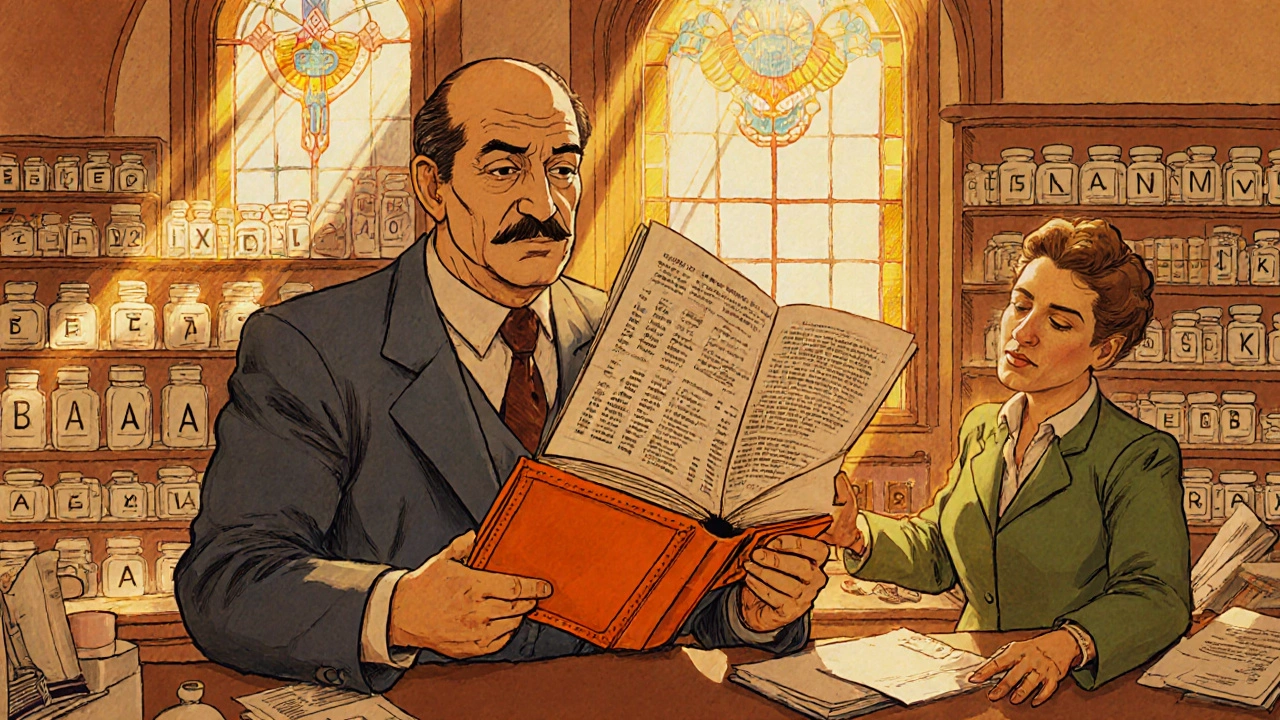
The FDA Orange Book is the official government list that tells you which generic drugs are approved and can be safely swapped for brand-name medicines. It’s not just a directory-it’s the rulebook pharmacies, doctors, and insurers use every day to decide what gets filled at the counter. If you’ve ever picked up a generic pill and wondered if it’s really the same as the brand, the Orange Book is why you can trust that it is.
What Is the FDA Orange Book?
The full name is Approved Drug Products with Therapeutic Equivalence Evaluations. It’s published by the Food and Drug Administration and updated every month. You won’t find it on bookstore shelves-it’s online, free, and used by millions in the healthcare system. The Orange Book started in 1984 as part of the Hatch-Waxman Act, a law designed to speed up generic drug approvals without letting brand-name companies lock up the market forever with endless patents.
As of late 2023, it lists over 16,000 approved drug products. That includes both prescription and over-the-counter medicines. About 90% of all prescriptions filled in the U.S. are for generics. The Orange Book makes that possible by clearly showing which generics are equivalent to the original brand.
How Generic Drugs Get Listed
Generic drug makers don’t start from scratch. They don’t run new clinical trials on thousands of patients. Instead, they file what’s called an Abbreviated New Drug Application, or ANDA. The key word here is abbreviated. They only need to prove one thing: their version works the same way in the body as the brand-name drug.
That’s where the Reference Listed Drug (RLD) comes in. The RLD is the original brand-name drug the generic is copying. For example, if you’re making a generic version of Lipitor (atorvastatin), Lipitor is the RLD. The FDA picks the RLD based on which version was first approved and has the most complete data.
The generic applicant must show their drug delivers the same amount of active ingredient into the bloodstream at the same rate as the RLD. This is called bioequivalence. If they pass, the FDA approves the ANDA and adds the generic to the Orange Book.
Therapeutic Equivalence Codes: What the Letters Mean
Every drug in the Orange Book gets a Therapeutic Equivalence (TE) code. These are one- or two-letter codes that tell you whether a generic can be swapped without any risk.
- A codes mean the drug is therapeutically equivalent. You can substitute it freely. For example, an A-rated generic for metformin can replace the brand without concern.
- B codes mean the FDA doesn’t consider it equivalent. These are rare and usually happen with drugs that have narrow therapeutic windows-like warfarin or thyroid meds-where tiny differences matter. Pharmacists can’t switch these without a doctor’s OK.
- BN means it’s the only product available for that drug. No generics exist yet.
- AP means it’s a pen or inhaler product with special delivery issues. These are trickier to match, and the FDA is still refining how to rate them.
These codes are why you might get a different-looking pill each time you refill. If the TE code says “A,” it’s safe-even if the shape, color, or brand name changes.
Authorized Generics: The Hidden Option
There’s another kind of generic you won’t find in the Orange Book: the authorized generic. These are the exact same pills as the brand, just sold without the brand name. The manufacturer is the same company that makes the original. For example, the maker of Prilosec might also sell an authorized generic version under a different label.
Authorized generics are listed under the original brand’s New Drug Application (NDA), not under an ANDA. That’s why they don’t show up as separate entries in the Orange Book. But the FDA keeps a separate public list of them on its website, updated quarterly. These often hit the market faster than regular generics because they skip the ANDA process entirely.
Patents and Exclusivity: The Gatekeepers
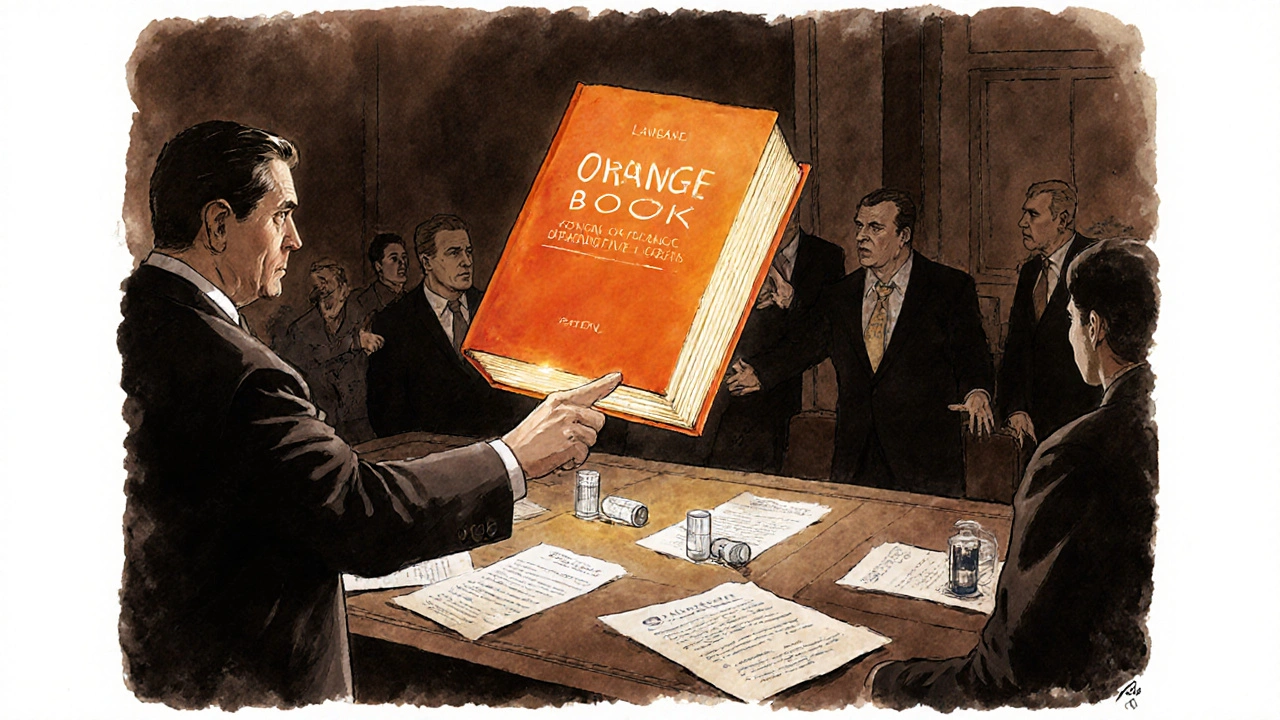
The Orange Book doesn’t just list drugs-it lists patents. Brand-name companies must tell the FDA about any patents covering their drug’s active ingredient, formulation, or how it’s used. These get published in the Orange Book, and they’re critical.
Here’s why it matters: if a generic company files an ANDA and says one of those patents is invalid or won’t be infringed, the brand company can sue. If they do, the FDA can’t approve the generic for 30 months. This is called the 30-month stay. It’s a legal pause, not a decision on whether the patent is good or bad.
Patent listings have grown sharply-from 8,000 in 2005 to over 14,000 in 2022. Critics say companies are stacking patents to delay generics (a tactic called “patent thicketing”). The FDA has cracked down in recent years, rejecting patents that cover trivial changes like pill color or packaging.
How to Use the Electronic Orange Book
The FDA’s Electronic Orange Book is free and easy to use. Here’s how to find what you need:
- Go to the search page and pick “Active Ingredients” or “Proprietary Name.”
- Search for the drug you’re looking for. For example, type “atorvastatin.”
- Look at the results grouped by dosage form (like tablet, capsule) and route (oral, injection).
- Find the RLD-it will say “Yes” under the RLD column.
- Below it, you’ll see all approved generics with their TE codes.
Pharmacists use this daily. But it’s not perfect. Complex drugs like inhalers or eye drops often have confusing TE codes because measuring bioequivalence is harder. One pharmacist on a national forum said, “I’ve had cases where the Orange Book says two inhalers are equivalent, but patients report different side effects.” The FDA is working on better ways to rate these.
Why It Matters to You
If you take a generic drug, the Orange Book is why your insurance covers it. If you’re a patient, it’s why you can switch from one generic to another without asking your doctor. If you’re a pharmacist, it’s your legal guide for substitution.
For people on tight budgets, the Orange Book saves money. In 2023, the Congressional Budget Office found that multi-source generics-those with multiple approved versions listed in the Orange Book-cost 18% to 22% less than single-source drugs. That’s hundreds of dollars a year for chronic conditions like high blood pressure or diabetes.
It also helps the system move faster. Thanks to the Generic Drug User Fee Amendments (GDUFA), the FDA now approves generics in about 10 months, down from 36 months in 2010. That’s because the Orange Book gives everyone a clear, shared reference point.
What’s Changing Now
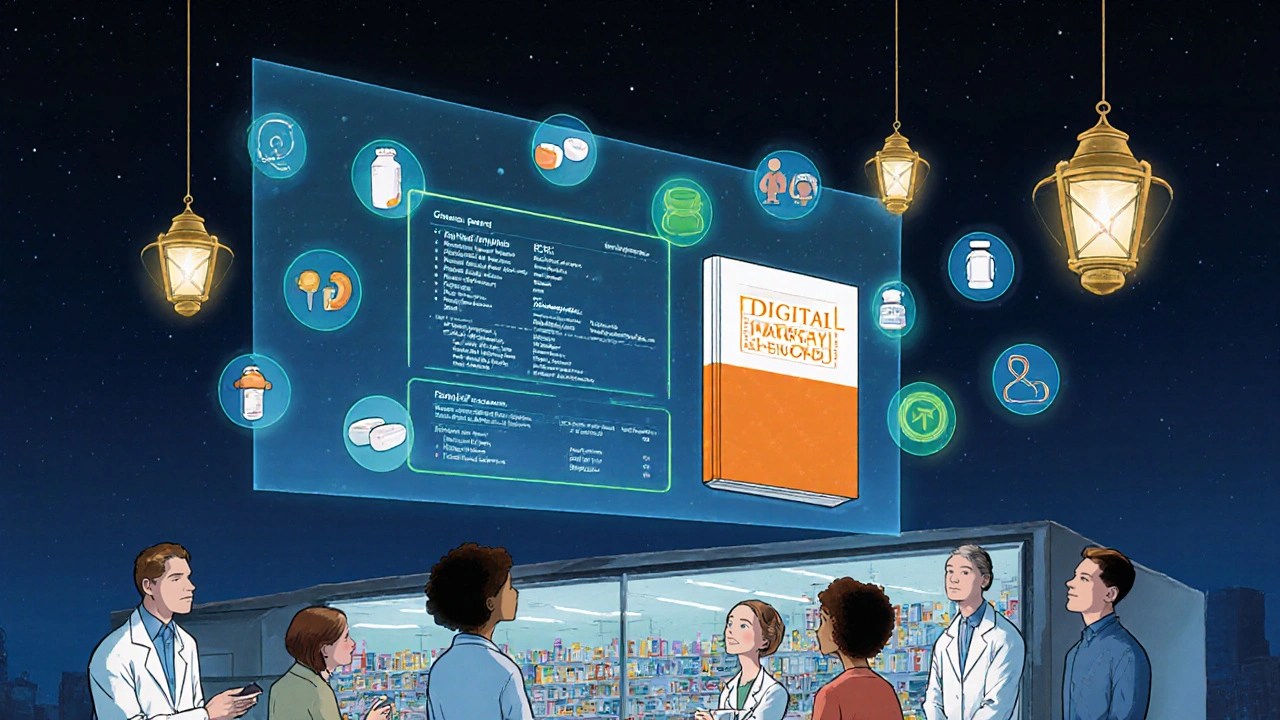
The FDA is working on a “Digital Orange Book” by 2025. It will be updated in real time, not monthly. That means new approvals, patent expirations, and discontinued products will show up faster.
They’re also testing more detailed equivalence ratings for complex products like injectables and nasal sprays. Right now, those are often lumped into broad “A” codes, but the agency knows that’s not always accurate.
And the legal battles keep going. In 2022, a court questioned whether the FDA has the right to reject certain patent listings. That could change how companies game the system in the future.
But one thing won’t change: the Orange Book remains the backbone of generic drug access in America. Without it, we’d be back to guessing whether a pill is safe to swap. With it, millions get affordable medicine every day.
Is the FDA Orange Book the same as Drugs@FDA?
No. Drugs@FDA shows all drug applications, including those still under review, tentative approvals, and brand-name drugs. The Orange Book only lists approved drugs with therapeutic equivalence ratings. If a generic is in Drugs@FDA but not in the Orange Book, it hasn’t been fully approved yet.
Can a generic drug be pulled from the Orange Book?
Yes. If a generic drug is discontinued by the manufacturer, it moves to the Discontinued Drug Product List. It’s no longer available for substitution. Also, if the FDA finds a product doesn’t meet quality or bioequivalence standards, it can be removed.
Why do some generics have different TE codes even if they contain the same ingredients?
Because the delivery method matters. Two tablets with the same active ingredient can have different TE codes if one is extended-release and the other is immediate-release. The same goes for inhalers or creams-how the drug gets into your body changes how it’s rated.
Do over-the-counter (OTC) drugs appear in the Orange Book?
Yes, but they’re not rated for therapeutic equivalence. The Orange Book includes OTC products in a separate list, but since they don’t require a prescription and aren’t used for complex conditions, the FDA doesn’t assign TE codes to them.
How often is the Orange Book updated?
Monthly. New approvals, patent changes, and discontinued products are added each month. The FDA releases the updated version on the first business day of each month.
Can I trust a generic drug just because it’s in the Orange Book?
Yes-if it has an “A” rating. The FDA requires rigorous testing for bioequivalence before approving any generic. If it’s listed and rated “A,” it’s as safe and effective as the brand. Millions of people take these daily without issue.
Wendy Edwards
November 26, 2025 AT 10:34Jaspreet Kaur
November 26, 2025 AT 13:59Gina Banh
November 26, 2025 AT 15:01Deirdre Wilson
November 27, 2025 AT 09:24Damon Stangherlin
November 28, 2025 AT 08:51Ryan C
November 28, 2025 AT 14:25Dan Rua
November 30, 2025 AT 06:56Mqondisi Gumede
December 1, 2025 AT 20:25Douglas Fisher
December 1, 2025 AT 21:47Albert Guasch
December 3, 2025 AT 11:39Ginger Henderson
December 4, 2025 AT 07:56Bethany Buckley
December 5, 2025 AT 07:51Stephanie Deschenes
December 5, 2025 AT 19:20Cynthia Boen
December 6, 2025 AT 14:49Amanda Meyer
December 8, 2025 AT 14:18