
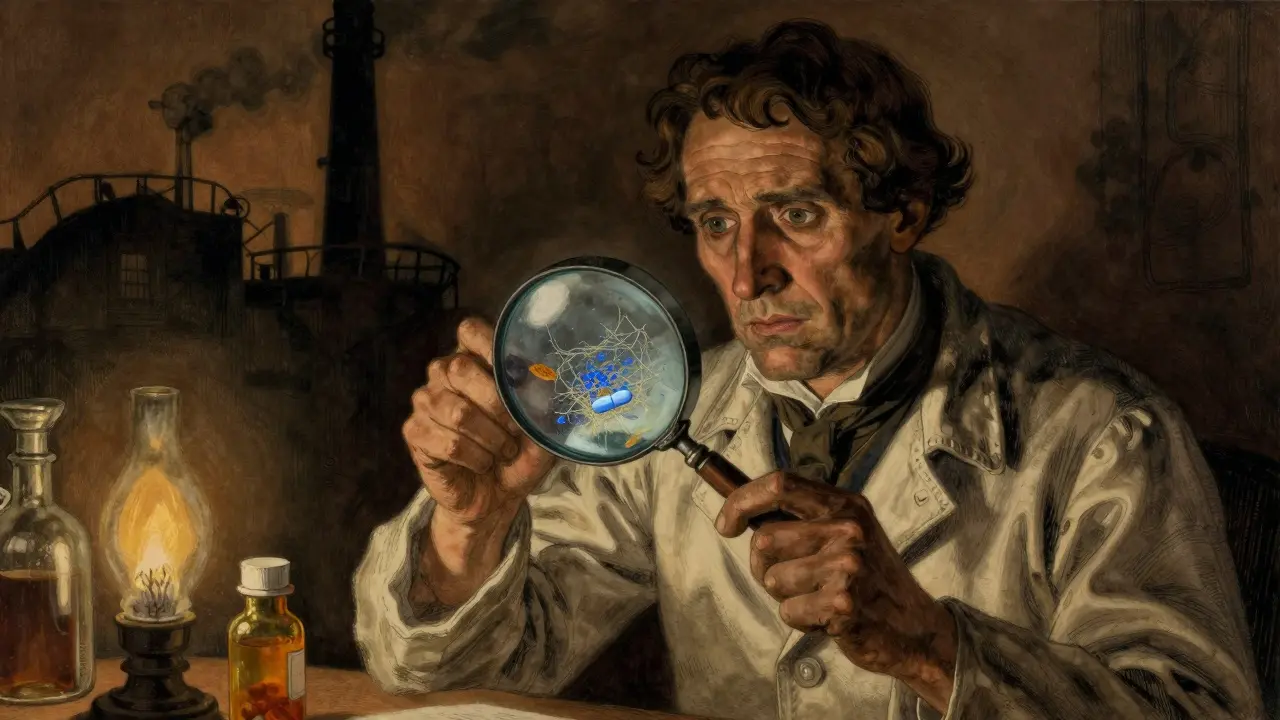
When you pick up a generic pill from the pharmacy, you expect it to work the same as the brand-name version. You don’t expect it to be contaminated with harmful particles, chemicals, or microbes. But that’s exactly what’s happening more often than most people realize. In 2022, nearly one in five drug recalls in the U.S. involved contamination - and over a third of those were generic drugs. This isn’t a rare glitch. It’s a systemic risk built into how most generic medications are made today.
What Exactly Is Generic Drug Contamination?
Contamination means something unwanted ends up in your medicine. It could be leftover chemicals from another drug made on the same machine, tiny bits of metal from faulty equipment, mold spores from a poorly cleaned room, or even bacteria from a worker’s skin. The FDA calls this cross-contamination - when one product accidentally mixes with another during manufacturing. These aren’t just theoretical risks. In 2021, a patient developed severe skin rashes after using a generic hydrocortisone cream that contained unknown contaminants. Pharmacists on Reddit have posted photos of blue specks in metronidazole tablets - later confirmed to be copper. Hospital pharmacies report finding foreign particles in pills, and some have even had to pull batches because the pills smelled odd or looked discolored. The problem isn’t that generics are inherently unsafe. They’re required to meet the same active ingredient standards as brand-name drugs. But the way they’re made - often in crowded, aging factories overseas - creates openings for contamination that brand-name companies rarely face.Why Are Generic Drugs More at Risk?
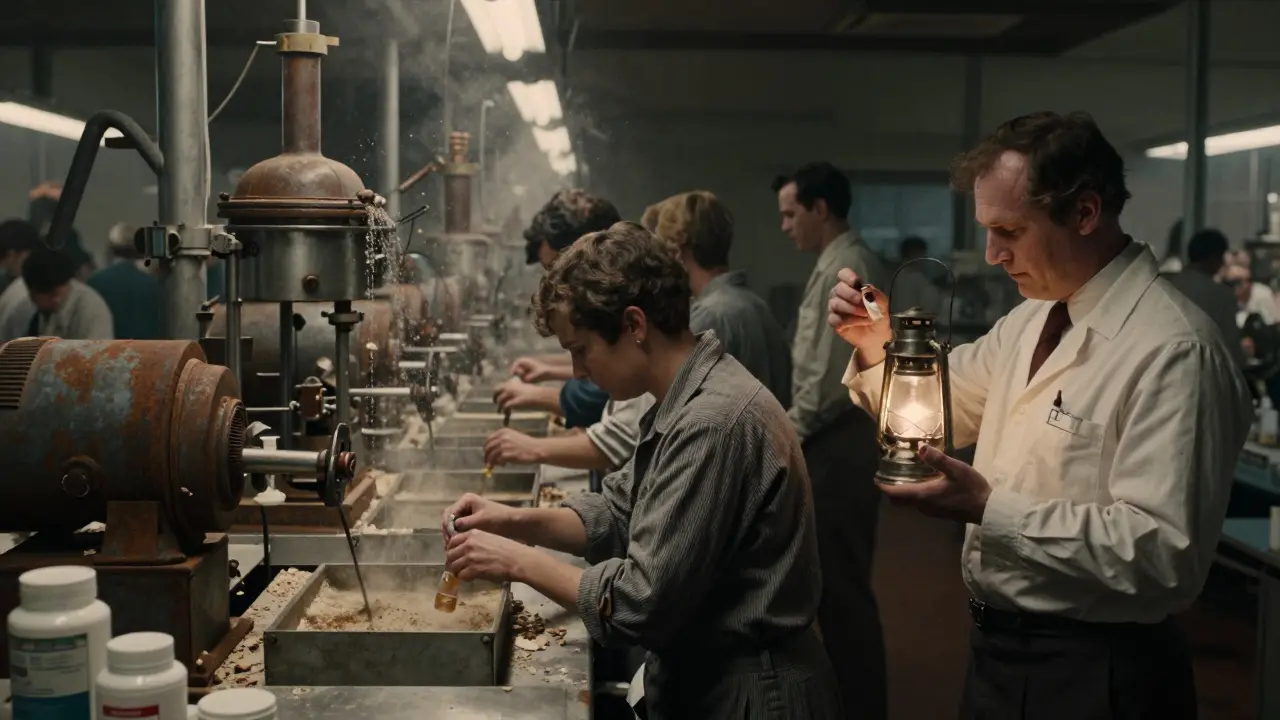
The generic drug market is huge. Ninety percent of all prescriptions filled in the U.S. are for generics. But they make up only about 15% of total drug spending because they’re cheap. That low price comes at a cost. Most generic manufacturers operate on profit margins of 20-25%. Brand-name companies? They make 60-70%. That difference affects everything: how often equipment is cleaned, how well staff are trained, whether new technology is adopted. FDA inspections show that 8.3% of generic manufacturing sites received official warnings for contamination control issues in 2022. For brand-name companies, it was just 5.1%. In India - where a large portion of U.S. generic drugs are made - contamination-related inspection findings were over twice as high as in U.S.-based facilities. Older factories are a major factor. Facilities built before 2000 have a 34% higher risk of contamination. Many still use open processing lines where dust and particles can float freely. One pharmacist in Ohio told me her hospital received a batch of generic metformin with visible fibers in the powder. The manufacturer was using a 1980s production line. And here’s the kicker: 80% of the active ingredients in U.S. drugs come from just two countries - China and India. The FDA inspects less than 1% of imported drug shipments. That means most contamination goes undetected until it reaches patients.How Contamination Happens - The Real Culprits
It’s not just dirty rooms. Contamination happens in very specific, preventable ways:- Personnel: A single person sheds about 40,000 skin cells per minute. When they move around a cleanroom, they release over 100,000 tiny particles. If they’re not wearing proper gear or following gowning procedures, those particles end up in your pills.
- Shared equipment: If a machine makes blood pressure pills one day and diabetes pills the next, and the cleaning isn’t perfect, traces of the first drug can stay behind. Even 10 parts per million - less than a grain of salt in a bathtub - can be dangerous for potent drugs.
- Manual handling: Piercing a vial with a needle, breaking an ampule, or withdrawing liquid from a container causes airborne contamination. These steps account for over 60% of hazardous drug incidents in pharmacies.
- Poor cleaning validation: Many factories don’t test thoroughly enough. The FDA says cleaning must remove 95% of residue with 95% confidence. But some skip this step, or use weak cleaning agents that don’t kill spores.
How Prevention Actually Works - And Why It’s Often Failing
The rules for preventing contamination are clear. They’re called Good Manufacturing Practices (GMP). But following them isn’t optional - it’s the law. Here’s what real prevention looks like:- Facility design: Non-sterile drugs need at least an ISO Class 8 environment (like a clean office). Sterile drugs? ISO Class 5 - that’s hospital operating room level.
- Staff training: Every employee must get 8-12 hours of initial contamination training, plus annual refreshers. Yet 34% of FDA violations cite poor environmental monitoring - meaning staff aren’t trained or aren’t following procedures.
- Cleaning validation: After making one drug, the machine must be cleaned and tested. Swabs are taken. Samples are sent to a lab. It must prove residue is below 10 ppm. And this isn’t done once - it’s done three times in a row to prove it’s consistent.
- Microbial limits: For oral pills, the total bacteria count can’t exceed 1,000 colony-forming units per gram. Yeast and mold? No more than 100. Most factories test this every batch. Some don’t test at all.
What Happens When Contamination Is Found?
When a contaminated batch is discovered, the manufacturer has to act - fast. The FDA has two main tools:- Recalls: If a product is unsafe, the company must recall it. In 2022, the average cost of a contamination recall was $18.7 million. Some, like the valsartan nitrosamine crisis in 2018-2019, cost over $1 billion.
- MedWatch: This is the FDA’s reporting system. Patients, doctors, and pharmacists can report side effects or suspicious pills. Between 2020 and 2022, over 1,200 reports were filed about possible generic contamination. Nearly 400 mentioned real health problems - rashes, nausea, allergic reactions, even organ damage.
What You Can Do - As a Patient or Pharmacist
You can’t test pills at home. But you can protect yourself.- Check the pill’s appearance: If your generic looks different - color, shape, markings - ask your pharmacist. A sudden change could mean a new supplier. If it has specks, discoloration, or an odd smell, don’t take it.
- Report anything suspicious: Use the FDA’s MedWatch system. Even if you’re not sure, report it. One report might trigger an investigation.
- Ask your pharmacist: Independent pharmacists say 63% of them can’t test for contamination themselves. But they can tell you if a batch has been recalled or if the manufacturer has a history of violations. Ask: “Is this from a manufacturer with recent FDA warnings?”
- Stick with trusted brands: Some generic manufacturers have excellent records. Teva, Mylan, and Sandoz have invested in closed systems and real-time monitoring. If your insurance allows, ask for those.
The Future: Better Tech, Stronger Rules
Things are starting to change. In January 2023, the FDA started requiring all sartan-class drugs (blood pressure meds) to be tested for nitrosamines - a cancer-causing impurity that caused the global valsartan recall. That’s a direct response to past failures. New technology is helping too:- Rapid microbiological testing: Instead of waiting 7 days to know if a pill is contaminated, some labs now get results in 4 hours.
- AI-powered monitoring: The FDA is testing AI systems that watch 15,000 data points per factory - air flow, humidity, particle counts - to predict contamination before it happens. Early results show 89% accuracy.
- Blockchain tracking: Some companies are testing systems that track each batch from raw material to pharmacy. If contamination shows up, they can trace it back to the exact machine and shift.
Final Thought: Safety Isn’t Cheap - But Neither Is Neglect
Generic drugs saved the U.S. healthcare system hundreds of billions of dollars. That’s a huge win. But when safety is traded for price, people get hurt. The system isn’t broken - it’s stretched too thin. Manufacturers need to invest in better equipment. Regulators need to inspect more. And patients need to know: your medicine isn’t just a number on a label. It’s your health. If you’ve ever wondered why your generic pill didn’t work like it used to - or why you felt worse after switching - it might not be in your body. It might be in the pill.Are generic drugs less safe than brand-name drugs?
Generic drugs must contain the same active ingredient, strength, and dosage form as the brand-name version. By law, they’re required to be therapeutically equivalent. But safety isn’t just about what’s in the pill - it’s about what’s not supposed to be there. Contamination risks are higher in generics because many manufacturers operate on tighter budgets, older equipment, and overseas facilities with less oversight. So while the intended medicine is the same, the risk of unintended contaminants is greater.
How do I know if my generic medication is contaminated?
You can’t test it at home. But look for changes: new colors, odd smells, visible specks, or pills that crumble easily. If your prescription suddenly works differently - like your blood pressure isn’t controlled or you develop a rash - it could be contamination. Talk to your pharmacist. Check the FDA’s MedWatch database or recall notices. If something seems off, don’t take it.
What should I do if I suspect my medication is contaminated?
Stop taking the medication. Keep the bottle and any remaining pills. Contact your pharmacist and doctor immediately. Then file a report with the FDA through MedWatch. Even if you’re unsure, your report could help identify a larger issue. If you experience symptoms like nausea, dizziness, rash, or unusual fatigue after taking the drug, mention that in your report.
Can I ask my pharmacy for a brand-name drug instead of a generic?
Yes. Your doctor can write “Dispense as Written” or “Do Not Substitute” on your prescription. Insurance may require you to pay more, but if you’ve had bad reactions to generics before, it’s worth it. Some pharmacies also carry generics from manufacturers with better safety records - ask if they can source those.
Why aren’t more generic drugs being tested for contamination?
Testing every batch would make generics too expensive. Right now, the FDA inspects less than 1% of imported drug shipments. Manufacturers test a sample of each batch, but not every pill. The system relies on random checks and recalls after problems arise. New technology like rapid testing and AI monitoring is helping, but widespread testing isn’t yet standard - especially for low-cost generics.
Which generic drug manufacturers have the best safety records?
Companies like Teva, Mylan, and Sandoz have invested heavily in modern manufacturing, closed systems, and real-time monitoring. Their facilities in Europe and the U.S. have significantly lower contamination rates. But even within these companies, quality can vary by factory. The best approach is to ask your pharmacist which manufacturer supplies your generic - and check the FDA’s website for recent inspection reports.
If you take daily medication, stay alert. Your health depends on it.
Brian Anaz
January 6, 2026 AT 08:03China and India are dumping trash pills into our medicine cabinets and the FDA is asleep at the wheel. This isn't a 'risk'-it's a national security failure. We outsource our health to sweatshops and wonder why people get sick. Time to stop buying cheap junk and make drugs at home-or stop pretending we care about safety.
Saylor Frye
January 7, 2026 AT 19:49Interesting how the piece frames this as a 'systemic risk'-as if the problem isn't just greed, but the entire neoliberal logic of outsourcing everything to the lowest bidder. The real tragedy? We accept this because we've been trained to think 'cheap' equals 'good value.' But medicine isn't a commodity-it's a lifeline. And we're gambling with it.
Kiran Plaha
January 9, 2026 AT 05:31I work in a pharma lab in Hyderabad. We clean machines 3 times a day, use sealed systems, test every batch. Not all factories are like this. But please don’t assume all Indian makers are bad. Many of us work hard. The problem is the buyers who demand price cuts every year.
Harshit Kansal
January 10, 2026 AT 22:34Bro, I took a generic blood pressure pill last month and my heart felt like it was doing the cha-cha. Then I switched back to brand and boom-normal again. I don't care if it costs $15 instead of $3. My life isn't a spreadsheet.
Vinayak Naik
January 11, 2026 AT 06:49Y'all ain't gonna believe this-but I once found a whole damn hair in a bottle of generic ibuprofen. Not a strand. A full head-hair. Like, curly, dyed black, like someone's grandma’s wig fell in. I took a pic, sent it to the FDA, and got a form letter back. No recall. No apology. Just... silence. That’s the system.
Cam Jane
January 12, 2026 AT 13:53Listen, if you're on daily meds, don't just swallow and hope. Check the bottle. Look at the pill. Compare it to last time. If it looks different, ask your pharmacist: 'Who made this?' and 'Any recent recalls?' Don't be shy. You're not being annoying-you're being smart. And if something feels off? Stop. Report. Save the bottle. Your life matters more than the $2 you 'saved.'
Amy Le
January 13, 2026 AT 11:23Of course generics are dangerous. We let China make 80% of our medicine. We're literally outsourcing our immune system to a country that doesn't even have the same legal standards. And now we're surprised people are getting sick? Wake up. This isn't a medical issue-it's a betrayal of sovereignty. 🇺🇸💊
Pavan Vora
January 13, 2026 AT 17:52From India, I must say: we are not all the same. Some factories are terrible, yes-but many are world-class, with ISO certifications, automated lines, and trained staff. The issue is not India-it’s the race to the bottom by U.S. buyers. They demand lower prices, then blame us when things go wrong. It’s unfair.
Indra Triawan
January 14, 2026 AT 12:05I’ve been on generics for 12 years. I’ve had panic attacks, rashes, insomnia. I thought it was me. Turns out, it was the pill. I finally switched to brand and cried for an hour. No one listens. No one cares. I’m just another statistic. But now I’m screaming. Someone has to.
Susan Arlene
January 15, 2026 AT 10:39we’re all just trying to survive. pills are supposed to help. not make you wonder if you’re gonna die from a speck of metal. i don’t care who made it. i just want to feel okay.
Joann Absi
January 16, 2026 AT 08:40THIS IS A WAR. 🇺🇸 vs 💊 🇨🇳🇮🇳 The corporations are winning. The FDA is a puppet. And we’re the ones swallowing the poison. I’ve lost friends to this. Don’t you dare say ‘it’s just a pill.’ It’s your liver. Your brain. Your future. 🚨💊
Ashley S
January 18, 2026 AT 08:24If you're okay with your medicine being made in a dirty factory overseas, then you're not just irresponsible-you're evil. People die from this. And you're fine with it because you saved $4. That's not frugal. That's monstrous.
Venkataramanan Viswanathan
January 18, 2026 AT 18:35As a former manufacturing engineer in a U.S.-based generic facility, I can confirm: the cleaning validation protocols are often bypassed under production pressure. Management prioritizes output over safety. The FDA inspections are sporadic and predictable. We knew what was happening. We reported it. Nothing changed. This is not a failure of individuals-it is a failure of the entire model.