
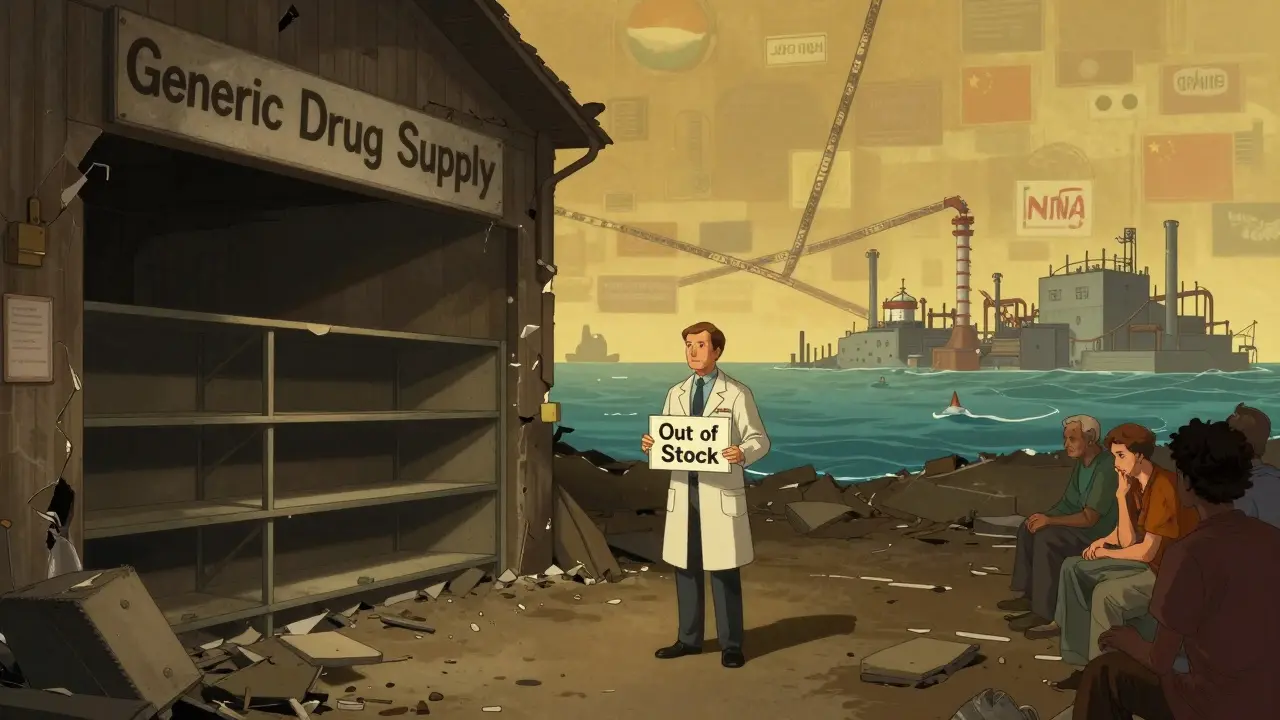
Every year, Americans fill over 4 billion prescriptions. Ninety percent of them are for generic drugs. But behind that number is a broken system. While generics make up most of what’s on pharmacy shelves, they’re also the most likely to vanish without warning. You might not notice until you show up for your refill and the pharmacist says, "We don’t have it." For many, that means switching to a more expensive brand, going without medication, or waiting weeks for a replacement. This isn’t an accident. It’s the result of deep, systemic problems in how generic drugs are made, priced, and shipped.
Why generics cost so little - and why that’s the problem
Generic drugs are cheaper because they don’t need to repeat expensive clinical trials. Once a brand-name drug’s patent expires, any company can make the same medicine. That sounds fair - until you realize how the market works. Instead of competing on quality, safety, or reliability, manufacturers compete on price. And they’re losing.
Group purchasing organizations (GPOs) and pharmacy benefit managers (PBMs) negotiate contracts for hospitals and pharmacies. These contracts are awarded based on price differences as small as one-tenth of a cent per tablet. That’s not a typo. One-tenth of a cent. To make that work, manufacturers cut corners. They reduce staffing. They delay maintenance. They skip upgrades. They move production overseas, where labor and regulations are looser.
Branded drug companies make 70-80% gross margins. Generic makers? Often 15-20%. Some products barely clear 5%. When a new company enters the market with a slightly lower bid, everyone else is forced to drop prices further. Eventually, making the drug costs more than they can sell it for. So they stop. And when one manufacturer quits, there’s often no backup.
The global supply chain is a house of cards
Most of the active ingredients in your generic pills aren’t made in the U.S. They’re made in India or China. The FDA says 97% of antibiotics, 92% of antivirals, and 83% of the top 100 generic drugs have no domestic source for their active ingredient. That means your heart medication, your antibiotic, your thyroid pill - all rely on factories halfway across the world.
And it’s not just one step. The process is fragmented. One facility makes the active ingredient. Another blends it with fillers. A third coats the pills. A fourth packages them. Each step adds risk. A storm in India. A labor strike in China. A regulatory shutdown. Any one of these can break the chain.
In early 2020, India halted exports of 26 essential medicines, including acetaminophen. China shut down 44 drug-making facilities during lockdowns. The U.S. didn’t have enough backup. People couldn’t get their medications. The pandemic didn’t create the problem - it just exposed it.
Quality control is failing
It’s not just about supply. It’s about safety. The FDA found serious quality issues at Intas Pharmaceuticals in 2022. Their cancer drug cisplatin was pulled from the U.S. market because of "enormous and systematic quality problems." That’s not a one-off. In 2021-2022, FDA audits showed U.S.-based manufacturers had 95%+ accuracy in batch records. Some foreign manufacturers? As low as 78%.
Studies show generic drugs made in India are linked to 54% more serious adverse events - including hospitalizations and deaths - compared to identical drugs made in the U.S. That doesn’t mean all Indian-made drugs are dangerous. But it does mean the system isn’t holding everyone to the same standard. And when quality slips, the FDA has to act. Which means more recalls. More shortages.
It’s too expensive to do it right in America
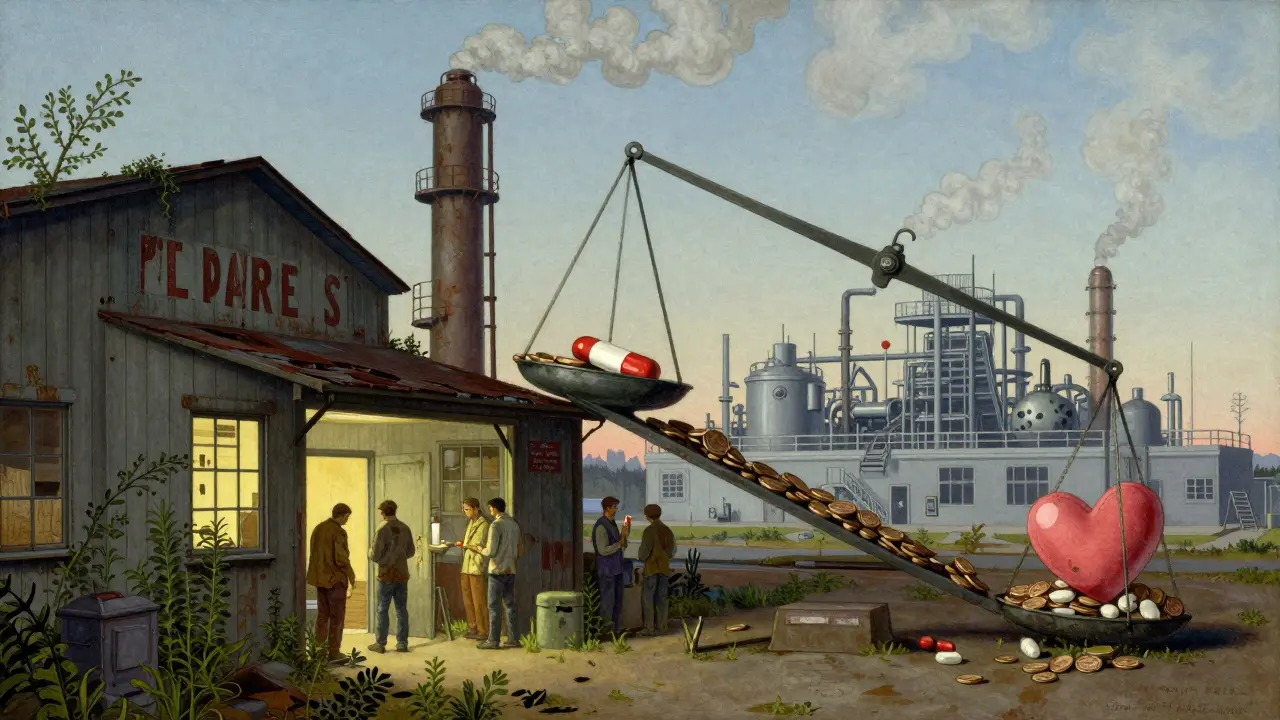
Building a new FDA-compliant drug factory in the U.S. costs between $250 million and $500 million. It takes 3 to 5 years. In India or China? $50 million to $100 million. Same regulations, same standards - but cheaper labor, faster approvals, less paperwork.
Even if a U.S. company wanted to invest in better equipment - like continuous manufacturing systems that monitor quality in real time - they can’t justify the cost. Why spend $50 million on a new line when you’re making pennies per pill? The math doesn’t work.
And the penalties for mistakes are brutal. A single FDA Form 483 (a list of inspection violations) can cost $1.7 million to fix. And it takes 12 to 18 months. Meanwhile, foreign competitors keep churning out pills at lower cost, with less oversight. The U.S. system punishes quality. The global system rewards speed and low cost.
The numbers tell the story
Here’s what’s really happening:
- In 2023, the FDA recorded 278 active drug shortages - the highest number since tracking began in 2011.
- 67% of those shortages involved generic drugs.
- Only 14% of active pharmaceutical ingredients (APIs) are made in the U.S. today. In 2010, it was 35%.
- Over the past decade, 37% of U.S.-based generic manufacturers have shut down or stopped production.
- By 2027, the number of companies supplying generics to the U.S. could drop from 127 to 89.
That’s not a fluctuation. That’s a collapse.
Who’s affected - and how
This isn’t abstract. Real people are suffering.
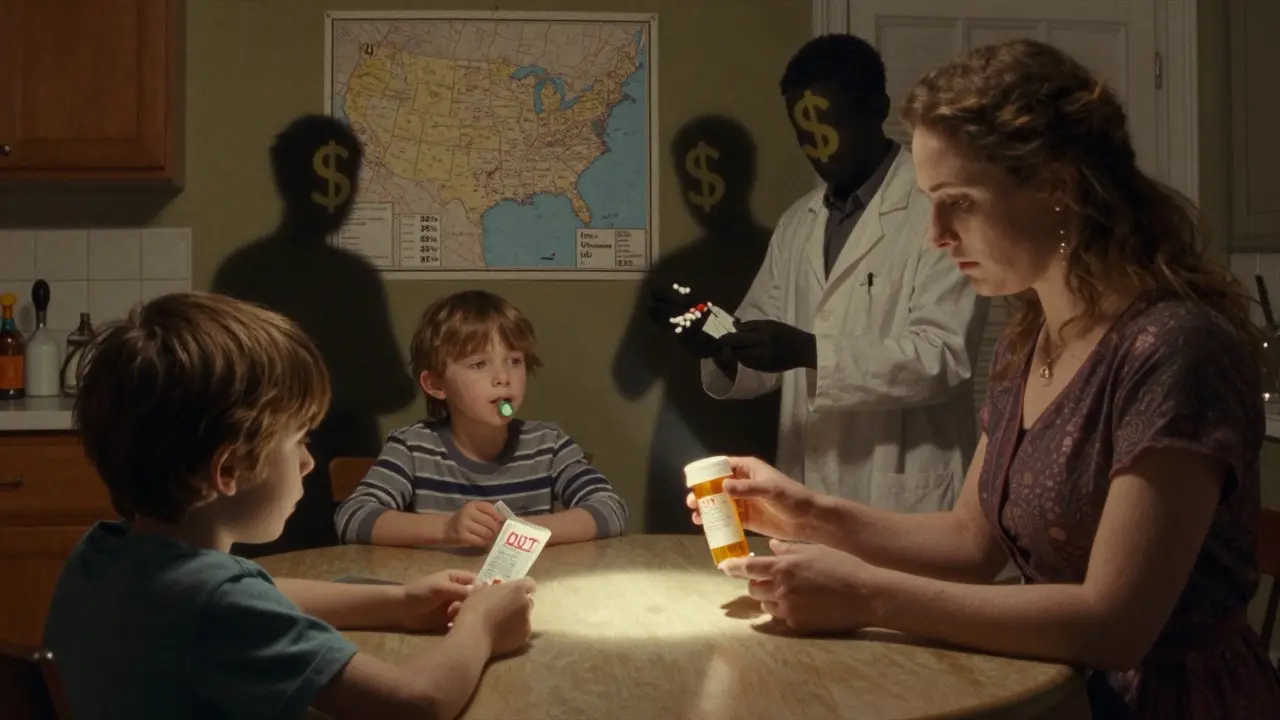
A hospital pharmacist in Ohio told Reddit users they’d switched antibiotics for 17 different infections in six months because the generics weren’t available. A nurse practitioner in Texas had to monitor 89 patients switching from one thyroid medication to another - each with slightly different absorption rates. A Medicare beneficiary saw their monthly cost for a heart drug jump from $10 to $450 when the generic ran out.
And it’s not just the elderly. Cancer patients. New mothers. Diabetics. People with epilepsy. All of them rely on stable, affordable generics. When those drugs disappear, the ripple effects hit every part of the healthcare system - ERs, clinics, pharmacies, insurance companies.
What’s being done - and why it’s not enough
The FDA has a Drug Shortage Task Force. Congress passed the CREATES Act in 2019 to stop brand companies from blocking generic competition. The Biden administration added $80 million to inspect foreign facilities. But these are bandaids.
Inspecting 72% of API facilities overseas? The FDA has to cover 40% more sites than it did five years ago - with only a 12% funding increase. That’s not a solution. It’s a race to catch up.
Some lawmakers are pushing tax breaks for domestic API production. Others want strategic stockpiles of critical drugs. Those ideas have potential. But they’re still in discussion. Meanwhile, the market keeps eroding.
What’s next?
Without a fundamental shift, this will keep getting worse. The system is designed to reward the cheapest option - not the most reliable. But when a drug shortage leads to a patient’s death, or a cancer treatment is delayed, the cost isn’t measured in cents per pill.
Some experts believe consolidation and targeted government support could stabilize the market by 2028. Others warn we’re headed toward a crisis that threatens national health security. The truth? We’ve built a system that depends on cheap drugs made by distant factories with thin oversight. And it’s cracking.
For now, patients and providers are left to scramble. But the question isn’t whether this will get better. It’s whether we’ll fix it before it breaks completely.
Monica Warnick
February 9, 2026 AT 02:03Susan Kwan
February 10, 2026 AT 07:02Random Guy
February 11, 2026 AT 18:13Karianne Jackson
February 12, 2026 AT 05:22Tom Forwood
February 13, 2026 AT 09:59Chelsea Cook
February 14, 2026 AT 09:33Andy Cortez
February 14, 2026 AT 15:34Jacob den Hollander
February 15, 2026 AT 12:23Randy Harkins
February 16, 2026 AT 22:09