
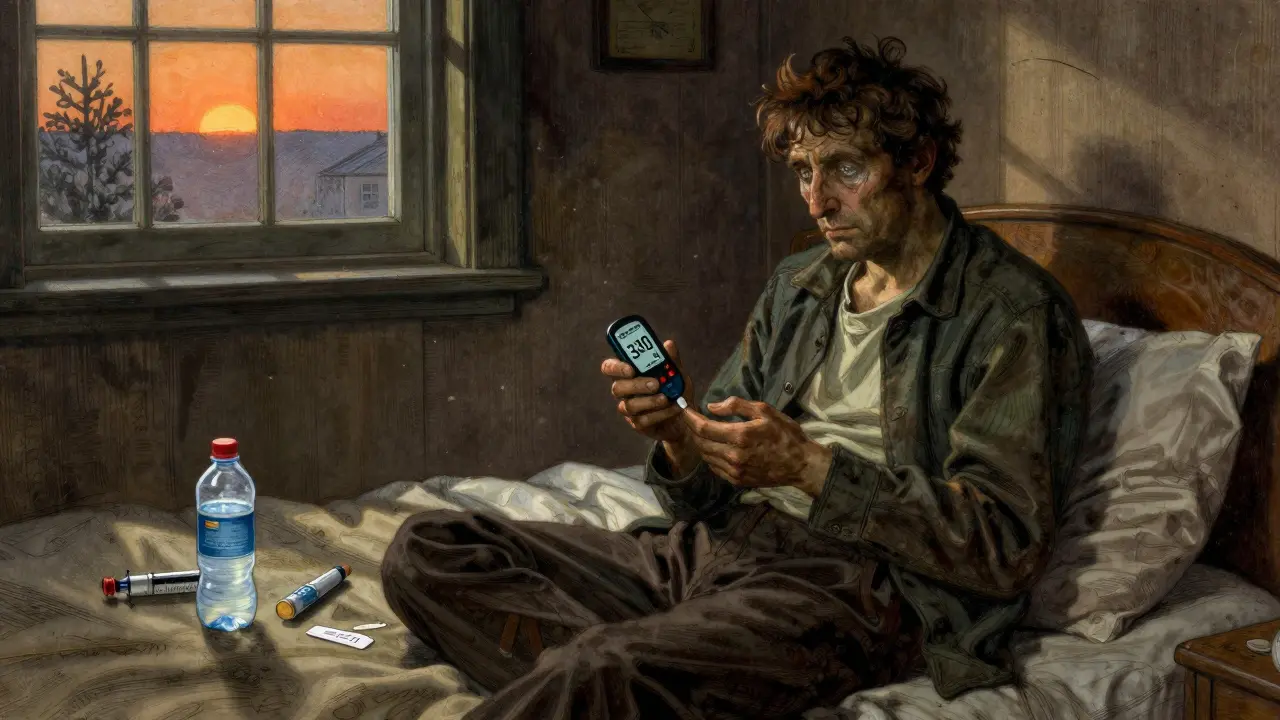
When your blood sugar climbs too high, your body doesn’t just feel off-it starts to break down. Hyperglycemia isn’t just a number on a glucometer. It’s a silent alarm that something’s seriously wrong, especially if you have diabetes. Left unchecked, it can lead to coma, organ damage, or even death. But here’s the truth: most people don’t notice the warning signs until it’s too late. And by then, it’s already an emergency.
What Exactly Is Hyperglycemia?
Hyperglycemia means your blood glucose is higher than it should be. For most people, that’s above 180 mg/dL. It’s not just a fluke. It happens when your body either doesn’t make enough insulin (type 1 diabetes) or can’t use it properly (type 2 diabetes). Without insulin, glucose can’t get into your cells to fuel them. So it piles up in your bloodstream like traffic on a highway with no exits.
It’s not just diabetics who get this. People under extreme stress, those on high-dose steroids, or even after a major infection can spike. But for the vast majority, it’s tied directly to poorly managed diabetes.
Early Warning Signs You Can’t Ignore
The first signs are subtle. Too often, people brush them off. You think you’re just tired from work. Or maybe you’re drinking more water because it’s hot outside. But if you’re peeing every hour, chugging liters of fluids, and still feeling parched-that’s not normal.
- Polyuria: Urinating more than 2.5 liters a day. That’s not just frequent-it’s constant. You’re going every 30 to 60 minutes, even at night.
- Polydipsia: Drinking 4 liters or more of fluid daily and still not satisfied. Water, tea, soda-it doesn’t matter. Your body is screaming for hydration.
- Blurred vision: Your vision gets foggy, like looking through a dirty windshield. This happens because high sugar pulls fluid from your eye lenses. It’s reversible, but it’s a red flag.
- Fatigue: Not just tired. Exhausted. Like your batteries are dead. This isn’t from lack of sleep. It’s because your cells are starving for energy.
These symptoms don’t come and go. They build. And if you’re ignoring them, you’re playing Russian roulette with your health.
When It Gets Worse: The Middle Stage
Once blood sugar hits 250 mg/dL or higher, things shift fast. You start feeling mentally foggy. Concentration vanishes. Headaches become daily. You lose weight without trying-5% or more of your body weight in a few months. That’s not dieting. That’s your body eating itself.
Why? Because without insulin, your body can’t use glucose. So it starts breaking down fat and muscle for fuel. That’s why you’re losing weight even if you’re eating more. Your body’s in survival mode.
And then there’s the smell. A fruity, sweet odor on your breath. It’s not perfume. It’s acetone-the same chemical found in nail polish remover. That’s your body burning fat instead of sugar. And that’s a sign you’re heading into diabetic ketoacidosis.

The Emergency Phase: DKA and HHS
When blood sugar hits 300 mg/dL or higher, you’re in danger. Two life-threatening conditions can follow: diabetic ketoacidosis (DKA) and hyperosmolar hyperglycemic state (HHS).
DKA mostly hits type 1 diabetics. It comes on fast-within 24 to 48 hours. You’ll feel nauseous, have stomach pain, and breathe fast and deep (Kussmaul breathing). Your breath smells like fruit. You might feel confused or dizzy. Blood ketones above 3 mmol/L and pH below 7.3 mean your blood is turning acidic. This kills.
HHS is worse. It mostly affects type 2 diabetics, especially older adults. It creeps in over days or weeks. You’re severely dehydrated-losing 8 to 12 liters of fluid. Your blood is thick, like syrup. You get confused, weak, maybe even have seizures. Your glucose? Over 600 mg/dL. And unlike DKA, you won’t have ketones. That’s why it’s harder to spot.
HHS has a mortality rate of 15-20%. DKA? 1-5%. But both require immediate hospital care. No exceptions.
What Triggers These Crashes?
It’s not just forgetting insulin. Here’s what actually causes most emergencies:
- Illness: Infections-flu, UTIs, pneumonia-raise stress hormones that spike blood sugar. 42% of severe episodes are linked to sickness.
- Insulin pump failure: A clogged line or disconnected device can stop insulin delivery. 18% of emergencies come from this.
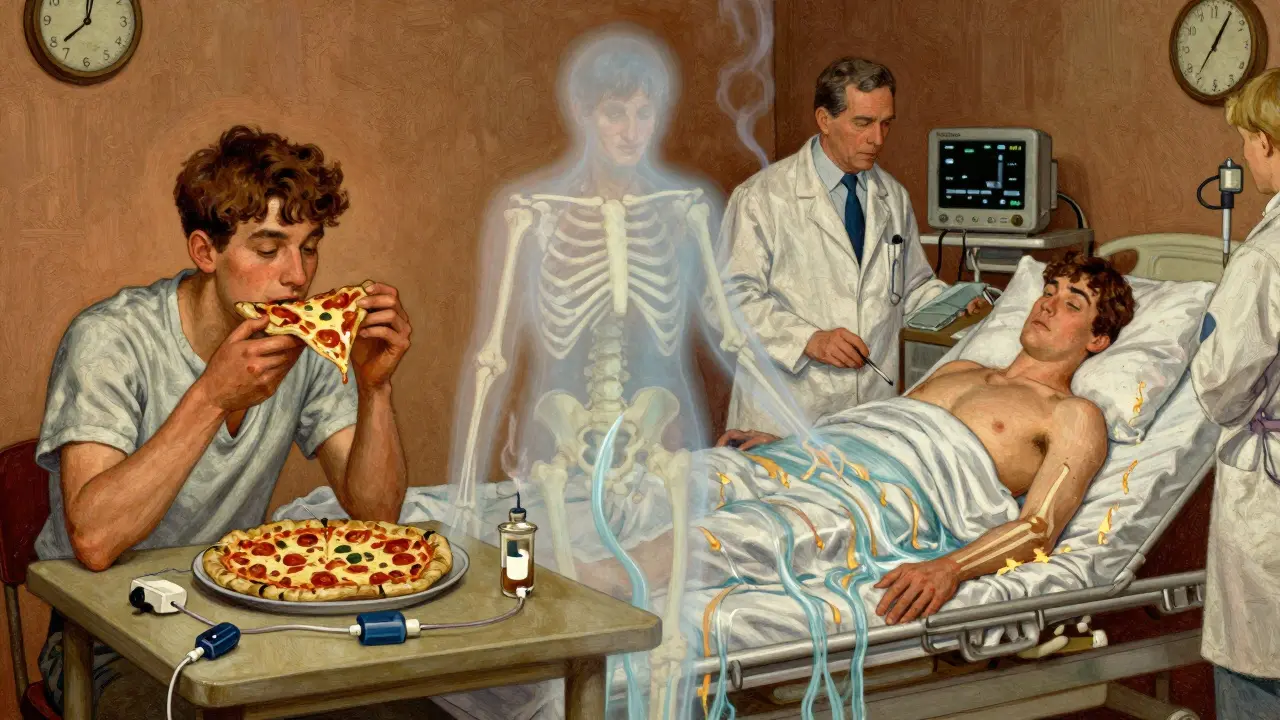
- Carb miscalculation: Eating a pizza, a birthday cake, or a large meal without adjusting insulin. 29% of cases.
- Emotional stress: Grief, anxiety, or even a bad day at work can trigger a spike. 11% of cases.
- Dawn phenomenon: Your body releases hormones between 4-8 a.m. that raise glucose. It’s natural-but if your insulin doesn’t match it, you wake up with 250+ mg/dL.
And here’s the hidden culprit: gastroparesis. A condition where your stomach empties slowly. Medications sit there, get absorbed late, and then crash your blood sugar hours later-leading to overcorrection. Many people don’t even know they have it.
What to Do in an Emergency
If your blood sugar is above 240 mg/dL, don’t wait. Act now.
- Test for ketones. Use a urine strip or blood ketone meter. If ketones are moderate or high, don’t exercise. You’ll make it worse.
- Take your correction insulin. Use your personal insulin-to-carb ratio. Most people need 0.1 units per kg of body weight every hour until glucose drops below 250.
- Drink water. 8-16 oz every hour. Sugar-free fluids only. No soda, no juice. You’re trying to flush out sugar and ketones.
- Monitor every 2 hours. If glucose doesn’t drop after two insulin doses, or if you feel worse-call 911 or go to the ER.
Never try to “wait it out.” And never skip insulin because you’re scared of low blood sugar. The risk of DKA or HHS is far greater.
How to Prevent This From Happening Again
Prevention isn’t about perfection. It’s about consistency.
- Use a CGM. Continuous glucose monitors give real-time alerts. People using them reduce severe hyperglycemia by 57%. Dexcom’s G7 even predicts spikes 30 minutes ahead.
- Know your triggers. Keep a log: What did you eat? Were you sick? Did you skip insulin? Patterns show up fast.
- Adjust for dawn phenomenon. If your morning glucose is consistently high, talk to your doctor about adjusting your basal insulin or using a temporary overnight increase.
- Get educated. Programs like the CDC’s Diabetes Self-Management Education cut ER visits by 42%. You’re not alone.
- Check your insulin. Make sure your pump or pen is working. Change infusion sets every 2-3 days. Store insulin properly-heat ruins it.
And if you’re on steroids, have pancreatitis, or are dealing with Cushing’s syndrome-your hyperglycemia risk is higher. Talk to your endocrinologist. Don’t assume it’s just “diabetes.”
The Bigger Picture
Hyperglycemia isn’t just a personal problem. It’s a systemic one. In the U.S., it causes over 1.2 million hospitalizations a year. Each DKA admission costs $14,200. HHS? $18,500. The total cost? $327 billion annually.
And disparities are real. Black patients have 2.3 times more hyperglycemia emergencies than White patients-not because of biology, but because of access. Insulin costs, transportation, insurance, and education gaps make the difference between life and death.
But hope exists. AI-driven wearables, predictive algorithms, and expanded Medicare coverage for CGMs are changing the game. By 2030, digital health tools could cut hyperglycemia incidents by 60%.
But that future only works if you act today. Not tomorrow. Not next week. Today.
What blood sugar level is considered hyperglycemia?
Hyperglycemia is generally defined as a blood glucose level above 180 mg/dL. Mild cases range from 180-250 mg/dL, moderate from 251-300 mg/dL, and severe is above 300 mg/dL. Emergencies like DKA or HHS occur when levels exceed 250 mg/dL and 600 mg/dL respectively.
Can non-diabetics get hyperglycemia?
Yes. Severe stress, infections, steroid use, pancreatitis, Cushing’s syndrome, or even major trauma can cause temporary hyperglycemia in people without diabetes. These cases usually resolve once the underlying issue is treated, but they still require medical attention.
What’s the difference between DKA and HHS?
DKA (diabetic ketoacidosis) happens mainly in type 1 diabetes, with high ketones and acidic blood (pH <7.3). It comes on fast-within hours. HHS (hyperosmolar hyperglycemic state) occurs in type 2 diabetes, with extreme dehydration and no significant ketones. Blood sugar is usually above 600 mg/dL. HHS develops slowly over days and has a higher death rate, especially in older adults.
How do I know if I need to go to the ER?
Go to the ER if your blood sugar is above 300 mg/dL and doesn’t drop after two insulin doses, if you have moderate to high ketones, if you’re vomiting, confused, having trouble breathing, or can’t keep fluids down. Don’t wait for coma. Act at the first sign of emergency.
Can I treat high blood sugar at home?
Mild to moderate hyperglycemia (180-300 mg/dL) can often be managed at home with insulin correction, hydration, and monitoring. But if symptoms worsen, ketones are present, or glucose stays above 300 mg/dL for more than 6 hours, seek emergency care. Home treatment has limits-know them.
Why does my blood sugar spike in the morning?
This is called the dawn phenomenon. Between 4-8 a.m., your body naturally releases hormones like cortisol and growth hormone, which raise blood sugar. If your insulin doesn’t match this surge, you wake up with high glucose. It’s common in both type 1 and type 2 diabetes. Adjusting basal insulin or using a CGM with predictive alerts can help.
How can I prevent recurrent hyperglycemia?
Use a continuous glucose monitor (CGM) for real-time alerts, track your triggers (food, stress, illness), take insulin as prescribed, check your pump or injection site regularly, and get educated through programs like the CDC’s Diabetes Self-Management Education. Consistency beats perfection.
Jessica Chaloux
March 2, 2026 AT 00:54Deborah Dennis
March 2, 2026 AT 23:04Shivam Pawa
March 4, 2026 AT 05:55Diane Croft
March 4, 2026 AT 20:47Donna Zurick
March 6, 2026 AT 15:14Tobias Mösl
March 8, 2026 AT 12:10tatiana verdesoto
March 10, 2026 AT 02:54Ethan Zeeb
March 10, 2026 AT 13:00