
When you buy a generic pill in Germany, France, or Spain, the price isn’t just set by the manufacturer. It’s shaped by what other countries are paying. This is called international reference pricing-a system where governments look at drug prices in other nations to decide how much they’ll pay for the same medicine at home. For generic drugs, this isn’t just a policy. It’s the main way most European countries keep costs down. But how exactly does it work? And what happens when prices get too low?
How International Reference Pricing Works for Generics
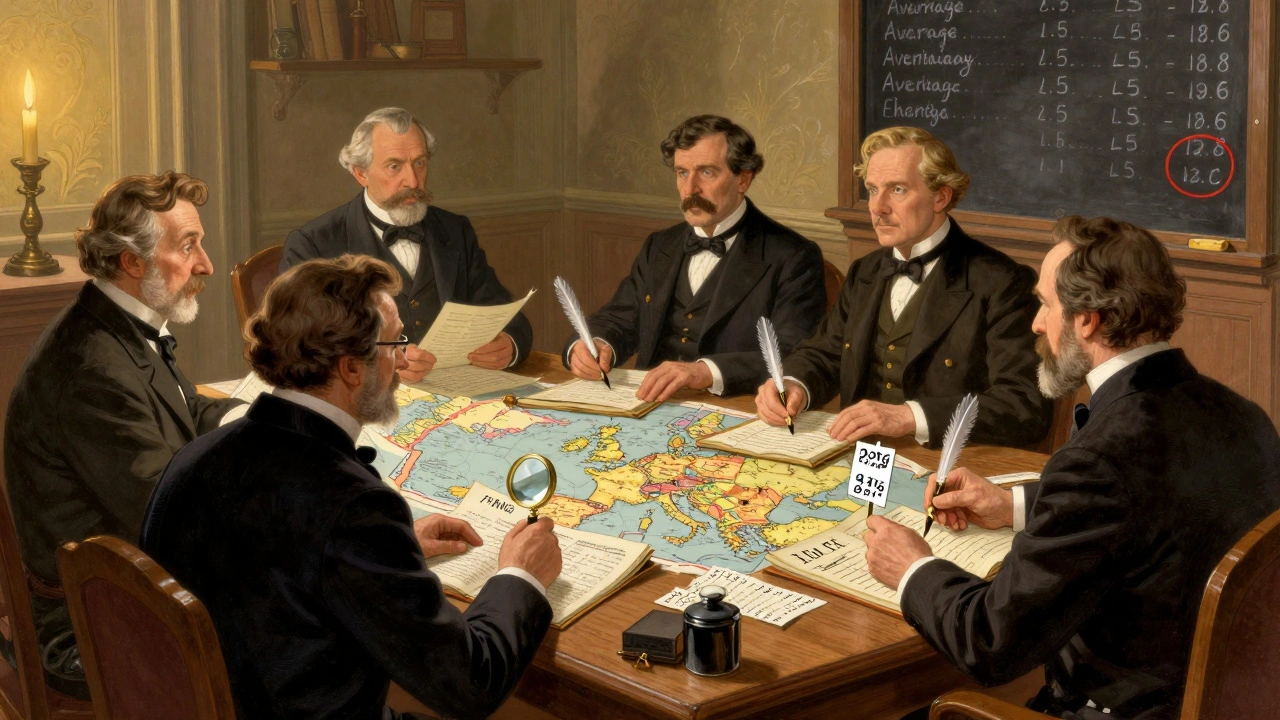
International reference pricing (IRP) for generics doesn’t mean copying the cheapest price from another country. Instead, governments pick a group of similar countries-usually five to seven-and use their average or median drug prices as a benchmark. For example, Germany might look at prices in France, Italy, Spain, the Netherlands, and Austria to set its own reimbursement rate for a generic blood pressure pill.
Most European countries don’t use external reference pricing (comparing prices across borders) alone for generics. They use internal reference pricing: grouping all therapeutically identical generics together and setting one reimbursement price-the lowest in the group plus a small margin. In Germany’s AMNOG system, if five versions of the same generic drug are sold, the government reimburses at the lowest price plus 3%. Manufacturers then compete to be the cheapest. That drives prices down fast.
Some countries, like the Netherlands, mix this with mandatory discounts and tendering. Hospitals bid for the right to supply certain generics, and the lowest bidder wins. This pushes prices even lower. In some cases, generic prices in the Netherlands are 85% below the original branded version.
Which Countries Use It-and How Differently
Of the 38 high-income countries surveyed by the OECD in 2020, 34 use some form of IRP. But for generics, the numbers are even higher: 28 out of 32 European countries apply it. The methods, however, vary widely.
Western European nations like France, Germany, and Spain typically reference each other. Eastern European countries often use Austria, Germany, and the Netherlands as benchmarks. Switzerland has a unique formula: two-thirds of the average international price, plus one-third based on Swiss-specific data. This helps balance global trends with local affordability.
Not all countries use IRP for generics. The U.S. federal government doesn’t. Some states, like Colorado, have tried it for Medicaid generics and saw 12-15% savings. Canada uses IRP only for patented drugs; generics are priced through provincial tendering. In Canada, a generic version of a common antibiotic might cost $2 in Ontario but $5 in Quebec-no cross-border price alignment at all.
Why IRP Works for Generics-But Also Creates Problems
IRP works because generics are chemically identical. There’s no innovation to protect. So governments reason: if Country A pays $0.10 for a pill, why should Country B pay $0.50? The result? Countries using IRP for generics have prices 25-40% lower than those that don’t.
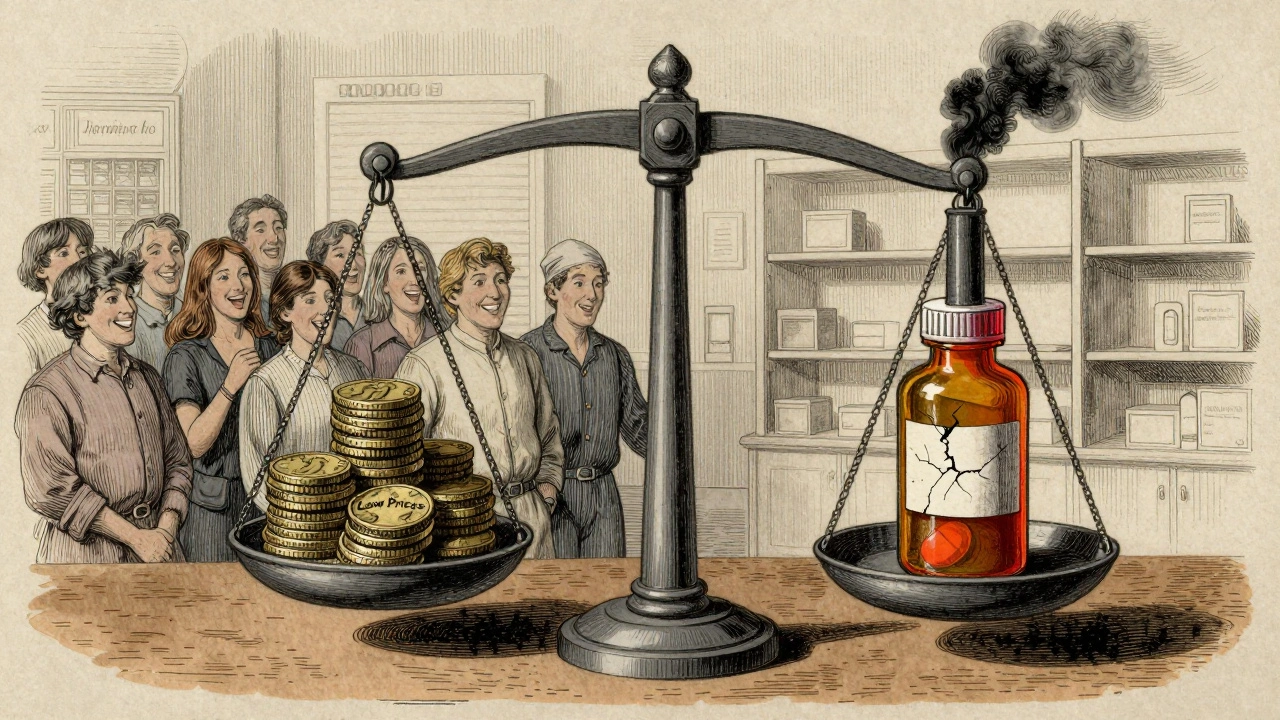
But there’s a cost. When prices are squeezed too hard, manufacturers walk away. In Portugal, 22 generic products disappeared from the market in 2019 because the reimbursement rate didn’t cover production costs. In Greece during its financial crisis, 37% of generic medicines faced shortages. Pharmacies couldn’t stock them because the government’s price was below what it cost to import or produce them.
Another issue is the “pricing spiral.” If Country A lowers its price, Country B follows-and then Country C lowers theirs even further to stay competitive. Everyone ends up paying less, but manufacturers lose money. Teva, one of the world’s biggest generic makers, reported a 9% revenue drop in Europe between 2020 and 2022, even as sales volume rose 15%. Lower prices, same volume, less profit.
Therapeutic Equivalence and Quality Concerns
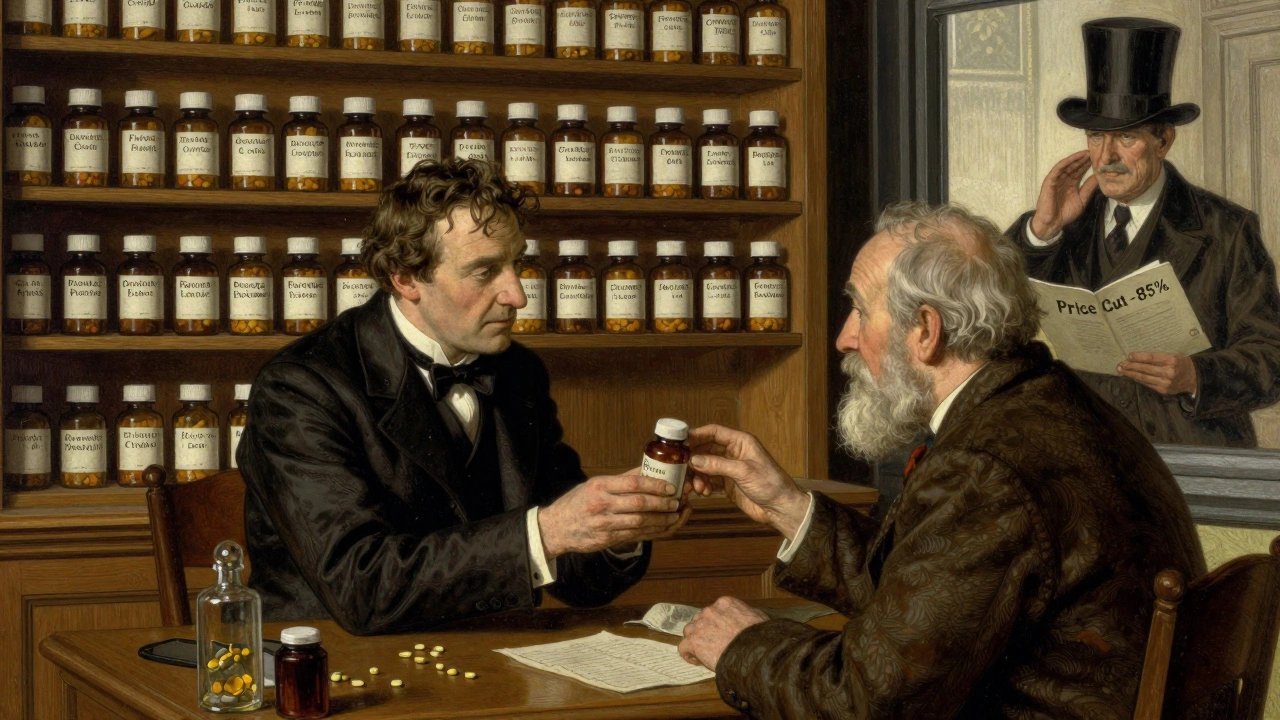
IRP assumes all generics in a group are the same. But they’re not always. A simple tablet might be interchangeable, but complex generics-like inhalers, injectables, or topical creams-can vary in how they’re absorbed, how stable they are, or how they’re manufactured.
Germany’s Federal Joint Committee defines over 1,200 reference groups for generics. Each group includes an average of 8.3 products. But if one product in the group is slightly less effective or causes more side effects, patients still get the cheapest one. Pharmacists in Spain say 89% of prescriptions are now filled with the reference-priced generic-but 63% report occasional shortages of that exact product, forcing substitutions that patients don’t always want.
A 2021 OECD survey found that while 78% of patients were happy with generic substitution, 34% worried about quality differences. One woman in Italy told researchers she switched from a branded cholesterol pill to a cheaper generic-and started feeling dizzy. Her doctor said they were the same. She didn’t believe it. And she wasn’t alone.
How Countries Are Fixing the System
Europe isn’t ignoring the problems. In January 2023, France launched a new “dynamic reference pricing” system that adjusts generic prices every quarter based on market share. If a cheaper generic suddenly dominates, its price gets cut. If a more expensive one gains traction, it might get a small bump. Early results show 8.2% extra savings compared to old static systems.
The European Commission is testing a “European Reference Pricing Platform” that started in April 2023. It’s a pilot covering 15 off-patent drugs across seven countries. By 2025, they plan to expand to 100 medicines. The goal? More transparency, fewer surprises, and less market fragmentation.
Experts like Professor Panos Kanavos from LSE say the sweet spot is using 5-7 reference countries. More than that? Diminishing returns. Countries using 10+ reference nations saw only 31% price reduction-but 12% higher shortage rates. Too many references make the system messy and unstable.
What’s Next for Generic Drug Pricing
The trend isn’t going away. IQVIA predicts that by 2027, 65% of European generic prices will be set by reference pricing-up from 58% in 2022. But the future isn’t just about lower prices. It’s about smarter pricing.
The OECD now recommends tiered reference groups. Not all generics are equal. A simple tablet might need one price rule. A complex injectable, developed over years and costing millions to produce, might need a higher floor. Some countries are starting to factor in manufacturing complexity, not just the cheapest price.
Also, new players are entering the market. Companies like Hikma and Fresenius Kabi are expanding in Europe because they’ve learned to play the IRP game. They produce high-quality generics at low cost and win tenders. Others, especially smaller manufacturers, are getting squeezed out.
For patients, this means more access to affordable pills-but also more risk of shortages. For manufacturers, it means razor-thin margins and pressure to innovate not in drugs, but in production efficiency. For governments, it’s a balancing act: keep prices low, but not so low that no one makes the medicine anymore.
What You Need to Know
If you live in a country that uses IRP for generics:
- Your prescription might be filled with a different brand than you’re used to-but it’s legally the same.
- Shortages can happen, especially if the cheapest version runs out.
- Price changes can occur without warning. A drug you paid $1 for last month might now cost $0.60-or disappear entirely.
- Don’t assume cheaper = worse. Many generics meet the same quality standards as branded drugs.
- If you notice side effects after switching, talk to your doctor. It’s not always the drug-it could be fillers, coatings, or absorption differences.
International reference pricing isn’t perfect. But it’s the most effective tool countries have to control the cost of medicines that don’t need patents. The real challenge isn’t setting prices-it’s setting them right. Low enough to save money, but high enough to keep the medicines coming.
What is international reference pricing for generic drugs?
International reference pricing (IRP) is when a country sets the price of a generic drug by looking at what other countries pay for the same medicine. Instead of letting manufacturers set their own prices, governments use average or median prices from a group of similar countries to determine how much they’ll reimburse pharmacies or hospitals. This system is used by most European nations to control spending on off-patent medications.
Which countries use international reference pricing for generics?
28 of the 32 European countries use some form of IRP for generics. Common reference countries include Germany, France, Italy, Spain, and the Netherlands. Western European nations typically reference each other, while Eastern European countries often use Austria, Germany, and the Netherlands. Outside Europe, only a few U.S. states and Canada’s provinces use limited forms of reference pricing, mostly for public programs like Medicaid.
Does international reference pricing cause drug shortages?
Yes, when prices are set too low. In Greece during its financial crisis, 37% of generic medicines faced shortages because manufacturers couldn’t cover costs. Portugal lost 22 products in 2019 after price cuts made production unprofitable. The issue isn’t IRP itself-it’s how it’s designed. Systems that ignore manufacturing costs or fail to account for supply chain risks are more likely to cause shortages.
Are generic drugs under IRP less effective than branded ones?
Legally, no. Generics must meet the same bioequivalence standards as branded drugs. But some patients report differences in side effects or how quickly the drug works-often due to inactive ingredients, coatings, or how the pill is absorbed. These aren’t always caught in standard tests. If you notice changes after switching to a reference-priced generic, talk to your doctor. It’s rare, but it happens.
Why don’t the U.S. and Canada use international reference pricing for generics?
The U.S. doesn’t use IRP at the federal level because drug pricing is largely market-driven, and Medicare is legally barred from negotiating prices. Some states, like Colorado, have experimented with IRP for Medicaid generics with modest success. Canada uses IRP only for patented drugs through its PMPRB. Generics are priced through provincial tendering systems, where hospitals bid for the lowest price-so there’s no cross-border comparison.
How often do countries update generic drug prices under IRP?
Most update annually or semi-annually. France now updates quarterly under its new dynamic system. Greece did quarterly updates during its financial crisis to respond to fast-moving prices. The frequency depends on how volatile the market is. More frequent updates mean lower prices-but also more instability for manufacturers and pharmacies.
What’s the future of international reference pricing for generics?
The trend is toward more sophisticated systems. Instead of just comparing prices, countries are starting to consider manufacturing complexity. The EU’s new pilot platform will cover 100 medicines by 2025. Experts predict that by 2027, 65% of European generic prices will be set by IRP-but with tiered groups for simple vs. complex drugs. The goal isn’t just cheaper pills, but sustainable access.
What This Means for Patients and Providers
For patients, IRP means more affordable medicines-but also more uncertainty. You might get a different brand each time you refill. You might wait longer if the cheapest version is out of stock. But you’re also paying less. For doctors and pharmacists, it means more administrative work: tracking which generics are in the reference group, explaining substitutions, and managing patient concerns.
For policymakers, the challenge is clear: how do you keep prices low without breaking the supply chain? The answer isn’t to abandon IRP. It’s to refine it. Better baskets. Better data. Better rules for complex generics. The system isn’t broken-it’s just growing up.
Benjamin Sedler
December 5, 2025 AT 03:17So let me get this straight - we’re telling drug companies they can’t make a profit because some European country decided $0.07 is ‘fair’? Bro, if you want cheap pills, go buy them from a guy in a van in Tijuana. At least he doesn’t need a PhD in economics to figure out supply and demand.
Carolyn Ford
December 6, 2025 AT 05:31Oh, so now we’re pretending generics are all the same?!! Really?!! Let me guess - you also think all iPhones are the same because they all have a screen and a home button?! The inactive ingredients? The coating? The dissolution rate?!! The FDA doesn’t even test for *those* properly!! And now you want to force patients to take whatever’s cheapest??!! This isn’t healthcare - it’s pharmaceutical Russian roulette!!
Pavan Kankala
December 7, 2025 AT 06:54They don’t want you to know this - but the real reason they do IRP is to funnel money into Big Pharma’s offshore shell companies. The ‘cheapest’ generics? They’re made in China by factories that pay workers 30 cents an hour. The ‘quality’? A joke. The ‘equivalence’? A marketing lie. You think your blood pressure pill is safe? Ask yourself - who really benefits when a man in Berlin gets his pill for $0.02? Not you. Not me. Someone else.
Yasmine Hajar
December 8, 2025 AT 08:50Y’all need to chill. I’ve been on generics for 8 years - and honestly? I’ve saved hundreds. I get the fear, I do - but I’ve switched brands three times and never had an issue. The system’s not perfect, but it’s working for millions. Let’s not throw the baby out with the bathwater. Maybe we just need better transparency - not panic. And hey - if your doctor says it’s safe, trust the science, not the fear-mongers. We got this 💪
Karl Barrett
December 8, 2025 AT 11:48The structural inefficiencies inherent in the current IRP paradigm stem from a fundamental misalignment between marginal cost pricing and the non-linear economies of scale in pharmaceutical manufacturing. When reference pricing ignores the fixed-cost amortization of GMP compliance, bioequivalence testing, and supply chain logistics - you don’t get ‘cheaper drugs’ - you get supply chain collapse. The elasticity of supply for complex generics is near-zero below a certain threshold - yet policymakers treat them like commodities. This is not economics. It’s mathematical nihilism.
Jake Deeds
December 8, 2025 AT 19:11It’s so easy to call this ‘smart policy’ - until you’re the one standing in a pharmacy, holding a prescription for a drug that no longer exists. And then you’re told, ‘Oh, it’s just a different brand!’ - but your body doesn’t care about the label. It cares about how you feel. And if you feel like garbage because some bureaucrat in Brussels decided your pill should cost 37 cents? That’s not progress. That’s cruelty disguised as efficiency.
George Graham
December 9, 2025 AT 19:42I’ve worked in community pharmacy for 15 years. I’ve seen patients cry because their cholesterol med disappeared. I’ve had to explain why the pill that worked for 3 years suddenly doesn’t. But I’ve also seen people who couldn’t afford their meds before - now they’re taking them daily. It’s messy. It’s unfair. But it’s not evil. The fix isn’t to scrap IRP - it’s to add safety nets. Tiered pricing for complex drugs. Stockpile reserves. Manufacturer guarantees. We know how to do this. We just need the will.
Augusta Barlow
December 11, 2025 AT 12:28Did you know that in 2018, the WHO quietly admitted that over 70% of generic drugs sold in Europe have unreported bioavailability variations beyond the 80-125% FDA tolerance? And that’s just the ones they tested. The rest? No data. No oversight. And now we’re forcing all 1,200 reference groups in Germany to be interchangeable? What happens when the guy who made your blood thinner in India used a different solvent than the one in Spain? You don’t die immediately. You just… get weird. Fatigue. Brain fog. Heart palpitations. And then the doctor says, ‘It’s all in your head.’ But it’s not. It’s the pill. And they don’t test for that. They test for the active ingredient - not the rest. The rest is what makes you sick.
Jenny Rogers
December 13, 2025 AT 05:05It is, without question, a moral imperative that the provision of essential pharmaceuticals must not be subjected to the whims of market speculation or the profit-maximization imperatives of multinational conglomerates. The ethical framework underpinning public health policy must prioritize equitable access over corporate fiscal interests - a principle which, regrettably, has been eroded in jurisdictions where deregulation and neoliberal orthodoxy have taken precedence. International reference pricing, when implemented with rigorous oversight and contextual sensitivity, represents not merely a fiscal tool, but a profound expression of social justice.
Rachel Bonaparte
December 14, 2025 AT 21:23Oh, so now we’re just going to pretend that ‘the system works’ because some PhD in London says so? Let me tell you - the EU’s ‘pilot platform’? It’s a PR stunt. The same companies that own the big brands own the ‘cheap’ generics. They just rebrand them. You think Hikma is some little guy? They’re owned by a Dubai fund. And the ‘quality’? It’s all the same factory. Same machine. Same workers. Same quality control. You think your $0.05 pill is different from the $0.50 one? It’s not. It’s just cheaper because the company stopped paying for fancy packaging and customer service. And you’re okay with that? Because you’re ‘saving money’? Wake up.
Ollie Newland
December 16, 2025 AT 16:13My mate in Manchester got his asthma inhaler cut from £8 to £1.50 last year. He’s been fine. But his mate down the road? His went from £8 to £0.80 - and now he’s got a cough that won’t quit. The pharmacist says it’s the same. But the puff feels different. And now he’s got to see a specialist. So who’s really saving money? Not him. Not the NHS. We need to stop treating meds like toilet paper.
Rebecca Braatz
December 17, 2025 AT 03:15Hey - if you’re scared of switching generics, you’re not alone. But here’s the thing: talk to your pharmacist. Ask them what’s in the pill. Ask if it’s got the same fillers. Ask if they’ve seen others have issues. You’re not being paranoid - you’re being smart. And if something feels off? Speak up. Your voice matters. We can fix this - but only if we don’t stay silent. You got this. 💙
Michael Feldstein
December 17, 2025 AT 20:26Interesting point about the ‘pricing spiral’ - but have you considered the reverse? What if countries started using *highest* reference prices as a floor? Not to inflate costs, but to prevent the race to the bottom. If Germany pays $0.15, and France pays $0.12, why should Spain drop to $0.08? Maybe we set a minimum threshold - say, 70% of the median - and let competition happen above it. That way, innovation in production efficiency is rewarded, not punished.
jagdish kumar
December 19, 2025 AT 06:38Generics are not medicine. They are commerce.