
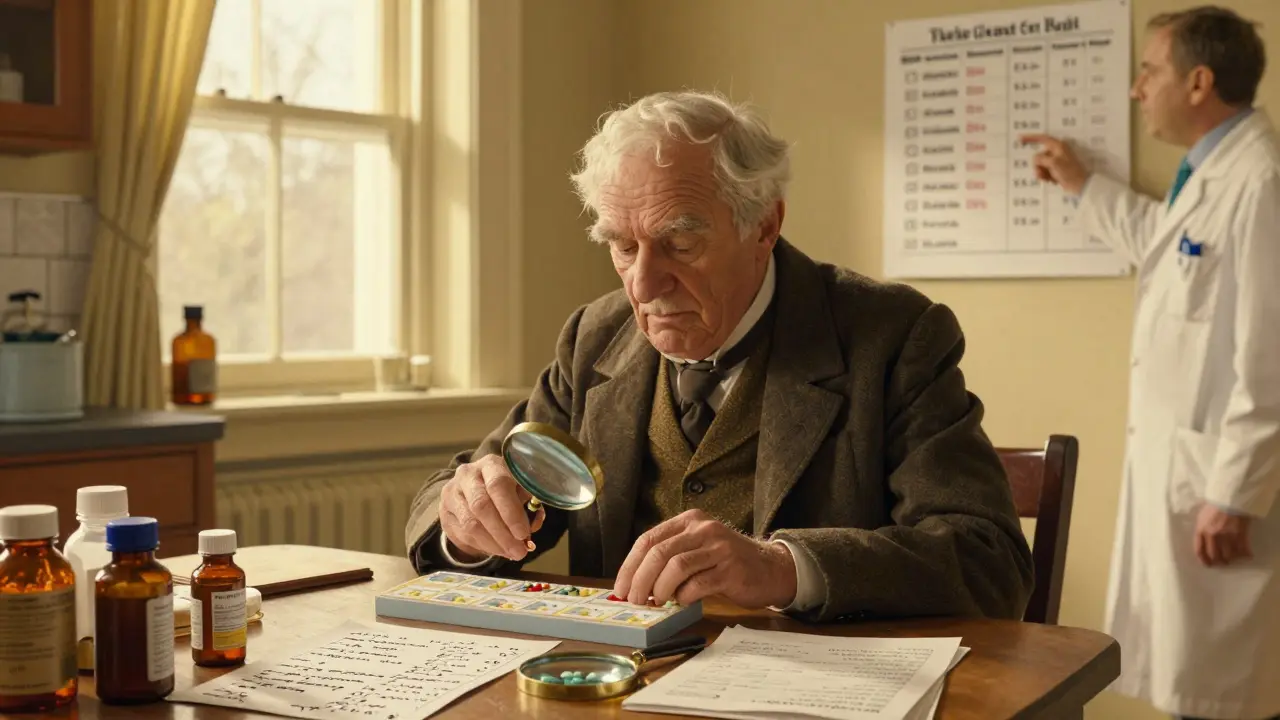
More than one in five older adults in the U.S. are taking ten or more prescription drugs every day. That’s not just common-it’s dangerous. When you’re juggling five or more medications at once, you’re in what doctors call polypharmacy. It’s not the number alone that’s the problem. It’s the hidden risks: drugs clashing with each other, side effects masking new health issues, and pills being kept long after they’re needed. The good news? You can take control. Safe polypharmacy isn’t about cutting pills blindly. It’s about smart, step-by-step management-with your doctor, pharmacist, and your own actions working together.
What Makes Polypharmacy Risky?
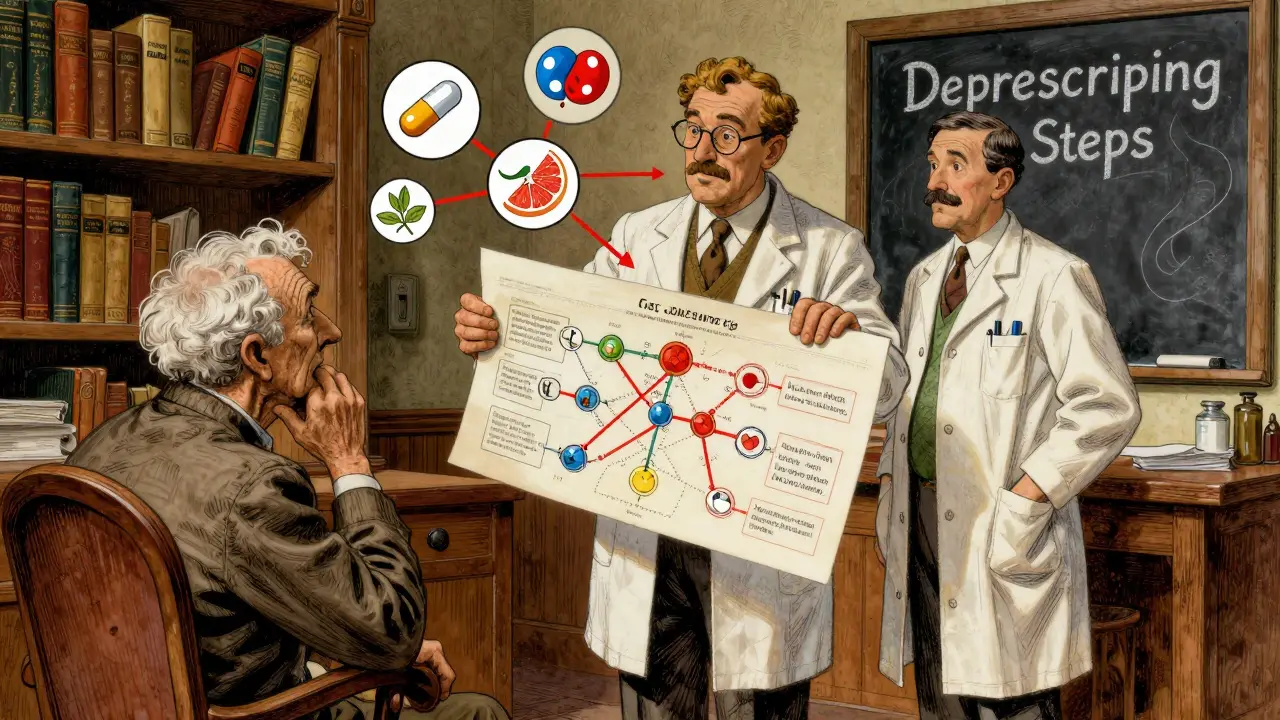
Polypharmacy isn’t automatically bad. If you have heart disease, diabetes, arthritis, and high blood pressure, you likely need several medications. That’s appropriate polypharmacy-each drug has a clear purpose, works as intended, and the benefits outweigh the risks. The real danger comes from inappropriate polypharmacy: drugs with no clear reason, duplicates, or ones that cause more harm than good. One of the biggest traps is the prescribing cascade. You take a medication for high blood pressure, and it gives you dizziness. Instead of adjusting the original drug, your doctor prescribes another for the dizziness. Now you’re on two pills for one problem. That’s how you end up with 12 medications when you really needed three. Studies show nearly 20% of older adults are on at least one medication that shouldn’t be there. Another silent risk? Over-the-counter drugs and supplements. A daily aspirin, a sleep aid, or that herbal ginkgo biloba you think is harmless? They all interact. Grapefruit juice can make cholesterol meds toxic. St. John’s wort can cancel out antidepressants. And if you’re seeing three different doctors, none of them may know what the others prescribed.Five Steps to Safer Medication Use
The World Health Organization lays out a clear, proven path to safer polypharmacy. You don’t need to be a doctor to follow it.- Know exactly what you’re taking-and why. Write down every pill, patch, injection, vitamin, and herb. Include the dose, how often you take it, and which doctor prescribed it. Example: Lipitor 20 mg, once at night, for high cholesterol, Dr. Chen. Don’t rely on memory. Keep this list in your wallet, phone, and with a family member.
- Bring all your meds to every appointment. Not a list. The actual bottles. Your pharmacist can spot duplicates, expired pills, or dangerous combinations you didn’t even know existed. Many interactions happen because no one ever saw the full picture.
- Ask: Is this still necessary? At every checkup, ask your doctor: “Is this medicine still helping? Could I stop it?” Some drugs-like certain painkillers, sleeping pills, or acid reflux meds-are meant for short-term use. If you’ve been on them for years, they may be doing more harm than good.
- Use one pharmacy. It sounds simple, but it’s powerful. One pharmacy means one system tracking all your drugs. They can flag interactions before you even leave the counter. Chain pharmacies have databases that connect across locations. Independent pharmacies often know you by name and remember your history.
- Watch for new symptoms. If you start feeling foggy, dizzy, nauseous, or unusually tired after starting a new drug-or even after a dose change-don’t ignore it. Call your doctor or pharmacist immediately. That’s not just a side effect. It could be a drug interaction.
Deprescribing: Stopping Drugs Safely
Stopping a medication isn’t as simple as tossing the bottle. Some drugs need to come off slowly. Beta-blockers for heart conditions, antidepressants, or steroids can cause serious rebound effects if stopped cold. That’s why deprescribing-the planned, gradual reduction of unnecessary meds-must be guided by a professional. Research shows that when doctors and patients work together to deprescribe, outcomes improve. People feel better, have fewer falls, and report higher quality of life. But it’s not about reducing the total number of pills. It’s about removing the ones that don’t belong. Ask your doctor:- Which of my meds has the highest risk and lowest benefit?
- What would happen if I stopped this one?
- How should I taper off safely?
- What symptoms should I watch for?
How Your Team Can Help
Managing multiple meds isn’t something you should do alone. It’s a team sport. Your doctor decides what to start or stop based on your health goals. But your pharmacist is the hidden hero. They spot interactions, check for duplications, and can suggest cheaper or safer alternatives. Many clinics now include pharmacists in routine visits for patients on five or more meds. Your nurse or care coordinator can help you set up pill organizers, remind you of appointments, and track changes after hospital visits. Medication reconciliation-reviewing your full list when you’re discharged from the hospital-is one of the most important safety steps. Studies show up to 30% of readmissions in older adults are due to medication errors after discharge. And don’t forget your family or caregiver. They can help you remember to take pills, notice changes in behavior, and speak up if something seems off. Many patients don’t report side effects because they think it’s just “getting older.” But fatigue, confusion, or loss of appetite aren’t normal aging-they’re red flags.Building Daily Routines That Stick
Taking 10 pills a day is overwhelming. The key to staying on track? Tie your meds to habits you already have. Put your morning pills next to your toothbrush. Keep your evening ones in your nightstand with your water glass. Use a pill organizer with days and times labeled. Set phone alarms-not just one, but two, with different tones. If you miss a dose, don’t double up. Call your pharmacist. They’ll tell you what to do based on the specific drug. Some are okay to take late. Others are dangerous to double. Also, review your list every three months. Did you stop taking that anxiety pill after therapy? Did your blood pressure improve so you no longer need the full dose? Update your list. Bring the new version to your next visit.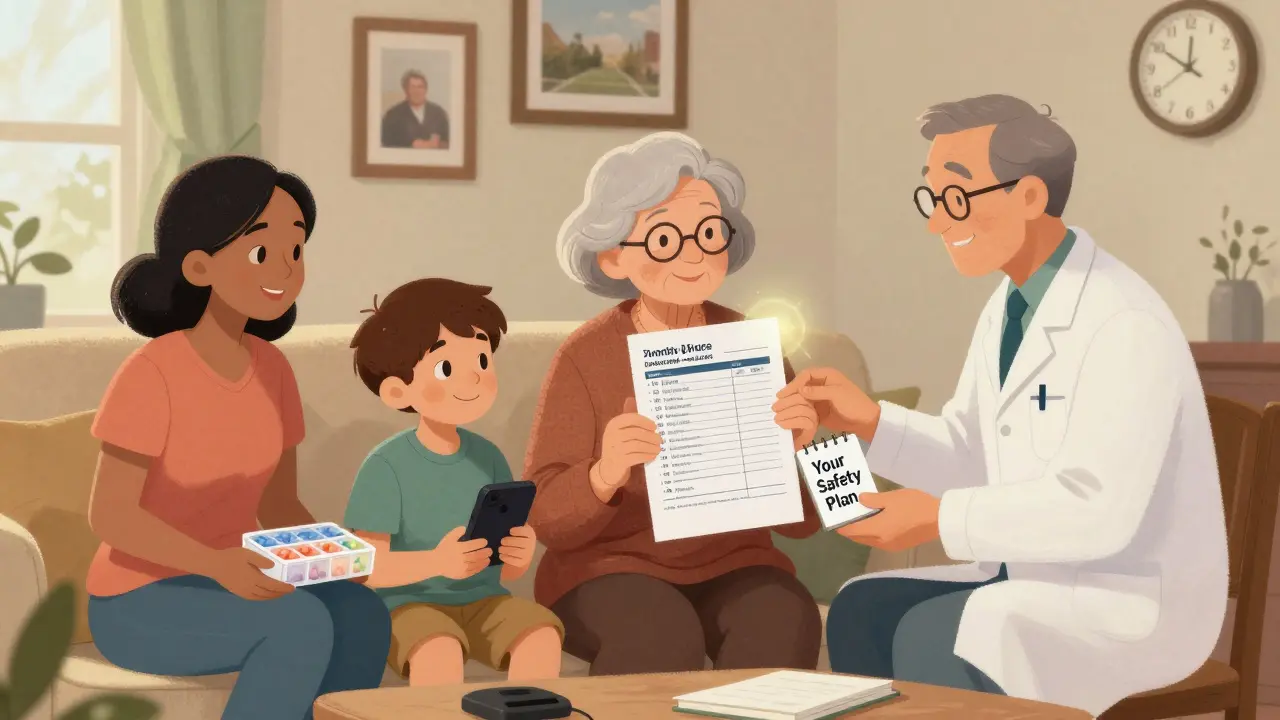
What to Ask Your Doctor Next Time
Next time you see your provider, ask these questions:- Which of my medications are essential, and which might I be able to stop?
- Are any of these drugs being used to treat side effects of another drug?
- Have you checked for interactions with my vitamins or supplements?
- Can we simplify my schedule? Can I take fewer pills per day?
- What signs should I watch for that mean a drug might not be right for me anymore?
Final Thought: It’s Not About Fewer Pills. It’s About Better Health.
The goal isn’t to cut your meds to the bare minimum. It’s to make sure every single one is working for you-not against you. A person on six well-chosen, carefully monitored drugs can live better than someone on twelve with hidden risks. Start today. Write down your list. Bring your bottles. Ask one question at your next appointment. Small steps prevent big problems. And in the end, that’s what safe polypharmacy is all about: keeping you healthy, not just busy with pills.What is polypharmacy?
Polypharmacy means taking five or more medications at the same time. It’s common in older adults and people with multiple chronic conditions. While some polypharmacy is necessary and safe, it becomes risky when medications are unnecessary, duplicate each other, or cause harmful interactions.
Can over-the-counter drugs and supplements cause dangerous interactions?
Yes. Common OTC drugs like ibuprofen, antacids, and sleep aids, along with supplements like St. John’s wort, ginkgo, or fish oil, can interfere with prescription medications. For example, ibuprofen can raise blood pressure and damage kidneys when taken with certain heart or kidney meds. Always tell your doctor or pharmacist about everything you’re taking-even if you think it’s harmless.
What is deprescribing, and is it safe?
Deprescribing is the planned, gradual process of stopping medications that are no longer beneficial or may be causing harm. It’s safe when done under medical supervision. Some drugs, like antidepressants or blood pressure medications, need to be tapered slowly to avoid withdrawal or rebound effects. Never stop a medication on your own.
Why should I use just one pharmacy?
One pharmacy means one complete record of all your prescriptions, OTC drugs, and supplements. Pharmacists can check for dangerous interactions between all your meds, alert you to duplicates, and even suggest cheaper alternatives. If you switch pharmacies, that safety net disappears.
How often should I review my medication list?
Review your list every three months, or whenever you see a new doctor, are discharged from the hospital, or start or stop any medication. Update your list immediately and bring the new version to your next appointment. Medications that were helpful a year ago may no longer be needed.
What should I do if I experience new side effects?
Contact your pharmacist or doctor right away. Don’t assume it’s just aging. New fatigue, confusion, dizziness, nausea, or unexplained bruising can signal a drug interaction. Keep a symptom diary noting when it started, what meds you took, and how bad it is. This helps your provider identify the cause faster.
Cara C
December 21, 2025 AT 16:17I used to be terrified of my meds until I started bringing all the bottles to my appointments. My pharmacist caught three duplicates I didn’t even know about. One was a generic and brand name of the same blood pressure pill. I almost had a stroke from overdosing on it. Now I keep my list on my phone and in my wallet. It’s not glamorous but it saved my life.
Also, never underestimate the power of one pharmacy. I switched to CVS after my old one closed and suddenly they started warning me about interactions I’d been ignoring for years. They’re not just cashiers-they’re your secret health squad.
mukesh matav
December 22, 2025 AT 19:12Interesting read. I’ve seen this happen in my family-my uncle took 14 pills a day. No one questioned it. Then he started falling. Turned out three of them were for side effects of others. He’s down to six now. Feels like a new man. Not because he took less-but because he took the right ones.
Peggy Adams
December 23, 2025 AT 17:58They say ‘ask your doctor’ like they’re not just profit-driven salesmen pushing pills. My grandma got prescribed 8 new meds after a fall. Turns out the ‘dizziness’ was just dehydration. They never asked if she drank water. Big Pharma doesn’t want you to stop pills-they want you to keep buying them. Deprescribing? More like depowering patients.
And don’t get me started on supplements. They’re all just placebo candy with a fancy label. But hey, if you wanna waste money on ginkgo biloba, go ahead. I’ll be over here drinking tap water and living longer.
Sarah Williams
December 25, 2025 AT 08:38Just started doing the bottle-to-the-doctor thing last week. My mom cried when I told her we were cutting her nighttime sleep pill. She said she’d been taking it for 12 years and didn’t know she could stop. We did it slow. Two weeks later she says she’s sleeping better without it. Turns out the pill was making her groggy all day. Who knew?
You don’t need to be a genius to do this. Just care enough to ask.
Jay lawch
December 25, 2025 AT 19:50Let us not forget the global context. In India, where I come from, polypharmacy is not a ‘problem’-it’s a symptom of a broken system. Here in the West, you have specialists who prescribe without communication. In my country, you have a single general practitioner who gives you ten prescriptions because he doesn’t know what else to do. The real issue is not the pills-it’s the lack of integrated healthcare infrastructure. You can’t fix polypharmacy with a list. You need systemic reform. You need doctors trained in geriatric pharmacology, not just revenue targets. And you need governments to stop letting pharmaceutical companies dictate treatment norms. The WHO guidelines are nice, but they don’t fix a healthcare industry that treats humans like pill-dispensing machines.
And don’t get me started on the ‘one pharmacy’ advice. In rural areas, there’s one pharmacy for 50 miles. And it’s owned by the same guy who sells you painkillers and chai. There’s no database. No alerts. Just trust and prayer.
Christina Weber
December 26, 2025 AT 01:02There are multiple grammatical and structural errors in this article. For example, the opening paragraph contains a dangling modifier: ‘That’s not just common-it’s dangerous.’ The subject ‘more than one in five older adults’ is not the subject of ‘that’s.’ Also, the phrase ‘drugs clashing with each other’ is unscientific and colloquial. Furthermore, the use of ‘pill’ instead of ‘medication’ or ‘pharmaceutical agent’ is inappropriate in a medical context. And the claim that ‘20% of older adults are on at least one medication that shouldn’t be there’ is cited without a reference. Where is the peer-reviewed source? This is not journalism-it’s alarmist clickbait dressed as public health advice.
Also, the advice to ‘bring all your meds’ is dangerous. Some medications, especially controlled substances, should not be transported in unsecured containers. And the suggestion to ‘ask your doctor if you can stop’ is irresponsible without first consulting a clinical pharmacist. You are encouraging laypeople to make clinical decisions. This is unethical.
Dan Adkins
December 26, 2025 AT 13:10It is with profound respect for the sanctity of medical science that I address this matter. The notion that laypersons can or should engage in the de-escalation of pharmacological regimens without formal clinical training is not merely ill-advised-it is a direct affront to the integrity of the medical profession. The pharmaceutical industry, while imperfect, operates under rigorous regulatory frameworks that ensure safety, efficacy, and reproducibility. To suggest that a patient, armed with nothing but a list and a smartphone, can independently determine the necessity of a beta-blocker or an SSRI is not empowerment-it is epistemic arrogance.
Moreover, the recommendation to utilize a single pharmacy is commendable, yet insufficient. What is required is a centralized, federally mandated electronic health record system with real-time pharmacovigilance protocols, interoperable across all prescribers, pharmacies, and insurers. Until such infrastructure is implemented, any advice to ‘ask questions’ is little more than a placebo for systemic failure.
And let us not forget: the aging population is not a problem to be managed by reducing pills. It is a demographic imperative demanding institutional innovation. The solution is not in individual behavior modification, but in structural investment in geriatric pharmacology, multidisciplinary care teams, and universal access to clinical pharmacists. Until then, we are merely rearranging deck chairs on the Titanic.
Grace Rehman
December 26, 2025 AT 19:04So we’re supposed to be grateful that the system lets us live long enough to become walking pharmacy shelves
My dad’s on 11 meds. He can’t remember which one’s for what. He takes them all at once like candy. The doctor says ‘it’s fine.’ The pharmacist says ‘it’s fine.’ The nurse says ‘it’s fine.’ But his eyes are glassy and he keeps falling
Turns out the ‘dizziness’ was from the blood pressure pill he’s been on since 2008. No one checked if it was still needed. No one asked. Just kept adding more to fix the side effects of the others
Deprescribing isn’t magic. It’s just common sense. But somehow in this country, common sense is the rarest drug of all
And yeah I know I’m being sarcastic. But what else can you do when the system’s designed to keep you medicated, not healed
Cara C
December 27, 2025 AT 01:50Grace, you just nailed it. My mom’s doctor said ‘it’s fine’ for years too. Then she started hallucinating. Turns out it was the antihistamine she’d been taking for allergies since 2010. No one ever questioned it. She’s off it now. No more ghosts in the living room.
Thanks for saying what we’re all thinking.