
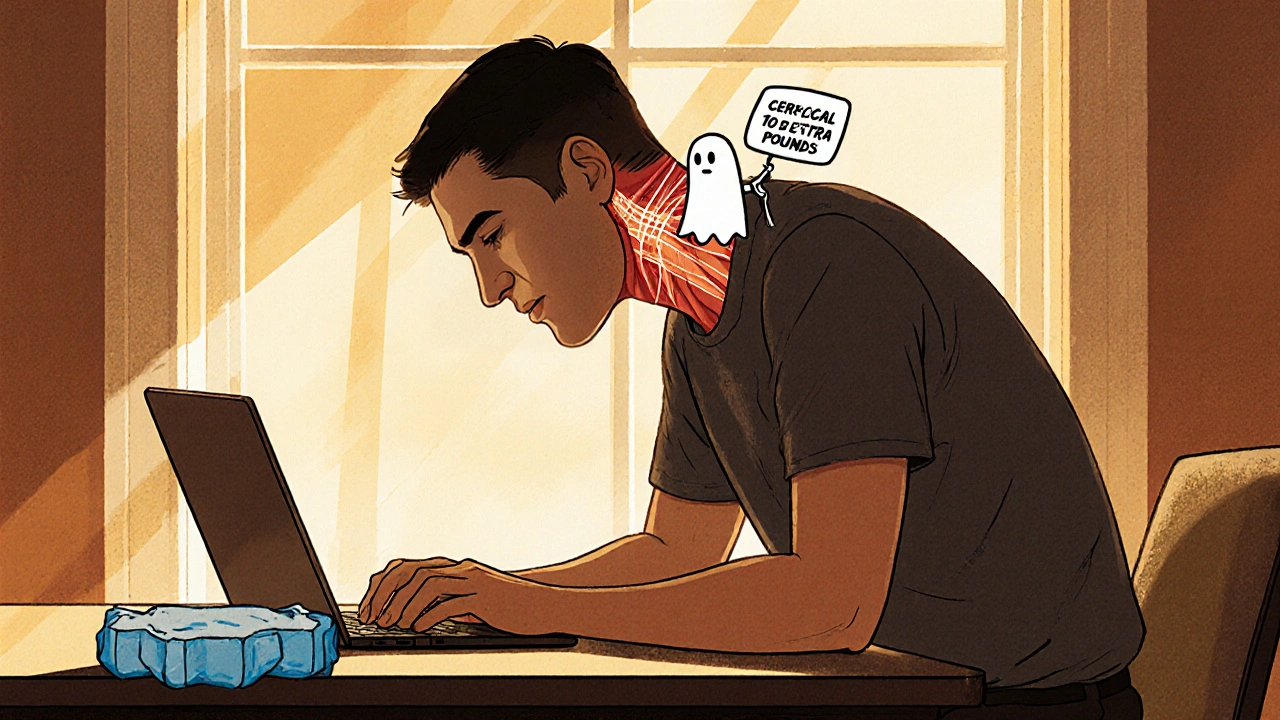
Neck pain isn’t just an annoyance-it’s one of the most common reasons people visit a doctor. If you’ve ever woken up with your neck locked up, or felt a sharp ache after staring at a screen too long, you’re not alone. About cervical strain is behind 60-70% of all acute neck pain cases seen in clinics. It’s not a herniated disc or a pinched nerve. It’s your muscles and tendons overstretched, torn, or inflamed from sudden movement, poor posture, or even sleeping funny. The good news? Most cases heal quickly-with the right approach.
What Exactly Is Cervical Strain?
Cervical strain happens when the soft tissues in your neck-muscles like the trapezius and levator scapulae, or tendons and ligaments-get pulled beyond their limit. Think of it like a rubber band snapped too far. It doesn’t break completely, but it’s damaged enough to hurt. This isn’t something that happens overnight in a car crash (though whiplash is a classic example). More often, it builds up slowly: hunching over a laptop, cradling a phone between ear and shoulder, or turning your head sharply while reaching for something.
Unlike other neck problems, cervical strain doesn’t cause numbness or tingling down your arm. That’s a sign of nerve compression, like radiculopathy. Strain pain stays put-right in your neck, upper back, or shoulders. You’ll feel stiffness when turning your head, tenderness when touching the area, and pain that gets worse with movement. Most people rate their pain between 4 and 6 out of 10 during the first few days. It’s not unbearable, but it’s enough to make you avoid looking over your shoulder, checking your blind spot while driving, or even sleeping on your side.
How Bad Is It? Mild, Moderate, or Severe?
Not all cervical strains are the same. The severity depends on how much tissue is damaged.
- Mild strain: Tiny tears in muscle fibers. Pain starts within hours, peaks in 1-2 days, and fades in 48-72 hours. You can still move your neck, just with discomfort.
- Moderate strain: Partial tearing. Pain lasts 1-2 weeks. Swelling and stiffness are noticeable. Turning your head fully might be impossible without pain.
- Severe strain: Near-complete or full tear. Recovery takes 6-12 weeks. You might feel a pop at the time of injury. Pain is constant, even at rest. Medical evaluation is needed.
Most people fall into the mild to moderate range. But here’s the catch: if you ignore it or treat it wrong, it can turn chronic. Around 10-15% of acute cases become long-term problems, often because people rest too much or never fix the posture habits that caused it in the first place.
What’s Not Neck Strain? Ruling Out Other Causes
Not every neck ache is a strain. It’s easy to assume the worst, but many other conditions mimic it.
- Cervical radiculopathy: Nerve pinching. Causes shooting pain, numbness, or weakness in the arm or hand. Often from a bulging disc.
- Cervical osteoarthritis: Wear-and-tear arthritis. Pain builds slowly over months. You might feel grinding or clicking when you move your neck. Common in people over 60.
- Cervical stenosis: Narrowing of the spinal canal. Causes balance issues, leg weakness, or trouble with bladder control. Rare, but serious.
- Rheumatoid arthritis: Autoimmune. Morning stiffness lasts more than 30 minutes. Usually affects multiple joints.
Key clue? Strain pain gets worse with movement and better with rest. If your pain is constant, worse in the morning, or spreads to your arm, it’s probably something else. Don’t self-diagnose-but knowing the difference helps you ask the right questions.
What Works: Evidence-Based Treatment Steps
There’s no magic pill. The best treatment for cervical strain is a mix of smart rest, movement, and patience.
Days 1-3: Reduce Inflammation, Don’t Freeze
Ice is your friend-but only for the first 72 hours. Apply a cold pack for 15-20 minutes every 2-3 hours. Studies show this cuts pain by 32% compared to just waiting it out. Avoid heat early on-it can increase swelling.
Rest? Yes. But not total bed rest. Stay gently active. Walk around. Sit upright. Lying flat for hours actually slows healing. Research from Mayo Clinic found that patients who stayed lightly active recovered 37% faster than those who wore neck braces for days.
Days 4-14: Move It Back Slowly
Now it’s time to start moving. Not just stretching-specific, controlled movements.
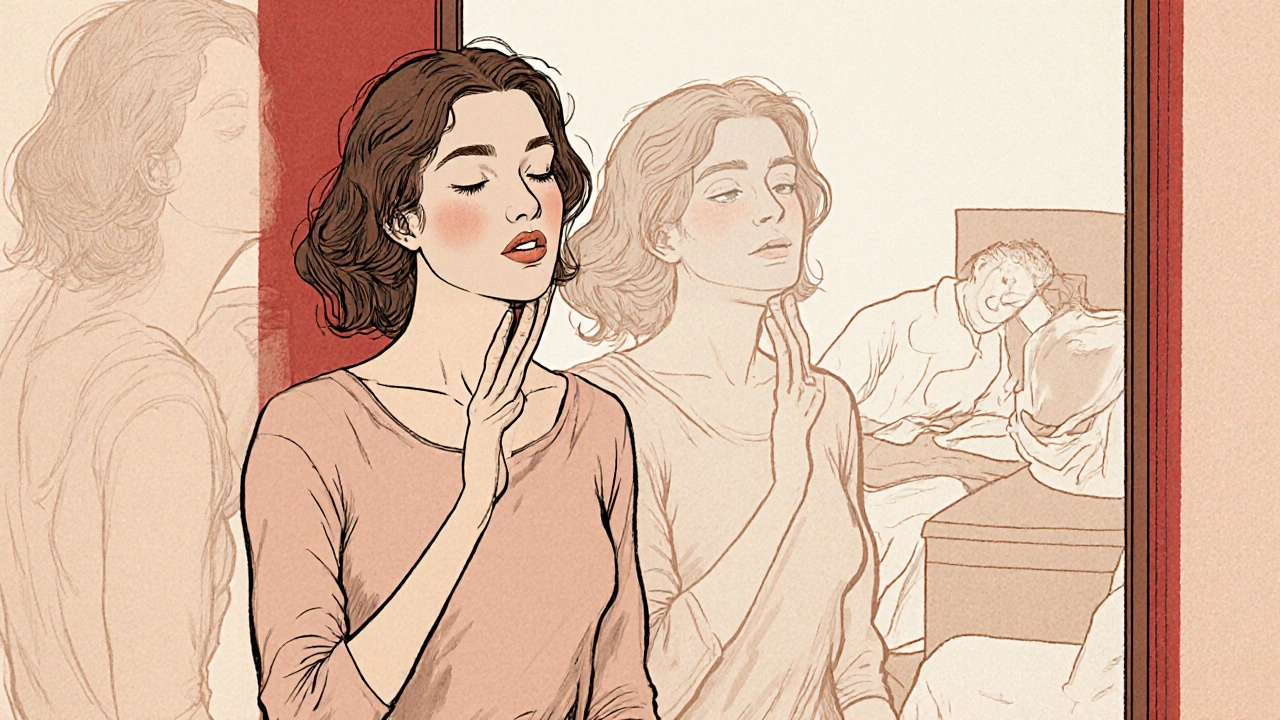
- Chin tucks: Sit or stand tall. Gently pull your chin straight back, like you’re making a double chin. Hold for 3 seconds. Repeat 10-15 times, 3 times a day.
- Scapular retractions: Squeeze your shoulder blades together as if trying to hold a pencil between them. Hold 5 seconds. Do 15 reps, 3x daily.
- Neck rotations: Slowly turn your head left, then right. Stop at the point of discomfort-not pain. Do 5 reps each side, twice daily.
These aren’t just exercises. They’re rehab. A 2023 study in the Spine Journal found people who did these daily improved their neck rotation by nearly 19 degrees in just two weeks. That’s the difference between being able to check your blind spot or not.
Weeks 3-6: Build Strength, Not Just Flexibility
Once the sharp pain fades, it’s time to strengthen. Weak neck and shoulder muscles are why strain keeps coming back.
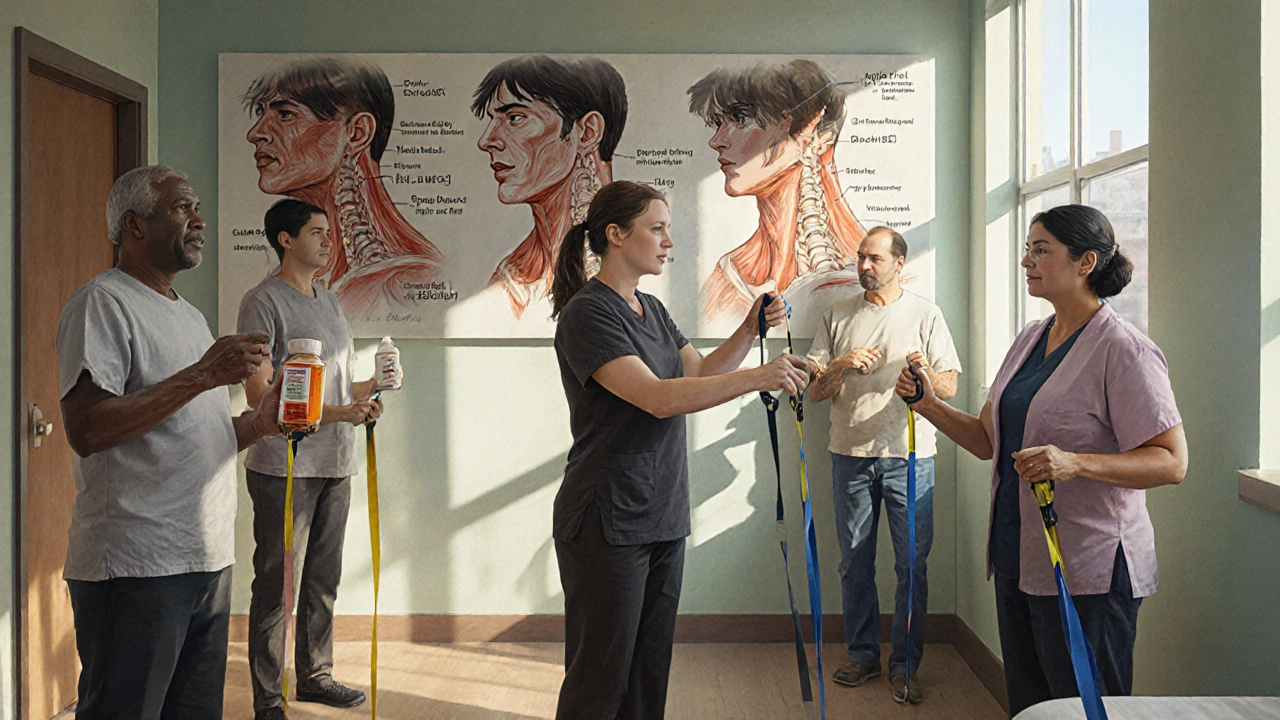
Use resistance bands (TheraBand®). Do:
- Seated rows: Pull band toward your ribs, squeezing shoulder blades.
- Neck isometrics: Press your palm against your forehead, resist with your neck muscles (no movement).
Two sets of 15 reps, three times a week. People who added resistance training saw 23% more strength gain than those who only stretched. That’s the key to preventing future flare-ups.
What Doesn’t Work (And Why)
There’s a lot of noise out there. Here’s what the science says to skip.
- Long-term NSAIDs: Ibuprofen or naproxen might help for the first week, but beyond 7-10 days, they offer no extra pain relief-and raise your risk of stomach issues by 15%.
- Neck braces: Wearing a soft collar for more than 48 hours weakens muscles and delays recovery. Only use if advised by a doctor for severe cases.
- Chiropractic adjustments alone: Some people feel instant relief after a crack, but if you don’t follow up with exercises, the pain often returns. Studies show 32% of patients need repeated visits because they didn’t address the root cause.
- Waiting to see a specialist: The average person waits 8.2 weeks before getting proper care. By then, acute strain has turned into chronic myofascial pain. Early physical therapy within 72 hours cuts recovery time by 28%.
Real People, Real Results
One Reddit user, u/NeckPainWarrior, spent six months stuck with daily headaches from forward head posture. Their neck jutted out 4.2 centimeters past their shoulders. After six months of physical therapy focused on strengthening the lower traps and serratus anterior muscles, that number dropped to 1.8 cm. The headaches vanished. No surgery. No pills. Just consistent rehab.
Another patient, a 48-year-old office worker in Melbourne, started doing chin tucks while brushing her teeth. She linked the exercise to a daily habit-something she already did. Within 10 days, her morning stiffness was gone. Compliance drops after six weeks for most people, but those who tie exercises to existing routines stick with them.
Prevention: Stop the Cycle Before It Starts
Most cervical strains aren’t accidents-they’re habits. Here’s how to break the cycle:
- Screen height: Your monitor should be at eye level. If you’re looking down, your neck is bent. That’s 10 extra pounds of pressure per inch of tilt.
- Take breaks: Every 30 minutes, stand up, roll your shoulders, and do 5 chin tucks.
- Sleep position: Avoid stomach sleeping. Use a pillow that supports your neck’s natural curve-not one that cranks your head up.
- Strengthen your upper back: Rows, wall angels, and band pull-aparts three times a week build a strong base so your neck doesn’t have to carry the load.
And if you work at a desk? You’re 2.3 times more likely to get cervical strain than someone who moves around. Ergonomics isn’t a luxury-it’s prevention.
When to See a Doctor
You don’t need to rush to the ER for neck pain. But call your doctor if:
- Pain doesn’t improve after 2 weeks of home care.
- You get numbness, tingling, or weakness in your arms or hands.
- You have headaches, dizziness, or trouble balancing.
- Pain wakes you up at night or gets worse when lying down.
These aren’t signs of a simple strain. They could mean nerve compression, disc issues, or something more serious. Don’t wait.
What’s New in Treatment
Technology is helping. In early 2023, the FDA approved a wearable device called NeckSense™. It uses sensors to track your neck posture and buzzes when you slouch. It’s not a cure-but for people who spend hours hunched over laptops, it’s a reminder that posture matters.
Researchers are also testing whether combining physical therapy with mental strategies-like managing pain anxiety-can cut chronic pain rates in half. Early results show promise. If you’re scared of moving because it hurts, that fear can keep pain alive. Therapy that addresses both body and mind works better.
The global market for neck pain treatments is growing fast-projected to hit $26.7 billion by 2027. That’s because more people are realizing: you don’t need drugs or surgery. You need movement, strength, and better habits.
Final Takeaway
Cervical strain is common, treatable, and usually short-lived. But it’s also sneaky. It hides behind bad posture, stress, and screen time. The fastest way to heal? Move early, move smart, and don’t ignore the little things-like how you hold your phone or sit at your desk. Most people get better in 2-4 weeks. The ones who don’t? They waited too long to fix the cause.
How long does cervical strain usually take to heal?
Most mild to moderate cervical strains heal within 2 to 4 weeks. Mild cases resolve in 48-72 hours with rest and ice. Moderate strains take 1-2 weeks, especially with gentle movement and exercises. Severe strains, involving partial or full tears, may take 6-12 weeks. Healing speed depends on early activity, not rest.
Is heat or ice better for neck strain?
Use ice for the first 72 hours to reduce inflammation and numb pain. Apply for 15-20 minutes every 2-3 hours. After that, switch to heat-warm towels or heating pads-to relax tight muscles and increase blood flow. Don’t use heat too early, or it can make swelling worse.
Should I use a neck brace for cervical strain?
Only for short-term use, like 24-48 hours, if pain is severe. Wearing a brace longer weakens neck muscles and slows recovery. Studies show patients who avoided braces recovered 37% faster than those who wore them for days. They’re not a long-term solution.
Can neck strain cause headaches?
Yes. Tight muscles in the neck, especially the upper trapezius and levator scapulae, can refer pain to the base of the skull and trigger tension headaches. These are often mistaken for migraines. Treating the neck strain usually relieves the headache. If headaches persist after neck pain improves, see a doctor.
What exercises should I avoid with neck strain?
Avoid heavy lifting, overhead presses, or any exercise that strains the neck-like crunches with hands behind the head, or intense yoga poses like plow or shoulder stand. Don’t do rapid head rotations or bounce stretches. Stick to slow, controlled movements like chin tucks and scapular retractions until you’re fully healed.
Can poor posture cause recurring neck strain?
Absolutely. Forward head posture-where your head juts forward over your shoulders-is the #1 cause of recurring strain. It puts 10 extra pounds of pressure on your neck for every inch your head moves forward. Office workers are especially at risk. Fixing posture with strengthening exercises and ergonomic adjustments is the only way to stop the cycle.
Iives Perl
November 26, 2025 AT 19:14Savakrit Singh
November 27, 2025 AT 19:47Jebari Lewis
November 29, 2025 AT 19:27sharicka holloway
December 1, 2025 AT 08:47Alex Hess
December 2, 2025 AT 20:19Leo Adi
December 3, 2025 AT 11:09Melania Rubio Moreno
December 5, 2025 AT 03:17Gaurav Sharma
December 7, 2025 AT 01:32Shubham Semwal
December 7, 2025 AT 07:08Jauregui Goudy
December 8, 2025 AT 07:52Tom Shepherd
December 10, 2025 AT 01:35Frances Melendez
December 10, 2025 AT 06:37Jonah Thunderbolt
December 11, 2025 AT 16:55Lauren Zableckis
December 12, 2025 AT 18:29Asha Jijen
December 13, 2025 AT 20:22