
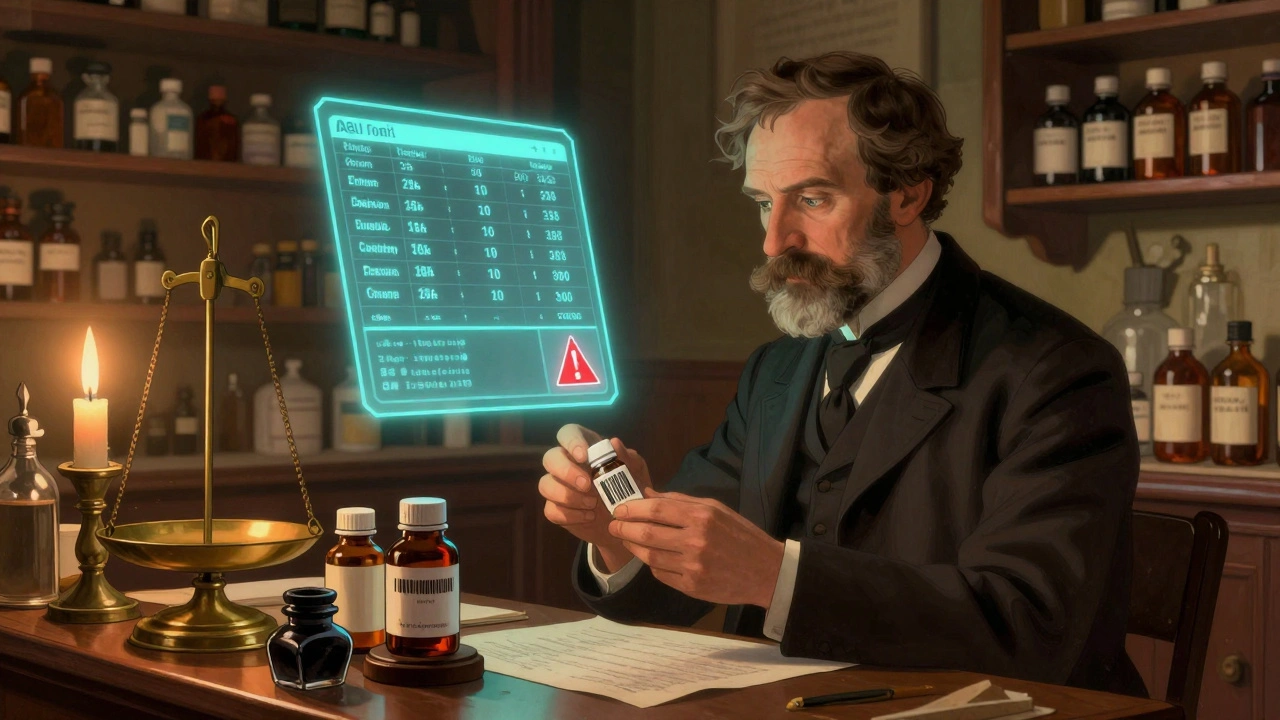
Every year, thousands of patients in Australia and around the world are harmed because a pill was mislabeled, a dose was miscalculated, or the wrong drug was handed out. These aren’t rare mistakes-they’re systemic problems rooted in how pharmacies handle prescriptions. The good news? pharmacy workflow systems are changing that. They’re not just fancy machines or software upgrades. They’re safety nets built into the daily rhythm of pharmacy work to stop errors before they reach patients.
What Exactly Is a Pharmacy Workflow?
A pharmacy workflow is the entire path a prescription takes from the moment it’s received to when the patient walks out with their meds. It’s not just filling bottles. It’s checking the patient’s history, verifying the doctor’s order, making sure there are no dangerous drug interactions, counting pills, labeling correctly, and finally, handing it over with a quick safety check. In the past, this was all done by hand. A pharmacist would read a paper script, look up the drug in a book, count tablets by eye, and hope they didn’t miss something. Human error was built into the system. Now, technology steps in at every stage. Modern pharmacy workflows use a mix of barcode scanners, automated dispensing cabinets, electronic prescribing, and software that connects directly to hospital records. When a prescription comes in digitally, the system pulls up the patient’s full medication history-what they’re taking now, allergies, kidney function, even what other doctors have prescribed. If something doesn’t add up, it flags it immediately. No more guessing.How These Systems Prevent Errors
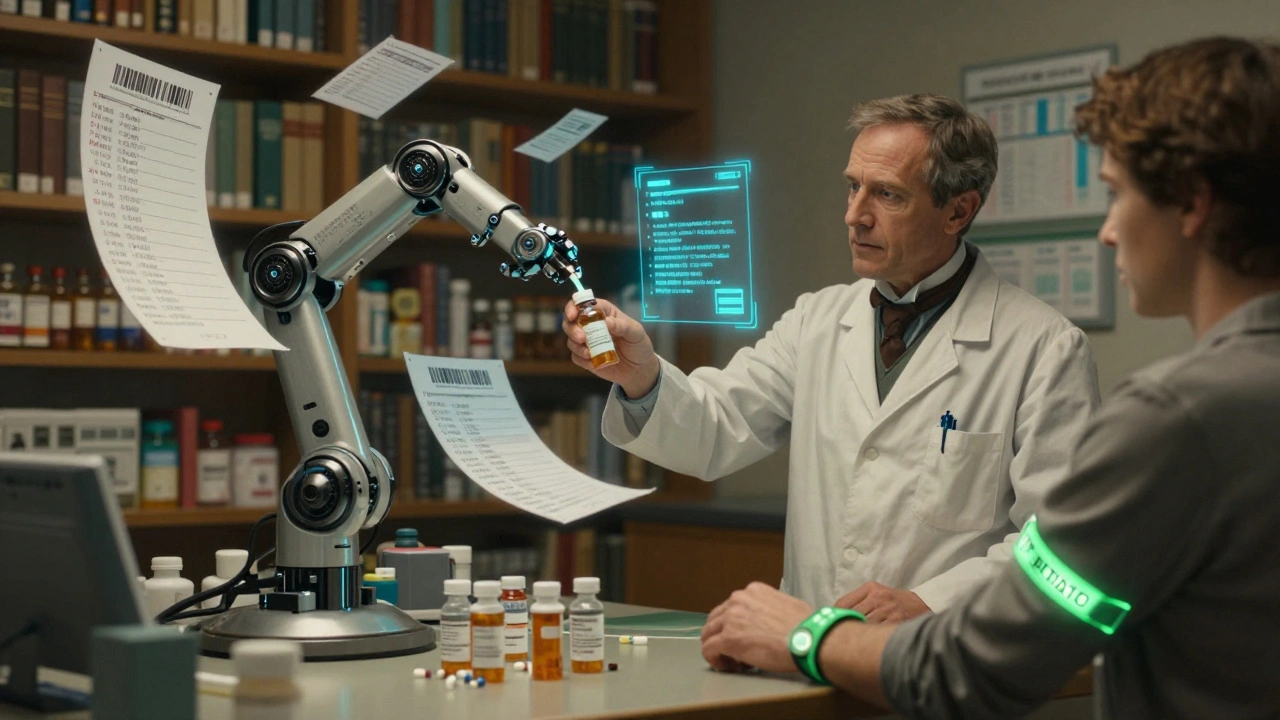
Let’s say a doctor prescribes 50mg of a drug, but the patient’s chart shows they’re on another medication that can cause dangerous interactions at that dose. Without a system, a pharmacist might miss it. With one? The software pops up a red alert before the prescription even gets to the counter. Here’s how it works in practice:- Barcode scanning at every step: When a pharmacist picks up a bottle from the shelf, they scan it. Then they scan the patient’s wristband or ID. If the barcode doesn’t match, the system stops everything. This alone cuts dispensing errors by up to 80%.
- Automated drug interaction checks: The system cross-references every new prescription with the patient’s entire list of current meds. It doesn’t just check for obvious conflicts-it looks at dosages, timing, liver metabolism, and even food interactions.
- Robotic dispensing: In hospitals and large pharmacies, robots now count pills and fill bottles. They don’t get tired. They don’t miscount. A robot can fill 1,200 prescriptions in a shift with near-zero error rates.
- Real-time inventory alerts: If a drug is running low or about to expire, the system notifies the pharmacist before it’s even ordered. This prevents patients from getting outdated or unavailable meds.
- Integration with EHRs: Everything connects. The pharmacy system talks to the hospital’s electronic health record (EHR) using HL7 standards. That means no more handwritten notes, lost faxes, or misread prescriptions.
Studies show these systems catch 14 times more errors than manual checks. That’s not a guess-it’s from real-world data in U.S. and Australian hospitals. And it’s not just about saving lives. It saves money too. One hospital in Victoria cut its medication-related readmissions by 30% after installing a full workflow system.
Types of Systems Used Today
Not all pharmacy workflow systems are the same. They’re built for different needs.- Comprehensive pharmacy systems like Epic or Cerner are used in big hospitals. They handle everything-prescriptions, inventory, billing, and even patient education materials. They’re expensive but powerful.
- IV compounding systems like Wolters Kluwer’s Simplifi+ are made for hospitals that prepare IV bags. These are high-risk tasks. One wrong drop of fluid can kill. These systems use cameras, sensors, and step-by-step digital checklists to make sure every IV is mixed exactly right.
- Workflow automation tools like Cflow or KanBo are popular in independent pharmacies. They don’t replace the whole system-they make the existing one smoother. Think of them as digital to-do lists that track who’s doing what, when prescriptions are due, and if anything’s falling behind.
Some systems focus on speed. Others focus on compliance. The best ones do both. For example, a system that meets USP <797> and <800> standards for sterile compounding isn’t just a nice-to-have-it’s a legal requirement in Australia and the U.S. If your pharmacy doesn’t comply, you risk fines, shutdowns, or worse.
Implementation Isn’t Just Plug-and-Play
Buying a fancy system doesn’t mean errors disappear overnight. Many pharmacies make the mistake of thinking technology alone will fix everything. It won’t. Getting a new workflow system up and running takes 3 to 6 months. Why? Because you have to change how people work. Staff need training-not just on how to click buttons, but on why the system matters. A pharmacist who’s been doing this for 20 years might resist scanning every bottle because “I’ve never made a mistake before.” But mistakes aren’t always about skill. They’re about fatigue, distraction, workload. Successful rollouts include:- Redesigning workflows before installing tech
- Running pilot tests with a small team
- Creating clear documentation and quick-reference guides
- Having vendor support on-site during the first few weeks
One pharmacy in Melbourne switched from paper to barcode scanning and saw a 60% drop in labeling errors within 90 days. But it took them four months to get everyone comfortable. The key? They didn’t rush. They let staff test the system during slow hours and gave them feedback channels to suggest improvements.
Costs and ROI
You can’t ignore the price tag. Enterprise-level systems cost between $50,000 and $250,000 a year. Smaller pharmacies might pay $10,000-$30,000 for cloud-based tools like Cflow. But here’s the thing: the cost of not using them is higher. A single medication error can lead to a lawsuit, a patient’s hospital readmission, or even death. The financial and reputational damage from one serious error can run into millions. Insurance premiums go up. Staff morale drops. Patients leave. The return on investment isn’t just in saved time-it’s in saved lives. One study found that for every $1 spent on pharmacy automation, hospitals saved $4 in avoided adverse events. That’s a 400% return.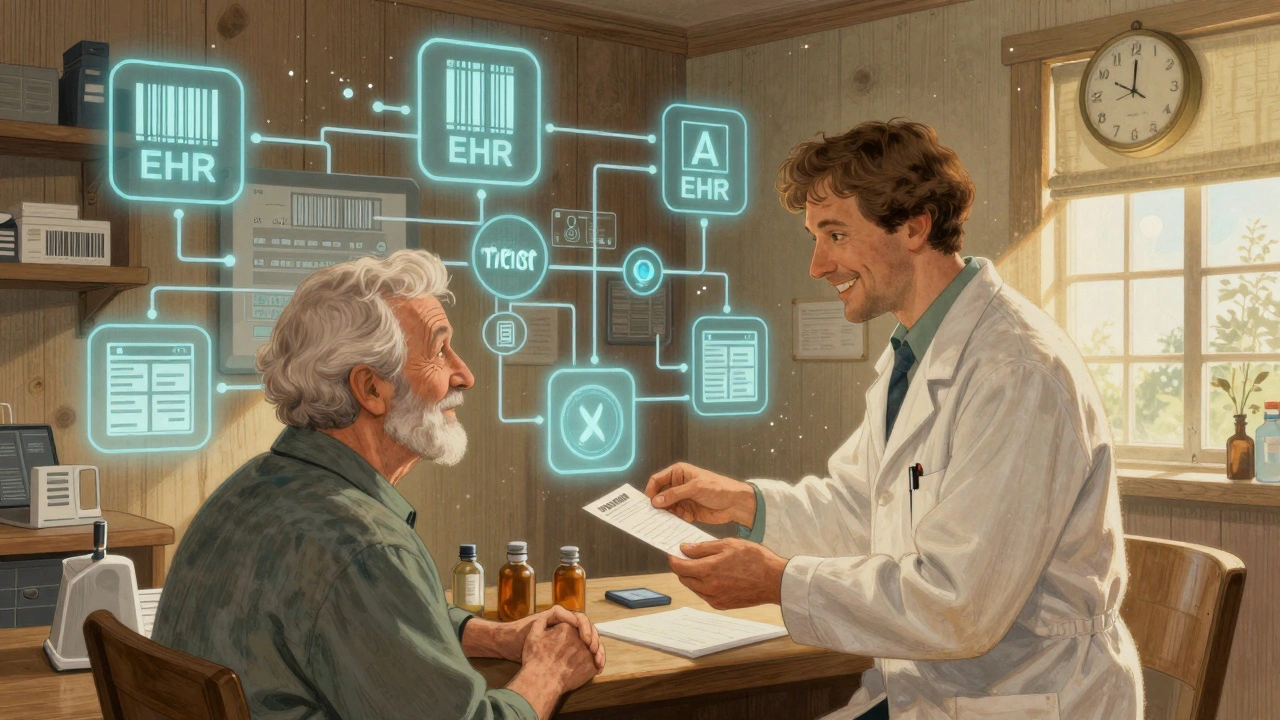
What’s Next? AI and Predictive Tools
The next wave of pharmacy tech isn’t just about preventing errors-it’s about predicting them. New systems are starting to use AI to spot patterns. For example:- If a certain pharmacist consistently takes longer to fill diabetes scripts, the system might suggest a training refresher.
- If a particular batch of a drug is flagged more often for mislabeling, the system can trace it back to the supplier or packaging.
- AI can predict when inventory will run low based on seasonal trends, weather (like flu season), or even local events.
Telehealth integration is also growing. If a patient gets a prescription from a virtual visit, the system can auto-send it to their local pharmacy, confirm delivery, and even text them a reminder to take it.
The American Society of Health-System Pharmacists (ASHP) says the future is about “closed-loop systems”-where the prescription starts digitally, moves through automation, ends with the patient taking the drug, and the system confirms they did. That’s the gold standard. And it’s already happening in leading Australian hospitals.
Why This Matters for Patients
You might think, “I’m just picking up my blood pressure pill. How does this affect me?” It affects you every time you walk into a pharmacy. The person behind the counter is less stressed. They’re not rushing. They’re not juggling 15 scripts at once. They’re confident the system caught the mistake before it happened. That’s peace of mind. For you. For your family. For the pharmacist who just wants to do their job right. In a world where mistakes can be fatal, pharmacy workflow systems aren’t luxury tech. They’re essential infrastructure-like seatbelts in cars or fire alarms in buildings. You don’t notice them until they’re gone. And when they’re gone, the consequences are devastating.Frequently Asked Questions
How do barcode scanning systems reduce medication errors?
Barcode scanning ensures the right drug, dose, and patient are matched at every step. When a pharmacist scans a medication and the patient’s ID, the system cross-checks them against the electronic prescription. If there’s a mismatch-say, the wrong drug or wrong dose-the system blocks the process and alerts the pharmacist. This simple step cuts dispensing errors by up to 80%, according to studies from the Institute of Medicine and ASHP.
Are pharmacy workflow systems only for hospitals?
No. While hospitals use advanced systems for IV compounding and robotic dispensing, independent pharmacies benefit too. Cloud-based tools like Cflow and KanBo help small pharmacies automate refills, track inventory, reduce wait times, and prevent drug interactions. These systems are scalable and designed for different pharmacy sizes and needs.
What regulations must pharmacy workflow systems comply with in Australia?
Australian pharmacies must comply with Therapeutic Goods Administration (TGA) standards, which align with international guidelines like USP <797> for sterile compounding and USP <800> for hazardous drugs. Systems must also meet privacy requirements under the Privacy Act 1988 and ensure secure data handling-similar to HIPAA in the U.S. Any software that stores patient health data must be certified for security and interoperability.
Can these systems replace pharmacists?
No. They’re designed to support pharmacists, not replace them. Automation handles repetitive tasks like counting pills or checking interactions, freeing pharmacists to focus on patient counseling, complex cases, and clinical decisions. Studies show pharmacists using these systems spend 30% more time talking to patients because they’re not bogged down by manual checks.
How long does it take to see results after implementing a workflow system?
Most pharmacies see a noticeable drop in errors within 60 days, but full efficiency takes 3-6 months. The first month is usually spent training staff and adjusting workflows. The second month focuses on fixing integration issues. By month three, teams start using reporting tools to track metrics like fill times and error rates. The real payoff-fewer patient incidents and lower costs-becomes clear after six months.
John Fred
December 13, 2025 AT 01:20OMG this is 🔥! Barcode scanning alone cuts errors by 80%?! That’s not tech-that’s a miracle worker. 🤯 I work in a clinic and we just rolled out automated interaction checks-my pharmacist now has time to actually ask how my kids are. 🙌 No more rushed refills. This is healthcare 2.0, baby!
Harriet Wollaston
December 14, 2025 AT 05:50I just picked up my grandma’s meds last week and the pharmacist smiled and said, ‘The system caught a bad interaction-your script was flagged.’ I cried. Not because it was scary-but because someone cared enough to build something that protects people like her. 🤗 Thank you for writing this.
Lauren Scrima
December 14, 2025 AT 17:57So… you’re telling me… we need a robot to count pills… because humans are… unreliable? 🤔 And we’re calling this ‘innovation’? I mean… wow. We’ve gone from ‘pharmacist’ to ‘system monitor.’ Next they’ll make us sign a waiver before we get aspirin. 🤷♀️
Rawlson King
December 15, 2025 AT 17:11Let’s be real-this is just corporate laziness dressed up as ‘safety.’ Pharmacists used to know their patients. Now they stare at screens while the system does their job. You think a robot knows Mrs. Henderson’s arthritis flares on Tuesdays? No. It just knows barcodes. Pathetic.
Scott Butler
December 17, 2025 AT 16:50USA invented this stuff. Australia’s just copying it. And yet they act like it’s their breakthrough. Meanwhile, our hospitals have been using closed-loop systems since 2015. We don’t need a lecture on ‘what’s next’-we built it. And we did it better.
Emma Sbarge
December 18, 2025 AT 00:16AI predicting errors? Sounds like Big Pharma’s next marketing gimmick. They’ll sell us ‘predictive analytics’ and then jack up the price of insulin again. Don’t be fooled. Tech doesn’t fix greed. It just hides it behind algorithms.
Deborah Andrich
December 18, 2025 AT 11:36My brother’s a pharmacist in Ohio. He said the same thing-before the system, he was drowning. Now he has 40 extra minutes a day to talk to patients. Not because he’s better. Because the system took the noise away. That’s not automation. That’s dignity.
Tommy Watson
December 19, 2025 AT 16:45robot dispense?? pffft. my cousin works at a pharmacy and said the robots break ALL the time. like, every other day. now they got 2 people standing around waiting for it to stop beeping. so much for ‘zero error rates’ lol. also why does everyone say ‘pharmacist’ like they’re a scientist? its just pills bro.
Richard Ayres
December 20, 2025 AT 12:12The data cited here is compelling, particularly the 400% ROI from automation. However, one must consider the human capital investment required for successful implementation. Training, workflow redesign, and cultural adaptation are non-trivial. Technology alone is insufficient without organizational readiness. This is not merely a software deployment-it’s a transformation.
Sheldon Bird
December 20, 2025 AT 22:05Love this. Seriously. I’ve seen pharmacies where the staff look like they’re about to cry from stress. Now? They’re calm. Patients are safer. And yes, the robots don’t get tired. 🤖💙 We need more of this. Not less.
Karen Mccullouch
December 22, 2025 AT 17:43Oh great. More government-mandated tech. Next they’ll force us to scan our prescriptions before we can breathe. This isn’t safety-it’s control. And don’t get me started on HL7 standards. Who even wrote those? Some bureaucrat who’s never filled a prescription? 🤬
Michael Gardner
December 23, 2025 AT 09:08Wait-so robots are better than humans at counting pills? That’s… actually kind of terrifying. What happens when the system fails? Do we just hand out random pills and hope? I’m not convinced. We’re outsourcing responsibility to machines. That’s not progress. That’s surrender.
Willie Onst
December 24, 2025 AT 17:21You know, I think this is the quiet revolution we didn’t know we needed. It’s not flashy like AI or robots-it’s just… better. Less stress. Fewer mistakes. More time for real care. It’s like when your phone stopped crashing all the time. You don’t cheer. You just… feel better. That’s what this is.
Ronan Lansbury
December 25, 2025 AT 23:07Of course they’re pushing this tech. It’s not about safety-it’s about control. The same people who made you pay $400 for insulin now want to track every pill you take. HL7? EHRs? Closed-loop systems? All surveillance under the guise of ‘care.’ Wake up. They’re not saving lives-they’re monetizing compliance.