
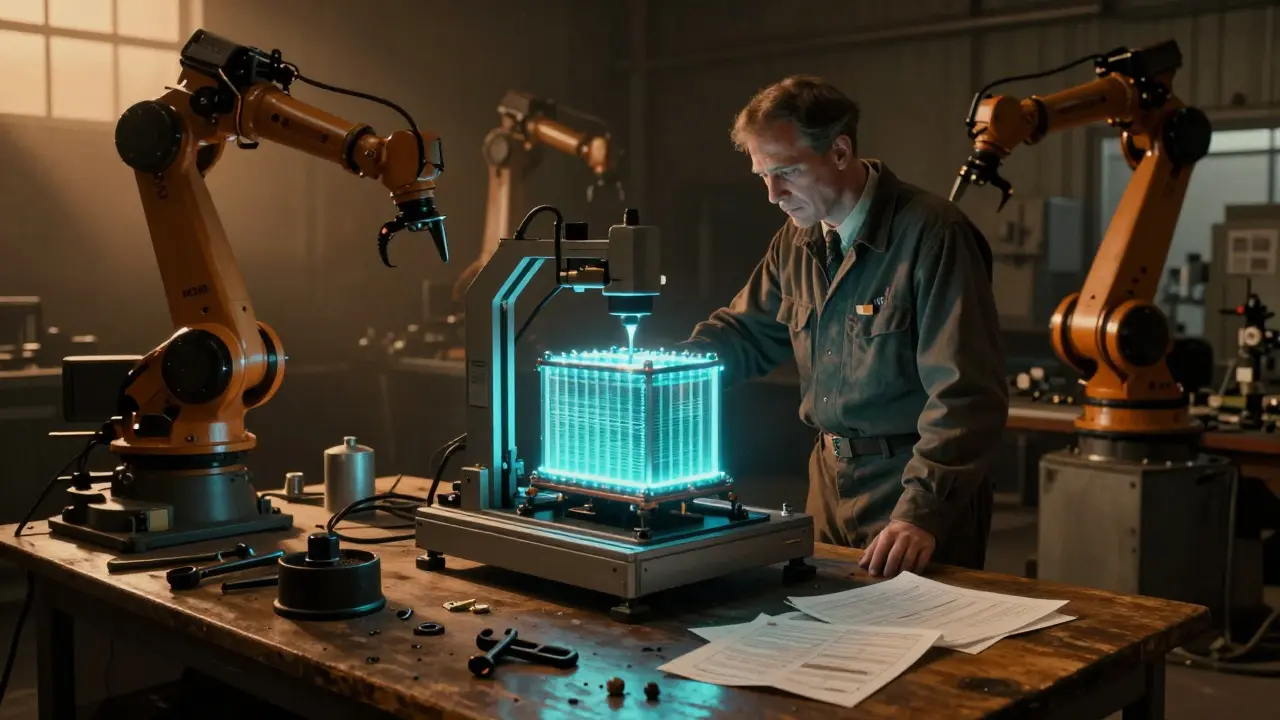
It’s 2025, and factories across the U.S. are quieter than they used to be-not because demand has dropped, but because quality assurance has become the biggest bottleneck. You’d think more automation would mean fewer mistakes. But the opposite is true. As products get more complex-electric vehicle batteries, smart medical devices, connected electronics-every tiny flaw now costs more. And the fear isn’t just about defective parts. It’s about losing customers, missing deadlines, and watching margins vanish before your eyes.
Why Quality Isn’t Just a Checkpoint Anymore
Ten years ago, quality assurance meant inspectors with calipers and clipboards walking the line at shift change. Today, it’s a real-time data stream that decides whether a product ships or gets scrapped. According to the ZEISS U.S. Manufacturing Insights Report 2025, 95% of executives and directors say quality is mission-critical. Not important. Not nice to have. Mission-critical. That’s because a single missed inspection on a medical implant or an EV battery cell can trigger recalls, lawsuits, or worse. The cost of rework and iterations now ranks as the second-largest quality challenge, cited by 38% of manufacturers. That’s not just waste. That’s money burning in real time.The Hidden Cost of Manual Inspection
Here’s the brutal truth: 47% of manufacturers’ time is spent on inspection. Not production. Not innovation. Inspection. That’s almost half of every shift tied up in checking what should’ve been built right the first time. And it’s getting worse. With more complex assemblies-think a single smartphone containing hundreds of tiny, interconnected components-manual checks are slow, inconsistent, and prone to human error. One quality engineer on Reddit described it like this: “We’re expected to maintain aerospace-grade precision while moving at consumer electronics speed. It’s impossible without proper technology.”Technology Isn’t the Answer-Integration Is
Companies are throwing money at shiny new tools: AI-powered cameras, 3D scanners, real-time monitoring systems. ZEISS and Hexagon rolled out AI-enhanced inspection software in mid-2025 that cuts inspection time by up to 52% and improves accuracy by 34%. Sounds perfect, right? But here’s the catch: 54% of users on Capterra say their new systems took longer to integrate than promised. Why? Because they were installed in isolation. A robot arm that checks a part doesn’t help if the data doesn’t talk to the inventory system or the shipping scheduler. Reader Precision found that automation, robotics, and AI are often implemented without system integration-leading to technology that looks impressive on paper but adds no real value on the floor.
What Works: Integrated Systems and Cross-Functional Teams
The manufacturers winning in 2025 aren’t the ones with the most gadgets. They’re the ones with integrated platforms. Deloitte’s 2026 outlook shows that companies using fully connected quality systems see 22% lower rework costs and 18% faster time-to-market. How? They built teams-not just quality engineers, but production managers, IT specialists, and even supply chain planners-all working from day one. The most successful implementations take 6-9 months and involve constant communication. One medical device maker reduced rework costs by $1.2 million a year by linking metrology data directly to material ordering systems. Another, an automotive supplier, cut defect detection time in half after syncing their AI vision system with their ERP software. The difference? Data flowed. People talked. Decisions were made in real time.The Skills Gap Nobody Wants to Talk About
Here’s where it gets ugly. 47% of manufacturers say the biggest challenge isn’t technology-it’s people. There’s a growing gap between workers who understand old-school quality control and those who can interpret data from AI tools. A June 2025 survey by the Manufacturing HR Association found that 73% of hiring managers now require data analytics skills for quality roles. Median salaries for those with AI/ML experience hit $98,500-22% higher than traditional roles. But training doesn’t happen overnight. One electronics manufacturer spent $2.3 million on automated inspection systems… and saw a 40% spike in errors during the first year because no one knew how to interpret the alerts. They had the tech. They didn’t have the talent.
Cloud-Based QMS Is the New Standard
The old way-paper logs, Excel sheets, siloed databases-is dead. Gartner’s Q2 2025 report shows cloud-based Quality Management Systems (QMS) now make up 68% of new enterprise deployments, up from 52% in 2023. Why? Because they let factories in Michigan, Mexico, and Malaysia all operate from the same playbook. When regulations change-or a supplier’s material batch fails-everyone gets the update instantly. Manufacturers in aerospace and medical devices lead the charge here, with 78% and 72% adoption respectively. But even general manufacturing is catching up. Cloud QMS isn’t just convenient. It’s becoming a compliance requirement.Who’s Falling Behind-and Why
The divide is widening. Manufacturers using predictive quality analytics see 27% fewer defects reach customers. Those still relying on manual checks? They’re paying 43% more in labor costs for quality alone. Forrester’s August 2025 forecast warns that companies delaying AI-driven quality tools will face 23% higher defect rates by 2027. Meanwhile, 58% of manufacturers recognize quality as strategic-but lack the resources to act. That’s the “quality solution gap.” It’s not that they don’t care. It’s that they’re stuck between outdated processes, tight budgets, and a workforce that’s aging out faster than it’s being replaced. The Manufacturing Institute predicts a shortage of 2.1 million workers by 2030, with 37% of those in quality-focused roles. That’s not a hiring problem. It’s a survival problem.The Future Isn’t About More Tools-It’s About Smarter Decisions
The manufacturers who will thrive in 2026 aren’t the ones buying the most robots. They’re the ones treating quality as a strategic lever-not a cost center. That means aligning quality metrics with customer feedback. It means using data to predict failures before they happen. It means training teams to act on insights, not just collect them. One company in Ohio started using customer return data to feed back into their production line. Within six months, their defect rate dropped 41%. That’s not luck. That’s intelligence.Quality assurance in 2025 isn’t about fixing mistakes. It’s about preventing them before they’re made. The fear isn’t that machines will fail. It’s that we’ll keep treating quality like an afterthought-while the world moves faster than we can catch up.
Why is rework costing so much in manufacturing today?
Rework costs have surged because product complexity has exploded. Modern devices-like electric vehicle batteries or smart medical implants-have hundreds of tiny, interconnected parts. A single misaligned component can cause chain-reaction failures downstream. With material costs up 44% for many manufacturers and lead times stretched thin, reworking a part means losing not just labor hours, but also expensive raw materials and delayed shipments. The ZEISS 2025 report found 38% of manufacturers list rework as their top quality challenge, second only to rising material costs.
What’s the biggest mistake manufacturers make when upgrading quality systems?
The biggest mistake is buying new technology without integrating it into existing workflows. Many companies install AI-powered inspection cameras or automated metrology tools but leave them disconnected from ERP, inventory, or production scheduling systems. This creates data silos. Workers get alerts they can’t act on. Managers can’t trace defects back to root causes. Reader Precision found that automation without integration leads to higher error rates, not lower. Success comes from cross-functional teams planning integration from day one-not after the hardware arrives.
Are cloud-based Quality Management Systems (QMS) really better than on-premise?
Yes, for most manufacturers. Cloud-based QMS allows real-time data sharing across multiple sites, automatic regulatory updates, and faster compliance reporting. Gartner reports that 68% of new enterprise deployments in 2025 are cloud-based, up from 52% in 2023. For companies with global suppliers or multiple factories, cloud systems eliminate version control issues and ensure everyone works from the same standard. On-premise systems still work for very small, isolated operations-but they’re becoming a liability for growth.
Can predictive analytics really prevent defects before they happen?
Absolutely. Predictive quality analytics use historical data, machine learning, and real-time sensor inputs to flag patterns that precede failures. For example, if a machine’s vibration pattern shifts slightly before a component goes out of tolerance, the system can alert operators to adjust settings before a single defective part is made. QualityZe’s benchmarking data shows early adopters experience 27% fewer quality deviations reaching end products. One medical device company reduced customer-reported defects by 41% in under a year using this approach.
Why is there such a shortage of skilled quality workers?
The workforce gap isn’t just about numbers-it’s about skills. Older workers know manual inspection. Younger workers know software. But few have both. A June 2025 survey found 73% of hiring managers require data analytics skills for quality roles, and median salaries for those with AI/ML experience hit $98,500. Training programs haven’t caught up. Meanwhile, the Manufacturing Institute projects a shortage of 2.1 million workers by 2030, with 37% of those needed in quality-focused roles. Without upskilling and cross-training, factories will keep choosing between speed and accuracy.
Ivan Viktor
March 3, 2026 AT 09:22Let’s be real - we’re all just throwing tech at the problem and calling it innovation. I’ve seen factories spend $2M on AI cameras that don’t talk to their ERP. The machines blink green, nobody knows why, and the line keeps running. It’s not a quality issue. It’s a communication failure.
And don’t get me started on ‘integrated systems.’ If integration meant anything, we wouldn’t still be using Excel sheets to track calibration logs. We’re not broken. We’re just lazy.
Also, why is everyone acting like cloud QMS is some magical cure? It’s just a database with a pretty UI. The real work? Still happens on the floor with a headset and a clipboard.
RacRac Rachel
March 5, 2026 AT 06:35This post gave me chills - in a good way! 🙌 Finally, someone’s talking about quality as a strategic lever, not a cost center. I work in med devices, and our team just linked metrology data to our supply chain system. Last month, we caught a material variance before it even hit the line. Saved $180K in scrap and a potential recall.
It’s not about more tools. It’s about listening. Data doesn’t lie. People do. Let the numbers guide you - and don’t be afraid to ask ‘why’ five times. We’re not fixing defects. We’re building trust.
Also - shoutout to the engineer who said ‘aerospace precision at consumer speed.’ That’s the exact quote I use in every training. Thank you. 💪
Matt Alexander
March 5, 2026 AT 10:15Simple truth: if your QA team can’t explain what the AI is telling them, you’ve got a training problem, not a tech problem. Buy the fancy camera. Then spend six months teaching your inspectors how to read the graphs. No shortcuts. No magic buttons. Just patience and practice.
Also - stop hiring ‘quality engineers’ who’ve never held a caliper. You need people who’ve seen a bad batch in real life. Tech helps. Experience saves.
Jeff Card
March 6, 2026 AT 01:37I read this whole thing and just felt… seen. I’ve been in this industry for 18 years. We used to fix things on the line. Now we fix data streams. The pressure is insane. But I’ve seen what happens when you treat QA like a checklist - people burn out. Teams fracture. Morale dies.
What I’ve learned? The best factories aren’t the ones with the most robots. They’re the ones where the QA lead eats lunch with the production supervisor every day. They talk. They listen. They fix things together. That’s the real integration.
Jane Ryan Ryder
March 7, 2026 AT 22:27Oh great. Another post about how we’re all doomed because we didn’t buy enough AI. Let me guess - the author works in Silicon Valley and thinks a $500K scanner fixes a $20M culture problem?
Fact: 80% of US factories are still run by guys in coveralls who’ve been there since ‘08. You think they care about cloud QMS? No. They care about not getting yelled at for missing a burr.
Stop romanticizing tech. Start respecting the people who actually make stuff. And maybe, just maybe, pay them enough to care.
John Cyrus
March 8, 2026 AT 07:15Anyone who says integration is hard hasn’t actually tried it. The problem isn’t technology - it’s leadership. If your CEO thinks QA is a department and not a philosophy, you’re already dead. You don’t need more sensors. You need a CEO who wakes up thinking about quality first. Not revenue. Not growth. Quality.
And if you’re still using Excel for calibration logs? You’re not a manufacturer. You’re a hobbyist with a warehouse.
Shivam Pawa
March 8, 2026 AT 23:22From India - we’re scaling up our QA ops with predictive analytics. The real win? Reducing MTTR (mean time to resolve) by 62%. But the ROI isn’t in the tech. It’s in the shift from reactive to proactive. We started by mapping failure modes from customer returns into our ML model. Now we’re seeing defects before they’re even produced.
Key insight: data doesn’t need to be big. It needs to be relevant. And the people? They need to feel ownership. Not just compliance.
Sharon Lammas
March 10, 2026 AT 11:01There’s something quiet and profound about this whole conversation. We talk about automation, AI, cloud systems - but we rarely talk about the human cost of change. The veteran inspector who’s been reading micrometers since before smartphones. The new hire who’s terrified of a dashboard that flashes red. The manager who’s caught between budgets and ethics.
Quality isn’t a system. It’s a relationship. Between people. Between shifts. Between data and dignity. We’re not just fixing parts. We’re healing workflows.
Maybe the real innovation is listening - not just to sensors, but to silence.
Richard Elric5111
March 11, 2026 AT 12:09The ontological crisis of modern manufacturing lies not in the inadequacy of instrumentation, but in the epistemological disjunction between data and praxis. We have quantified the qualitative to such an extent that the very notion of ‘quality’ has been reified into a metric, divorced from its phenomenological grounding in craftsmanship, intuition, and embodied knowledge.
The AI-driven inspection system may detect a micron-level deviation, but it cannot comprehend the dignity of the artisan who once corrected such imperfections with a hand-file and a quiet pride. The tragedy is not that machines are replacing humans - it is that we have allowed machines to define what it means to make something well.
marjorie arsenault
March 12, 2026 AT 13:31You got this. Seriously. I’ve been where you are - overwhelmed, under-resourced, stuck between old ways and new tech.
Start small. Pick one line. One process. One person who’s willing to try. Train them. Celebrate the win. Then expand.
Cloud QMS? Yes. AI? Yes. But the real magic? A team that feels heard. A manager who shows up. A culture that says, ‘Your voice matters.’
You don’t need a $5M system. You need a spark. And you already have it.
Helen Brown
March 13, 2026 AT 19:31They’re lying to us. The whole ‘AI will fix quality’ thing? It’s a distraction. The real reason rework is up? Because the CEO cut QA headcount by 30% last year to ‘increase margins.’ Now they’re spending $10M on sensors to cover up the fact they fired the people who knew how to spot a bad weld.
It’s not tech. It’s greed. And the next time someone says ‘automation solves everything,’ ask them: ‘Who got laid off to pay for it?’
Deborah Dennis
March 14, 2026 AT 21:59Ugh. Another ‘insightful’ post from someone who’s never held a wrench. Let’s break it down: 1) 47% of time on inspection? That’s because you’re hiring amateurs. 2) Cloud QMS? You’re outsourcing compliance to a SaaS vendor. 3) ‘Predictive analytics’? You mean ‘magic black box that sometimes works.’
Real solution? Hire experienced inspectors. Pay them. Train them. Let them lead. Stop chasing shiny objects. And for god’s sake - stop calling quality a ‘lever.’ It’s not a lever. It’s a responsibility.