

It’s 2025. You walk into your pharmacy to pick up your prescription for Eliquis. The pharmacist says, "The generic is FDA-approved. We just can’t get it yet." That’s not a glitch. It’s the new normal. Between 2023 and 2025, dozens of generic drugs cleared the FDA’s final review-only to sit on shelves for years while brand-name companies drag them through courtrooms. The system isn’t broken. It’s working exactly as designed. And it’s costing patients billions.
Why a "Approved" Generic Still Isn’t Available
The FDA doesn’t control when generics hit the market. That’s not their job. Their job is to say whether a drug is safe and effective. Once they approve a generic, they hand the keys to the courts. And that’s where things get messy. Under the Hatch-Waxman Act, a generic company can file an ANDA (Abbreviated New Drug Application) and challenge a brand-name patent with a Paragraph IV certification. That’s their legal right. But when they do, the brand company gets an automatic 30-month stay. That’s not a suggestion. It’s a hard stop. The FDA can’t give final approval until that clock runs out, a court rules in the generic’s favor, or the patent expires. In 2024, 68% of all generic applications included a Paragraph IV challenge. That’s up from 59% in 2020. The average drug now has 14.7 patents listed in the FDA’s Orange Book-up from 12.3. That’s not innovation. That’s patent thickets. Companies stack patents on minor changes-tablet coatings, dosing schedules, delivery methods-to keep generics out. One drug, Humira, had 242 patents tied to it. That’s not protecting innovation. That’s locking the door.Real Cases: The Drugs You Can’t Get, Even Though They’re Approved
Take Xarelto. The FDA approved the generic version in November 2024. By January 2025, the brand company, Janssen, filed three new patents. Each one reset the 30-month clock. That means even though the generic was approved, patients had to wait another 2.5 years to get it at a lower price. Eliquis, Trulicity, Steglatro-same story. Pharmacists across the U.S. report patients asking why their doctor prescribed a $500-a-month brand drug when the generic is "approved." The answer? It’s not legally available yet. Oncology drugs are hit hardest. The average delay between FDA approval and market launch for cancer generics is 4.1 years. Compare that to cardiovascular generics, which take 2.8 years. Why? Because cancer drugs are expensive. And the stakes are higher. Brand companies fight harder to protect billion-dollar revenues.The Hidden Cost: Patients Paying More, Skipping Doses
Patients aren’t just inconvenienced. They’re suffering. A 2025 survey by Patients For Affordable Drugs Now found 412 documented cases between 2023 and 2025 where people skipped doses or went without medication because the generic wasn’t available. The average out-of-pocket cost for the brand version? $487 per month. The projected cost for the generic? $85. That’s an 82% price jump-just because of legal delays. Hospitals are feeling it too. The American Society of Health-System Pharmacists reported that 78% of pharmacy directors see patent delays as a major contributor to drug shortages. In cancer units, this isn’t just about cost. It’s about access. If a patient can’t get the generic version of an injectable chemotherapy drug, they might wait weeks for the brand version to restock. That’s not hypothetical. That’s happening right now.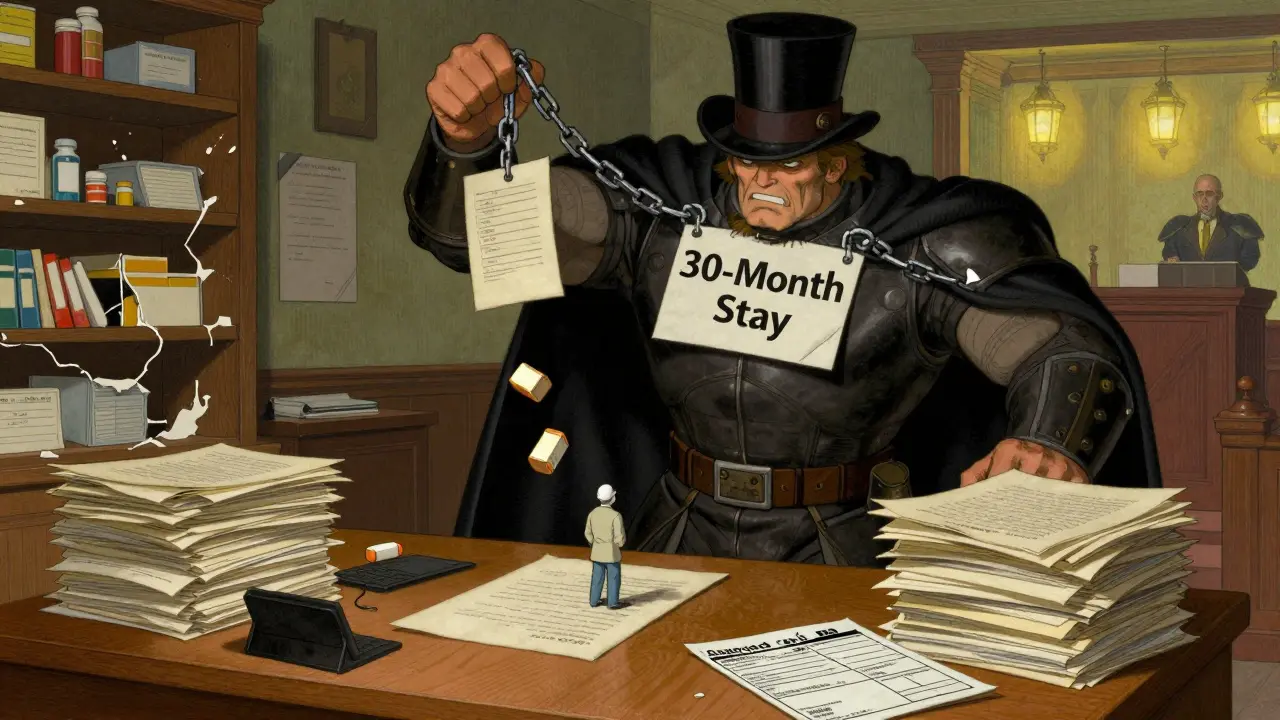
Why the FDA Can’t Fix This
The FDA has tools. They’ve launched an AI-assisted review system that cut approval times by 22% for non-litigated generics. They’ve created a National Priority Voucher program to fast-track certain drugs. But none of it touches the patent problem. The FDA doesn’t decide patent validity. Courts do. Even when a patent is weak, the 30-month stay still applies. In 2025, the FDA’s own director, Dr. Patrizia Cavazzoni, admitted in front of Congress: "Patent litigation remains outside our regulatory authority." That’s why the agency is pushing for more transparency in the Orange Book. They want to stop companies from listing patents that don’t actually cover the drug. But even if they succeed, it won’t stop the lawsuits. It just makes them slightly harder to hide.Who’s Getting Hurt? The Small Generic Companies
Big pharma can afford to fight 10 patent lawsuits at once. They have teams of lawyers and deep pockets. Small and mid-sized generic companies? Not so much. In 2025, 63% of delayed generics came from manufacturers with annual revenue under $500 million. The average legal cost per patent case? $12.7 million. That’s more than most of these companies make in a year. Many just give up. They file the ANDA, get slapped with a lawsuit, and walk away. That’s why only 63 first generics were approved by the FDA in 2025-down from 87 in 2023. The system isn’t just slow. It’s crushing smaller players.What’s Different Now? The Shift in Strategy
Ten years ago, brand companies would launch their own "authorized generic" right when the patent expired. It was a way to undercut real generics and keep market share. That’s mostly gone. In 2020, 28% of branded drugs faced this tactic. By 2025, it was down to 12%. Why? Because the courts are getting smarter. And the FTC is watching. In 2024 and 2025, the FTC filed seven enforcement actions against companies using anti-competitive tactics. One case against Jazz Pharmaceuticals over Xyrem forced them to let generics in earlier. The new tactic? Patent thickets. More patents. Longer litigation. Slower timelines. It’s not about winning in court. It’s about outlasting the generic company.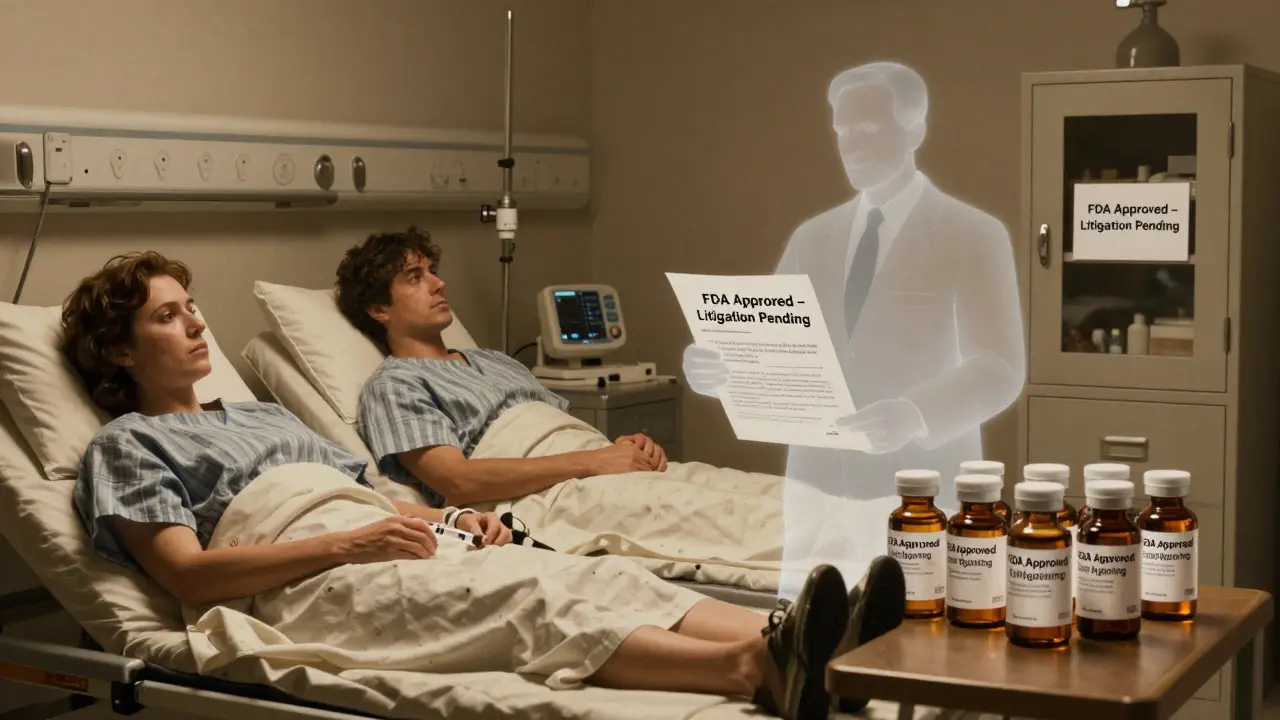
How Other Countries Do It
Look at Europe. The average delay between FDA approval and market launch in the U.S. is 3.2 years. In the EU? 1.7 years. Why? No 30-month stay. No automatic litigation freeze. If a generic challenges a patent, the court moves faster. And if the patent is invalid, the generic can launch immediately. The U.S. system is designed to favor the brand. Europe’s is designed to favor competition. The result? Europeans get cheaper drugs sooner. Americans pay more, wait longer.What’s Being Done? And Will It Work?
There’s momentum for change. The CREATES Act, which would force brand companies to provide samples needed for generic testing, passed the House in 2024 but stalled in the Senate in 2025. The FDA is pushing for limits on how many patents can be listed per drug. McKinsey found 67% of industry stakeholders support that. But PhRMA, the big pharma lobby, is fighting back hard. They argue that limiting patents will hurt innovation. But here’s the thing: innovation isn’t being hurt. It’s being exploited. The original 20-year patent term was meant to reward real breakthroughs-not to extend monopolies by adding patents on pill color. The appointment of Dr. Peter Bach as FDA Commissioner in January 2025 raised hopes. He’s spoken publicly about "reforming patent listings to prevent evergreening." If he follows through, we could see generic entry times drop by 8 to 12 months by 2027. But that’s still years away. And in the meantime, patients are paying the price.What Patients and Pharmacists Can Do
You can’t change the law overnight. But you can push back. If your pharmacist says a generic is approved but unavailable, ask why. Demand to know if it’s a patent issue. Call your representative. Share your story with Patients For Affordable Drugs Now. Write to the FDA. These delays aren’t invisible. They’re systemic. And they’re fixable-if enough people demand it. The next time you hear "the generic is approved," don’t accept it. Ask: "Why can’t I get it?" Because if you don’t, no one else will.Why is a generic drug approved by the FDA but still not available in pharmacies?
Even after FDA approval, a generic drug can be blocked from entering the market due to patent litigation. When a generic manufacturer challenges a brand-name patent with a Paragraph IV certification, the brand company can file a lawsuit, triggering an automatic 30-month stay. During this time, the FDA cannot grant final approval for the generic to be sold, even if it’s proven safe and effective. This legal delay, not a regulatory one, is why many approved generics remain unavailable for years.
What is a Paragraph IV certification and how does it delay generics?
A Paragraph IV certification is a legal statement filed by a generic drug company claiming that a brand-name drug’s patent is invalid, unenforceable, or won’t be infringed. This triggers the brand company’s right to sue, which automatically puts a 30-month hold on FDA approval of the generic. Even if the patent is weak or the lawsuit is frivolous, the clock still runs. In 2024, 68% of all generic applications included this certification, making it the most common path to market-but also the most likely to trigger delays.
Why do oncology generics take longer to reach patients than other drugs?
Oncology drugs have the highest revenue potential, so brand companies fight harder to protect them. The average delay for cancer generics is 4.1 years between FDA approval and market launch-longer than any other therapeutic area. These drugs are often complex injectables, which also face supply chain issues. But the main barrier is patent thickets: dozens of patents covering minor formulation changes, delivery methods, or dosing schedules. Generic companies face higher legal costs and longer litigation, and many lack the resources to fight back.
How does the U.S. system compare to other countries on generic drug delays?
The U.S. has the longest delays in the developed world. The average time between FDA approval and generic launch is 3.2 years. In the European Union, it’s just 1.7 years. The difference comes down to patent laws. Europe doesn’t have an automatic 30-month stay. Courts move faster, and generics can launch immediately if a patent is invalidated. The U.S. system prioritizes protecting brand companies’ legal rights over patient access, while Europe leans toward faster competition and lower prices.
Are small generic manufacturers more affected by patent delays than big ones?
Yes. In 2025, 63% of delayed generic drugs came from companies with annual revenue under $500 million. The average cost of a patent lawsuit is $12.7 million-more than most small companies earn in a year. Big companies like Teva or Sandoz can afford to fight multiple lawsuits at once. Smaller firms often can’t. Many simply abandon their applications after being sued, even if their patent challenge is strong. This reduces competition and keeps prices high.
What’s being done to fix patent-related generic delays?
The FDA is pushing for more transparency in patent listings in the Orange Book to stop "evergreening"-listing patents that don’t actually cover the drug. The FTC has filed seven enforcement actions since 2024 against companies using anti-competitive tactics. Congress considered the CREATES Act to force brand companies to provide drug samples for testing, but it stalled in 2025. Industry groups support limiting the number of patents per drug, but big pharma lobbyists are resisting. Real change will require legislative action, not just regulatory tweaks.
Herman Rousseau
December 22, 2025 AT 05:20Bro, this isn't just broken-it's a rigged game where Big Pharma writes the rules and patients foot the bill. I've seen it firsthand: my mom skipped her Eliquis doses for 11 months because the generic was 'approved' but legally locked up. She ended up in the ER. $500/month isn't a price-it's a punishment. And the FDA? They're stuck watching while the courts play chess with people's lives.
Meanwhile, in Europe, generics hit shelves in under two years. We're not lagging because we're inefficient-we're lagging because we're *choosing* to be cruel.
Sam Black
December 22, 2025 AT 11:07It’s wild how we celebrate innovation until it’s not profitable. Patents were meant to protect breakthroughs-not to turn a pill coating into a legal fortress. I’ve read the Orange Book. Half the patents listed? They’re for fonts on the label. We’ve turned medicine into a monopoly art project.
And the worst part? The people who *could* fix this-the FDA, Congress-are too scared to touch the lobbying machine. So we get ‘approved’ drugs that don’t exist. The system doesn’t need reform. It needs arson.
Vikrant Sura
December 22, 2025 AT 15:20lol. So generics are delayed. Big whoop. Maybe they’re not ready yet. Maybe the FDA is just being careful. People always cry about prices but never mention quality control. Maybe the delay is a feature, not a bug.
Candy Cotton
December 24, 2025 AT 09:17Let me be perfectly clear: this is the result of weak leadership and a culture that rewards entitlement over responsibility. Americans expect everything for free, but when you demand cheaper drugs, you’re undermining innovation. The patent system is a cornerstone of American ingenuity. If you can’t afford your medication, you should have planned better. This isn’t a crisis-it’s a character test.
Jim Brown
December 26, 2025 AT 04:36There’s a philosophical void here. We treat medicine as a commodity, yet we grant corporations the moral authority to decide who lives and who doesn’t based on litigation timelines. The patent system was never meant to be a delay engine. It was meant to incentivize creation-not to weaponize bureaucracy.
What if we redefined ‘innovation’ not as the number of patents filed, but as the speed with which life-saving treatments reach those who need them? We’ve inverted the moral calculus. And we wonder why trust in institutions is collapsing.
Jamison Kissh
December 26, 2025 AT 10:51Why do we assume the courts are neutral arbiters? They’re not. They’re just another market player with robes. The 30-month stay isn’t law-it’s a loophole dressed up as procedure. And the fact that small generics get crushed while Big Pharma files 14 patents on one drug? That’s not capitalism. That’s feudalism with a law degree.
I keep thinking: if this were a video game, we’d call it ‘exploit mode.’ But in real life, people are dying in the loading screen.
Gabriella da Silva Mendes
December 27, 2025 AT 08:52Okay but have you thought about how this affects the economy?? Like, if generics were available, people would spend less on meds and more on… stuff? But then again, if they spent less on meds, maybe they’d die sooner and then we’d have fewer people to pay taxes? I mean, it’s a trade-off, right? 🤷♀️
Also, I saw a TikTok that said the FDA is just lazy. So maybe that’s it? 🤔
Tarun Sharma
December 28, 2025 AT 15:36Patent thickets are a global issue. But in India, we bypass them through compulsory licensing. Not perfect, but it saves lives. The U.S. system prioritizes litigation over access. That is a choice. Not an accident.
Julie Chavassieux
December 28, 2025 AT 17:44My pharmacist just told me the same thing about Trulicity. I cried in the parking lot. I’m not even mad. I’m just… empty.
Jeremy Hendriks
December 30, 2025 AT 01:32Let’s be real: this isn’t about patents. It’s about power. The system is designed to make you feel powerless so you stop asking questions. And once you stop asking, they win. The FDA can’t fix this? Fine. But we can. We’re the ones who pay. We’re the ones who wait. We’re the ones who die waiting. And if we don’t start treating this like a civil rights issue, then we’re not patients-we’re spectators.