
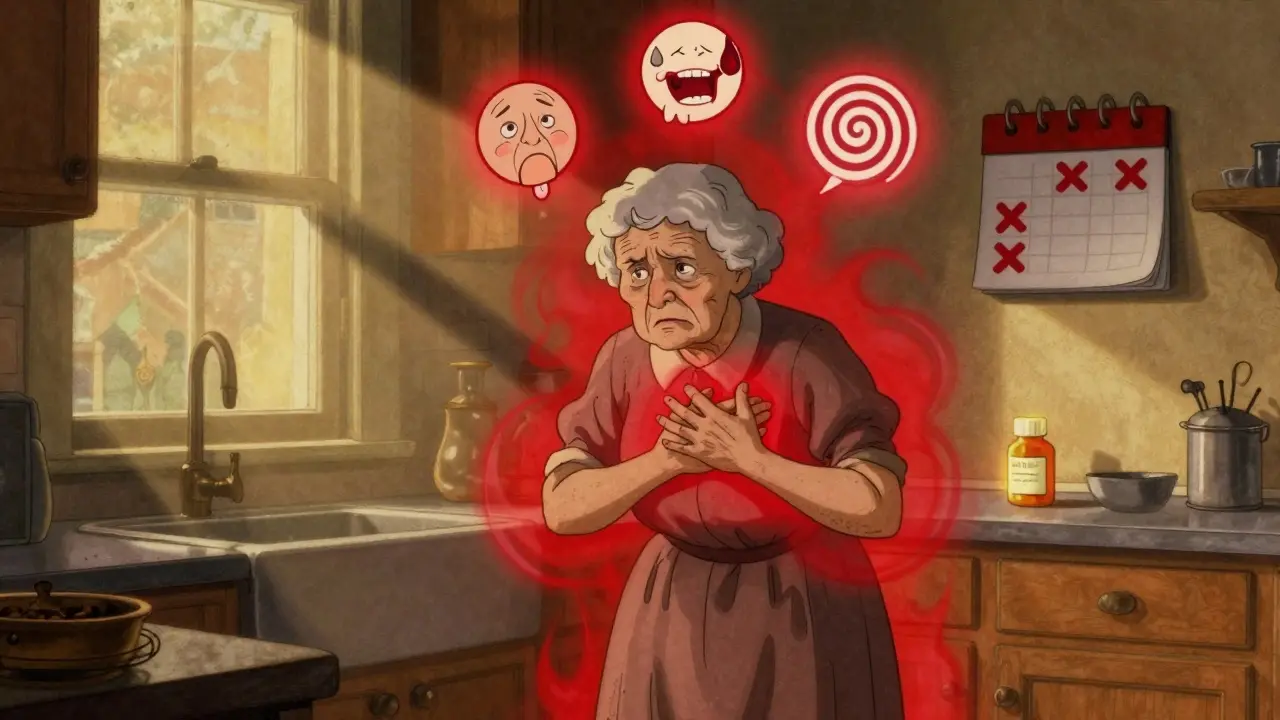
It’s easy to assume that if a medication is prescribed, it’s safe to keep taking - even if you feel off. But some side effects aren’t just annoying. They’re warning signs. And ignoring them can turn a manageable issue into a life-threatening emergency.
In Australia, about 1 in 15 hospital admissions is linked to medication problems. That’s not rare. It’s common enough that doctors and pharmacists now train patients to spot the difference between a mild reaction and a true red flag. The key isn’t to panic over every little change - it’s to know when to act fast.
What Counts as a Red Flag?
Not every weird feeling means something’s wrong. Nausea after antibiotics? Common. Dry mouth from antihistamines? Normal. But if you start feeling like you’re going to pass out, or your face swells up, or you break out in blisters - those aren’t side effects. They’re emergencies.
Here’s what you need to watch for:
- Difficulty breathing - wheezing, gasping, or feeling like your throat is closing. This can happen within minutes of taking a new drug.
- Hives or a sudden rash - especially if it spreads fast or itches badly. Red, raised patches that look like bug bites? Don’t wait.
- Swelling of the face, lips, tongue, or throat - even if it’s mild. This often comes with trouble swallowing or speaking.
- Dizziness or fainting - especially if you’re over 65. Dizziness increases your risk of falling by 200%, and that fall could break a hip or cause internal bleeding.
- Severe nosebleeds or bleeding that won’t stop - common with blood thinners like warfarin or apixaban. If you’re bleeding more than usual, call your doctor.
- Blisters on skin or inside mouth - this could be Stevens-Johnson Syndrome or toxic epidermal necrolysis. These are rare, but deadly. They start with flu-like symptoms, then blisters form. Stop the medication immediately and go to hospital.
- Confusion, hallucinations, or seizures - especially if you’re on antidepressants, pain meds, or epilepsy drugs.
These aren’t "maybe" situations. If you have any of these, don’t wait until your next appointment. Call 000 or go to the nearest emergency department.
When to Call Your Doctor (But Not 000)
Not every problem needs an ambulance. But you still shouldn’t ignore it.
Call your GP if:
- A side effect lasts more than 48 hours and doesn’t improve.
- You’re having trouble sleeping, eating, or doing daily tasks because of how you feel.
- You’re on a chronic medication - like for blood pressure, diabetes, or depression - and you’ve started feeling worse, not better.
- You’ve developed a new symptom that doesn’t match what your pharmacist told you to expect.
- You’ve stopped the medication because you were scared, and now you’re not sure if you should restart it.
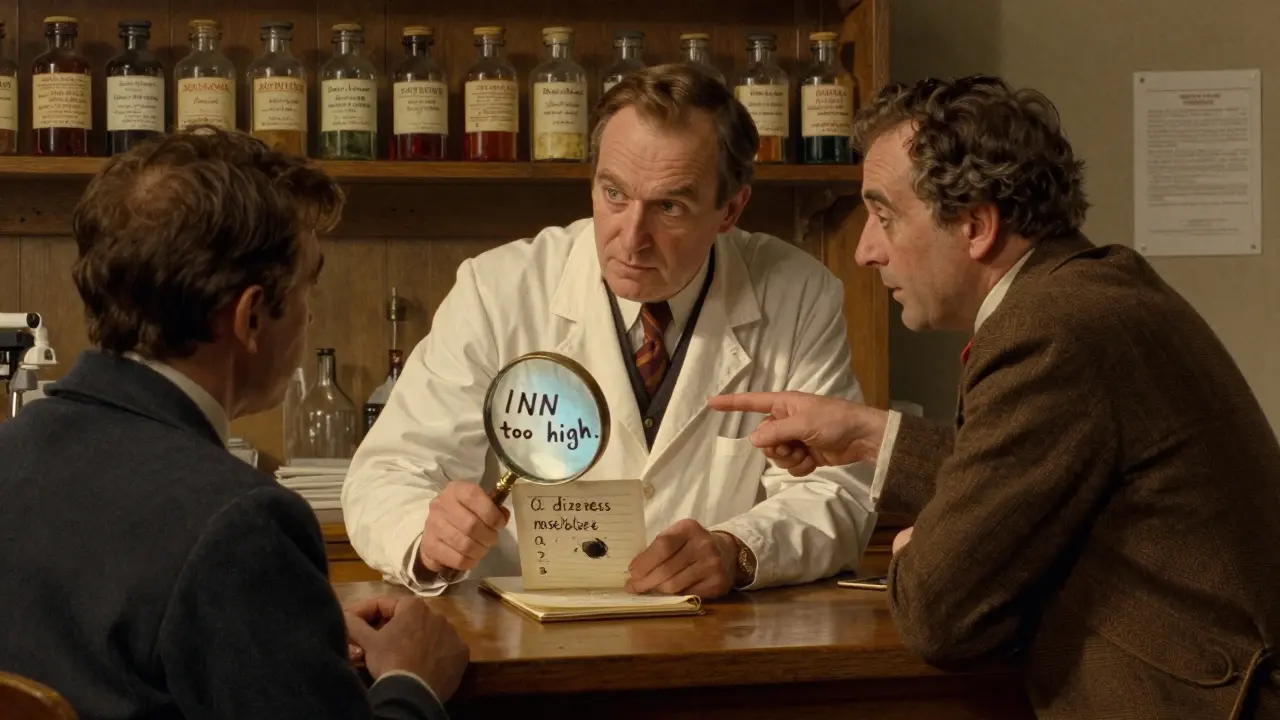
Here’s a real example: A 72-year-old woman in Melbourne started taking a new blood thinner. She noticed her gums bled a little when brushing her teeth - normal at first. But after three days, she was bleeding every time she ate, and her stool looked dark. She called her doctor. They checked her INR level. Her blood was too thin. The dose was adjusted before she had a major bleed.
That’s the point. You don’t need to wait for disaster. If something feels off, say something.
What’s Just a Minor Side Effect?
Let’s be clear: most side effects aren’t dangerous. They’re just unpleasant.
These are usually fine to keep taking the medication for:
- Mild nausea or upset stomach - especially with antibiotics or painkillers.
- Constipation - common with opioids or iron tablets.
- Diarrhea - happens in 1 in 4 people on amoxicillin.
- Drowsiness - especially with older antihistamines or some antidepressants.
- Headache - can happen with many drugs, including blood pressure meds.
- Mild rash - small, localized, not itchy or spreading.
Harvard Health says: if you’re not having trouble breathing, swelling, or blisters, you should keep taking the medicine unless your doctor tells you otherwise. Stopping medication on your own is one of the top reasons treatment fails for chronic conditions like high blood pressure or diabetes.
Keep a Side Effect Diary
Doctors can’t fix what they don’t understand. And most people forget what they felt like three days ago.
Write down:
- What symptom you had (e.g., "dizziness when standing up").
- When it happened (e.g., "30 minutes after taking my pill at 8am").
- How long it lasted (e.g., "2 hours").
- How bad it was on a scale of 1 to 10.
- What you were doing when it happened (e.g., "walking to the kitchen").
A 2022 Lancet study found that patients who kept this kind of diary helped their doctors diagnose medication issues 65% faster. That’s not a small boost. That’s life-saving.
Keep the diary on your phone or in a small notebook. Bring it to your next appointment - even if you think it’s nothing.
What to Do If You’re Unsure
Here’s the simplest rule: When in doubt, call your doctor or pharmacist.
You don’t need to be certain. You don’t need to know if it’s serious. You just need to say: "I’m on this medication, and I’m feeling this. Should I be worried?"
Pharmacists in Australia are trained to handle these questions. Many offer free medication reviews. If you’ve been on the same drugs for more than six months, ask for one. It takes 20 minutes and could catch a dangerous interaction.
And if you’re ever unsure whether to call 000 or your doctor - call 13 HEALTH (13 43 25 84). It’s a free 24/7 service staffed by nurses who can help you decide what to do next.
Why Reporting Matters
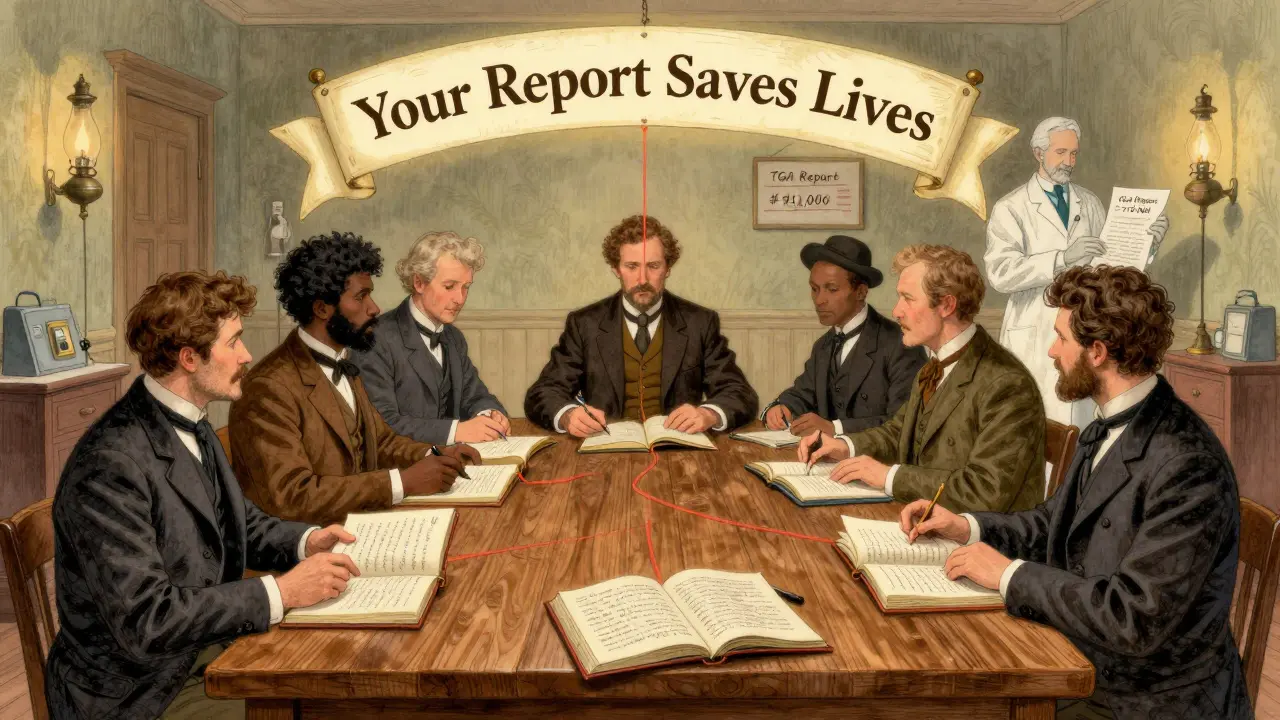
Every time you report a side effect, you help someone else.
The Therapeutic Goods Administration (TGA) runs a system called the Adverse Drug Reaction Reporting Program. It’s how drugs get warnings updated or pulled off the market. In 2023, over 12,000 reports came from Australian patients. That’s how they found out that a common arthritis drug was increasing heart attack risk in older adults.
You can report online at tga.gov.au. You don’t need to be a doctor. Just your name, the drug, and what happened.
It’s not about blaming anyone. It’s about making medicines safer for everyone.
Don’t Guess. Ask.
Medications save lives. But they can hurt too - if we don’t pay attention.
You’re not overreacting if you’re worried. You’re being smart.
The goal isn’t to avoid medicine. It’s to use it safely. And that means knowing when to speak up.
Next time you take a pill and feel something strange - don’t shrug it off. Write it down. Call your doctor. Or if it’s sudden and scary - call 000.
Your body is telling you something. Listen to it.
What should I do if I think I’m having an allergic reaction to my medication?
If you have trouble breathing, swelling of your face or throat, hives, or feel like you’re going to pass out, call 000 immediately. These are signs of anaphylaxis - a life-threatening reaction. Do not wait. Do not take antihistamines and hope it goes away. Emergency treatment with epinephrine is critical and can save your life.
Should I stop taking my medication if I get a rash?
Not always. A mild, small, non-itchy rash is common with antibiotics and usually harmless. But if the rash spreads quickly, turns into blisters, or affects your mouth or eyes, stop the medication and go to hospital. This could be Stevens-Johnson Syndrome, which is rare but dangerous. Always check with your doctor before stopping any prescribed drug.
Is it safe to keep taking my pills if I feel a little dizzy?
Dizziness can be normal at first, especially with blood pressure or anxiety meds. But if it lasts more than 48 hours, gets worse, or makes you feel like you might fall, call your doctor. Dizziness increases fall risk by 200% in older adults - and falls can lead to serious injuries. Your dose might need adjusting.
Can I report side effects even if I’m not sure they’re from the medication?
Yes. The Therapeutic Goods Administration (TGA) encourages anyone to report possible side effects, even if you’re unsure. They look at patterns across many reports to identify real risks. Your report could help catch a dangerous reaction before it affects others.
Why do I need to keep taking my medicine if I feel worse?
Many medications take days or weeks to work. Stopping them early - especially for conditions like high blood pressure, depression, or epilepsy - can cause serious setbacks. For example, stopping an antidepressant suddenly can cause withdrawal symptoms or a relapse. Only stop if you have a true emergency (like swelling or breathing trouble). Otherwise, talk to your doctor first.
How do I know if my side effect is from the medication or something else?
Track it. Note when the symptom started, how long it lasts, and what time you took your medicine. If it happens within an hour after taking the pill, it’s likely linked. If it’s been weeks and the symptom is new, it might be unrelated. A side effect diary helps your doctor spot the connection - and avoids unnecessary tests or changes.
Lindsey Kidd
December 24, 2025 AT 19:07OMG this is so needed 😭 I was on antibiotics and got a tiny rash but thought "eh, it’ll go away"... turned out it was a mild allergic reaction. Called my doc next day and they switched it right away. Don’t ignore the little signs, y’all! 🙏💊
Rachel Cericola
December 26, 2025 AT 02:04Let me tell you, as a nurse who’s seen too many ER visits because someone "thought it was just a side effect" - this is gospel. The difference between a harmless upset stomach and Stevens-Johnson isn’t always obvious to patients, which is why this list is gold. I give this to every new patient on anticonvulsants or antibiotics. And yes, the diary thing? Non-negotiable. I had a patient last month who tracked her dizziness down to 12 minutes after her blood pressure med. We caught a drug interaction no one else saw. That’s not luck. That’s vigilance. If you’re on chronic meds, write it down. Even if you think it’s nothing. Your future self will thank you.
CHETAN MANDLECHA
December 26, 2025 AT 07:43Interesting. In India, many people stop medicines on their own because they think "it's not working" or "it's making me weak". But doctors here don't always explain side effects well. This guide is simple, clear, and needed. I will share it with my family. Also, the 000 number - I didn't know Australia uses that. In India we call 108. Same idea, different number.
Ajay Sangani
December 26, 2025 AT 20:47you know… sometimes i wonder if the real red flag isnt the side effect but the fact that we’re told to take so many pills in the first place. modern medicine is like… a hammer. every problem looks like a nail. i’ve seen people on 7 meds for 3 symptoms. and then they get dizzy. and they think it’s the blood pressure one. but what if its the combo? what if the system is the problem? not the symptom? just… food for thought.
Pankaj Chaudhary IPS
December 28, 2025 AT 01:35As a public health advocate, I commend this article for its clarity and actionable guidance. In developing nations, medication adherence and side effect awareness remain critical gaps. This framework - distinguishing emergency symptoms from benign reactions, promoting diary-keeping, and encouraging patient reporting - is not just useful, it is transformative. I urge health ministries in India and other Commonwealth nations to adopt similar public education campaigns. Every life saved begins with awareness. Thank you for this vital contribution.
Payson Mattes
December 30, 2025 AT 00:42Okay but have you ever wondered if Big Pharma is hiding how many of these "side effects" are actually caused by the fillers and dyes in the pills? I looked up the inactive ingredients in my blood pressure med - there’s 17 chemicals I can’t even pronounce. And guess what? The FDA doesn’t test those. I stopped taking mine and switched to a natural supplement. My dizziness? Gone. Coincidence? I think not. Also, why do they always say "call 000" but never mention that ambulances in Australia are privatized? Who profits when you show up in the ER? Just saying.
Steven Mayer
December 31, 2025 AT 22:26The clinical significance of pharmacokinetic variability in elderly populations is grossly underappreciated. The pharmacodynamic response to anticoagulants is nonlinear and heavily influenced by CYP450 polymorphisms, renal clearance, and protein binding. The anecdotal emphasis on "feeling off" lacks predictive validity. A more robust approach would involve INR monitoring, creatinine clearance calculations, and pharmacogenomic screening. The diary method is insufficient as a diagnostic tool - it’s anecdotal noise. If you’re experiencing dizziness, order a TSH, B12, and serum electrolytes before assuming it’s medication-related.
Diana Alime
January 2, 2026 AT 20:48i literally cried reading this. i was on that blood thinner. my gums bled for WEEKS. i thought it was just "aging". then one morning i spat out a clump the size of a marble. i called my doc. they were like "oh. yeah. that’s bad." i almost died. i’m so glad someone wrote this. please, if you’re reading this - don’t be like me. write it down. call. don’t wait.
Adarsh Dubey
January 3, 2026 AT 17:38This is one of the most balanced and practical guides I’ve seen on medication safety. The distinction between emergency and non-emergency symptoms is clear, and the emphasis on documentation is spot-on. I’ve seen too many cases where patients either panic over minor issues or ignore serious ones because they weren’t educated properly. The diary suggestion alone could prevent hundreds of avoidable hospitalizations. Well done.
Bartholomew Henry Allen
January 4, 2026 AT 09:55Any country that tells its citizens to call 000 for medical emergencies is not a real nation. Real nations have national health systems with trained triage officers. This article is a bandaid on a gunshot wound. We need universal access to primary care not panic buttons. Stop normalizing crisis response. Fix the system.