
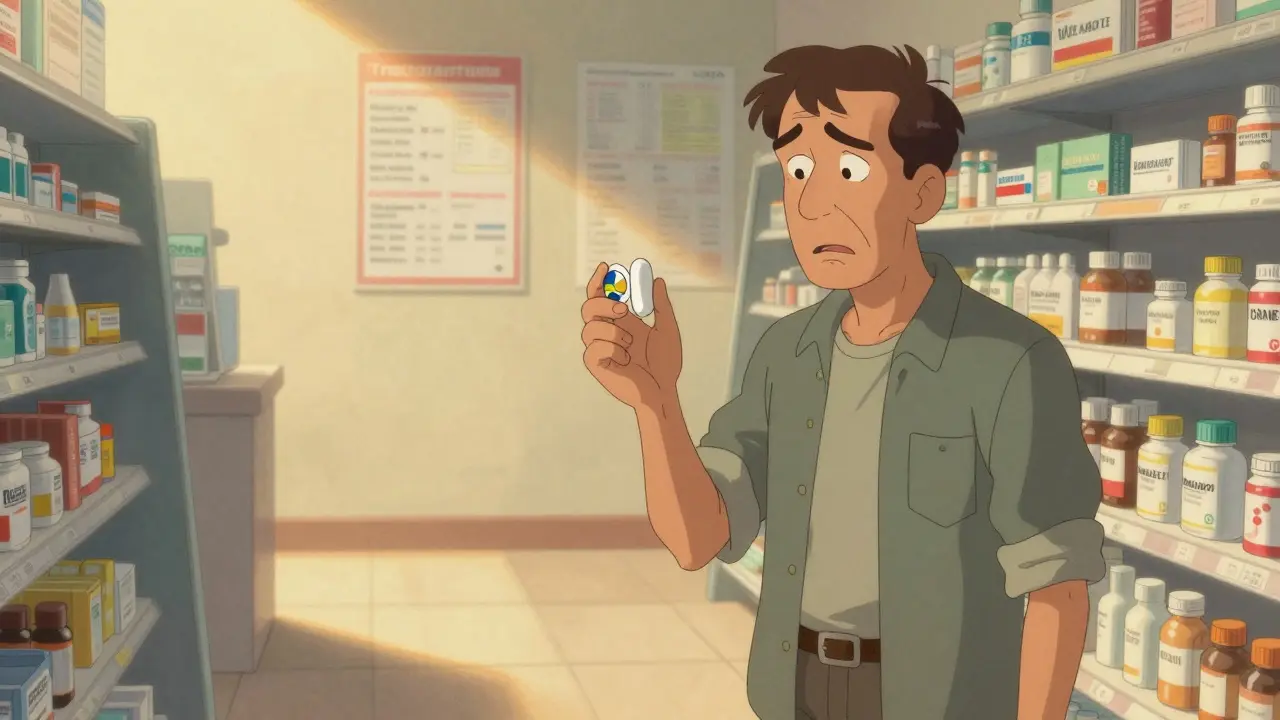
When you pick up a prescription, do you ever wonder why the pill looks different this time? Maybe it’s a different color, shape, or even has a strange logo on it. You’re not alone. Millions of people switch from brand-name drugs to generics every year - not because they want to, but because their insurance forces them to, or because the price dropped by 90%. But here’s the real question: are patients actually happy with generics? And more importantly, does their satisfaction even matter?
It’s Not About the Medicine - It’s About the Mind
Generic drugs are chemically identical to their brand-name counterparts. They contain the same active ingredient, in the same dose, and work the same way in your body. The FDA requires them to be bioequivalent - meaning they must deliver the same amount of medicine into your bloodstream within the same time frame as the brand version. That’s not opinion. That’s science. So why do so many people swear their generic version doesn’t work as well? It’s not the drug. It’s the psychology. Think about it: if you’ve been taking a brand-name pill for years - say, Lipitor for cholesterol - and your doctor suddenly switches you to a generic, you’re not just getting a new pill. You’re getting a new experience. The packaging is different. The pill looks unfamiliar. You might even notice a slight change in how you feel - not because the drug changed, but because your brain started expecting something to be off. Studies show this isn’t just in your head. It’s a real, measurable phenomenon called the nocebo effect. When people believe a treatment is inferior, they’re more likely to report side effects - even when the treatment is identical. One 2023 study found that patients told they were switching to a generic version of an antidepressant were 3 times more likely to report nausea or fatigue than those who weren’t told - even though both groups got the exact same pill.How Do We Measure Satisfaction?
Researchers don’t just ask, “Do you like your generic?” They use tools like the Generic Drug Satisfaction Questionnaire (GDSQ), a 12-item survey that breaks satisfaction into three buckets: effectiveness, convenience, and side effects. - Effectiveness (3 questions): “Does this medicine control your symptoms as well as the brand?” - Convenience (4 questions): “Is it easy to get? Is the price affordable?” - Side effects (5 questions): “Have you noticed any new or worse symptoms since switching?” The results? Across 15 countries, the average satisfaction score for generics was 7.2 out of 10. But here’s the twist: patients who were told by their doctor that generics were “just as good” scored 28% higher than those who weren’t given any explanation. And it’s not just about what the doctor says. It’s about how they say it. A 2024 study in Greece found that when physicians used phrases like “This generic has been tested on over 10,000 people and works exactly like the brand,” satisfaction jumped from 58% to 82%. Simple language. Clear facts. No jargon.Not All Generics Are Created Equal
Some drugs are more forgiving than others. Antibiotics? Most people don’t notice a difference. Satisfaction rates hover around 85%. Blood pressure meds? Around 80%. But when you get into drugs with a narrow therapeutic index - where even a tiny change in dosage can cause big problems - things get messy. Antiepileptic drugs. Thyroid meds. Blood thinners. These are the troublemakers. In one 2023 Reddit thread with over 1,200 comments, nearly 30% of negative experiences involved levothyroxine (generic Synthroid). People reported fatigue, weight gain, heart palpitations - symptoms that didn’t exist before switching. Some even got their TSH levels checked. Turns out, in 90% of cases, the lab results were normal. The body was getting the right dose. But the feeling didn’t match the expectation. Meanwhile, in Saudi Arabia, 45% of patients believed generics were as effective as international brands. In Greece, 75% said they trusted the safety of generics. Cultural context matters. In places where healthcare is more centralized and trust in the system is higher, satisfaction rises.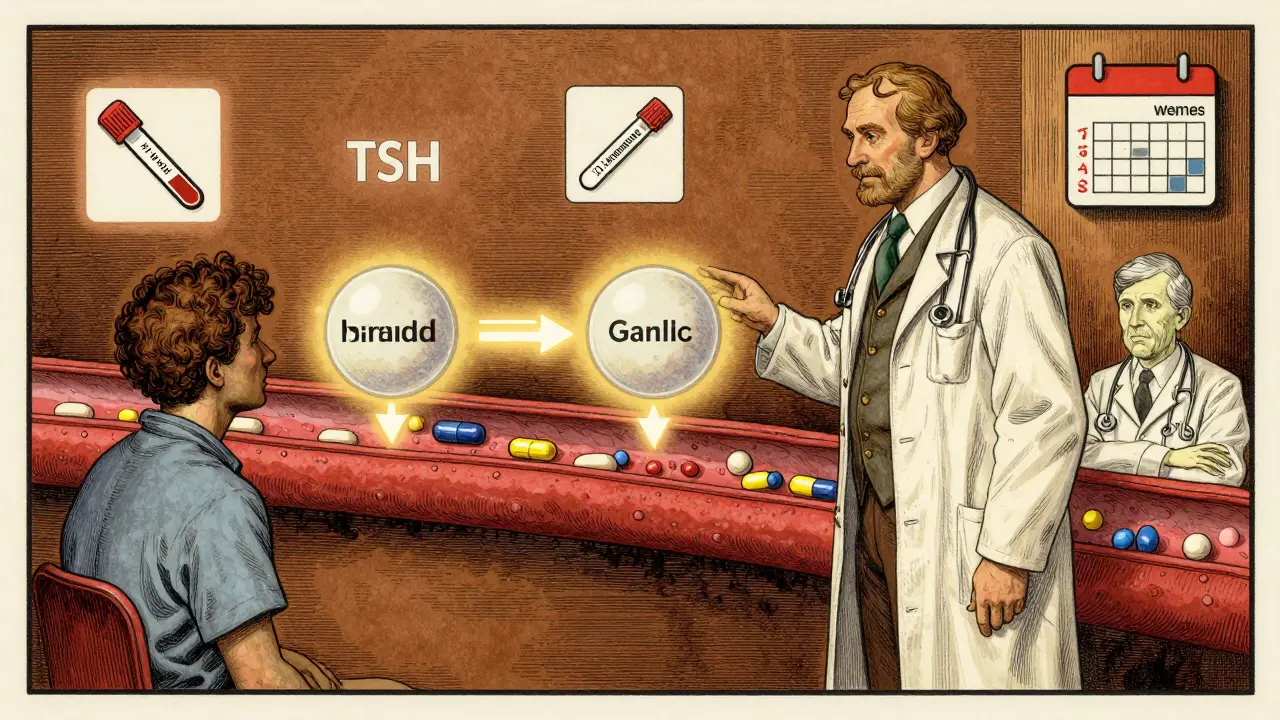
The Cost Factor - And Why It’s Not Just About Money
Let’s talk about price. Generics cost 80-90% less than brand-name drugs. In the U.S., that’s the difference between $40 and $4 for a month’s supply of lisinopril. That’s life-changing for someone on a fixed income. A 2024 study found that patients who switched to generics because of cost were 2.3 times more likely to stick with their medication long-term. That’s huge. Non-adherence to prescriptions costs the U.S. healthcare system over $300 billion a year. Generics help fix that - but only if patients keep taking them. The problem? Some people stop because they think the generic isn’t working. They don’t realize their symptoms are returning because they stopped the medicine - not because the medicine failed.What Doctors and Pharmacists Don’t Tell You
Most patients assume their pharmacist just fills the script. But pharmacists are often the first line of defense against misinformation. A 2022 study showed that when pharmacists explained bioequivalence standards - “The FDA requires generics to be within 80-125% of the brand’s absorption rate” - patient confidence increased by 41%. Yet only 18% of pharmacists routinely offer this explanation. Doctors are even worse. Only 1 in 5 routinely discuss generics with patients before prescribing. They assume the patient knows. They assume the patient doesn’t care. They assume the insurance company handled it. But patients care. A lot.The Real Barrier Isn’t Quality - It’s Trust
Here’s the uncomfortable truth: the biggest obstacle to generic adoption isn’t science. It’s branding. Brand-name drugs spend billions on advertising. They create emotional connections. “Lipitor helps you live longer.” “Prozac gives you peace.” “Synthroid keeps you balanced.” These aren’t just slogans. They’re stories. And stories stick. Generics? They come in plain white bottles. No ads. No logos. No promises. Just a name you’ve never heard of. It’s not that people distrust generics. It’s that they’ve never been given a reason to trust them.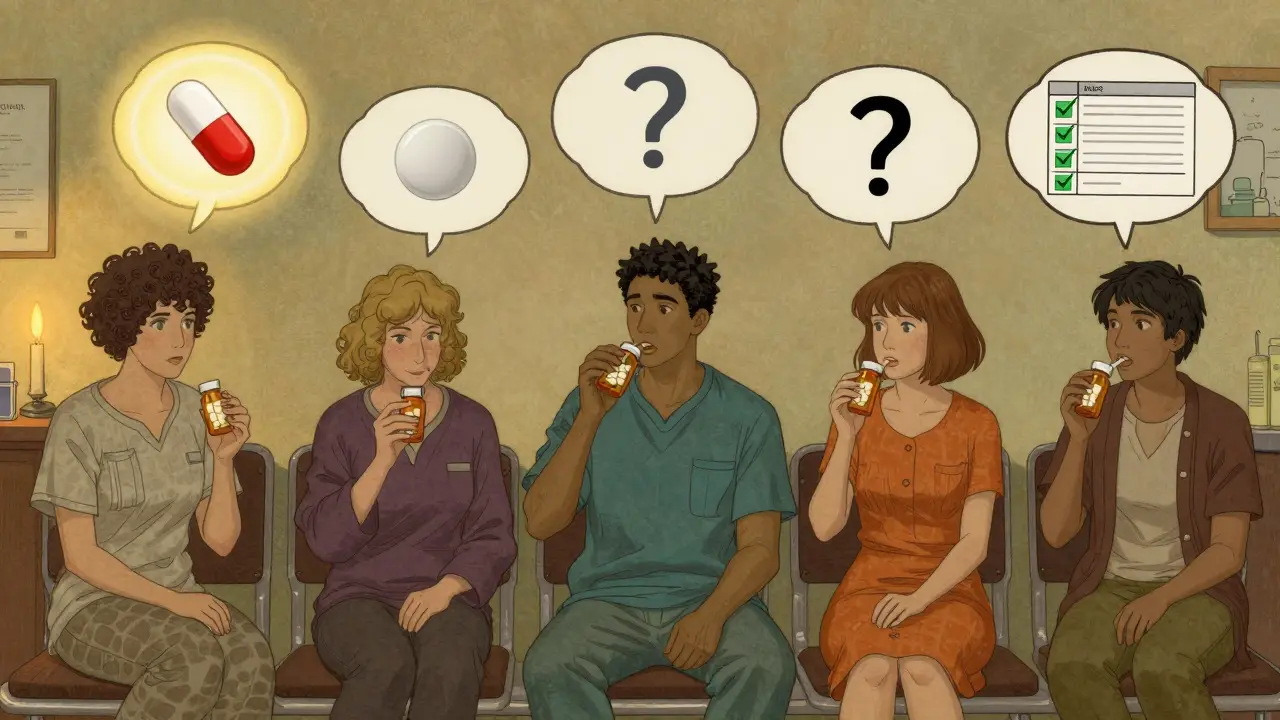
What’s Changing - And What’s Coming
The FDA launched its Generic Drug User Fee Amendments (GDUFA) III Patient Perception Initiative in 2024 - a $15.7 million project to build better tools for measuring satisfaction. They’re now using AI to scan social media posts in 28 languages to understand how people really feel about generics. Some hospitals are starting to use pharmacogenomics - testing your genes to predict how you’ll respond to a drug - to personalize generic switches. If your genes show you metabolize a drug slowly, your doctor might avoid switching you to a generic that’s absorbed faster. And insurance companies? They’re starting to tie reimbursement to satisfaction scores. If your patients report low satisfaction with a generic, your clinic might lose funding. It’s not just about saving money anymore. It’s about keeping people healthy.What You Can Do - As a Patient
If you’re switched to a generic and feel something’s off:- Don’t assume it’s the drug. Ask for a blood test to check levels.
- Keep a symptom journal for two weeks. Note timing, severity, and what you were doing.
- Ask your doctor: “Is this generic bioequivalent to the brand?”
- Ask your pharmacist: “Can you explain how this version was tested?”
- If you’re still uneasy, ask for a trial period. Some insurers will cover the brand for 30 days while you adjust.
Final Thought: Satisfaction Is a Signal - Not a Flaw
Patient dissatisfaction with generics isn’t proof that generics are inferior. It’s proof that the system failed to explain them. We’ve built a world where we trust pills with logos more than pills without. We’ve trained people to equate price with quality. We’ve ignored the psychological weight of a pill’s appearance. The solution isn’t to stop using generics. It’s to start talking about them - clearly, honestly, and often. Because when patients understand what they’re taking - and why - satisfaction doesn’t just go up. Adherence does too. And that’s the real win.Are generic medications really as effective as brand-name drugs?
Yes. By law, generic medications must contain the same active ingredient, in the same strength and dosage form, as the brand-name version. The FDA requires them to be bioequivalent - meaning they deliver the same amount of medicine into your bloodstream at the same rate. Studies show no meaningful difference in clinical outcomes for the vast majority of drugs. The only exceptions are a few narrow therapeutic index drugs, like warfarin or levothyroxine, where small differences in absorption can matter - but even then, most patients do just fine on generics with proper monitoring.
Why do some people feel worse after switching to a generic?
This is usually due to the nocebo effect - when expecting a negative outcome leads to experiencing one. The pill looks different, the packaging is unfamiliar, or you were told the generic might not work as well. Your brain picks up on these cues and starts interpreting normal sensations - like a slight headache or fatigue - as side effects. In most cases, lab tests show your drug levels are perfectly normal. Talking to your doctor or pharmacist about what to expect can reduce this effect by up to 40%.
Which medications have the lowest patient satisfaction with generics?
Antiepileptic drugs, antidepressants, and thyroid medications like levothyroxine report the lowest satisfaction rates - often below 70%. These are drugs where small changes in blood levels can cause noticeable symptoms. Patients are also more likely to notice subtle differences because they’re managing chronic conditions. In contrast, antibiotics and blood pressure meds have satisfaction rates above 85%, since patients don’t usually notice small variations in how they feel.
Can a pharmacist help me feel more confident about a generic?
Absolutely. Pharmacists are trained to explain bioequivalence and the FDA’s approval process. When they say, “This generic has been tested on thousands of people and meets the same strict standards as the brand,” patients report feeling 30-40% more confident. Ask them to explain how the generic was approved. Most will be happy to help - and it might be the most important conversation you have about your medication.
Should I ask my doctor to keep me on the brand-name drug?
Only if you’ve tried the generic and had a verified problem - like abnormal lab results or worsening symptoms. Don’t assume the generic isn’t working just because it looks different. Most people do just fine. If cost is an issue, ask your doctor about patient assistance programs or generic alternatives. Insurance often requires you to try the generic first. But if you have a documented issue, your doctor can request a prior authorization for the brand.
How do cultural differences affect satisfaction with generics?
In collectivist cultures - like those in Asia and the Middle East - patients are more likely to trust authority figures and institutional systems, leading to higher satisfaction with generics. In individualist cultures - like the U.S. and Western Europe - patients rely more on personal experience and brand familiarity, which can lower satisfaction. Studies show satisfaction scores are 32% higher in collectivist cultures, even when the same drug is used. This highlights how perception, not science, drives satisfaction.
Is there a way to tell if a generic is working for me?
For chronic conditions, the best way is through objective measures: blood pressure readings, cholesterol levels, TSH levels, seizure frequency, or mood tracking apps. Don’t rely on how you “feel.” Symptoms can be influenced by stress, sleep, diet, or the nocebo effect. If you’re unsure, ask your doctor for a lab test or symptom log. If your numbers are stable and your symptoms haven’t worsened, the generic is likely working fine.
Do generic medications have different inactive ingredients?
Yes. While the active ingredient must be identical, generics can use different fillers, dyes, or binders. These don’t affect how the drug works, but they can cause allergic reactions in rare cases - like a dye sensitivity. If you’ve had an allergic reaction to a brand-name drug, check with your pharmacist to see if the generic uses the same inactive ingredients. Most people don’t react to these differences, but if you have a history of allergies, it’s worth asking.
Ashley Porter
January 27, 2026 AT 21:02The nocebo effect here is a textbook case of psychosomatic pharmacodynamics. Patients aren't experiencing pharmacological failure-they're experiencing cognitive dissonance between brand-associated expectancy and generic visual stimuli. The FDA's bioequivalence thresholds (80-125%) are statistically robust, but human perception operates on heuristics, not confidence intervals. The pill's color, size, or even the font on the bottle becomes a conditioned stimulus for therapeutic efficacy. We've conflated familiarity with fidelity.
And don't get me started on the inactive ingredients. While they're inert from a pharmacokinetic standpoint, they're not inert from a psychosocial one. Dye sensitivities, lactose fillers, even the shape of the tablet can trigger nocebo-mediated autonomic responses. The real issue isn't bioequivalence-it's perceptual equivalence.
Pharmacists who skip the explanation aren't being lazy-they're failing to manage expectation architecture. This isn't just about adherence; it's about neurocognitive reconditioning.
Mohammed Rizvi
January 29, 2026 AT 19:57Let me tell you something-back in Mumbai, we’ve been taking generics since the 80s. No one had insurance, no one had brand loyalty. We took what worked. And guess what? We didn’t die. We didn’t get sicker. We just got cheaper. Now Americans act like switching to a generic is like swapping their spouse for a lookalike. It’s not magic. It’s chemistry.
But I’ll give you this: the branding is psychological warfare. Pfizer didn’t spend billions on ads so you’d feel better about your cholesterol-they spent it so you’d forget the pill costs $4 and not $40. Your brain remembers the logo, not the molecule.
Generics don’t need a story. They need a chance. And maybe, just maybe, a little less American consumer theater.
Nicholas Miter
January 30, 2026 AT 14:02My grandma switched from Lipitor to the generic last year. She was terrified. Said the pill looked 'wrong.' We sat down, looked up the FDA bioequivalence data together, checked her cholesterol levels before and after. Same numbers. Same energy. Same life.
She still calls it 'the blue one' instead of 'atorvastatin.' Doesn't matter. What matters is she's still taking it. That’s the win.
Doctors don’t explain because they’re rushed. Pharmacists don’t explain because they’re understaffed. Patients don’t ask because they’re scared to sound dumb. We’re all failing each other. But it’s fixable. Just talk. One conversation at a time.
TONY ADAMS
January 31, 2026 AT 10:56bro i switched to generic adderall and now i can’t focus at all. it’s like my brain is underwater. i know you guys are gonna say it’s all in my head but i’m telling you this is real. i even took a blood test. they said it was fine. but i don’t feel fine. so what do i do? just suffer? this is why i hate the system.
George Rahn
February 1, 2026 AT 02:43It is a lamentable indictment of modern Western medical culture that the populace has been rendered so infantilized by corporate marketing that they perceive a pharmaceutical product’s efficacy as a function of its packaging and brand recognition, rather than its molecular composition. The FDA’s rigorous bioequivalence protocols-grounded in empirical science-are systematically undermined by a cultural pathology that privileges aesthetics over anatomy.
One must ask: if a pill is chemically identical, why does its appearance warrant existential dread? Is this not the apotheosis of consumerist delusion? The generic is not a substitute-it is the authentic expression of pharmacological truth, stripped of the gilded illusion of superiority. To reject it is to reject reason itself.
Ashley Karanja
February 2, 2026 AT 03:18Okay, but let’s really sit with this for a second-this isn’t just about pills. It’s about trust in systems. When you’ve been told your whole life that ‘you get what you pay for,’ and then suddenly you’re handed a white pill with no logo and told ‘this is just as good,’ your brain doesn’t just accept it. It rebels. It’s like being told your wedding ring is fake because it’s from Walmart, even though it’s the same diamond.
And the nocebo effect? It’s not ‘in your head’-it’s in your body, your nervous system, your lived experience. If you’ve been on brand-name for a decade and your body has learned to associate that shape, that color, that pill texture with stability… switching feels like losing your anchor. The science says it’s the same. But the body remembers what the brain forgets.
So yes, doctors should explain. Pharmacists should clarify. But we also need to stop calling patients ‘irrational’ for feeling this way. Their fear isn’t ignorance-it’s trauma from being treated like a cost center. The real solution isn’t more data. It’s more compassion. And maybe, just maybe, a little more empathy in the pill bottle.
Neil Thorogood
February 3, 2026 AT 04:37Generic levothyroxine is a nightmare. I went from feeling like a human to feeling like a zombie. My TSH was ‘normal.’ My doctor said ‘it’s all in your head.’ I cried in the pharmacy parking lot. Then I switched back to Synthroid. My energy came back. My weight dropped. My therapist asked if I was sleeping better. I said yes. And guess what? The insurance company now bills me for $38 a month instead of $4.
So yeah. Sometimes the generic doesn’t work. And no, I’m not crazy. And no, I don’t care if your blog says I should be grateful. I’m not a statistic. I’m a person who just wants to feel like myself again.
Angie Thompson
February 4, 2026 AT 06:36My mom’s from Kenya. She takes a generic blood pressure pill that costs $1. She doesn’t know what ‘bioequivalence’ means. She doesn’t care. She just knows that after 3 weeks, her headaches stopped. She didn’t need a logo. She didn’t need a commercial. She just needed to feel better.
Maybe the real lesson here isn’t about generics. Maybe it’s about how we’ve made medicine into a brand, not a right.
And maybe, just maybe, the most effective drug isn’t the one with the best science… it’s the one you actually take.