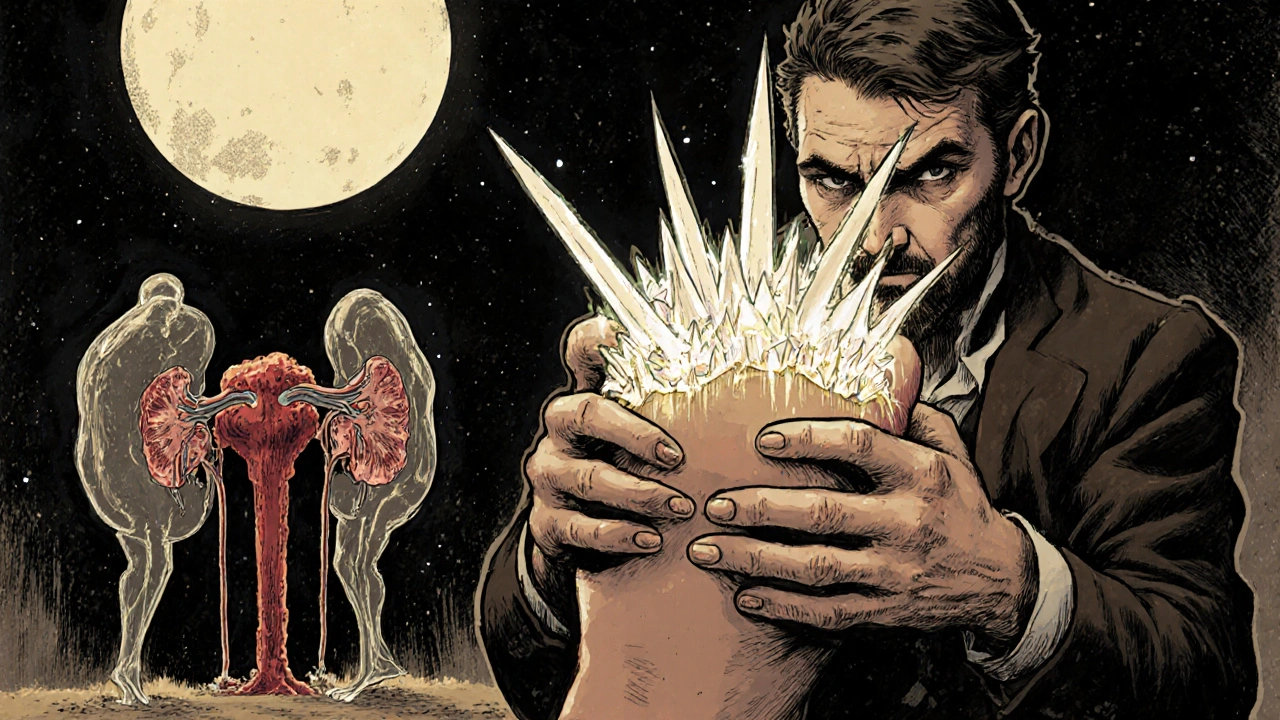
When your body makes too much gout, a type of inflammatory arthritis caused by uric acid crystals building up in joints. Also known as metabolic arthritis, it doesn’t just hurt—it can limit how you move, work, and live. It hits hardest in the big toe, but knees, ankles, and fingers aren’t safe either. Flare-ups come fast: redness, swelling, heat, and pain so sharp you can’t even bear a sheet over your foot.
What’s behind it? Too much uric acid, a waste product from breaking down purines in food and your own cells. When kidneys can’t flush it out, it turns into sharp crystals. That’s where allopurinol, a medication that blocks uric acid production comes in. It’s not a painkiller—it’s a long-term fix. People with chronic kidney disease, a condition where kidneys slowly lose function often need allopurinol because their kidneys are already struggling to remove waste. But even if your kidneys are fine, high-purine diets (red meat, shellfish, beer) can push uric acid past the edge.
Gout isn’t just about diet or drugs. It’s tied to weight, blood pressure, and even other meds. Some diuretics for fluid retention can make gout worse. That’s why managing gout often means looking at the whole picture: what you eat, what you take, and how your kidneys are doing. You don’t need to quit beer forever, but cutting back helps. You don’t need to live in pain during flares—there are safe, proven ways to reduce them.
The posts below give you real, practical info on what works. You’ll find how allopurinol fits into kidney care, what alternatives exist if it doesn’t suit you, and how other conditions like fluid retention or high blood pressure can make gout harder to control. No fluff. Just what you need to understand your body, avoid flare-ups, and talk to your doctor with confidence.