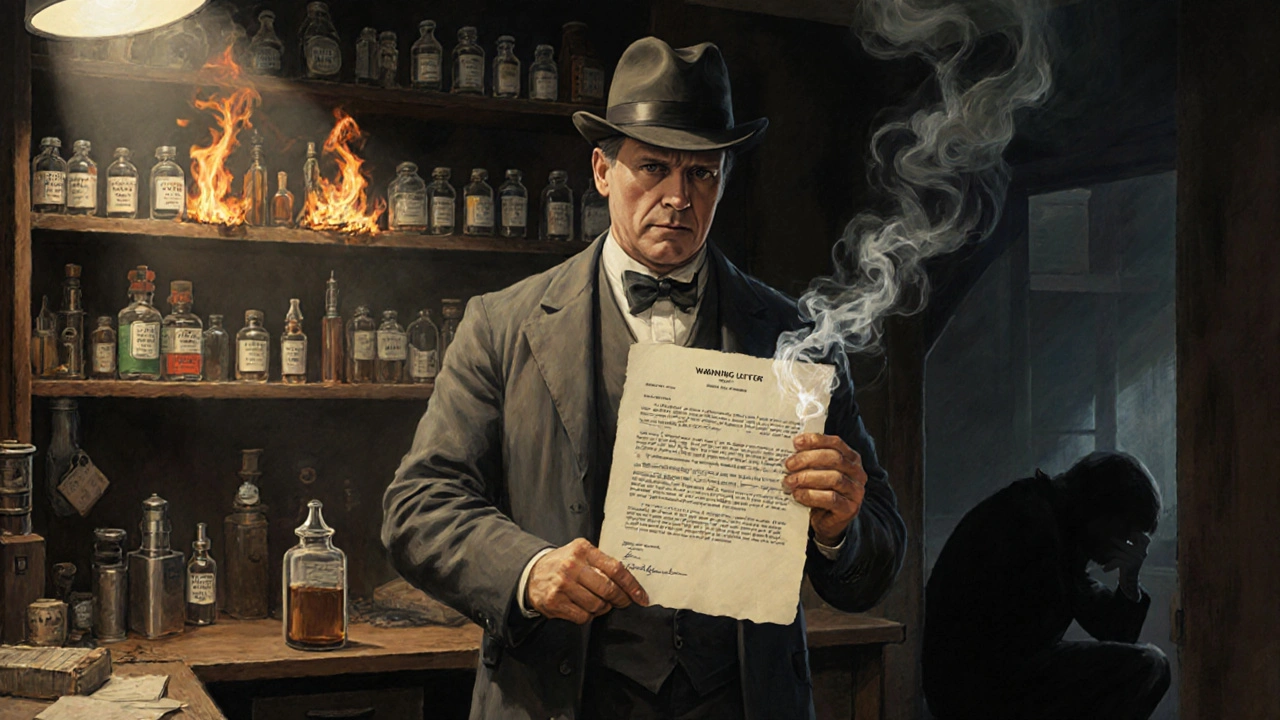
When you buy medication, you assume it’s made safely, tested properly, and meets legal standards. But non-compliant manufacturers, companies that ignore drug safety rules and regulatory standards. Also known as unlicensed producers, these operators cut corners to save money—and put your life at risk. They might skip purity tests, use cheap fillers, or fake batch records. Some even sell pills that contain nothing but sugar or toxic chemicals. This isn’t rare. It’s happening right now, and it’s harder to catch than you think.
These counterfeit medication, fake drugs designed to look like real prescriptions often show up in online pharmacies that don’t require a prescription. You might think you’re saving money buying cheap unsafe generics, generic drugs made without proper quality control from a website with a .com.au domain. But if the pharmacy isn’t licensed, the pill could be useless—or deadly. A 2023 WHO report found that 1 in 10 medicines in low- and middle-income countries are fake. In unregulated online markets, that number is much higher. And it’s not just overseas. Some domestic suppliers bypass FDA or TGA rules to push products into the market faster. If a drug looks different than usual, tastes odd, or doesn’t work like it should, it might not be real.
How do you know who to trust? Look at the source. Legit pharmacies are registered, their contact info is clear, and they ask for your prescription. If a site offers "discounted" versions of drugs like Effexor, Seroquel, or Viagra without a doctor’s note, walk away. Fake drugs don’t just fail to treat your condition—they can cause liver damage, allergic reactions, or even death. That’s why pharma regulation, the system of rules that ensures drugs are safe and effective matters. When manufacturers ignore it, the burden falls on you to spot the danger.
The posts below cover real cases where people were affected by bad drugs—from hydroxyurea with wrong dosing to counterfeit sildenafil that didn’t work. You’ll see how non-compliant manufacturers slip through cracks, how to check if your meds are legit, and what to do if you suspect something’s off. These aren’t theoretical warnings. These are stories from people who took a pill and got sick. You don’t need to be a pharmacist to protect yourself. You just need to know what to look for.