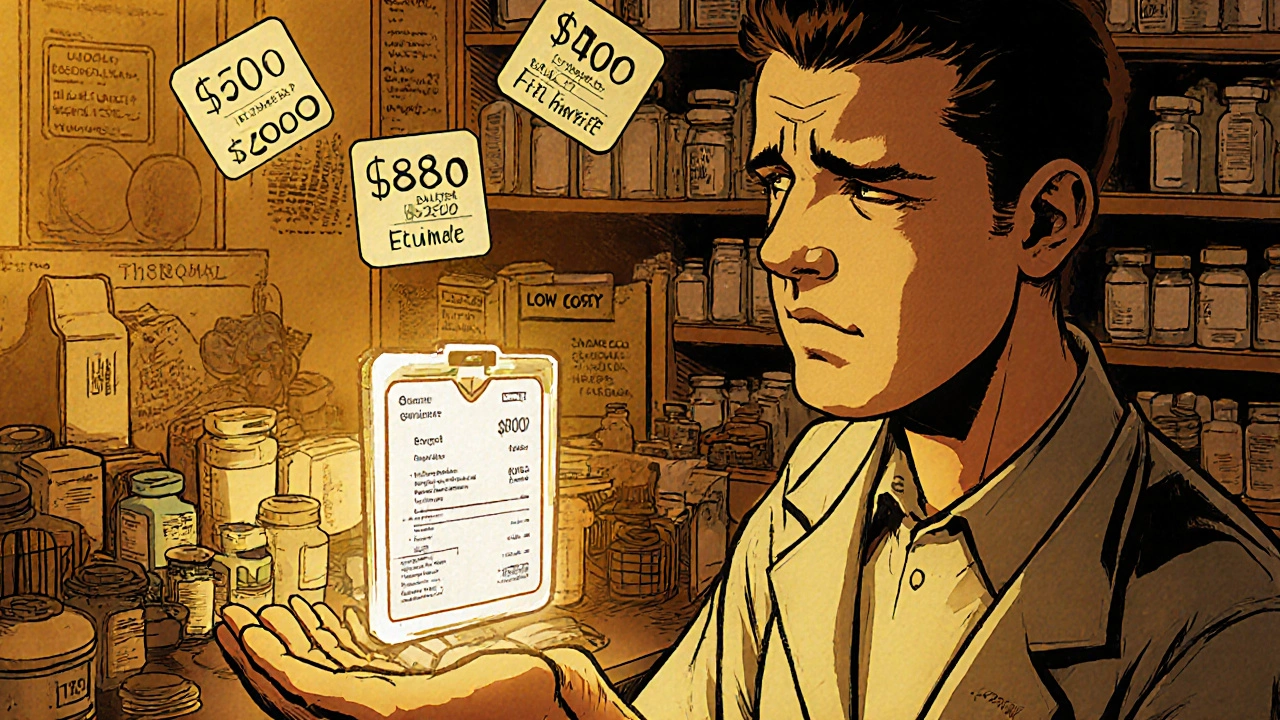
When you pick up a prescription, the price you see isn’t random—it’s shaped by prescription drug prices, the cost structure of pharmaceuticals set by manufacturers, insurers, and pharmacies. Also known as medication costs, they’re not just about the pill itself but who makes it, who pays for it, and how the system lets you access it. Two people can walk into the same pharmacy with the same script and pay completely different amounts. One pays $5. Another pays $150. Why? It’s not about the drug. It’s about insurance coverage, how your plan handles formularies, copays, and prior authorizations. Many think brand-name drugs are better, but generic drugs, medications that contain the same active ingredients as brand-name versions but are sold without the marketing costs are just as safe and effective. The only real difference? Price. And that’s where the system gets messy.
Prescription drug prices don’t follow logic—they follow rules written by manufacturers, pharmacy benefit managers, and insurers. A drug might cost $2 to make, but if it’s still under patent, the maker can charge $300 because no one else is allowed to sell it. Once the patent expires, generics flood the market, and prices drop by 80% or more. But even then, your pharmacy might not stock the cheapest version. Why? Because your insurance plan has a deal with a specific distributor. That’s why you sometimes see the same generic drug priced differently at CVS, Walgreens, and Walmart. And if your plan doesn’t cover it at all? You’re stuck paying full price. Some people skip doses. Others switch to cheaper alternatives—like buying from Canada or using mail-order pharmacies. These aren’t hacks. They’re survival tactics.
It’s not just about the drug. It’s about timing, location, and luck. A medication you paid $20 for last year might jump to $80 this year because the manufacturer raised the list price. Your copay might stay the same, but your deductible just got bigger. Or maybe your doctor switched you to a new drug because it’s on your plan’s preferred list—even if it’s not better for you. You don’t get a say. The system is designed to make you think you’re getting value, when often you’re just paying more for the same thing. That’s why understanding how brand-name drugs, medications sold under a trademarked name with exclusive marketing rights are priced versus generics matters. It’s not about science. It’s about business. And if you don’t know how it works, you’re leaving money on the table—or worse, skipping your meds.
Below, you’ll find real guides that cut through the noise. You’ll learn how to compare prices, spot hidden costs, find cheaper alternatives, and navigate insurance rules that are written to confuse you. Whether you’re paying for statins, antidepressants, or Parkinson’s meds, the system treats everyone the same: like a number. But you don’t have to be one.