
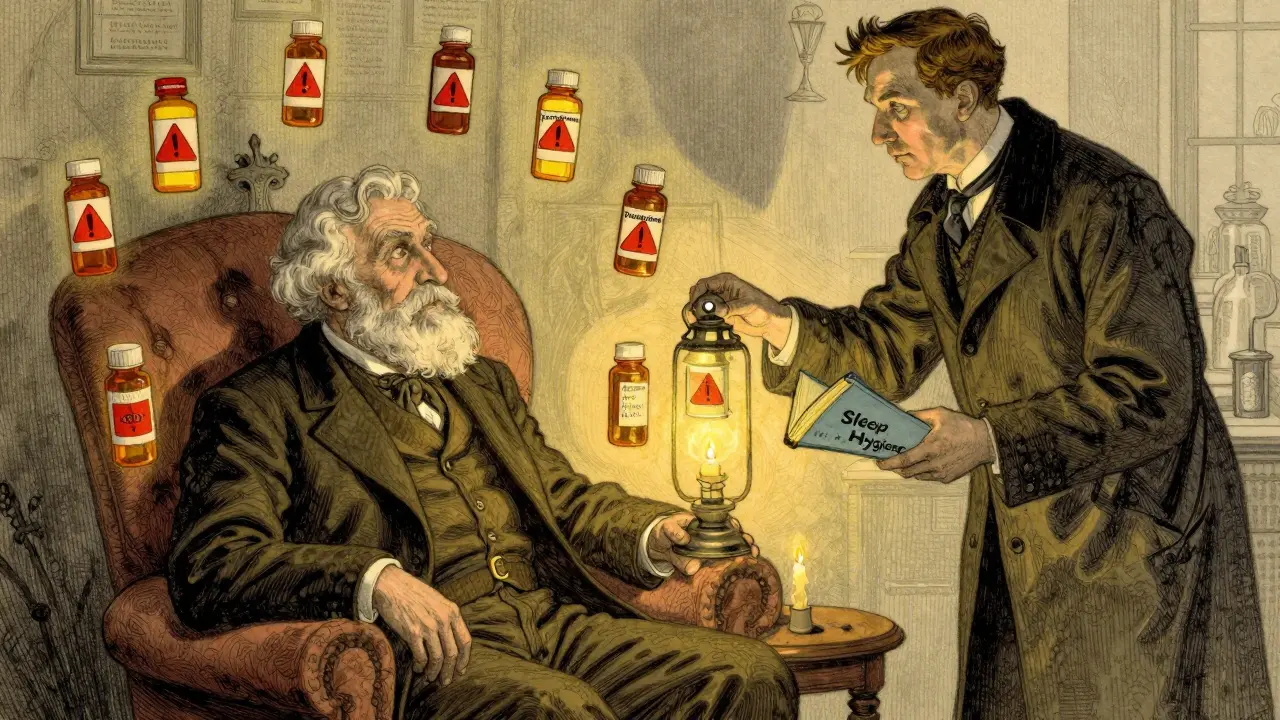
Every year, thousands of seniors end up in the hospital because of medications that should never have been prescribed to them in the first place. It’s not always the fault of doctors or pharmacists. Often, it’s because the drugs they’re taking - even if they’ve been on them for years - are simply too risky for older bodies. That’s where the Beers Criteria comes in. It’s not a suggestion. It’s a lifeline.
What Exactly Is the Beers Criteria?
The Beers Criteria is a list of medications that doctors and pharmacists are warned to avoid in adults aged 65 and older. It’s not a blanket ban. It’s a smart, evidence-based guide that says: "This drug might help, but in someone your age, the odds of harm are too high." Developed by Dr. Mark Beers in 1991 and now maintained by the American Geriatrics Society (AGS), it’s been updated every three years. The latest version, released in May 2023, is the most thorough yet, based on over 7,000 studies.Why does this matter? Seniors make up just 13.5% of the U.S. population, but they take 34% of all prescription drugs. That’s not because they’re sicker - it’s because multiple conditions pile up, and prescriptions stack on top of each other. One in five older adults is taking at least one medication that the Beers Criteria says they shouldn’t. And that’s linked to 15% of all hospital stays for seniors.
What Medications Are on the List?
The 2023 Beers Criteria identifies 134 medications or drug classes that pose higher risks than benefits for older adults. These fall into five clear categories:- Medications to avoid entirely: First-generation antihistamines like diphenhydramine (Benadryl) and hydroxyzine. These are common in sleep aids and allergy meds, but they block acetylcholine - a brain chemical critical for memory and focus. The result? Confusion, dizziness, falls, and even delirium. Even one dose can be dangerous for someone over 70.
- Medications dangerous with certain conditions: NSAIDs like ibuprofen and naproxen. For someone with heart failure or high blood pressure, these can cause fluid retention and make their heart work harder. A simple pain reliever becomes a heart risk.
- Medications to use with extreme caution: Anticoagulants like dabigatran (Pradaxa). While safer than warfarin for many, in seniors over 75 or with kidney problems, the risk of internal bleeding jumps significantly. Dosing matters - a lot.
- Drug combinations to avoid: Mixing anticholinergics (like oxybutynin for overactive bladder) with opioids (like oxycodone) can lead to severe constipation, urinary retention, and cognitive decline. It’s not just one bad drug - it’s the combo.
- Drugs needing kidney dose adjustments: Gabapentin, used for nerve pain, is cleared by the kidneys. In older adults with reduced kidney function, it builds up and causes drowsiness, dizziness, and falls. Many prescribers still give the same dose as to a 30-year-old.
Since 2019, 32 new drugs were added to the list, and 18 were removed because newer evidence showed they were safer than previously thought. That’s the power of science - the list isn’t static. It evolves.
How Is It Different From Other Tools?
You might hear about STOPP/START, another set of guidelines used mostly in Europe. The big difference? STOPP/START looks at the whole picture: "Is this drug needed for this condition?" The Beers Criteria says: "This drug is risky - don’t use it, even if the condition seems to fit." That’s both a strength and a weakness. Beers is blunt. It’s easier to program into an EHR system. In the U.S., 87% of hospitals and clinics use it. Medicare Part D requires it for patients taking eight or more medications. But sometimes, it flags a drug that’s actually necessary. For example, antipsychotics are on the list for dementia-related agitation - but if a patient is violent or hallucinating and other options have failed, the risk of not treating may be higher than the risk of the drug.That’s why experts say: Don’t use Beers alone. Use it with clinical judgment. It’s a red flag, not a death sentence.

How Do Doctors Actually Use It?
The best way it’s used? Integrated into electronic health records. When a doctor tries to prescribe diphenhydramine to a 78-year-old, the system pops up: "Beers Criteria Alert - Avoid in older adults. Consider non-drug options for insomnia." One study found that clinics using these alerts reduced benzodiazepine prescriptions for insomnia by 43% in seniors over 75. Another found a 28% drop in adverse drug events overall. That’s not just numbers - that’s fewer falls, fewer ER visits, fewer broken hips.But there’s a catch. Too many alerts. One primary care doctor reported getting 12 Beers alerts per patient visit. When the system screams too often, doctors start ignoring it. That’s called "alert fatigue." The key is smart filtering - only flagging high-risk interactions, not every minor one.
Pharmacists are the unsung heroes here. In 89% of cases, they’re the ones catching these issues during medication reviews. They’re the ones asking: "Why are you still on this?" and offering safer alternatives.
What Are the Alternatives?
The 2025 update to the Beers Criteria added something huge: the Alternatives List. For every flagged drug, it now suggests what to use instead.- Instead of diphenhydramine for sleep: Try sleep hygiene - consistent bedtime, no screens before bed, avoiding caffeine after noon.
- Instead of NSAIDs for joint pain: Physical therapy, weight management, topical capsaicin, or acetaminophen (within safe limits).
- Instead of gabapentin for nerve pain: Low-dose duloxetine or pregabalin (with kidney dose adjustment), or non-drug options like TENS units.
- Instead of antipsychotics for agitation in dementia: Environmental changes - reduce noise, increase daylight, engage in familiar activities. If needed, use low-dose risperidone only after other options fail.
These aren’t just guesses. They’re backed by clinical trials. Cognitive behavioral therapy for insomnia (CBT-I) is as effective as sleeping pills - and lasts longer without side effects. And it’s covered by Medicare.

Why Isn’t Everyone Using It?
Despite its proven value, only 41% of primary care practices in the U.S. consistently apply the Beers Criteria. Why?- Time. Doctors are rushed. Reviewing a 12-medication list for a 78-year-old takes 10 minutes - and most visits are 15.
- Cost. Some Beers-listed drugs are cheap. Alternatives might cost $100 a month. For seniors on fixed incomes, price matters more than guidelines. One study found 25% of Medicare patients skip meds because they can’t afford them - even if they’re unsafe.
- Legacy prescriptions. Many seniors have been on these drugs for decades. No one ever asked if they still needed them.
- Lack of awareness. Sixty-one percent of seniors don’t know their meds are being checked against the Beers Criteria. They assume their doctor knows best - and they’re right. But they need to be part of the conversation.
What Can Seniors and Families Do?
You don’t need to be a doctor to protect yourself or a loved one. Here’s how:- Ask for a full medication review at least once a year. Bring every pill bottle - including supplements and over-the-counter meds.
- Ask: "Is this still necessary? Are there safer options?" Don’t be shy.
- Check if your pharmacist offers a Medication Therapy Management (MTM) service. It’s free under Medicare Part D if you take multiple meds.
- Download the free AGS Beers Criteria app. It’s updated quarterly. Use it to check any new prescription before filling it.
- Speak up if you feel drowsy, confused, or unsteady. These aren’t "just aging" - they could be drug side effects.
The goal isn’t to stop all meds. It’s to stop the wrong ones. To replace dangerous ones with safer ones. To give seniors more years of independence - not more hospital beds.
The Bigger Picture
The Beers Criteria isn’t just a list. It’s a movement. It’s changing how we think about aging and medicine. The pharmaceutical industry is responding - 23 new "senior-friendly" drugs are in development. The FDA now requires geriatric warnings on 17 Beers-listed medications. Medicare is making it mandatory. And AI tools are being trained to predict which seniors are most at risk.But technology won’t fix this alone. People will. Doctors who pause before prescribing. Pharmacists who ask tough questions. Families who speak up. And seniors who know their bodies well enough to say: "This doesn’t feel right." The Beers Criteria is the map. You’re the navigator. Don’t let anyone else drive.
What is the Beers Criteria and who created it?
The Beers Criteria is a list of medications that pose more risks than benefits for adults aged 65 and older. It was originally created by Dr. Mark Beers in 1991 and is now maintained and updated every three years by the American Geriatrics Society (AGS). The most recent version was published in May 2023, based on over 7,300 research studies.
Why are some medications on the Beers Criteria list?
These medications are flagged because they’re more likely to cause serious side effects in older adults - like confusion, falls, kidney damage, or internal bleeding. Aging changes how the body processes drugs. The liver and kidneys slow down, and the brain becomes more sensitive to certain chemicals. A drug that’s safe for a 40-year-old can be dangerous for a 75-year-old.
Is it safe to stop a medication just because it’s on the Beers Criteria?
No. The Beers Criteria is a guide, not a rule. Some medications on the list may still be necessary for certain patients - for example, an antipsychotic for severe dementia-related aggression when other treatments have failed. Never stop a medication without talking to your doctor. The goal is to find safer alternatives, not to go without needed treatment.
What are common alternatives to Beers-listed drugs?
For insomnia, instead of diphenhydramine or benzodiazepines, try cognitive behavioral therapy for insomnia (CBT-I), sleep hygiene, or melatonin. For joint pain, use physical therapy, topical creams, or acetaminophen instead of NSAIDs. For overactive bladder, pelvic floor exercises or mirabegron may be safer than oxybutynin. The 2025 Alternatives List provides 147 evidence-based options.
How can I check if my meds are on the Beers Criteria list?
Ask your pharmacist for a medication review. You can also download the free AGS Beers Criteria app, which is updated quarterly. Bring a complete list of all your medications - including vitamins, supplements, and over-the-counter drugs - to your next doctor’s visit and ask: "Are any of these on the Beers list? Are there safer options?"
Does Medicare require doctors to follow the Beers Criteria?
Yes. As of 2024, Medicare Part D requires all prescription drug plans to use the Beers Criteria in their medication therapy management programs for dual-eligible beneficiaries - people on both Medicare and Medicaid. This affects over 12 million Americans. Pharmacists must review medications for potentially inappropriate use, and providers are expected to adjust prescriptions accordingly.
Chris Clark
December 19, 2025 AT 10:57Man I had no idea Benadryl was this dangerous for older folks. My grandma takes it every night for sleep and swears by it. Guess I need to talk to her doctor about CBT-I instead. This whole Beers thing is eye-opening.
Also why is everyone still using gabapentin like it’s candy? My uncle’s on 300mg three times a day and he’s falling over his own feet. Kidney function be damned.
Dorine Anthony
December 21, 2025 AT 07:28Just had my mom’s med review yesterday and the pharmacist flagged three things on the Beers list. One was an old anxiety med she’s been on since the 90s. She cried because she thought it was the only thing keeping her calm. We’re trying melatonin and breathing exercises now. Small wins.
James Stearns
December 22, 2025 AT 09:56It is with profound regret that I must observe the lamentable state of contemporary pharmacological oversight in the United States. The Beers Criteria, while ostensibly well-intentioned, represents a crude, algorithmic reductionism of clinical nuance. One cannot, in good conscience, dismiss decades of therapeutic efficacy merely because a committee of geriatricians has deemed certain compounds 'potentially inappropriate.' This is not medicine. This is bureaucratic overreach dressed in the garb of evidence-based practice.
Nina Stacey
December 23, 2025 AT 17:08so i just looked up my dad's meds on the app and wow like three of them are on the list and i had no idea and he's been on them for like 15 years and he's 82 and he's been super drowsy lately but i thought it was just aging you know
but now i'm like maybe it's not and i'm scared to ask his doctor because he gets mad when i question him but i think i have to
also the alternatives list is actually kinda cool like for sleep they say no screens before bed and that's it like what if he just wants to watch tv to relax
anyone else feel like the system is just ignoring this stuff
Dominic Suyo
December 24, 2025 AT 02:34Oh wow the Beers Criteria. The pharmaceutical industry’s worst nightmare wrapped in a PowerPoint slide. Let’s be real - this is just another way for Medicare to cut costs under the guise of ‘patient safety.’
‘Avoid NSAIDs’? Sure, because nothing says ‘elderly dignity’ like watching your arthritis flare up while you beg for a $120/month topical cream that’s not covered. And don’t even get me started on ‘non-drug options’ - like, what, we’re gonna have Grandma do yoga in a nursing home? She can barely stand up.
Meanwhile, the real problem? Doctors are overworked, patients are overmedicated, and the system is built to keep prescribing, not to pause. Beers is a Band-Aid on a hemorrhage.
Carolyn Benson
December 24, 2025 AT 19:33There is no such thing as 'inappropriate medication' - only inappropriate contexts. The Beers Criteria is a moral construct masquerading as science. It assumes aging is a pathology to be corrected, not a natural state to be honored.
What if the confusion from diphenhydramine is the price of peace? What if the fall is less terrible than the insomnia that preceded it? We have turned the elderly into data points in a risk matrix and called it compassion.
The real tragedy isn't the drugs - it's that we’ve stopped listening to what they’re trying to tell us.
Chris porto
December 26, 2025 AT 02:33I like how the Beers Criteria doesn't say 'never use' - it says 'use with caution.' That’s the key. It’s not about banning drugs, it’s about asking better questions.
My dad’s on gabapentin and his doctor just lowered the dose after we brought up the dizziness. He’s been sleeping better since. No magic pill, just a little attention.
Also - pharmacists are the real MVPs. They’re the ones who actually read the labels. Doctors? They’re running on caffeine and spreadsheets.
Aadil Munshi
December 26, 2025 AT 13:10Oh so now we’re blaming the drugs and not the fact that people are living longer than the system was designed for? Classic.
Beers Criteria? More like Beers-Just-Stop-Prescribing-Everything-And-Pray-They-Don’t-Die-Too-Soon.
And let’s not pretend CBT-I is accessible to a 78-year-old with no internet and two kids who work two jobs. The alternatives list is a fantasy written by people who’ve never held a pill bottle in their hands.
Meanwhile, the real issue: no one’s talking about why seniors are on 12 meds in the first place. It’s not laziness - it’s a broken system. Fix that, not the list.
Danielle Stewart
December 27, 2025 AT 16:22Just wanted to say thank you for writing this. My mom is 80 and I’ve been nagging her doctor for months to review her meds. Finally did it last week - they took her off hydroxyzine and switched her to a low-dose melatonin patch. She’s been herself again.
Don’t be afraid to ask. Your voice matters. And if your pharmacist offers MTM - take it. It’s free. It’s life-changing.
You’re not being a burden. You’re being brave.
Ryan van Leent
December 28, 2025 AT 23:42So let me get this straight - we’re gonna take away Benadryl from old people because they might get dizzy but we’ll still let them take opioids for back pain that’s been going on since 2005? That’s not safety that’s hypocrisy.
And who decided sleep hygiene is better than a pill? You ever try to explain that to someone who hasn’t slept in three nights because their hip hurts and their neighbor plays country music at 3am?
This whole thing feels like rich people telling poor people to eat better while they’re still on food stamps.