
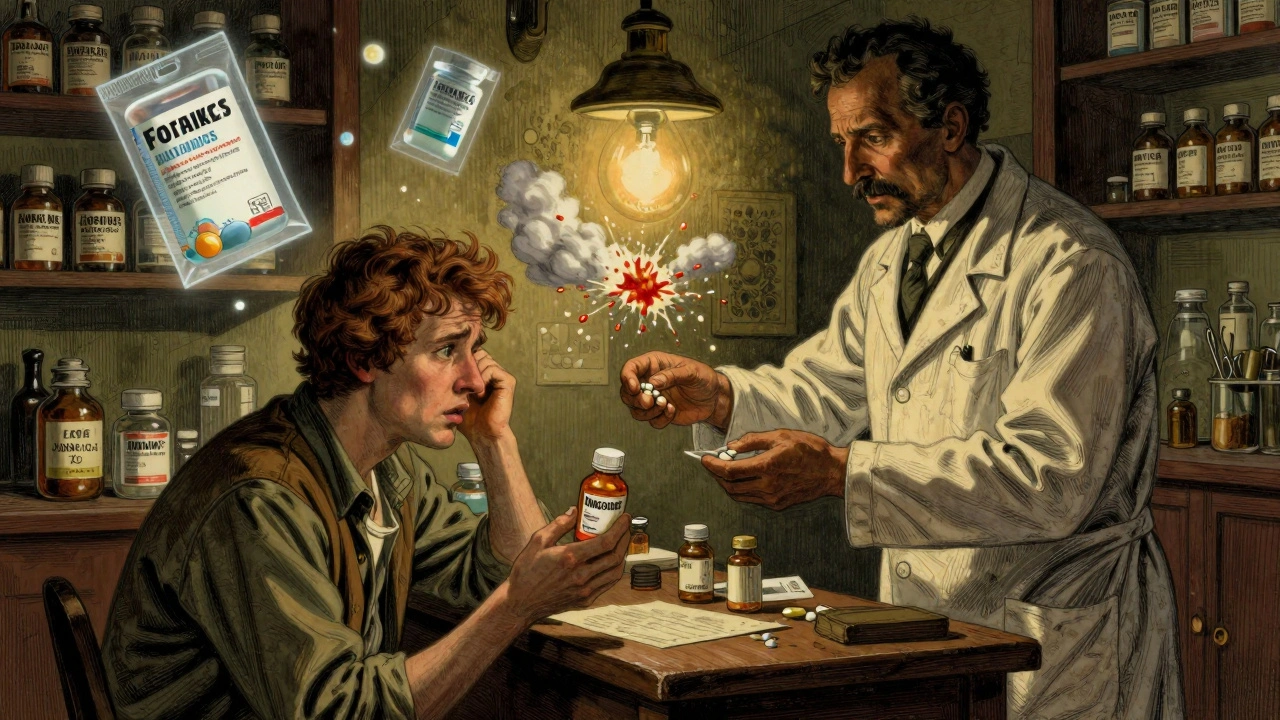
It’s supposed to be simple: a generic drug is cheaper, contains the same active ingredient, and works just like the brand-name version. But for some patients, that’s not true. When a generic medication fails to work as expected, the consequences can be serious-sometimes deadly. This isn’t rare. It’s happening more than most people realize, and the reasons go far beyond just cost-cutting.
Why a Generic Might Not Work
Generic drugs are approved by regulators like the FDA based on bioequivalence studies. That means they must deliver the same amount of active ingredient into the bloodstream as the brand-name drug, within a range of 80% to 125%. Sounds fair, right? But here’s the problem: that range is wide enough to cause trouble. For most medications, this variation doesn’t matter. But for drugs with a narrow therapeutic index-like warfarin, phenytoin, digoxin, or tacrolimus-the difference between a therapeutic dose and a toxic one is razor-thin. A 20% drop in absorption could mean your blood clotting levels swing dangerously high. A 25% increase could lead to kidney damage or seizures. In 2013, the FDA pulled Budeprion XL, a generic version of Wellbutrin, after hundreds of patients reported severe side effects: anxiety, dizziness, even suicidal thoughts. The issue wasn’t the active ingredient. It was the inactive ones-the fillers, coatings, and binders-that changed how the drug dissolved in the body. The brand-name version released its medication slowly over hours. The generic released it too fast, flooding the system. That’s not a minor difference. It’s a clinical emergency.The Silent Problem: Inconsistent Dosage
One of the most dangerous issues isn’t about how the drug behaves in the body-it’s about how much of the drug is even in the pill. Investigations by the Therapeutic Investigations Bureau of Journalism found that some generic chemotherapy drugs contained as little as 72.5% of the labeled active ingredient. Others had over 112%. That’s not a manufacturing error. That’s systemic. In one case, pills from the same blister pack had wildly different amounts of the active compound. Imagine taking your daily dose, thinking you’re getting the right amount, only to find out that the next pill you swallow might be half as strong-or twice as strong. Patients on anticoagulants like warfarin are especially vulnerable. Too little, and you risk a stroke. Too much, and you bleed internally. One patient in Australia, recovering from a heart transplant, noticed her symptoms returning after switching to a new generic tacrolimus. Her doctor initially thought her body was rejecting the organ. Only after switching back to the brand-name version did her levels stabilize. She later learned that the generic she’d been given contained 81.6% of the labeled dose.Manufacturing Chaos
Most generic drugs are made overseas. In 2023, nearly a third of all deficiencies in generic drug applications came from manufacturing issues. Some factories don’t have the right equipment to ensure consistent mixing. Others skip stability testing. A pill might be fine when it leaves the plant-but degrade in heat, humidity, or light during shipping. In May 2024, Glenmark Pharmaceuticals recalled nearly 47 million doses of potassium chloride because the tablets weren’t dissolving properly. Patients with low potassium levels were at risk of cardiac arrest. The problem? The coating was too hard. The drug couldn’t release in the gut. That’s not a theoretical risk. It’s a death sentence waiting to happen. Even worse, some manufacturers use cheaper, unstable forms of the active ingredient. Hydrolysis (breakdown in moisture), oxidation (reaction with air), or photolysis (light damage) can reduce potency before the pill even reaches the pharmacy. And because most patients don’t know which batch they’re getting, there’s no way to track if the failure is due to the drug-or bad luck.
Who’s Responsible?
You might assume the FDA is watching closely. But their standards are outdated. The 80-125% bioequivalence window was set decades ago, before the rise of complex extended-release formulations. For NTI drugs, the FDA now recommends a tighter range-90-111%-but enforcement is inconsistent. Many generics still get approved under the old rules. Pharmacy Benefit Managers (PBMs), the middlemen who negotiate drug prices for insurers, often push for the cheapest generic-even if it’s known to have issues. They get paid based on the difference between the price they pay and what they charge the insurer. So if a cheaper generic fails, the PBM still profits. The patient pays with their health. Doctors don’t always know what’s in the bottle. Pharmacists may substitute generics without telling them. And when a patient’s condition worsens, the assumption is usually that the disease is progressing-not that the medication is faulty.What You Can Do
If you’re on a medication with a narrow therapeutic index, don’t assume all generics are equal. Here’s what works:- Ask your doctor to write “Dispense as Written” or “Do Not Substitute” on your prescription. This legally prevents the pharmacy from switching brands.
- If you notice new side effects or a drop in effectiveness after switching generics, tell your doctor immediately. Don’t wait. Document the timing.
- Check the manufacturer name on your pill bottle. If it changes unexpectedly, ask why. Some manufacturers have better track records than others.
- For life-critical drugs like anticoagulants, immunosuppressants, or seizure meds, consider sticking with the brand name if you can afford it-or work with your insurer to get prior authorization.
- Report adverse effects to the FDA’s MedWatch program. One report might not change anything. But 100? That triggers an investigation.
The Bigger Picture
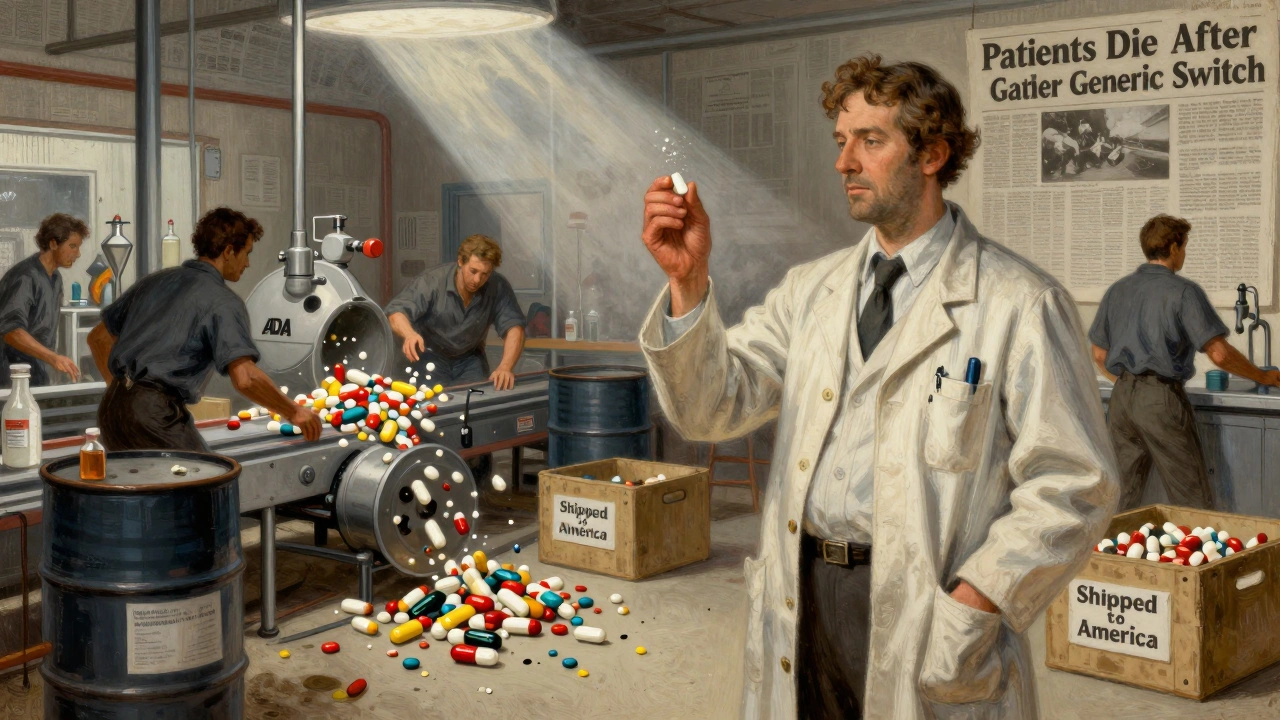
This isn’t just about generics. It’s about a system that prioritizes price over precision. The global generic drug market is worth $400 billion. But quality control is patchy, oversight is uneven, and transparency is nearly nonexistent. The same companies that make cheap generics often produce the brand-name versions too. So why does the brand work and the generic doesn’t? Sometimes, it’s because the brand is made in a better facility. Sometimes, it’s because the generic uses a cheaper, less stable form of the active ingredient. And sometimes, it’s because no one’s checking. Patients are being treated like data points in a cost-saving algorithm. But every pill is someone’s life.What’s Being Done?
The FDA is slowly tightening rules for NTI drugs. Some countries, like Germany and Canada, require more rigorous testing before approving generics. In 2025, the European Medicines Agency proposed mandatory batch-level testing for high-risk generics. But change moves slowly. And until manufacturers are held accountable for consistent quality-not just meeting the bare minimum-patients will keep paying the price. If your medication isn’t working like it used to, don’t blame yourself. Don’t assume your condition is worsening. Ask the hard questions. Demand answers. Your life depends on it.Can a generic drug really be less effective than the brand name?
Yes. While most generics work fine, some fail due to differences in inactive ingredients, manufacturing quality, or inconsistent active ingredient levels. For drugs with a narrow therapeutic index-like warfarin, digoxin, or tacrolimus-even small changes can cause serious side effects or loss of effectiveness. The FDA allows generics to vary by up to 25% in absorption compared to the brand, which is safe for most drugs but dangerous for others.
Which generic drugs are most likely to cause problems?
Drugs with a narrow therapeutic index are the biggest risk. These include anticoagulants (warfarin), anti-seizure meds (phenytoin), heart drugs (digoxin), immunosuppressants (tacrolimus, cyclosporine), and some psychiatric medications (lithium, levothyroxine). Extended-release versions like Concerta (ADHD) and Wellbutrin XL have also had documented failures. Chemotherapy drugs and potassium chloride have been recalled for inconsistent dosing.
How do I know if my generic drug is causing problems?
Watch for sudden changes: new side effects, worsening symptoms, or loss of effectiveness after switching to a generic. For example, if you’re on warfarin and your INR levels start swinging without reason, or if your seizures return after a generic switch, it could be the medication-not your condition. Always note the date you switched and report it to your doctor. Blood tests and dose adjustments can help confirm if the drug is the issue.
Should I avoid generics altogether?
No. Most generics are safe and effective. But for high-risk medications-especially those with a narrow therapeutic index-it’s smart to be cautious. Ask your doctor if your drug is on the list of high-risk generics. If you’ve had good results with the brand name, ask for it to be specified on your prescription. Don’t accept substitution without knowing what you’re getting.
What should I do if I think my generic drug failed?
First, contact your doctor immediately. Do not stop taking the medication unless instructed. Second, check the manufacturer and lot number on your bottle. Third, report the issue to the FDA’s MedWatch program (1-800-FDA-1088 or online). Your report helps regulators spot patterns. If you’re on a life-critical drug, ask your doctor to switch you back to the brand name or to a different generic with a better track record.
Arun kumar
December 2, 2025 AT 04:40Man, i remember when my uncle switched to generic warfarin and started bleeding out his nose for no reason. Docs just shrugged and said 'maybe you're not compliant'. Like bro, i took it same time every day for 10 years. The moment they switched the pill, everything went to hell. We found out later the batch had inconsistent dosing. Not my uncle's fault. System's broken.
Zed theMartian
December 3, 2025 AT 01:55Oh wow. A 25% variance? That's not bioequivalence, that's Russian roulette with a pharmacy stamp. I mean, if you told me I could get a 25% variance in my airplane's fuel injection, I'd refuse to board. But somehow, when it's my life-saving meds, we're supposed to just 'trust the system'? The FDA is basically a corporate lobbyist with a lab coat.
ATUL BHARDWAJ
December 5, 2025 AT 00:05India makes many generics. Quality varies. Some factories are clean. Some are not. Patients die because no one checks. We know this. But we also need cheap medicine. Balance is hard.
Steve World Shopping
December 5, 2025 AT 05:45Pharmaco-economic arbitrage at scale. The structural inefficiencies in the global supply chain for active pharmaceutical ingredients (APIs) are systemic. When you commoditize therapeutic outcomes, you inevitably induce therapeutic heterogeneity. The regulatory capture by PBMs exacerbates this. You're not treating patients-you're optimizing for margin-per-dose.
Rebecca M.
December 6, 2025 AT 13:05Oh honey, you mean the FDA lets them make pills that might be half as strong or twice as strong? And we're supposed to be grateful because it's 'cheaper'? Sweetie, I don't need a discount on my life. I need my damn pills to work. Next they'll sell me a 'budget' insulin that might just turn me into a vampire.
Jay Everett
December 7, 2025 AT 19:41Been there. My dad was on digoxin for years. Switched to a generic, started getting dizzy, nausea, weird heart flutters. We went back to brand - boom, normal in 3 days. I'm not anti-generic. I'm pro-consistency. If your meds are keeping you alive, don't gamble with the bottle. Check the maker. Ask for the lot. Report weird stuff to MedWatch. One report = noise. 100 reports = investigation. We need more noise.
Also, if you're on tacrolimus or warfarin? Don't let your pharmacist swap it without telling you. That's not service - that's negligence. Write 'Do Not Substitute' on the script. It's legal. Use it.
Jack Dao
December 8, 2025 AT 10:27People like you think this is about 'corporate greed' - it's not. It's about lazy patients who don't monitor their labs. If you're on warfarin, you should be checking INR weekly anyway. If your levels swing, it's not the pill - it's your diet, your alcohol, your thyroid. Stop blaming the system. Take responsibility.
Laura Baur
December 9, 2025 AT 18:08It's not just the manufacturers. It's the entire pharmacological industrial complex. The FDA’s outdated 80-125% standard was established in 1982, before extended-release formulations became dominant. The system was never designed to handle the complexity of modern pharmacokinetics. And now we're forcing patients to become pharmacologists just to stay alive. We've turned healthcare into a puzzle where the rules are hidden and the stakes are your organs. And we call this 'innovation'?
Meanwhile, the same companies that make the 'unsafe' generics also make the 'safe' brand-name versions - in different countries, with better equipment, under stricter oversight. So why can't we do that here? Because profit > patient. Always.
dave nevogt
December 11, 2025 AT 07:00I've worked in a pharmacy for 18 years. I've seen patients switch generics and come back crying because their seizures came back, or their transplant rejection markers spiked. We never knew which batch was which. The labels looked identical. The pharmacy system didn't track it. We just filled the script. I used to think generics were fine. Now I know - for some drugs, it's like playing roulette with your heart. We need batch-level tracking. We need transparency. We need to stop pretending this is just about cost.
Ella van Rij
December 12, 2025 AT 14:57generic? more like genericly dangerous. i swear if my insurance tries to swap my tacrolimus i'm going to start a petition to rename the FDA to 'F***ing Dumb Administration'. also, why do i have to be a detective just to not die? this is 2025, not 1925.
Lynn Steiner
December 13, 2025 AT 09:41America lets China make our life-saving pills and then acts surprised when people die? I'm so sick of this. We used to make things here. Now we outsource our health to factories with no oversight. And we call it 'free market'? More like free-for-all. My grandma died because her potassium pills didn't dissolve. She didn't even know they were made in Pakistan. This isn't capitalism. It's negligence with a corporate logo.
Alicia Marks
December 13, 2025 AT 12:27You got this. Speak up. Document everything. Tell your doctor. Report it. You're not alone. And you're not crazy. Your meds should work. Period.
Paul Keller
December 14, 2025 AT 02:06This is a profound failure of regulatory science, public policy, and corporate ethics. The notion that a patient's therapeutic outcome can be commoditized to the point of 25% variability in bioavailability is not just alarming - it is morally indefensible. The FDA’s current framework was designed for simple, immediate-release formulations. It is wholly inadequate for the pharmacokinetic complexity of modern extended-release, transdermal, and targeted-release drugs. Until we mandate batch-level bioequivalence testing for high-risk agents - and enforce it with real penalties - we are not a nation that values human life. We are a nation that values shareholder value disguised as healthcare.
And to those who say 'just pay for the brand' - that's not a solution. That's privilege. This isn't about affordability. It's about justice.