

When you have a sore knee or aching shoulder, you might reach for a pill-or a cream. But which one is safer? And does it even work the same way? The answer isn’t just about preference. It’s about how your body handles the drug, and what kind of risks you’re taking without realizing it.
How Your Body Treats Topical vs. Oral Meds
Topical medications like gels, creams, or patches are meant to stay local. You rub them on your skin, and they’re designed to soak into the tissue right underneath-muscle, tendon, joint-without going far beyond that. Oral meds, on the other hand, are swallowed, absorbed through your gut, and then pumped through your bloodstream to reach wherever the problem is. That’s the big difference: one stays put, the other goes everywhere. This isn’t just theory. Studies show that when you use a topical NSAID like diclofenac gel, less than 5% of the dose actually enters your bloodstream. Compare that to an oral pill, where 70-90% gets absorbed. That means your liver, kidneys, and stomach are getting a lot less of the drug when you use it on your skin. But here’s the catch: some topical products aren’t just creams. Transdermal patches-like the ones for fentanyl or nicotine-use special chemicals to force drugs through your skin. Those can deliver up to 92% of the dose into your blood. So not all topical = safe. It depends on the formulation.Why Safety Isn’t Just About Side Effects
Most people think side effects mean stomach upset or dizziness. But with oral NSAIDs, the real danger is hidden. Every year in the U.S., over 106,000 people end up in the hospital because of gastrointestinal bleeding from these pills. That’s not rare. That’s common enough to be a leading cause of drug-related hospitalizations. Topical NSAIDs? The risk of serious GI bleeding drops by 78%. The FDA’s own data shows just 1.2 adverse events per 10,000 prescriptions for topical versions, versus 14.7 for oral ones. And in patients over 65, the American Geriatrics Society says topical NSAIDs should be the first choice-not because they’re stronger, but because they’re far less likely to cause internal damage. Still, topical isn’t risk-free. About 10-15% of users get skin irritation: redness, itching, peeling. It’s annoying, but it’s not life-threatening. Meanwhile, oral NSAIDs can cause ulcers, kidney damage, high blood pressure, and even heart attacks in long-term users. The trade-off is clear: one causes messy skin, the other can mess up your insides.Real People, Real Results
In a 2023 survey of 2,417 people with osteoarthritis, 68% said topical creams gave them “good to excellent” pain relief. That’s just 4% lower than oral pills. But here’s what mattered more: 89% preferred the cream. Why? Because 89% of them didn’t have stomach pain, acid reflux, or nausea afterward. On the oral side, 42% did. Reddit threads from chronic pain communities echo this. One user wrote: “I stopped taking ibuprofen because I was throwing up every morning. The gel doesn’t fix my pain 100%, but I can actually eat breakfast now.” Another said: “It’s slow in winter. My hands get cold, and the gel doesn’t absorb well.” That’s a real limitation-temperature affects absorption. Skin at 32°C (89.6°F) absorbs better than skin at 20°C (68°F). Cold weather = slower relief. And then there’s adherence. A 12-month study of Medicare patients found that 37% more people stuck with topical meds than oral ones. Why? Because swallowing pills every day is hard when you’re older, have arthritis in your hands, or just forget. Creams? You feel them go on. You remember.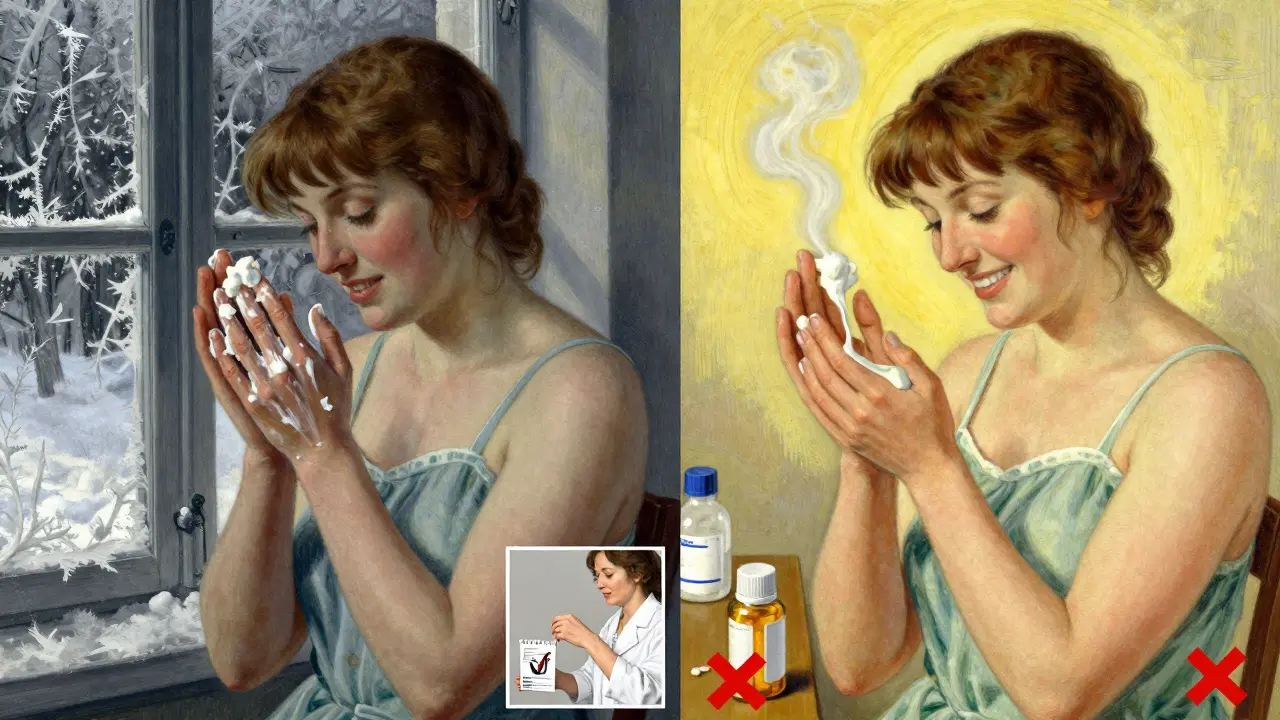
When Topical Just Won’t Cut It
Topical meds are great for localized pain-knees, elbows, lower back. But if your pain comes from arthritis in multiple joints, or if you have an infection inside your body, you need something that goes systemic. Antibiotics? You can’t rub them on your lungs. Antibiotics applied to the skin might kill bacteria on the surface, but they won’t touch an infected joint or a kidney infection. And here’s the hard truth: only 12% of the 200 most commonly prescribed medications can even be made into topical form. Why? Because most drugs are too big to slip through your skin. The limit? Around 500 Daltons in molecular weight. That rules out most antibiotics, antidepressants, and heart meds. That’s why transdermal patches are being developed for drugs that used to be only oral-like osteoporosis meds. Early trials show microneedle patches can deliver 45% of the dose directly into the bloodstream. That’s not topical anymore-it’s a bridge between topical and oral. But it’s still experimental.What You’re Not Being Told About Application
A lot of people think: “I’ll just use more cream to get more relief.” That’s dangerous. Applying double the amount doesn’t mean double the pain relief. It means double the chance of skin irritation-and possibly more systemic absorption than intended. The standard dose? A 4- to 6-inch ribbon of gel, applied 3-4 times a day to the affected area. That’s it. Too little? Won’t work. Too much? Could raise your blood levels enough to cause side effects. One case study showed a patient using diclofenac gel over 20% of their body surface area ended up with plasma levels matching those from an oral dose. And don’t forget: your skin isn’t the same everywhere. Thinner skin (like on your wrist) absorbs more than thick skin (like your heel). Damaged skin-cuts, burns, eczema-absorbs even more. That’s why doctors warn against using topical NSAIDs on broken skin. Also, most OTC topical products don’t give clear instructions. A 2022 FDA review found only 43% of them explained how much to use or how to maximize absorption. Meanwhile, 89% of oral meds come with detailed dosing info. You’re expected to figure out the cream on your own.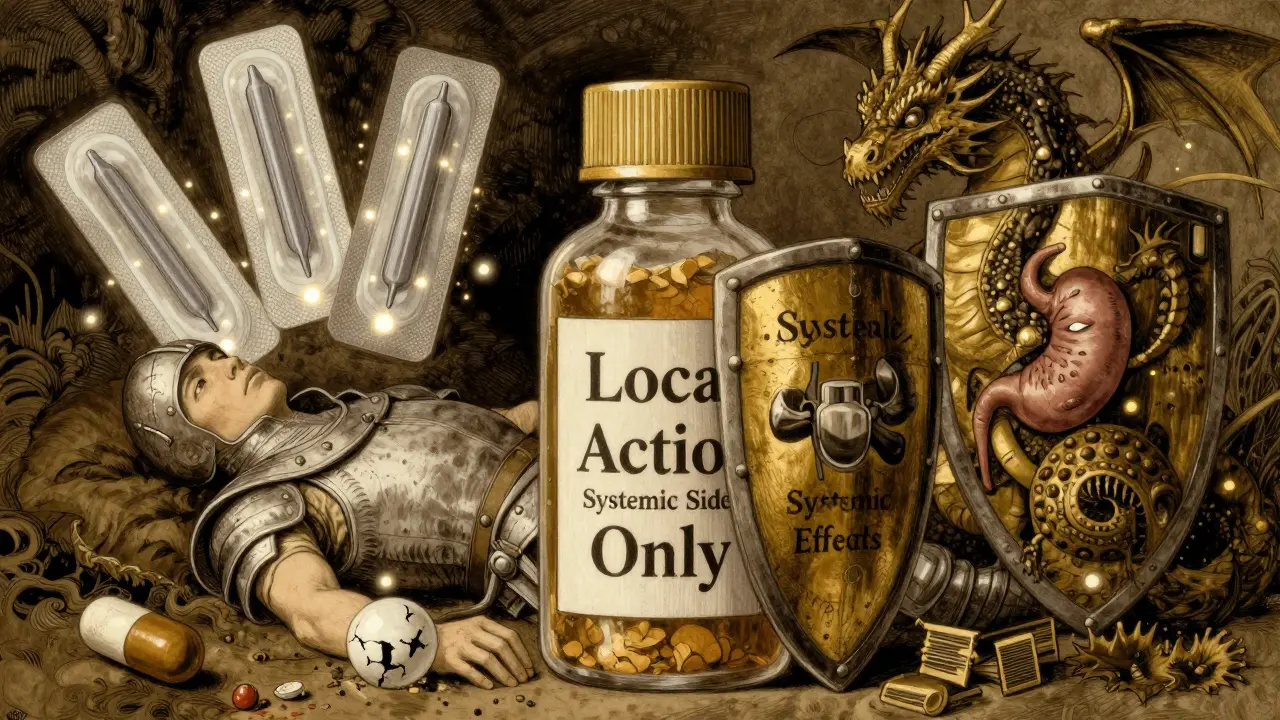
The Future Is Already Here
The market for topical drug delivery is growing fast-7.2% yearly, compared to 4.8% for oral meds. Why? Because hospitals and insurers are pushing for safer options. Medicare now covers 82% of topical NSAID prescriptions versus 67% for oral ones. And pharmaceutical companies are spending billions on it: Johnson & Johnson put $487 million into topical research in 2023 alone. New formulations like Diclonate P, approved by the FDA in 2023, deliver 3.2 times more drug into the tissue than older gels-while keeping blood levels below 5% of what an oral pill would do. That’s the sweet spot: local power, minimal risk. By 2030, experts predict 35% of new pain meds will be topical or transdermal. That’s up from 22% today. The goal? Cut down on those 106,000 annual hospitalizations from NSAID complications. And it’s working.What Should You Do?
If you have pain in one or two joints, start with topical. It’s safer, just as effective for most people, and you’ll avoid the stomach issues, kidney strain, and bleeding risks that come with pills. But if your pain is widespread, deep, or you’re treating an infection-oral meds are still necessary. Don’t avoid them out of fear. Just use them wisely: take the lowest dose for the shortest time, avoid alcohol, and never mix with other NSAIDs. Talk to your pharmacist. Ask: “Is this available as a cream?” If it is, and your pain is localized, ask why you’re being given a pill. You might be missing a safer option. And if you’re using topical meds: apply the right amount. Don’t rub it in like you’re polishing a car. Let it absorb. Wash your hands after. Keep it away from eyes and open wounds. And if your skin turns red or itches badly? Stop. That’s not normal. The bottom line? Topical doesn’t mean weak. It means targeted. And in medicine, precision is the safest kind of power.Can topical medications cause systemic side effects?
Yes, but it’s rare and usually only happens with misuse. Topical NSAIDs are designed to stay local, with less than 5% entering the bloodstream. But applying large amounts over wide areas, using them on broken skin, or combining them with oral NSAIDs can raise blood levels enough to cause side effects like stomach upset, high blood pressure, or kidney strain. One case study showed plasma levels matching oral doses after excessive application.
Are topical NSAIDs as effective as oral ones?
For localized pain-like osteoarthritis in the knee or elbow-yes, they’re nearly as effective. Clinical studies show 18% to 92% of users get good relief with topical NSAIDs, compared to 70-90% with oral. The difference is small, but the safety advantage is huge. For deep or widespread pain, oral works better because it reaches everywhere.
Why do some people say topical creams don’t work for them?
Several reasons. Cold weather slows absorption-skin needs to be above 32°C (89.6°F) for best results. Under-dosing is common-most people use too little. Poor application technique, like not letting it absorb or rubbing it off too soon, reduces effectiveness. And about 18-22% of people simply don’t absorb enough through their skin due to genetics, skin thickness, or body composition.
Is it safe to use topical NSAIDs long-term?
Yes, for most people. Long-term use of topical NSAIDs carries far lower risk than oral versions. Studies show only 22% of users stop due to side effects, compared to 78% who quit oral NSAIDs within six months. Skin irritation is the most common issue, but it’s usually mild. However, using them daily for years on large areas should be monitored by a doctor, especially if you have kidney problems or are elderly.
Can I use topical and oral NSAIDs together?
Generally, no. Combining them increases your total NSAID exposure and raises the risk of side effects-even if the topical version seems “safe.” The FDA and American College of Rheumatology advise against it. If you’re using a topical NSAID, don’t take an oral one unless your doctor specifically says it’s necessary.
What’s the difference between topical and transdermal?
Topical means the drug stays mostly at the site of application-like a cream for a sore knee. Transdermal means the drug is designed to pass through the skin and enter the bloodstream-like a fentanyl patch. Transdermal uses chemical enhancers to force absorption, making it a systemic delivery method. Topical = local. Transdermal = systemic.
Why aren’t more drugs available as topical creams?
Most drugs are too large to pass through the skin’s barrier. The molecular weight limit is around 500 Daltons. Antibiotics, antidepressants, and heart meds are usually way heavier. Also, the skin blocks water-soluble and charged molecules. That’s why only 12% of the top 200 prescribed drugs can be formulated topically. New tech like microneedles may change that in the future.
Do I need a prescription for topical NSAIDs?
Some are available over the counter (like 1% diclofenac gel), but stronger versions (1.5% or higher) require a prescription. Insurance coverage varies-Medicare covers 82% of topical NSAIDs, but some private plans still limit them. Always check with your pharmacist before assuming it’s OTC.
Joanna Brancewicz
January 7, 2026 AT 15:31Topical NSAIDs cut GI hospitalizations by 78%? That’s not a minor win-it’s a paradigm shift. The data’s clear: for localized pain, topical isn’t just safer, it’s clinically superior. Why are we still defaulting to pills? It’s inertia, not evidence.
And don’t get me started on OTC labeling. Half the gels don’t even say how much to use. You’re basically winging it. That’s negligence disguised as accessibility.
Lois Li
January 9, 2026 AT 13:13I’ve been using diclofenac gel for my knee for two years now. No stomach issues, no dizziness, no weird heart palpitations like I got on the pills. My mom, 72, switched from ibuprofen after a bleed and she says it’s the first time in 15 years she’s slept through the night without worrying about her insides. It’s not magic, but it’s close enough.
One thing I wish more people knew: cold weather really does make it less effective. I keep the tube in my pocket before applying. Warm skin = better absorption. Simple fix.
Prakash Sharma
January 11, 2026 AT 10:37Why are Americans so obsessed with weak alternatives? In India, we know painkillers are meant to work fast and hard. You want relief? Take the pill. Don’t waste time rubbing cream like you’re giving yourself a spa treatment. Topical is for people who fear medicine. Real men take the pill and deal with the side effects.
Also, why are you trusting FDA data? They’re influenced by Big Pharma. They want you to buy more expensive creams so they can charge more. Pills are cheaper and more effective. End of story.
Donny Airlangga
January 11, 2026 AT 15:47Prakash, I get where you’re coming from-but that mindset is why so many people end up in the ER. I’ve seen patients on oral NSAIDs for years, then suddenly have a perforated ulcer. It’s not about being weak. It’s about smart choices.
Topical isn’t ‘weak.’ It’s precision medicine. You wouldn’t use a sledgehammer to hang a picture, right? Why use a systemic drug for a localized problem? The science is on the side of topical. The fear is just cultural.
Evan Smith
January 11, 2026 AT 16:38So let me get this straight… you’re telling me I can avoid stomach bleeding, kidney damage, and heart risks by just slathering on some gel instead of popping a pill… and it works almost as well?
Why is this not on every pharmacy shelf with a giant sign saying ‘DON’T TAKE PILLS, USE THIS INSTEAD’? Someone’s making a ton of money off people’s guts rotting. This is wild.
Manish Kumar
January 11, 2026 AT 23:08There’s a deeper metaphysical layer here, you know? The pill represents the modern illusion of control-we swallow something to fix what’s broken, as if pain is an error to be erased, not a signal. The cream? It’s tactile, slow, embodied. You feel the coolness, the texture, the ritual. It forces you to be present with your body, not just suppress its voice.
And yet, we still reach for the pill. Why? Because we’re afraid of stillness. We fear listening. The cream asks you to wait. The pill demands obedience. Which one are you really choosing when you pop that tablet? It’s not pharmacology. It’s existential.
Kristina Felixita
January 12, 2026 AT 23:32OMG YES!! I switched to the gel after my stomach started screaming every morning-I was literally crying over breakfast!! Now I just smear it on, feel the coolness, and boom-no acid reflux, no nausea, I can actually eat toast again!!
But!! I have to say, the gel is SO SLOW in winter!! My hands get icy and it feels like it’s not doing anything… until like, 45 minutes later?? So I warm the tube in my pocket first now!! And I use it like 4x a day!! Don’t skimp!!
Also, wash your hands!! I once rubbed my eye by accident… that was a nightmare!! I cried for 20 mins!!
Also also, my cousin tried it and said it didn’t work… turns out she used like a pea-sized amount?? Like, nooo, you need a whole ribbon!! It’s not magic, it’s science!!
Also, why isn’t this on TV?? This should be the new norm!!
Also, I’m telling everyone I know!!
Ken Porter
January 13, 2026 AT 15:12Topical NSAIDs are a scam for the elderly who can’t swallow pills. The data is cherry-picked. The real reason they’re pushed? Insurance companies want cheaper hospital bills. Not better outcomes. Just lower costs.
And don’t tell me ‘precision medicine.’ If it were that good, we’d use it for everything. But we don’t. Because it doesn’t work for deep pain. So stop pretending it’s a universal solution. It’s a band-aid for lazy prescribing.
swati Thounaojam
January 14, 2026 AT 23:14I use it for my lower back. Works okay. But I don’t use too much. Skin gets red if I overdo it. Also, I don’t use on cuts. Learned that the hard way. Just follow the instructions. Simple.
Dave Old-Wolf
January 16, 2026 AT 19:01Wait, so if I use it on my wrist, which has thin skin, I get more absorption than if I use it on my heel? That makes sense. But what about people with eczema or psoriasis? Is it even safe for them? I’ve got a buddy with bad eczema-he tried the gel and it burned like hell. Should he avoid it completely? Or just avoid the inflamed spots?
And what about kids? Is this ever used for pediatric pain? I’ve never seen a kid’s version.
Molly Silvernale
January 18, 2026 AT 16:23Topical isn’t weak-it’s whispering. The pill is a shout. The cream is a sigh you feel in your bones. It doesn’t drown out the pain; it learns its rhythm. It doesn’t invade your bloodstream like a storm-it slips in like dawn, quiet, deliberate. And yet… it holds the same power. Isn’t that beautiful? We’ve been taught to fear the slow, the gentle, the local… as if only the loud can be true. But the quietest things often carry the deepest truth.
And the fact that we need a $487 million R&D push to convince doctors that less systemic = more safe? That’s not science. That’s cultural blindness.
Also, the skin isn’t just a barrier-it’s a language. It speaks in temperature, texture, sensation. When you rub the gel in, you’re not just applying medicine-you’re listening. And that, more than any pill, is healing.