
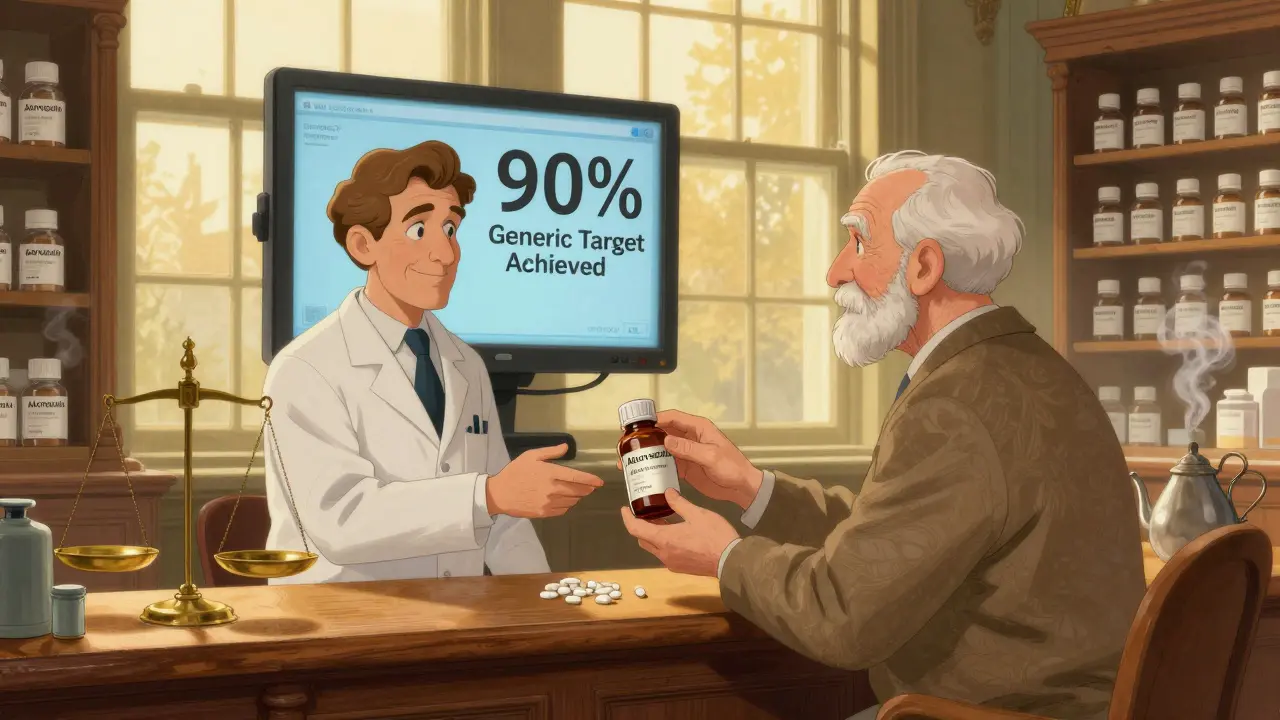
When you pick up a prescription at your local pharmacy in the UK, you might not realize that the medicine you’re given isn’t always the one your doctor wrote on the slip. Thanks to pharmaceutical substitution laws, pharmacists can swap branded drugs for cheaper generics - unless your doctor specifically says not to. This isn’t just a cost-saving trick. It’s a core part of how the NHS keeps healthcare affordable and sustainable. But in 2025, everything changed. New rules didn’t just tweak how medicines are swapped - they reshaped how care itself is delivered across the country.
What Pharmaceutical Substitution Actually Means
Pharmaceutical substitution lets pharmacists replace a branded medicine with a generic version that contains the same active ingredient, works the same way, and meets the same safety standards. For example, if your doctor prescribes Lipitor (atorvastatin), the pharmacist can give you the generic atorvastatin instead. It’s not a different drug. It’s the same drug, just without the brand name and marketing costs. This has been allowed in the UK since the 1990s, but it wasn’t automatic. Under Regulation 33 of the NHS (Pharmaceutical Services) Regulations 2013, pharmacists could only substitute if the prescriber didn’t mark ‘dispense as written’ (DAW). That small note on the prescription meant the doctor wanted the brand name - maybe because of patient history, side effects, or specific formulation needs. Now, with the 2025 reforms, that system is being pushed harder. The NHS is now required to hit a 90% generic substitution rate for eligible prescriptions, up from 83% in early 2025. That’s not a suggestion - it’s a performance target tied to funding. Pharmacies are being monitored. And the financial pressure is real: the NHS spent £1.2 billion on branded drugs in 2024. Switching even a third of those to generics saves hundreds of millions.How the 2025 Reforms Are Rewriting the Rules
The Human Medicines (Amendment) Regulations 2025, which came into force in June 2025, didn’t just tweak old rules - they rebuilt the system. The biggest change? Digital Service Providers (DSPs) now have to deliver all NHS pharmaceutical services remotely. No more face-to-face dispensing at the pharmacy counter. If you’re a new pharmacy applying to join the NHS list, you can’t open a physical shop and expect automatic approval. You need to prove you can deliver services digitally - through apps, video consultations, and automated dispensing systems. This move was meant to cut costs and modernize care. But it’s causing real friction. A British Pharmaceutical Industry survey in March 2025 found that 79% of community pharmacies are worried about the new rules. Over half said they’d need between £75,000 and £120,000 to upgrade their tech. Many small, independent pharmacies in rural towns simply can’t afford it. Some are closing. Others are merging into larger chains that can handle the investment. And it’s not just about pills. The NHS is also shifting care from hospitals to homes. The 2025 mandate says clearly: move care from hospital to community, sickness to prevention, analogue to digital. That means fewer outpatient appointments. Fewer emergency visits. More virtual clinics. More community nurses visiting patients at home. More diagnostic tests done in local hubs instead of busy hospital departments.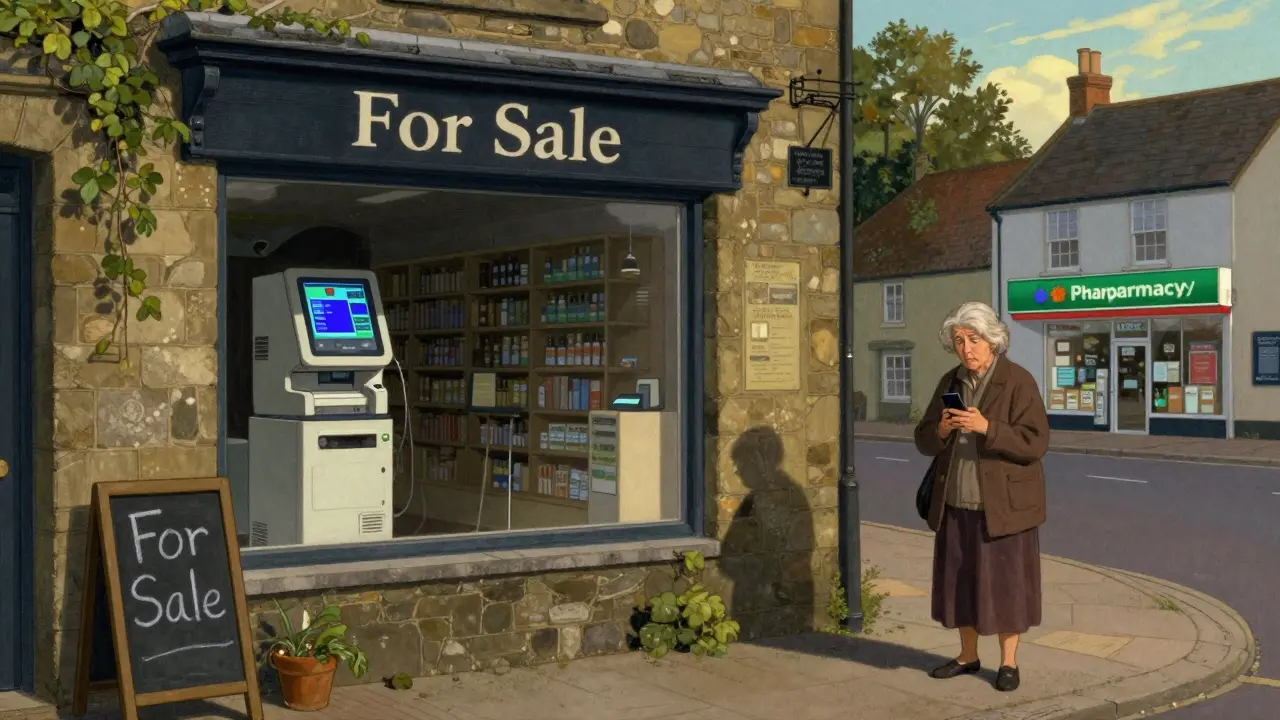
Service Substitution: When Your Doctor’s Appointment Goes Virtual
Service substitution is the bigger, less talked-about piece of this puzzle. It’s not just about swapping drugs - it’s about swapping entire care pathways. Take fracture clinics. Before 2025, you’d go to the hospital after breaking a wrist. You’d wait hours, get an X-ray, see a specialist, get a cast, and leave. Now, in many areas, you get a video call. You upload your X-ray from your phone. A specialist reviews it. You’re told how to care for it at home. Follow-ups are done via app. A pilot in North West London showed this cut unnecessary follow-ups by 40%. But it also left 15% of older patients behind - people without smartphones, no Wi-Fi, or who don’t trust technology with their health. The same is happening with diabetes care, heart failure monitoring, and mental health check-ins. Instead of monthly hospital visits, patients get wearable sensors that send data to a nurse. If something’s off, they’re called. If not, they’re left alone. It’s efficient. But it’s risky if you’re elderly, disabled, or living alone. Professor Sir Chris Whitty says shifting 30% of outpatient appointments to community settings by 2027 could clear 1.2 million waiting list appointments. That sounds great. But Dr. Sarah Wollaston, former chair of the Health and Social Care Committee, warns: ‘The current substitution framework lacks sufficient safeguards for vulnerable populations.’ Her point? We’re saving money - but not always saving lives.The Workforce Crisis Behind the Scenes
Here’s the problem no one talks about enough: we don’t have enough people to make this work. The NHS Confederation found that 68% of Integrated Care Boards (ICBs) don’t have enough staff to handle the shift from hospitals to community care. In rural areas, 42% of trusts don’t have the clinics, transport, or trained nurses to deliver the new services. Meanwhile, the King’s Fund estimates a 28,000-person shortfall in community health workers by 2027. And it’s not just numbers. The skills are different. A hospital pharmacist knows how to manage complex drug interactions in a controlled environment. A community pharmacist now needs to run video consultations, train patients on digital tools, and coordinate with social workers. Many haven’t been trained for that. The result? In Greater Manchester, early substitution programs actually widened health gaps. People in wealthier areas got better digital access. People in poorer areas got left out. Only after targeted outreach - door-to-door visits, free tablets for seniors, in-person help at libraries - did outcomes improve.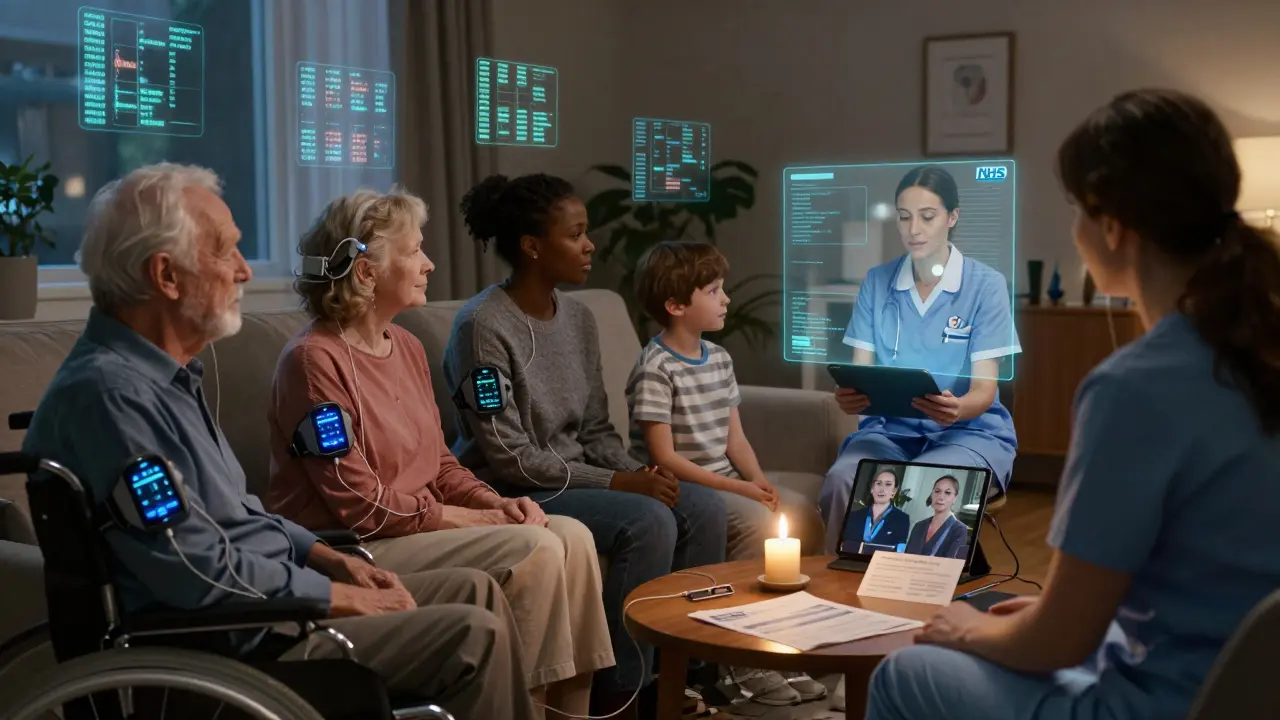
Jay Clarke
January 18, 2026 AT 04:42This is the most terrifying thing I’ve ever read. They’re turning healthcare into a fucking spreadsheet. Next thing you know, your grandma’s heart monitor will auto-send a ‘you’re fine’ notification while she’s having a stroke. I’m not even kidding. We’re outsourcing empathy to algorithms. And the worst part? We’re calling it ‘innovation.’
Selina Warren
January 19, 2026 AT 17:33Y’all are missing the point. This isn’t about cost. It’s about CONTROL. The government doesn’t want you sick-they want you *managed*. They don’t care if you live or die, as long as the numbers look good on their PowerPoint. This is social engineering disguised as healthcare reform. And it’s working. Too well.
Eric Gebeke
January 20, 2026 AT 12:02Let me be clear: if you’re okay with your 78-year-old mother getting a text message saying ‘your BP is high, please call 999’ instead of a nurse checking on her in person, then you’re not just naive-you’re complicit. This isn’t progress. It’s abandonment wrapped in a tech bro slogan. ‘Efficiency’ is just a fancy word for ‘we don’t care enough to show up.’
Jake Moore
January 22, 2026 AT 04:58As a former NHS pharmacist, I’ve seen this shift firsthand. The generics? Totally safe. The tech? Mostly useless for elderly patients. The real issue isn’t substitution-it’s the lack of training and support for frontline staff. We’re asking pharmacists to become tech support, social workers, and telehealth coordinators overnight-with no budget, no training, and no backup. Of course it’s breaking. We didn’t plan for humans.
Joni O
January 24, 2026 AT 00:46i just lost my gran last year and she never used a smartphone… the last time she saw a doctor was in person, and she cried because she felt seen. i know this sounds cheesy but… healthcare isn’t a product. it’s a hug when you’re scared. please don’t take that away.
Ryan Otto
January 25, 2026 AT 15:29Observe: The UK’s NHS is being weaponized as a Trojan Horse for globalist depopulation agendas. The substitution protocols are deliberately designed to exclude the elderly, the poor, and the non-tech-savvy-demographics that are statistically less ‘productive.’ The 90% generic target? A euphemism for ‘reduce life expectancy in lower-income brackets.’ The data doesn’t lie. The funding cuts correlate with rising mortality in rural postcodes. Coincidence? I think not.
Nishant Sonuley
January 27, 2026 AT 00:15Look, I get it-generic drugs save money, and digital care sounds slick on paper. But here’s the thing: when you remove the human element from healthcare, you’re not saving money-you’re shifting the cost. Who pays? The family member who quits their job to drive their parent to a clinic that no longer exists. Who pays? The kid who stays up all night trying to upload an X-ray because Grandpa’s phone died. We’re not modernizing-we’re outsourcing trauma to unpaid labor. And we’re pretending it’s a win because the spreadsheet says so. Wake up.
Emma #########
January 28, 2026 AT 04:52I work with seniors every day. Some of them don’t even know how to turn on a tablet. And now we’re telling them their care will be delivered through an app? I’ve seen people cry because they were told to ‘use the portal’ instead of having someone sit with them. This isn’t progress. It’s cruelty dressed up as efficiency. We need more people, not more pixels.
Andrew McLarren
January 29, 2026 AT 02:41While the intent behind the 2025 reforms is commendable-namely, the pursuit of fiscal sustainability and systemic modernization-the implementation appears to have been conducted with insufficient regard for equity of access, socio-technical literacy, and the phenomenological experience of patient vulnerability. The substitution paradigm, as currently operationalized, risks institutionalizing a two-tiered healthcare model wherein digital fluency becomes a prerequisite for care. This is not merely a policy failure; it is a moral one.
Andrew Short
January 30, 2026 AT 23:13Of course the independents are dying. This was never about healthcare. It was about consolidation. Big Pharma owns the generics. Big Tech owns the apps. Big Chains own the pharmacies. And the little guy? He’s just a line item on a balance sheet. They didn’t want to fix the NHS-they wanted to buy it. And now they’re making sure no one can stand in their way. You think this is about savings? No. It’s about monopoly.
christian Espinola
February 1, 2026 AT 04:30Notice how no one mentions the fact that the NHS has been underfunded since 2010-and now they’re using ‘efficiency’ as an excuse to cut even more? The real scandal isn’t substitution-it’s that the government refused to raise taxes on the wealthy to fund healthcare properly. Instead, they chose to make the sick suffer digitally. That’s not policy. That’s punishment.
Naomi Keyes
February 1, 2026 AT 15:21Let’s be precise: The Human Medicines (Amendment) Regulations 2025, Section 4.2(a), mandates that all DSPs must be ISO 13485-certified for remote delivery. Yet, only 37% of community pharmacies have achieved this certification as of Q1 2025. This is not ‘modernization’-this is regulatory overreach masquerading as innovation. Furthermore, the Carr-Hill formula, while well-intentioned, fails to account for regional variance in broadband penetration. In Cornwall, 22% of households lack reliable internet. In Manchester, 31% of over-70s have never used a video call. This isn’t a policy-it’s a disaster in slow motion.
Dayanara Villafuerte
February 2, 2026 AT 01:01Generic drugs = good 💊 Digital care = 🤷♀️ if you have Wi-Fi Old people without smartphones = 😢 Government savings = 🤑 My heart = 💔 We’re trading humanity for hashtags. And honestly? I’m done.
Andrew Qu
February 2, 2026 AT 06:04I’ve been a community nurse for 22 years. We’ve been doing home visits for decades. Now we’re supposed to replace that with an app? I’ve held the hands of people dying alone because their kids live 300 miles away. No algorithm can replace that. You can’t digitize compassion. And if you think you can, you’ve never sat with someone while they take their last breath.
kenneth pillet
February 3, 2026 AT 15:47