
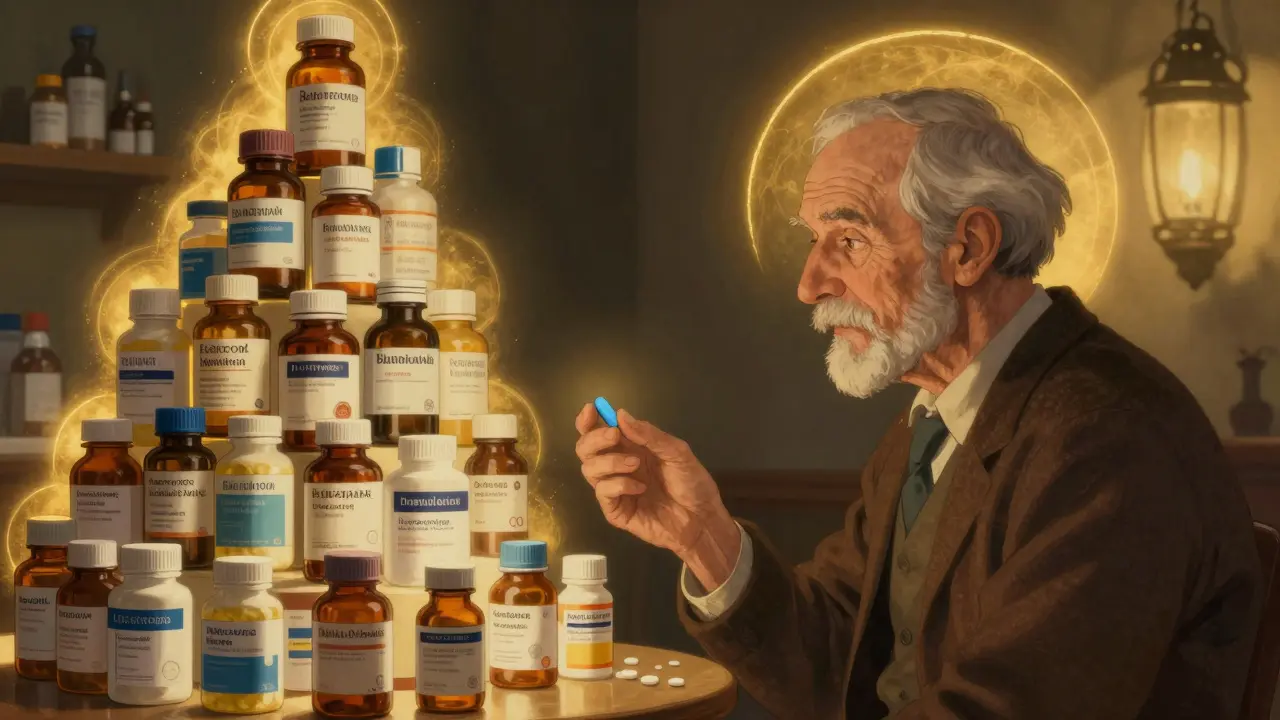
Ever opened your prescription bottle and seen a different name than what your doctor wrote? You’re not alone. Millions of people switch to generic drugs every year-not because they’re forced to, but because they save 80-85% on their monthly medication costs. And here’s the twist: the pill inside looks different, the label says something else, but it does exactly the same thing as the expensive brand-name version.
Same Medicine, Different Price Tag
Generic drugs aren’t cheaper because they’re lower quality. They’re cheaper because they don’t carry the same startup costs. When a pharmaceutical company invents a new drug, like Lipitor for cholesterol or Prilosec for acid reflux, they spend years and billions of dollars making sure it works. That includes lab tests, animal trials, and clinical trials with thousands of people. The average cost? Around $2.6 billion per drug, according to the Tufts Center for the Study of Drug Development. Once that drug is approved, the company gets a 20-year patent. During that time, no one else can make the same medicine. That’s their chance to earn back the money they spent-and then some. That’s why brand-name drugs can cost $500 a month. But when the patent runs out? That’s when the game changes.How Generics Skip the Costly Part
Generic manufacturers don’t have to start from scratch. They don’t need to redo those expensive clinical trials. Instead, they prove their version is bioequivalent-meaning it releases the same amount of active ingredient into your bloodstream at the same speed as the brand-name drug. The FDA requires this difference to be within 80-125% of the original. In plain terms: your body absorbs it the same way. This shortcut cuts development time from 10-15 years to just 1-3 years. And the cost? Around $1-5 million per generic drug, not billions. That’s why a generic version of Lipitor (atorvastatin) costs $4 a month instead of $500. Generic omeprazole? $6 instead of $300. The math doesn’t lie.Same Rules, Same Standards
Some people worry: if it’s cheaper, is it less safe? No. The FDA holds generic manufacturers to the same exact standards as brand-name companies. Every factory-whether it’s in the U.S., India, or China-must follow Current Good Manufacturing Practices (CGMP). The FDA inspects over 12,000 facilities worldwide each year to make sure. Generics must also prove they stay strong and effective until their expiration date. They’re tested for stability over 12-24 months, just like brand-name drugs. The active ingredient? Identical. The dose? The same. The way it works in your body? No difference. The only things that can change are the color, shape, flavor, or inactive ingredients-like fillers or dyes. Those don’t affect how the drug works. They’re changed just to avoid trademark issues. So if your generic pill is blue instead of white, or oval instead of round, that’s just branding, not biology.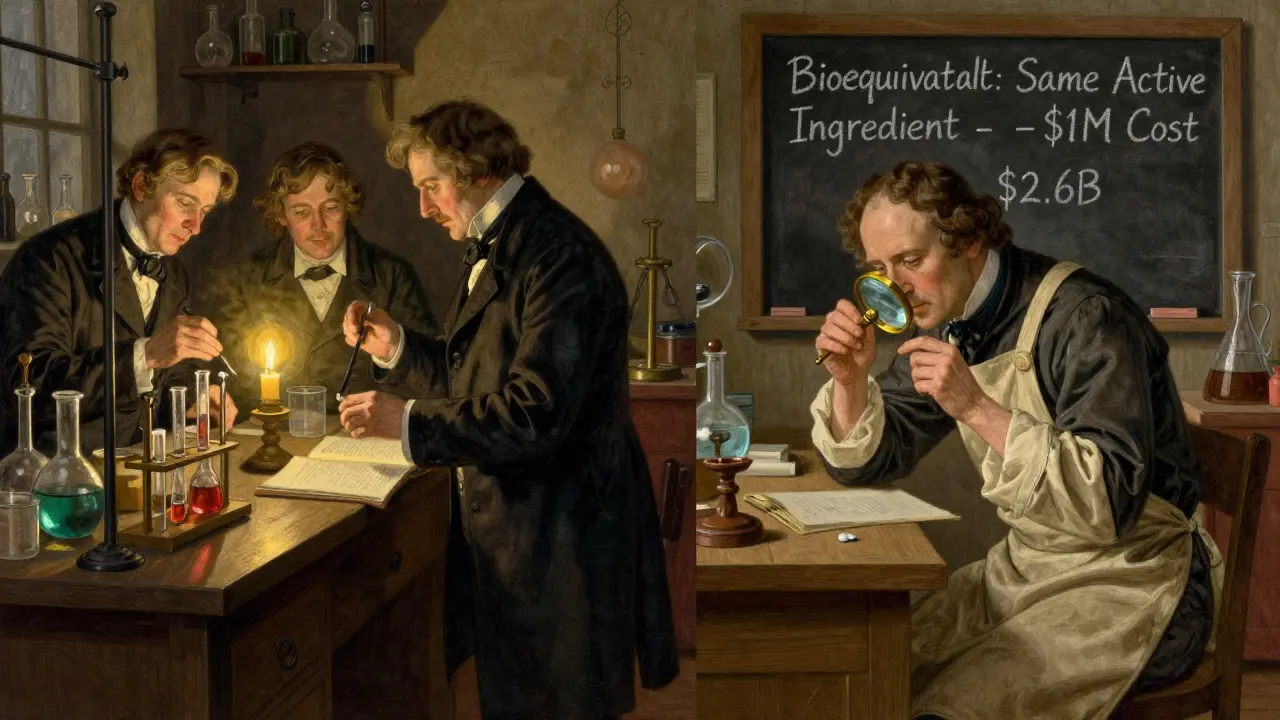
Why 90% of Prescriptions Are Generic
In the U.S., generics make up 90.5% of all prescriptions filled. But they only account for about 18% of total drug spending. That’s because brand-name drugs, which make up less than 10% of prescriptions, still take up 82% of the money spent. This isn’t just a personal savings trick-it’s a system-wide win. From 2007 to 2016, generic drugs saved the U.S. healthcare system $1.67 trillion. In 2022 alone, they saved $293 billion. That’s money that goes back into hospitals, clinics, and people’s pockets. Insurance plans know this. Most have a three-tier system: generics are Tier 1, with copays as low as $0-$15. Brand-name drugs are Tier 2 or 3, with copays of $25-$50 or even higher. If you ask for the brand when a generic is available, your insurer might not cover it unless your doctor jumps through extra hoops.Why Do People Still Hesitate?
Even though 84% of people agree generics are just as effective, 62% still trust brand-name drugs more. Why? It’s mostly perception. Some patients report feeling different after switching-more tired, less focused, or even worse symptoms. In rare cases, this might be real. For drugs with a narrow therapeutic index-like warfarin (blood thinner) or levothyroxine (thyroid hormone)-even tiny changes in how the drug is absorbed can matter. But the FDA says all approved generics meet the same standards. If you feel different, it’s not because the drug is weaker. It could be because your body is adjusting, or because you’re now taking a different manufacturer’s version. Pharmacists are trained to help with this. In 49 states, they can automatically swap a brand for a generic unless the doctor says no. But they’re also supposed to spend 3-5 minutes explaining the switch. If you’re nervous, ask them: “Is this the same as my old pill?” They’ll show you the bioequivalence data. Reddit threads and YouTube videos are full of stories. One person saved $400 a month switching from Synthroid to generic levothyroxine. Another said their ADHD symptoms got worse after switching from Concerta to generic methylphenidate. Both are valid experiences. But studies show those cases are rare. The American Medical Association says generic substitution is appropriate for the vast majority of drugs.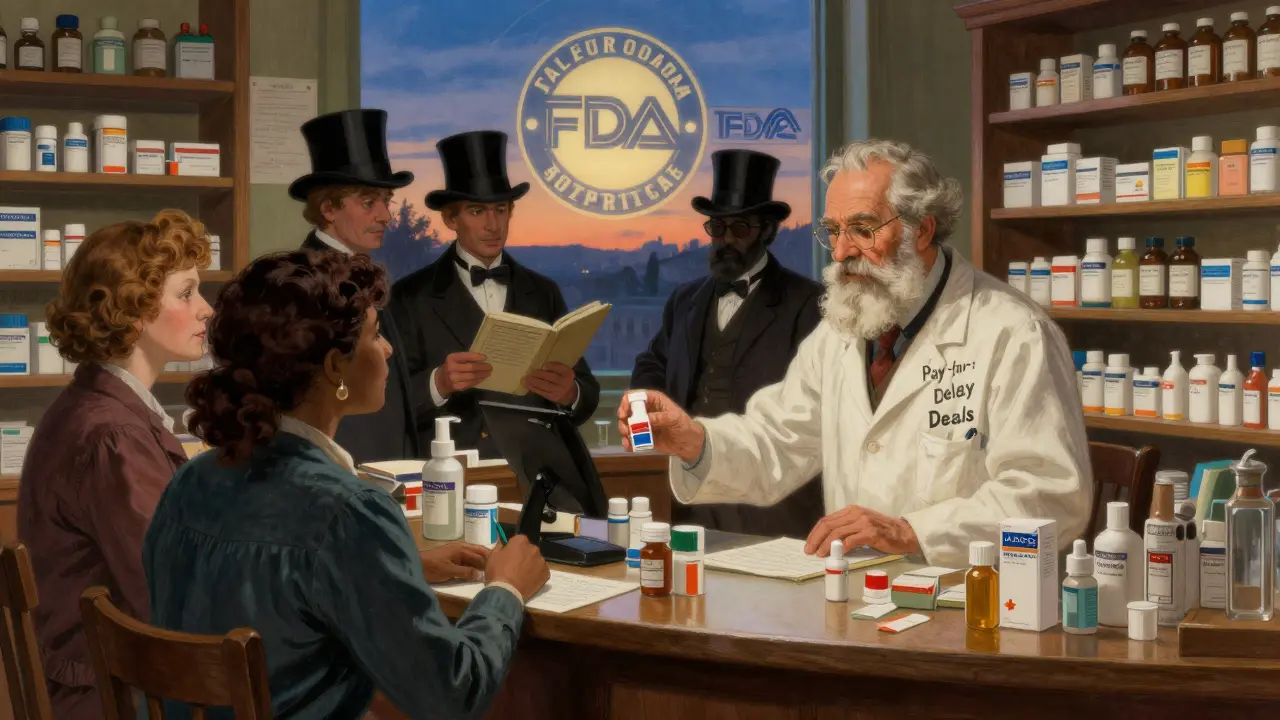
What’s Next for Generic Drugs?
The FDA is working to speed up approval for complex generics-like inhalers, eye drops, and creams-that used to take years to get approved. Their new plan aims to cut approval time from five years to two. That could save consumers another $50 billion a year. Meanwhile, the government is cracking down on “pay-for-delay” deals, where brand-name companies pay generic makers to hold off on launching their cheaper version. In 2022, the FTC found 148 of these deals, costing consumers $3.5 billion annually. And now, biosimilars-generic versions of complex biologic drugs-are starting to enter the market. These are like the next generation of generics, targeting drugs for cancer, arthritis, and autoimmune diseases. By 2028, they could be a $50 billion industry.What You Can Do Today
If you’re paying a lot for a prescription, ask your pharmacist: “Is there a generic version?” If your doctor prescribed a brand, ask them: “Can I try the generic?” Most of the time, the answer is yes. Don’t let the color or shape scare you. Don’t assume the expensive one is better. The science is clear: generics work the same. And if you’re worried about side effects, keep a simple journal: note how you feel before and after the switch. Talk to your doctor or pharmacist if something changes. You’re not just saving money-you’re using the system the way it was designed to work. And that’s not a compromise. It’s smart.Are generic drugs as effective as brand-name drugs?
Yes. Generic drugs contain the same active ingredients, work the same way, and deliver the same therapeutic results as brand-name drugs. The FDA requires them to be bioequivalent, meaning they’re absorbed into your bloodstream at the same rate and amount. Over 90% of prescriptions in the U.S. are filled with generics, and they’ve been proven safe and effective for decades.
Why do generic drugs look different from brand-name drugs?
By law, generic drugs can’t look identical to brand-name drugs because of trademark rules. That’s why the color, shape, or size might be different. But those differences are only in inactive ingredients like dyes or fillers, which don’t affect how the drug works. The active ingredient-the part that treats your condition-is exactly the same.
Can switching to a generic drug cause side effects?
For most people, no. But in rare cases, especially with drugs that have a narrow therapeutic index-like warfarin, levothyroxine, or certain seizure medications-small differences in how the body absorbs the drug can cause noticeable changes. If you feel worse after switching, talk to your doctor. It’s not because the generic is weaker-it might just mean your body needs time to adjust, or you’re switching between different generic manufacturers. Your pharmacist can help track which version you’re on.
Why are generic drugs so much cheaper if they’re the same?
Brand-name drugs cost billions to develop because companies must fund all the research, clinical trials, and marketing. Generic manufacturers skip those steps. They only need to prove their version works the same way, which costs about $1-5 million instead of $2.6 billion. Plus, once multiple companies start making the same generic, competition drives prices down even further-often by 80-90% within the first year.
Does insurance cover generic drugs better than brand-name drugs?
Yes. Most insurance plans have a tiered system where generics are in Tier 1, with the lowest copay-often $0 to $15. Brand-name drugs are usually Tier 2 or 3, with higher copays or coinsurance. If you ask for the brand when a generic is available, your insurer may deny coverage unless your doctor files a special request. Choosing the generic is the easiest way to keep your out-of-pocket costs low.
Are all generic drugs made in the U.S.?
No. About 70% of the active ingredients in generic drugs are made in India and China, but the final pills are often packaged in the U.S. or other countries. The FDA inspects all manufacturing facilities worldwide-whether they’re in the U.S., India, or elsewhere-to make sure they meet the same strict standards. Just because a drug isn’t made in America doesn’t mean it’s less safe.
Can I trust a generic drug from a new manufacturer?
Yes. Every generic drug, no matter who makes it, must be approved by the FDA. That means it’s been tested for safety, strength, and how well it works in your body. If a new company starts making your generic, your pharmacist will still give you the same effective medication. The only difference might be the pill’s appearance. If you’re unsure, ask your pharmacist to confirm it’s the same active ingredient.