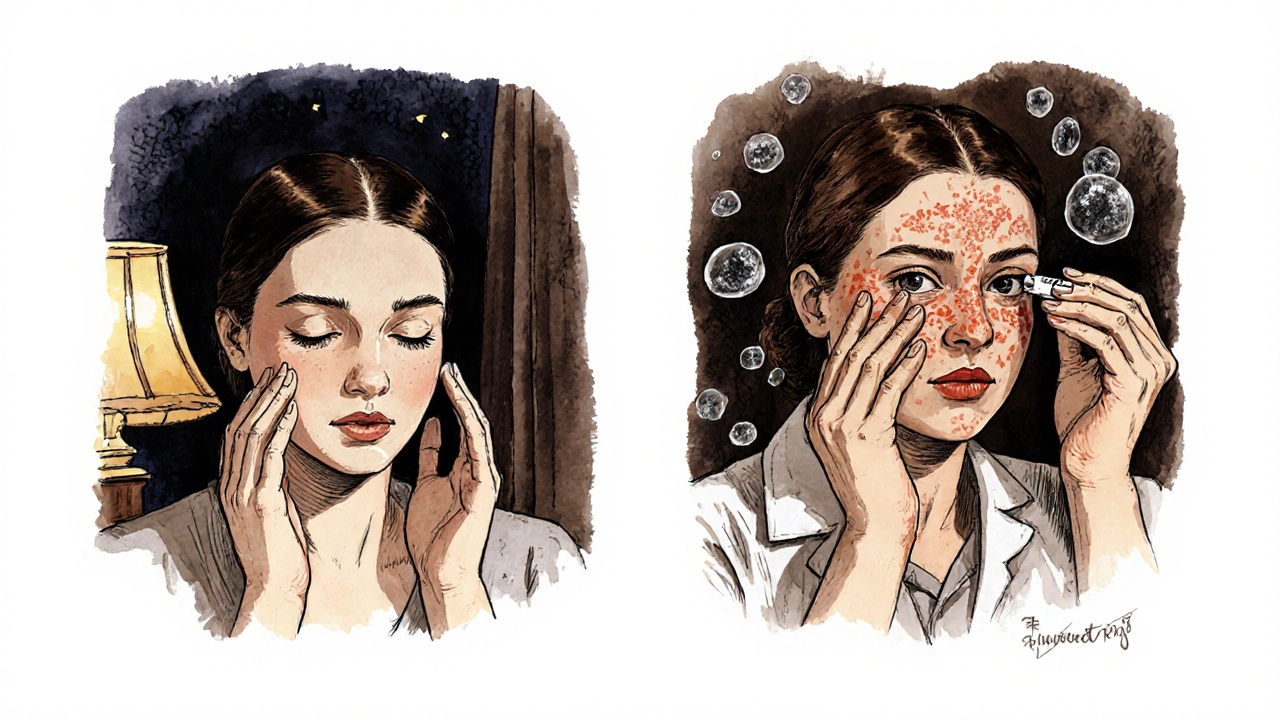
When you hear adapalene, a synthetic retinoid used to treat acne by unclogging pores and reducing inflammation. Also known as Differin, it's one of the few acne medications available over the counter in many countries, but most people don’t know how it differs from older options like tretinoin or benzoyl peroxide. Adapalene doesn’t just dry out your skin—it targets the root cause of breakouts by normalizing skin cell turnover. That means fewer clogged pores, less blackheads, and less inflammation over time. Unlike harsh scrubs or alcohol-based toners, it works silently under the surface, which is why it takes weeks to show results—and why so many quit too early.
Adapalene is part of a larger family called topical retinoids, vitamin A derivatives used to treat acne, wrinkles, and uneven skin tone. It sits between milder options like retinol and stronger ones like tretinoin. It’s less irritating than tretinoin but more effective than over-the-counter retinol, making it a sweet spot for most people with moderate acne. If you’ve tried benzoyl peroxide and it burned your skin or didn’t touch your deep cysts, adapalene might be the next step. It also pairs well with nicotinamide, a form of vitamin B3 that reduces redness and strengthens the skin barrier, which is why many dermatologists recommend combining them.
But adapalene isn’t magic. It won’t fix hormonal acne alone, and it won’t erase scars overnight. People with sensitive skin often need to start slow—every other night, then build up. And yes, you’ll likely experience peeling or redness at first. That’s normal. What’s not normal is using it with strong exfoliants like salicylic acid or physical scrubs. That’s how you end up with raw, flaky skin. Stick to a gentle cleanser, moisturizer, and sunscreen. Sunscreen isn’t optional here. Adapalene makes your skin more sensitive to UV light, and skipping SPF can undo months of progress.
If adapalene doesn’t work after 12 weeks, you’re not alone. Many people switch to tretinoin, a prescription retinoid with stronger effects but higher irritation risk, or try oral medications like spironolactone for hormonal acne. Others turn to azelaic acid, a gentle alternative that reduces redness and kills acne bacteria, which works well for rosacea-prone skin. The key isn’t finding the strongest product—it’s finding the one your skin can tolerate long-term.
Below, you’ll find real patient experiences, comparisons with other acne treatments, and what the latest research says about combining adapalene with other ingredients. No fluff. No marketing hype. Just what works, what doesn’t, and how to avoid the common mistakes that make people give up too soon.