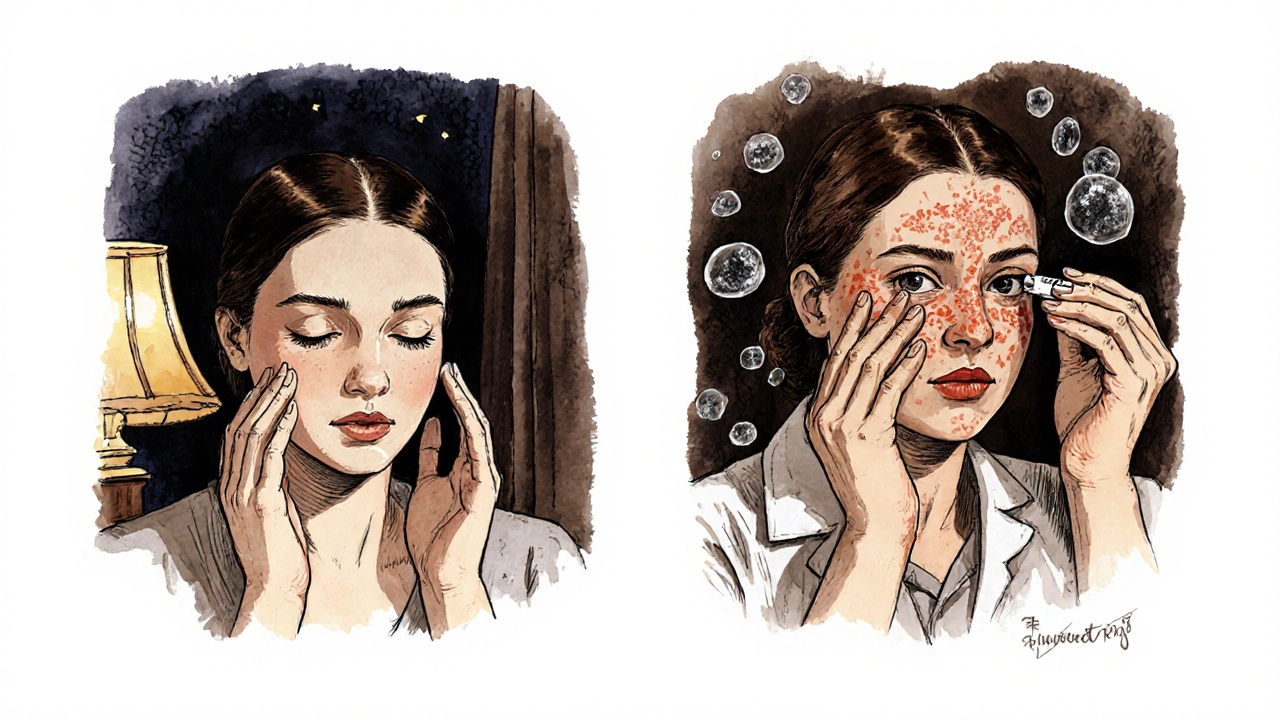
When it comes to anti-aging skin, the process of skin changes over time that leads to wrinkles, thinning, and loss of elasticity. Also known as cutaneous aging, it's not just about looking older—it's about losing the skin's natural ability to repair itself. Everyone’s skin ages, but not the same way. Some people get fine lines early; others lose firmness. The real difference? What you do now, not what you do at 50.
collagen, a protein that gives skin its structure and bounce starts dropping by about 1% every year after 20. Sun exposure, smoking, and sugar don’t just speed this up—they wreck it. UV rays break down collagen and elastin like scissors through fabric. That’s why daily sunscreen isn’t optional—it’s the single most effective anti-aging step you’ll ever take. And no, expensive creams won’t fix what the sun already damaged.
retinoids, vitamin A derivatives proven to boost cell turnover and collagen production are the only topical ingredients with decades of clinical proof. Tretinoin, the prescription kind, works better than anything you can buy over the counter. But even OTC retinol, used consistently, makes a visible difference in 3–6 months. Hyaluronic acid? It hydrates. Niacinamide? It calms redness. But neither rebuilds collagen like retinoids do. And don’t fall for ‘miracle’ serums with 20 ingredients—simplicity wins.
Skincare isn’t magic. It’s maintenance. Moisturizers don’t reverse aging—they keep skin barrier function strong, which slows visible damage. Drinking water helps, but it won’t plump wrinkles. Eating veggies rich in antioxidants supports skin health, but it won’t replace sunscreen. The truth? You can’t undo years of damage overnight. But you can stop it from getting worse. And that’s where most people fail—not because they don’t know what to do, but because they don’t stick with it.
What you’ll find here are real, no-fluff posts about what actually affects your skin: how certain drugs change skin texture, why some supplements claim to help but don’t deliver, how temperature and humidity can dry out your skin, and what’s behind the hype of popular treatments. No gimmicks. No paid promotions. Just what works, what doesn’t, and why.