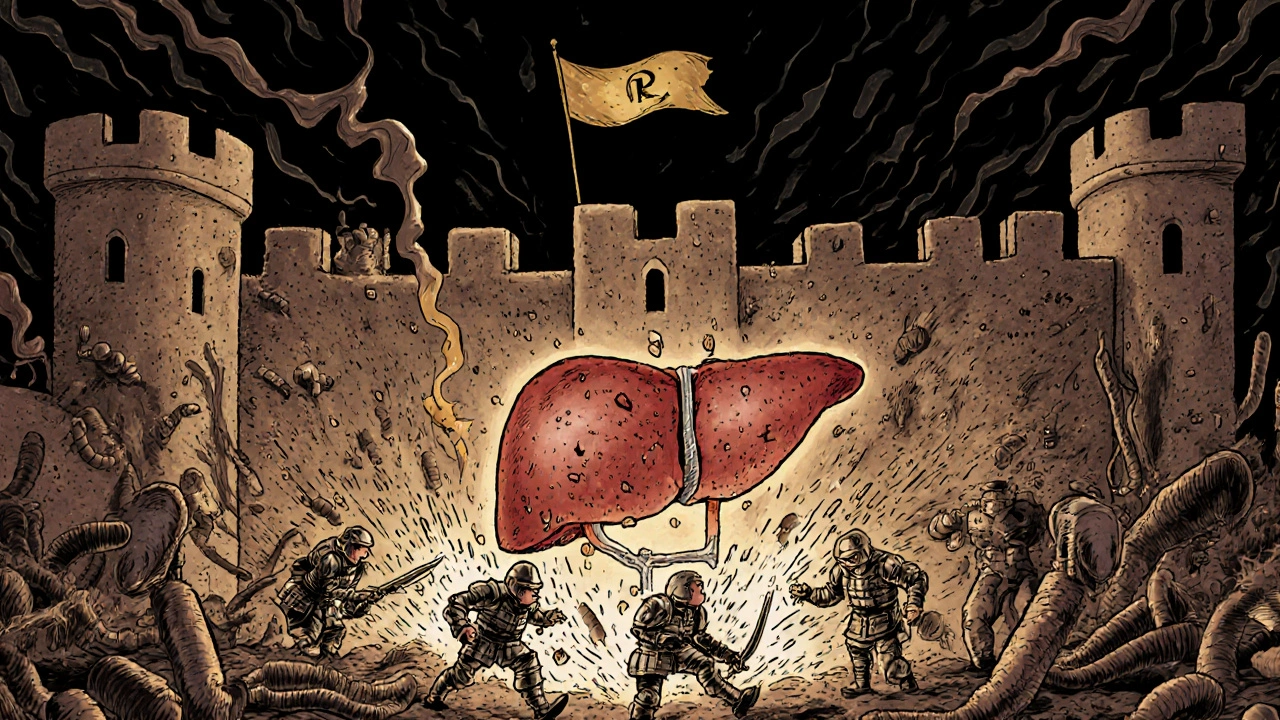
When you take an antibiotic liver injury, liver damage caused by antibiotics, often without warning, that can range from mild enzyme changes to acute failure. Also known as drug-induced liver injury, it’s not rare—some antibiotics quietly stress the liver even when you feel fine. Most people assume antibiotics are safe because they’re common, but the liver doesn’t always show trouble until it’s too late. This isn’t about rare side effects—it’s about patterns you won’t hear about until you’re already in trouble.
liver toxicity, the buildup of harmful substances that damage liver cells, often from medications like antibiotics doesn’t always come with yellow skin or nausea. Sometimes, it’s just a weird fatigue, dark urine, or a blood test showing elevated enzymes. The same antibiotics that treat a sinus infection—amoxicillin-clavulanate, erythromycin, sulfonamides—can quietly trigger this. It’s not about overdosing. It’s about your body’s unique reaction. Some people have genes that make their liver slow to process certain drugs. Others have hidden conditions that make them more vulnerable. The FDA’s post-marketing reports show this isn’t theoretical—it’s tracked, confirmed, and sometimes leads to recalls.
medication safety, the practice of using drugs in ways that minimize harm, especially when side effects aren’t obvious until damage is done means you can’t just rely on the label. If you’re on antibiotics for more than a week, especially if you’re over 50, have liver disease, or take other meds, ask for a simple liver function test. It’s not routine, but it should be. Many of the posts in this collection track exactly this: how side effects hide in plain sight, how monitoring catches what trials miss, and how patients are left guessing until something breaks. You don’t need to avoid antibiotics. But you do need to know when to ask for help.
What you’ll find here aren’t just warnings. They’re real stories and data from people who noticed something off—then found out it was the antibiotic. You’ll see how drug safety systems catch these issues after approval, how blood tests like CK and liver enzymes reveal hidden damage, and why some antibiotics are riskier than others. This isn’t fear-mongering. It’s about giving you the facts so you can ask the right questions before the next prescription.