When you live with chronic pain, a persistent physical sensation that lasts beyond normal healing time. Also known as persistent pain, it doesn't just hurt—it rewires how you think, sleep, and move. Many people assume pain is purely a physical problem, but science shows it’s just as much a mental one. That’s where cognitive behavioral therapy, a structured, goal-oriented talk therapy that changes how you respond to pain. It’s not about ignoring the pain—it’s about changing how your brain reacts to it. CBT for pain doesn’t erase the sensation, but it cuts through the fear, frustration, and helplessness that make it worse. Studies from the National Institutes of Health show people who use CBT for chronic pain report up to 50% less disability and improved daily function—even when the physical cause hasn’t changed.
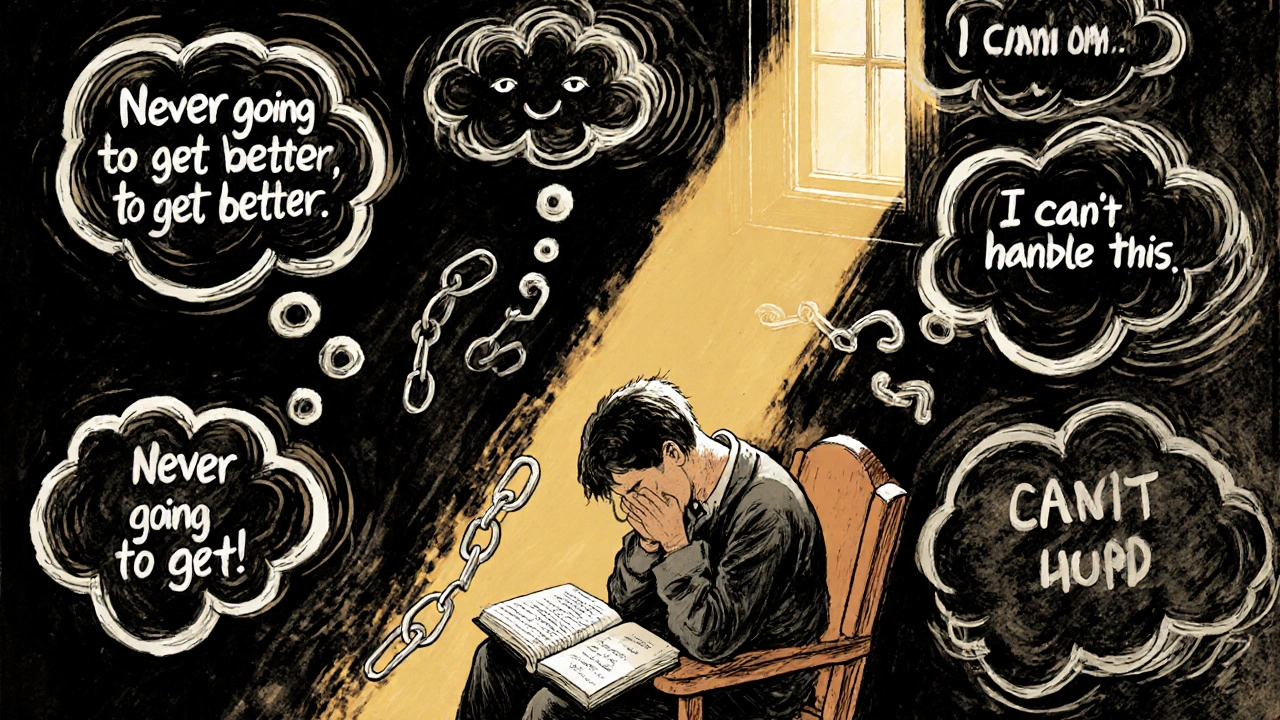
CBT for pain works because pain isn’t just a signal from your nerves. It’s filtered through your emotions, memories, and beliefs. If you believe pain means you’re damaged, you’ll avoid movement. If you think nothing will help, your body tightens up, making pain worse. CBT breaks that cycle. It teaches you to spot unhelpful thoughts like "I’ll never get better" or "This pain means something’s seriously wrong," and replace them with more accurate ones: "This is uncomfortable, but it’s not dangerous." You learn pacing—how to do a little more without crashing—and relaxation techniques that quiet the nervous system. It’s not magic. It’s practice. And it’s backed by real data from clinical trials, not just theory.
You won’t find CBT in a pill bottle. But you’ll find it in the lives of people who stopped letting pain control their days. It’s used alongside physical therapy, medications, and lifestyle changes—not as a replacement, but as a tool that makes the rest work better. If you’ve tried heat, pills, injections, or even surgery and still feel stuck, CBT might be the missing piece. The posts below show how real patients use it, what works with arthritis, back pain, migraines, and fibromyalgia, and how to find a therapist who actually knows what they’re doing. No fluff. Just what helps.