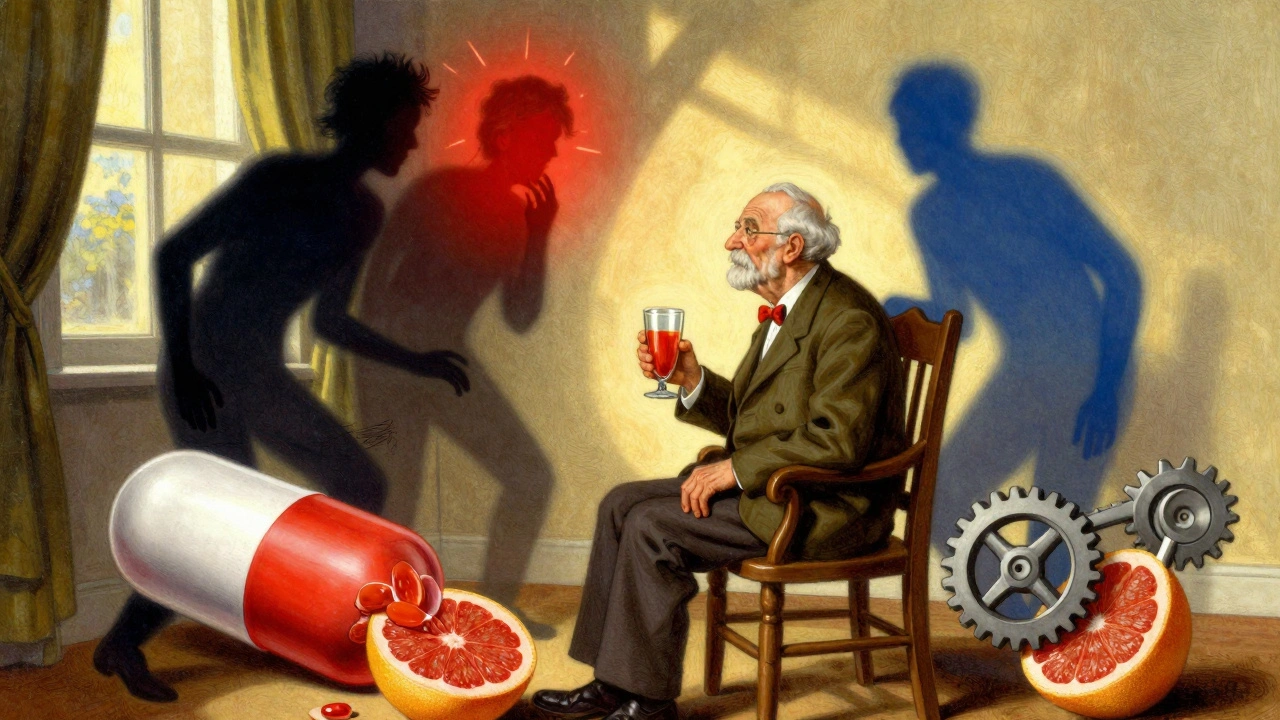
When your body breaks down medications, one enzyme does most of the heavy lifting: CYP3A4, a liver enzyme responsible for metabolizing over half of all prescription drugs. Also known as cytochrome P450 3A4, it’s the reason some pills work great for you but barely touch another person’s symptoms. If CYP3A4 gets blocked or sped up by something you eat, take, or smoke, your meds can suddenly become too strong or useless.
This isn’t theoretical. People on statins like simvastatin have ended up in the hospital after eating grapefruit—because grapefruit shuts down CYP3A4 and lets the drug build up to toxic levels. Others on blood thinners like apixaban saw their bleeding risk spike after starting a common antibiotic like clarithromycin, which does the same thing. On the flip side, St. John’s wort, a popular herbal supplement, can flip CYP3A4 into overdrive, making birth control pills, antidepressants, or even heart meds stop working. These aren’t rare cases—they happen every day in clinics and pharmacies.
It’s not just about pills. Even over-the-counter pain relievers, antifungals, and certain cancer drugs can interfere with CYP3A4. If you’re taking more than one medication, especially for chronic conditions like high blood pressure, diabetes, or depression, you’re likely at risk. The problem? Most patients don’t know to ask. Doctors don’t always check. And pharmacies often only flag the obvious clashes. But CYP3A4 is quiet—it doesn’t shout. It just quietly changes how your body handles drugs.
That’s why understanding CYP3A4 interactions isn’t just for pharmacologists. It’s for anyone taking meds regularly. Whether you’re managing pain, heart health, mental health, or just trying to avoid side effects, knowing what can mess with this enzyme saves you from surprises. Below, you’ll find real-world examples of dangerous combos, how to spot hidden risks, and what to do if you’re on multiple drugs. No jargon. No fluff. Just what you need to keep yourself safe.