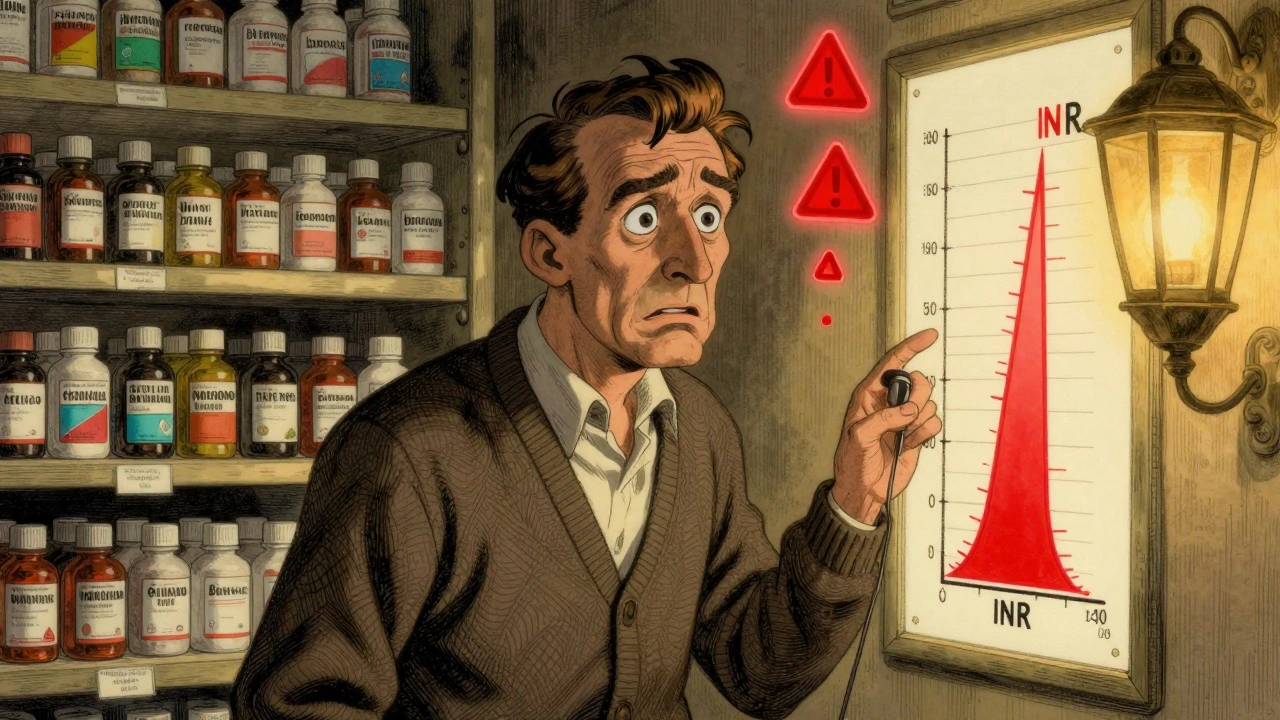
When you’re on warfarin, a blood thinner used to prevent dangerous clots in people with atrial fibrillation, deep vein thrombosis, or artificial heart valves. Also known as Coumadin, it works by slowing down your blood’s ability to clot—but that same effect makes it easy to accidentally overdose when combined with other substances. Many people don’t realize that everyday over-the-counter drugs can turn warfarin from a life-saving tool into a serious risk.
Take NSAIDs, nonsteroidal anti-inflammatory drugs like ibuprofen and naproxen, commonly used for headaches, arthritis, or muscle pain. These don’t just hurt your stomach—they also thin your blood. When you take them with warfarin, your risk of internal bleeding skyrockets. A 2023 study in the Journal of the American Heart Association found that people on warfarin who used NSAIDs regularly were 3 times more likely to be hospitalized for bleeding. Even a single dose of ibuprofen can throw off your INR levels, the test doctors use to measure how thin your blood is.
Then there’s aspirin, a low-dose daily pill many take for heart protection. It’s often assumed to be safe with warfarin because it’s also a blood thinner—but combining them doesn’t add up to better protection. It adds up to more bleeding. A 2022 review in Thrombosis Research showed no extra benefit for heart attack prevention when aspirin was added to warfarin, but a clear jump in stomach bleeds and brain hemorrhages. And if you’re popping fish oil or garlic supplements thinking they’re harmless? They’re not. Both interfere with clotting too, and while the risk is lower than NSAIDs, it’s still real.
Even something as simple as vitamin K, a nutrient found in leafy greens that helps your blood clot normally can mess with warfarin. You don’t need to avoid spinach or kale—but you do need to eat them consistently. If you suddenly eat a big salad every day, your INR drops. Skip them for a week? Your INR spikes. Stability matters more than restriction.
And here’s the kicker: you can’t always tell when something’s interacting. Warfarin doesn’t cause obvious symptoms when levels go wrong. You might feel fine until you bruise easily, notice blood in your urine, or get a headache that won’t quit. That’s when it’s already too late.
So what’s safe? Acetaminophen (Tylenol) is usually the go-to for pain relief. But even that has limits—taking more than 3,000 mg a day can damage your liver, and your liver is already working overtime to process warfarin. Antihistamines? Mostly fine. Cold medicines? Watch out—they often hide NSAIDs or decongestants that raise blood pressure. Always check the active ingredients, not just the brand name.
That’s why the posts below matter. You’ll find real-world breakdowns of what happens when warfarin meets common meds, supplements, and even foods. You’ll see what the science says about fish oil and aspirin, how generic drug failures can affect your INR, and why some people end up in the ER after taking OTC painkillers they thought were harmless. This isn’t theory. It’s what’s happening to real people every day.