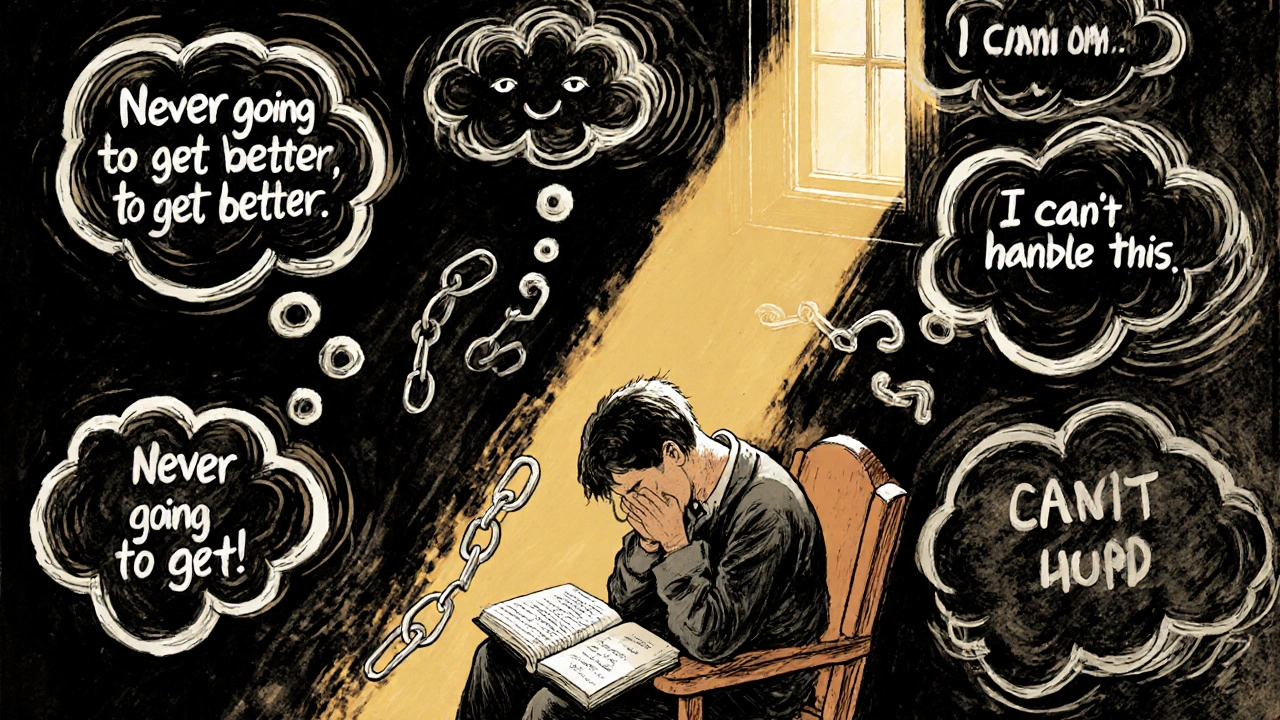
When you have chronic pain, it’s easy to think the worse it feels, the worse it must be. But pain catastrophizing, a mental pattern where pain is imagined as overwhelming, uncontrollable, and permanent. It’s not weakness—it’s your brain getting stuck in a loop that makes pain feel worse than it is. People who catastrophize often say things like, "This will never get better," or, "I can’t handle this anymore." That kind of thinking doesn’t make the injury worse—but it makes the pain feel heavier, longer, and harder to treat.
chronic pain, pain that lasts longer than three to six months, even after an injury has healed often gets tangled up with pain catastrophizing. They feed each other. The more you focus on the pain, the more your nervous system amps it up. And the more it hurts, the more you fear it. This isn’t just "being dramatic." Studies show people who catastrophize respond worse to physical therapy, need higher doses of pain meds, and recover slower after surgery. Even pain perception, how your brain interprets signals from your body changes when you’re stuck in this cycle. Your brain starts treating normal sensations—like a slight ache or stiffness—as dangerous signals.
Here’s the good news: psychological pain, the emotional and mental burden tied to physical discomfort can be rewired. You don’t need to ignore the pain—you need to change how you talk to yourself about it. Simple tools like mindfulness, pacing activities, and cognitive behavioral techniques help break the cycle. Many people find relief not by chasing stronger drugs, but by learning how to quiet the noise in their head. That’s why so many of the posts here focus on pain management strategies that go beyond pills—like exercises for neck strain, natural alternatives for joint pain, and how to spot real side effects from meds that might be making things worse.
If you’ve ever felt like pain is controlling your life, you’re not alone. And you’re not broken. What you’re experiencing is a known pattern—and it’s one that can be addressed. Below, you’ll find real, practical guides from people who’ve been there: how to tell if your pain is being made worse by your thoughts, what treatments actually work for long-term relief, and how to avoid common traps like over-relying on meds or giving up too soon. This isn’t about positive thinking. It’s about smarter thinking.