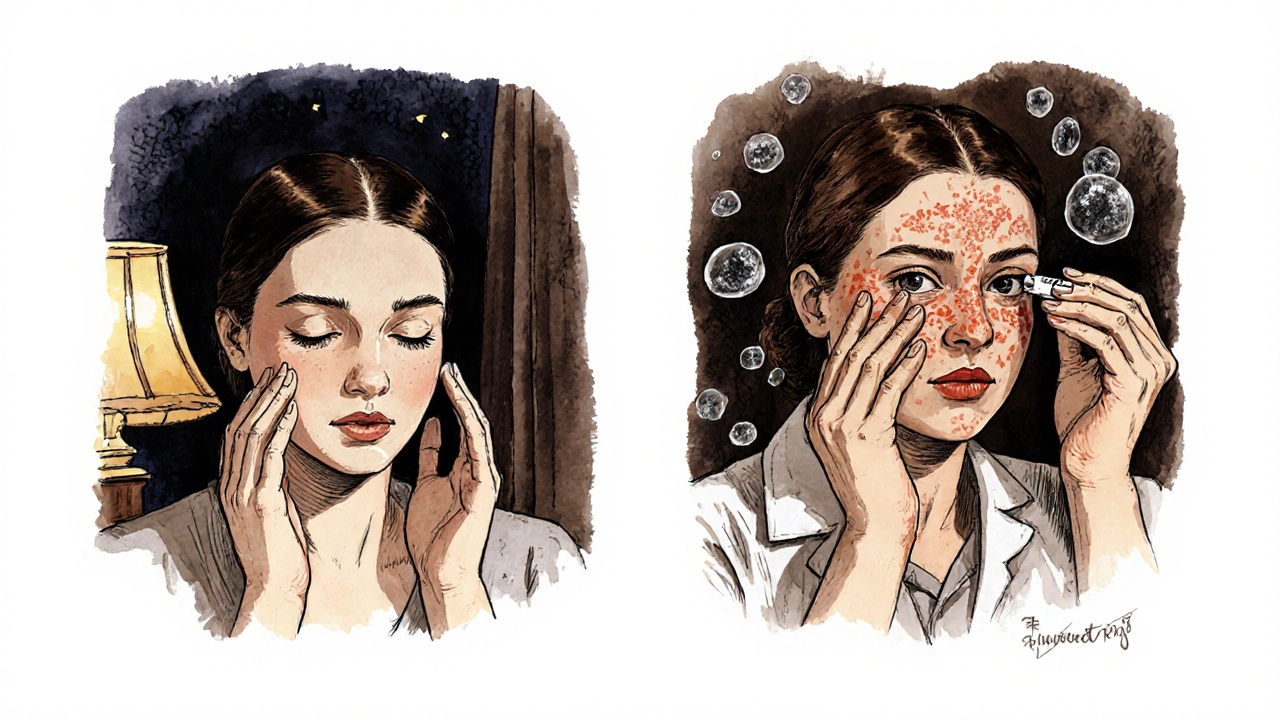
When doctors prescribe retinoid therapy, a treatment using synthetic forms of vitamin A to regulate skin cell growth and reduce inflammation. Also known as oral retinoid treatment, it’s not just for acne—it’s a powerful tool for severe psoriasis, acne that won’t quit, and even some rare skin cancers. Unlike topical creams, systemic retinoids like acitretin, an oral medication used primarily for psoriasis and other chronic skin disorders work from the inside out, changing how skin cells grow and die. This makes them effective where other treatments fail—but also means they come with real risks.
Retinoid therapy doesn’t just affect your skin. It impacts your liver, cholesterol levels, and even your bones over time. That’s why regular blood tests are often required, just like with hydroxyurea or statins. Patients on long-term retinoid therapy need monitoring for liver toxicity, dryness, mood changes, and birth defects—especially since these drugs stay in the body for months after stopping. Women of childbearing age must use two forms of birth control during and after treatment. It’s not a quick fix. It’s a commitment.
People often confuse retinoid therapy with over-the-counter retinol. They’re not the same. Retinol is mild, slow, and safe for daily use. Retinoid therapy like acitretin is prescription-only, stronger, and used only when other options don’t work. It’s the kind of treatment you turn to when your skin is breaking down and nothing else helps. And while it’s not for everyone, for those who need it, the results can be life-changing.
You’ll find posts here that break down the side effects of acitretin, how it stacks up against biologics and topical treatments, and what real patients experienced after months on the drug. There’s also info on how to manage dry skin, joint pain, and elevated triglycerides while on therapy. If you’re considering this treatment—or already on it—this collection gives you the facts without the fluff. No marketing. No hype. Just what you need to know to stay safe and get the most out of the therapy.