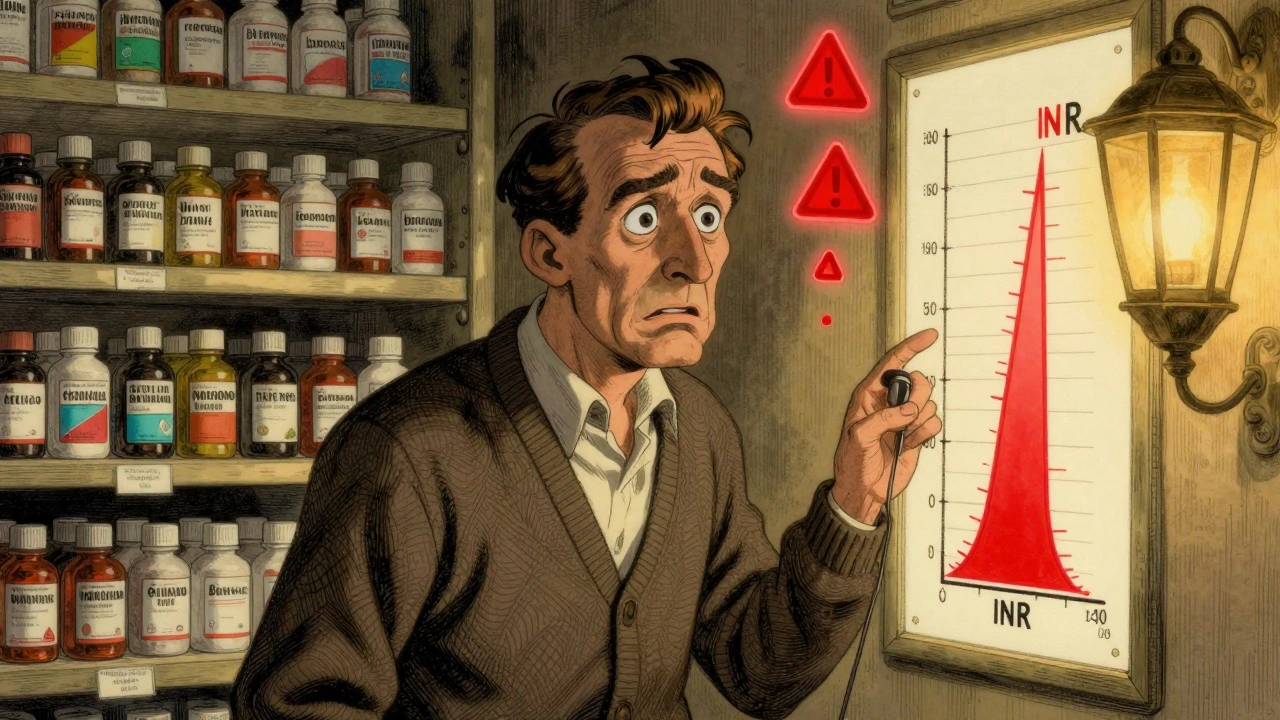
When you’re on blood thinners, medications like warfarin, apixaban, or rivaroxaban that reduce clotting to prevent strokes or blood clots, getting a cold isn’t just annoying—it’s risky. Many common cold medicines can dangerously increase your bleeding risk or interfere with how your blood thinner works. The good news? You don’t have to suffer. There are safe, effective ways to treat runny noses, sore throats, and congestion without putting your health in danger.
One of the biggest dangers comes from NSAIDs, nonsteroidal anti-inflammatory drugs like ibuprofen and naproxen, which thin the blood further and can cause stomach bleeding when mixed with anticoagulants. Even a single dose of Advil or Aleve can raise your risk. The same goes for aspirin, a common pain reliever and blood thinner itself. You might think it’s harmless since it’s OTC, but if you’re already on a prescription blood thinner, adding aspirin is like double-dosing on the same effect—only worse. Studies show this combo doesn’t just raise bleeding risk—it can lead to hospital visits.
Decongestants like pseudoephedrine and phenylephrine are another trap. They’re in nearly every cold medicine labeled "sinus" or "congestion relief." But they raise blood pressure and can interfere with how your body processes certain blood thinners, especially if you have heart issues or high BP. Instead, try saline nasal sprays—no drugs, no interactions. Steam inhalation, humidifiers, and drinking warm fluids help loosen mucus without touching your medication. For sore throats, honey in tea or saltwater gargles work better than medicated lozenges, which often contain NSAIDs or menthol that can irritate your stomach lining. And if you need a fever reducer, acetaminophen (Tylenol) is usually the safest choice—but always check with your pharmacist first. Even Tylenol can be risky at high doses if you have liver problems, which some blood thinner users do.
What about herbal remedies? fish oil, a popular supplement for heart health, also thins the blood. While low doses (under 3 grams daily) are usually fine with warfarin, combining it with cold meds that contain garlic, ginkgo, or ginger? That’s asking for trouble. These herbs can amplify bleeding risk silently. Same goes for CBD oils—some interact with the same liver enzymes that break down blood thinners, making them stronger or weaker than intended. Stick to basics: rest, hydration, and simple, drug-free symptom relief.
There’s no magic bullet, but there’s a clear path forward. Know what’s in every cold medicine you pick up. Read labels for hidden NSAIDs, decongestants, or herbal extracts. Talk to your pharmacist before buying anything—even if it’s labeled "natural" or "for sensitive stomachs." And if your symptoms last more than a week or get worse, don’t wait. Your blood thinner makes even a minor infection more serious. The goal isn’t to avoid colds entirely—it’s to treat them smartly. Below, you’ll find real-world advice from people who’ve walked this path, backed by clinical data and pharmacy guidelines. No fluff. Just what works, what doesn’t, and how to stay safe while your body recovers.