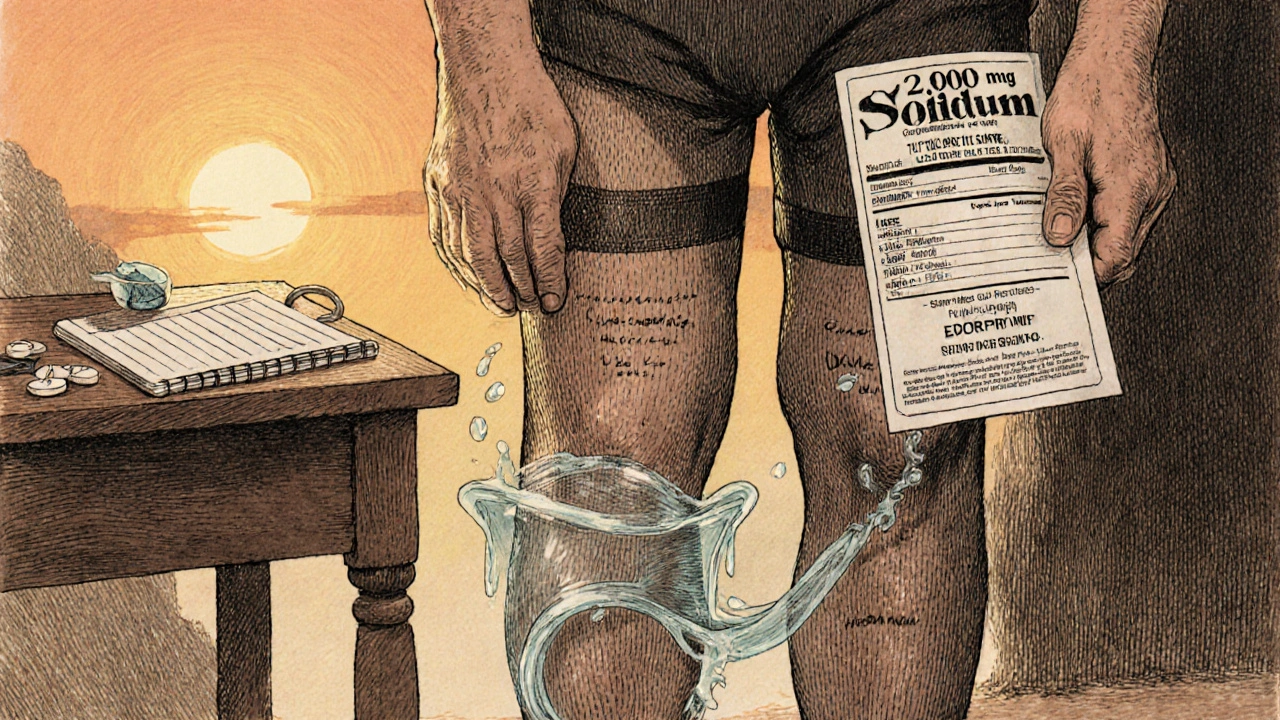
When you have chronic kidney disease, a condition where the kidneys slowly lose their ability to filter waste and excess fluid from the blood. Also known as CKD, it affects how your body handles salt, a compound of sodium and chloride that regulates fluid balance and blood pressure. Too much salt forces your kidneys to work harder, and when they’re already damaged, that extra load speeds up decline. Many people with CKD don’t realize how much salt is hiding in their food—even in things labeled "healthy" or "low-fat."
Salt restriction, the deliberate reduction of sodium intake to protect kidney function isn’t just about avoiding the salt shaker. It’s about understanding how sodium builds up in your body when your kidneys can’t flush it out, leading to swelling, high blood pressure, and heart strain. Studies show that cutting sodium to under 2,000 mg a day can slow CKD progression and reduce the need for dialysis. That’s not a guess—it’s what patients who stuck with low-sodium diets saw in real life. You don’t need to go zero-sodium. You just need to know where the hidden sodium is: canned soups, packaged snacks, deli meats, soy sauce, and even some breads. A single slice of store-bought bread can have 230 mg of sodium. Two slices? That’s already over 10% of your daily limit.
Hypertension, high blood pressure, which is both a cause and a consequence of CKD and salt go hand in hand. When your kidneys can’t remove extra fluid, your blood volume rises, and so does your pressure. That pressure then damages the tiny filters in your kidneys, creating a vicious cycle. Reducing salt helps break that cycle. It’s not magic—it’s physics. Less sodium means less fluid retention, lower pressure, and less stress on your kidneys. And if you’re taking blood pressure meds like ACE inhibitors or diuretics, salt restriction makes them work better. No extra pills needed.
You’ll find posts here that dive into how allopurinol, a medication used to lower uric acid in people with gout and CKD interacts with sodium intake, how fluid balance affects kidney function, and what alternatives exist when salt cravings hit hard. Some people swap soy sauce for lemon juice. Others cook with herbs instead of pre-made seasoning blends. A few track their sodium like a budget—every gram counted. These aren’t theoretical tips. They’re what real people with CKD are doing to stay off dialysis longer. You’ll see what works, what doesn’t, and why some "kidney-friendly" foods still sneak in too much sodium.