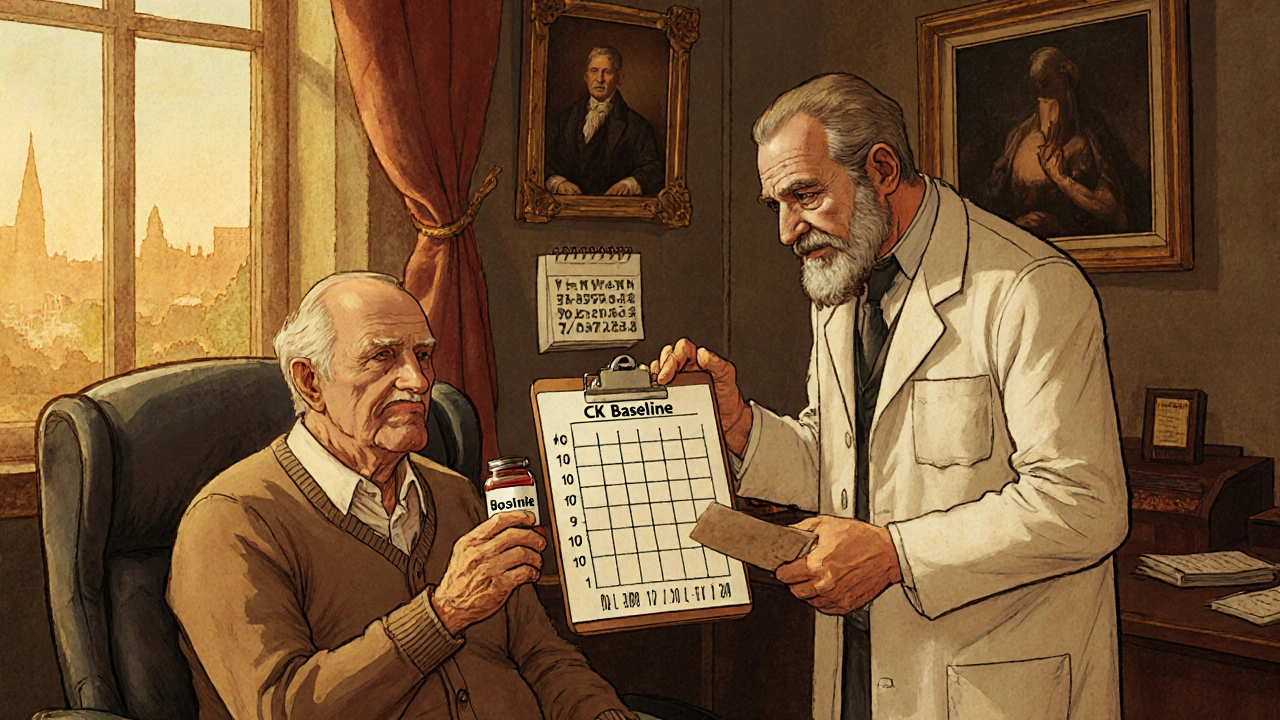
When you take a statin, a class of cholesterol-lowering drugs prescribed to reduce heart attack and stroke risk. Also known as HMG-CoA reductase inhibitors, they work by blocking a key enzyme in the liver that makes cholesterol. But for many people, the promise of lower cholesterol comes with a painful trade-off: unexplained muscle soreness, weakness, or cramps. This isn’t just a minor inconvenience—it’s why nearly 1 in 5 people stop taking statins within a year.
The real problem? Most of the time, the muscle pain isn’t caused by the statin at all. Studies show that in placebo-controlled trials, people taking sugar pills report the same level of muscle discomfort as those on statins. That doesn’t mean statins never cause issues—some people do have true statin intolerance, a condition where muscle symptoms are directly linked to statin use and improve after stopping the drug. But it does mean you need real testing, not just assumptions. A simple blood test for creatine kinase (CK) can tell if your muscles are actually breaking down. If your CK is normal and you feel better off the statin, it’s likely not the drug.
What you need to know next is what to do when statins don’t sit right. There are five proven non-statin cholesterol meds, alternatives that lower LDL without triggering muscle side effects. Also known as non-statin lipid-lowering therapies, these include ezetimibe, PCSK9 inhibitors like Repatha, bile acid sequestrants, fibrates, and niacin. Each has its own profile—some are pills, some are injections, some cost more, but all avoid the muscle pain trap. And if you’re worried about heart risk without statins, you’re not alone. But here’s the truth: you don’t have to choose between a healthy heart and feeling good in your body.
Some people blame statins for every ache, but others ignore real warning signs. If your muscle pain is severe, comes with dark urine, or feels like you’ve been hit by a truck, that’s not normal. That’s rhabdomyolysis—a rare but dangerous condition where muscle tissue breaks down and floods your kidneys. It’s rare, but it happens. Know the difference between ordinary soreness and something serious. And if you’ve quit statins because of pain, don’t assume you’re stuck without options. There’s a path forward, and it doesn’t mean giving up on heart protection.
Below, you’ll find real stories, real data, and real solutions from people who’ve been where you are. Some found relief switching meds. Others discovered their pain was tied to vitamin D, thyroid issues, or even their workout routine. No fluff. No marketing. Just what works when statins hurt too much.