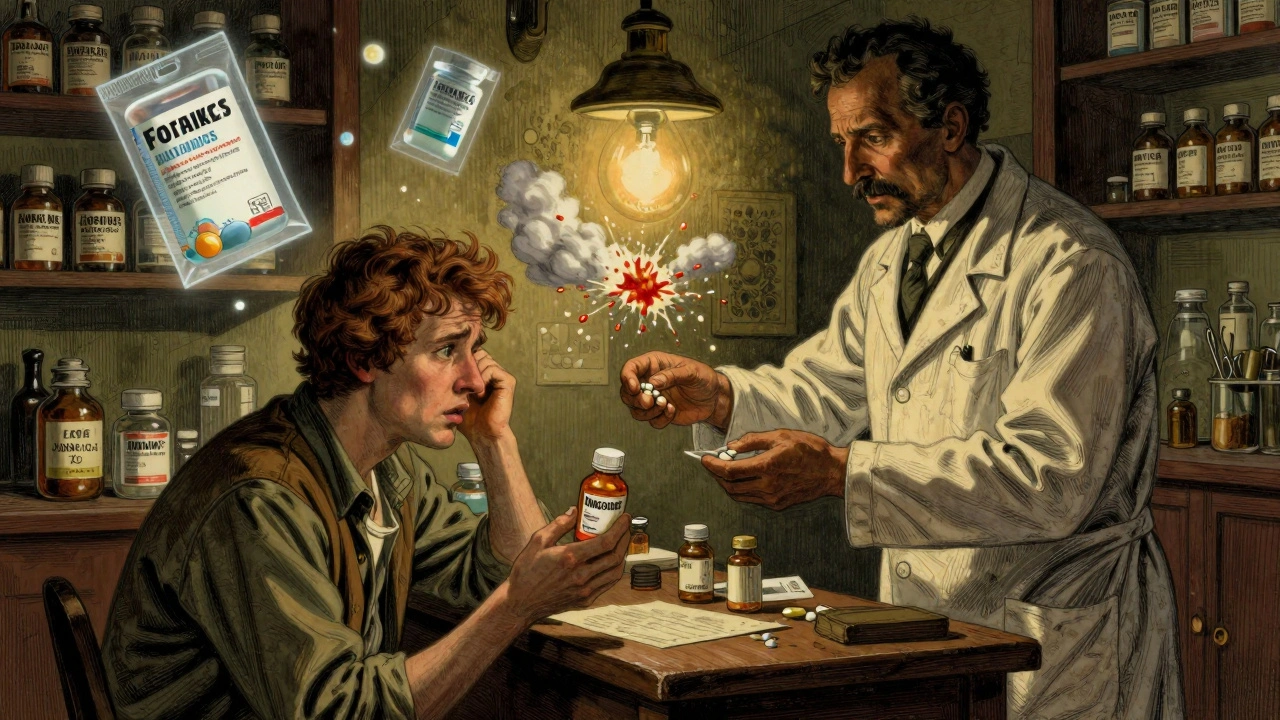
When a drug that once helped no longer does, that’s therapeutic failure, the point at which a prescribed medication no longer produces the expected clinical benefit. It’s not rare, and it’s not always your fault. Sometimes the body adapts. Sometimes the drug formulation changes. And sometimes, as the FDA Orange Book, the official list of approved generic drugs and their therapeutic equivalence ratings shows, a generic substitute isn’t truly interchangeable for your specific case. This isn’t about poor compliance—it’s about biology, chemistry, and how real-world use differs from clinical trials.
Therapeutic failure can show up in many ways. You might take your blood pressure pill daily but still have spikes. Your antidepressant might stop lifting your mood after months. Or your antibiotic clears the infection once, but not the next time. These aren’t just random flukes. They’re signals. And they often connect to things like drug interactions, when another substance—like cannabis, fish oil, or even grapefruit juice—changes how your body processes the medicine, or to medication storage, how heat, humidity, or expired pills degrade potency before you even take them. Even something as simple as switching from brand to generic can trigger it, especially if the active ingredient’s release profile isn’t identical. The FDA Orange Book helps track which generics are truly equivalent—but not every pharmacist or doctor checks it.
What makes therapeutic failure so frustrating is that it often feels invisible. You’re doing everything right—taking pills on time, eating well, avoiding alcohol—yet the results vanish. That’s why understanding the root cause matters more than ever. It could be a hidden interaction, a change in liver metabolism, or even a shift in your gut bacteria affecting absorption. In some cases, like with statins or antidepressants, what looks like failure is actually intolerance. And sometimes, as shown in posts about therapeutic failure linked to gout meds or Parkinson’s treatments, the issue isn’t the drug itself but the disease progressing beyond what that drug can handle.
There’s no single fix. But knowing what to look for changes everything. Did your symptoms return after a pharmacy switch? Did you start a new supplement? Did your doctor change your dose without explaining why? These are the real clues. The posts below walk you through real cases—why penicillin allergies are often misdiagnosed, how hydroxyurea needs blood tests to avoid hidden risks, why some generics work for others but not you, and how post-marketing data catches failures that trials never saw. You’re not alone in this. And you don’t have to guess your way out of it.