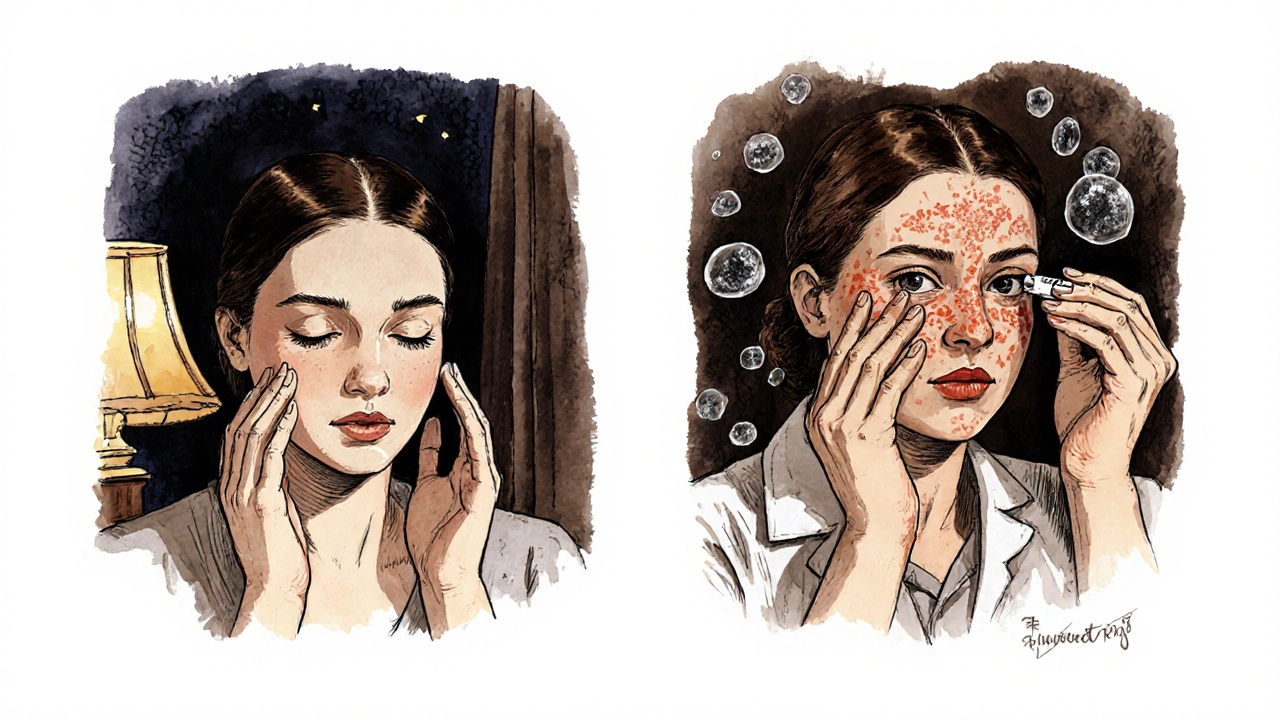
When you hear tretinoin, a synthetic form of vitamin A used in prescription skincare to treat acne and sun-damaged skin. Also known as all-trans retinoic acid, it’s one of the most studied and effective topical treatments for skin renewal. Unlike over-the-counter retinols, tretinoin is a prescription-strength retinoid that works directly on skin cells to speed up turnover, unclog pores, and boost collagen. It’s not a miracle cream—it’s a tool, and like any tool, it works best when you know how to use it.
Tretinoin is often prescribed for acne, a common skin condition caused by clogged hair follicles and excess oil, especially when other treatments fail. But it’s also used off-label for skin aging, the visible signs of sun damage and collagen loss like fine lines, uneven tone, and rough texture. Studies show it reduces wrinkles and improves skin texture over time, not overnight. The key is consistency. Most people see changes after 8–12 weeks, but it can take six months to get full results. Side effects like dryness, peeling, and redness are common at first—but they usually settle down as your skin adjusts.
Tretinoin doesn’t work alone. It needs sunscreen. Daily. No exceptions. Because it makes your skin more sensitive to UV light, skipping sunscreen can undo its benefits and even cause more damage. It also pairs well with gentle moisturizers and avoids harsh scrubs or alcohol-based toners. You don’t need a full skincare routine—just the basics: clean, apply tretinoin at night, moisturize, and protect in the morning.
People often confuse tretinoin with other retinoids like adapalene or tazarotene. They’re all in the same family, but tretinoin is the original and still the gold standard for both acne and anti-aging. It’s been used since the 1970s, and its safety and effectiveness are backed by decades of real-world use. It’s not for everyone—pregnant women, those with eczema flare-ups, or very sensitive skin should talk to their doctor first.
What you’ll find in the posts below isn’t just theory. These are real patient experiences, clinical insights, and practical tips on using tretinoin safely and effectively. You’ll see how it compares to other treatments, what side effects to expect, how to layer it with other products, and why some people see dramatic results while others struggle. This isn’t marketing fluff—it’s what works, what doesn’t, and what you need to know before you start.