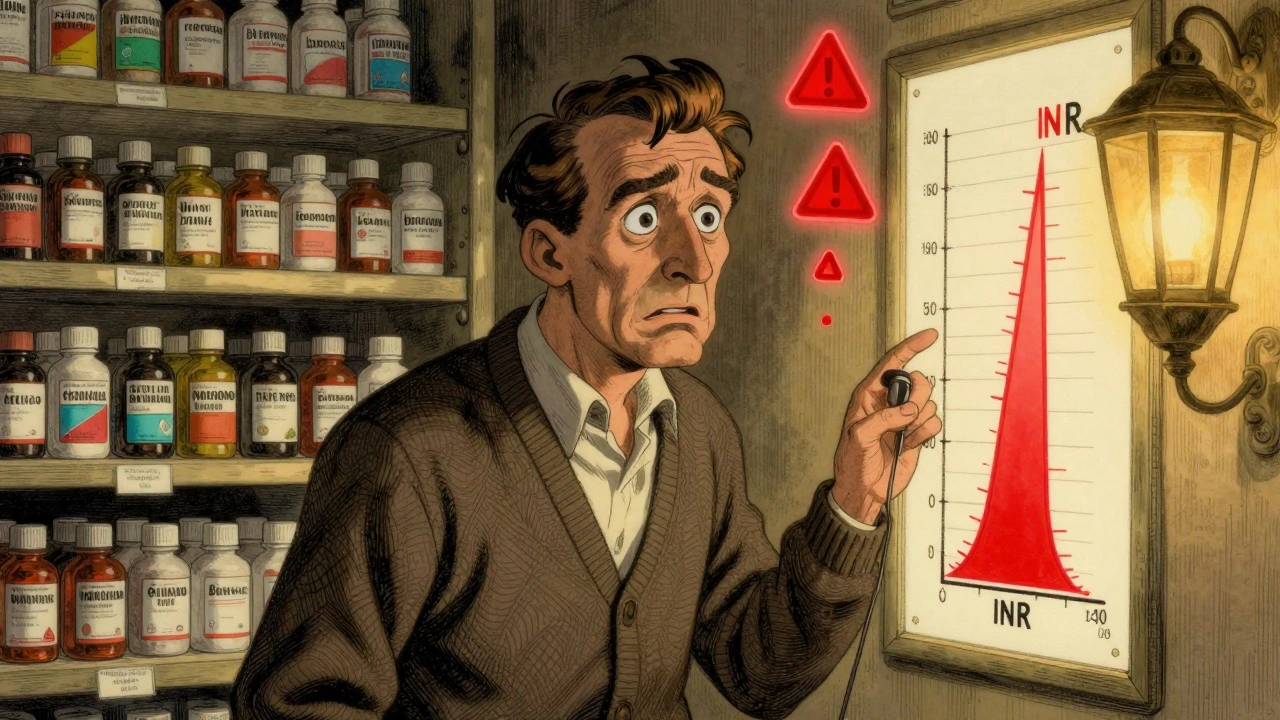
When you take warfarin, an anticoagulant used to prevent dangerous blood clots. Also known as Coumadin, it works by slowing down your blood’s ability to clot—essential if you have atrial fibrillation, a replaced heart valve, or a history of deep vein thrombosis. Many people also use NSAIDs, nonsteroidal anti-inflammatory drugs like ibuprofen, naproxen, or aspirin for pain and swelling. These are common, often bought over the counter, and taken without thinking twice. But when you combine them, you’re stacking two things that thin your blood. That’s not just a minor concern—it’s a real risk for serious bleeding.
Warfarin doesn’t just affect your blood—it’s sensitive to almost everything else you take. NSAIDs don’t just reduce pain—they interfere with your stomach lining and platelet function. Together, they can cause bleeding in your gut, brain, or elsewhere without warning. Studies show people on warfarin who take NSAIDs are up to three times more likely to have a major bleed. And it’s not just the dose—it’s how long you take them. Even a few days of ibuprofen can tip the balance. Your doctor might not even know you’re taking them, especially if you’re grabbing Advil for a headache or naproxen for back pain.
Some people think acetaminophen (Tylenol) is the safe swap—but it’s not always the answer either. If you have liver issues or take high doses, it can be risky too. The real solution isn’t just switching drugs—it’s understanding your whole picture. Are you older? Do you have ulcers, high blood pressure, or kidney problems? Those things make bleeding risk even higher. And if you’re on other meds—like SSRIs or antibiotics—that’s another layer. It’s not about avoiding pain relief. It’s about choosing the right kind.
What you’ll find in the posts below are real-world examples of how these interactions play out. From people who ended up in the ER after mixing warfarin with a weekend dose of ibuprofen, to how some doctors now avoid NSAIDs entirely for patients on anticoagulants. You’ll see what the science says about bleeding risk, how to talk to your pharmacist about safer alternatives, and why even "natural" anti-inflammatories like fish oil can add to the danger. This isn’t theory—it’s what happens when common meds collide. And knowing the signs—unusual bruising, dark stools, dizziness—could save your life.